Photography tours in Valencia: best tours for photos and photoshoots
Valencia: private walking photography tour
Duration: 3-4 hours
What are the best photography tours in Valencia?
For landscape and architecture photography, the dawn shoot at the City of Arts and Sciences offers the cleanest light with the fewest crowds. For street and social photography, guided walking photo tours in El Carmen and Ruzafa combine technique instruction with interesting urban environments. Professional photoshoots (for portraits, couples, and families) run from €80-150 for 1-2 hours.
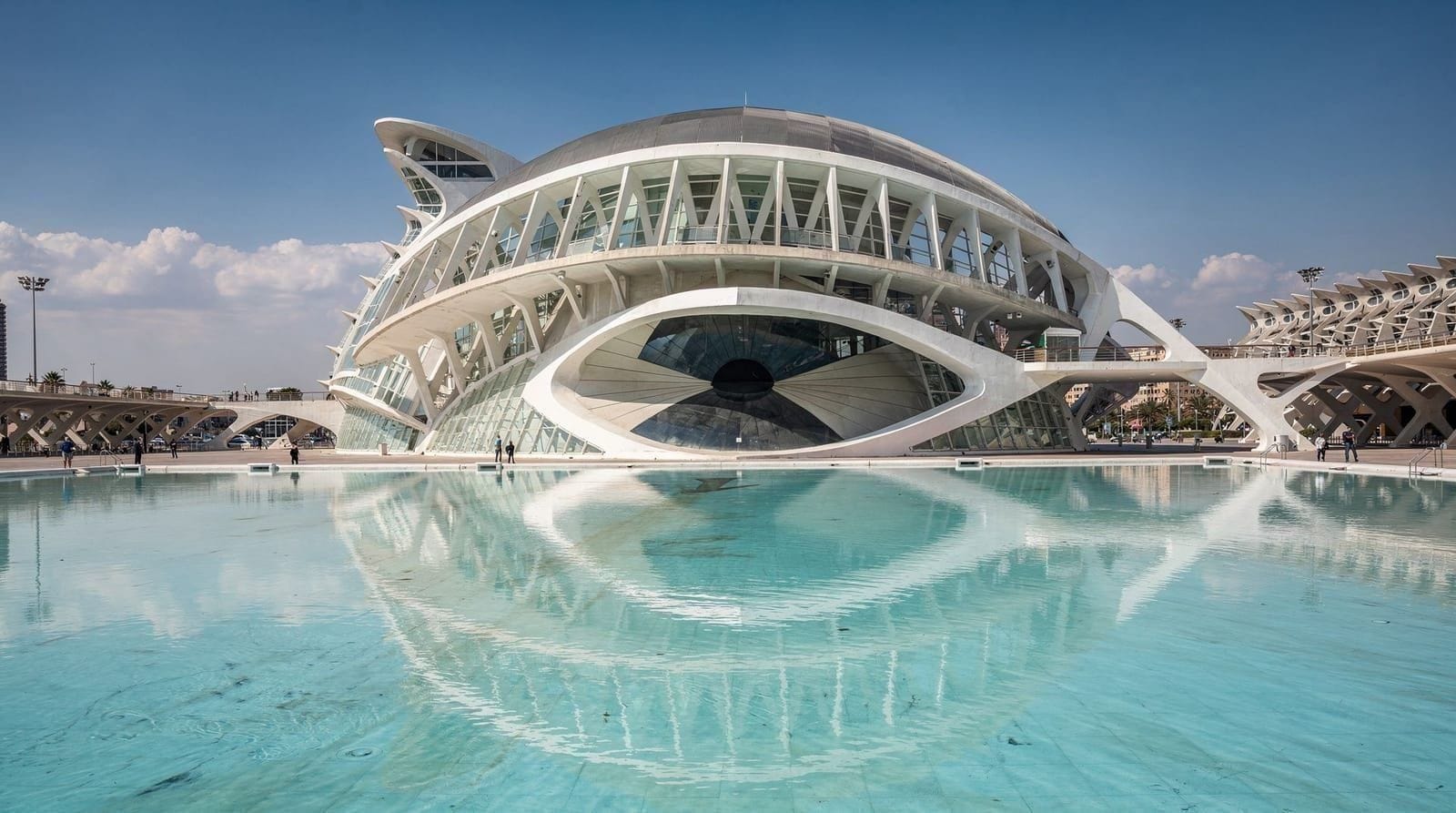
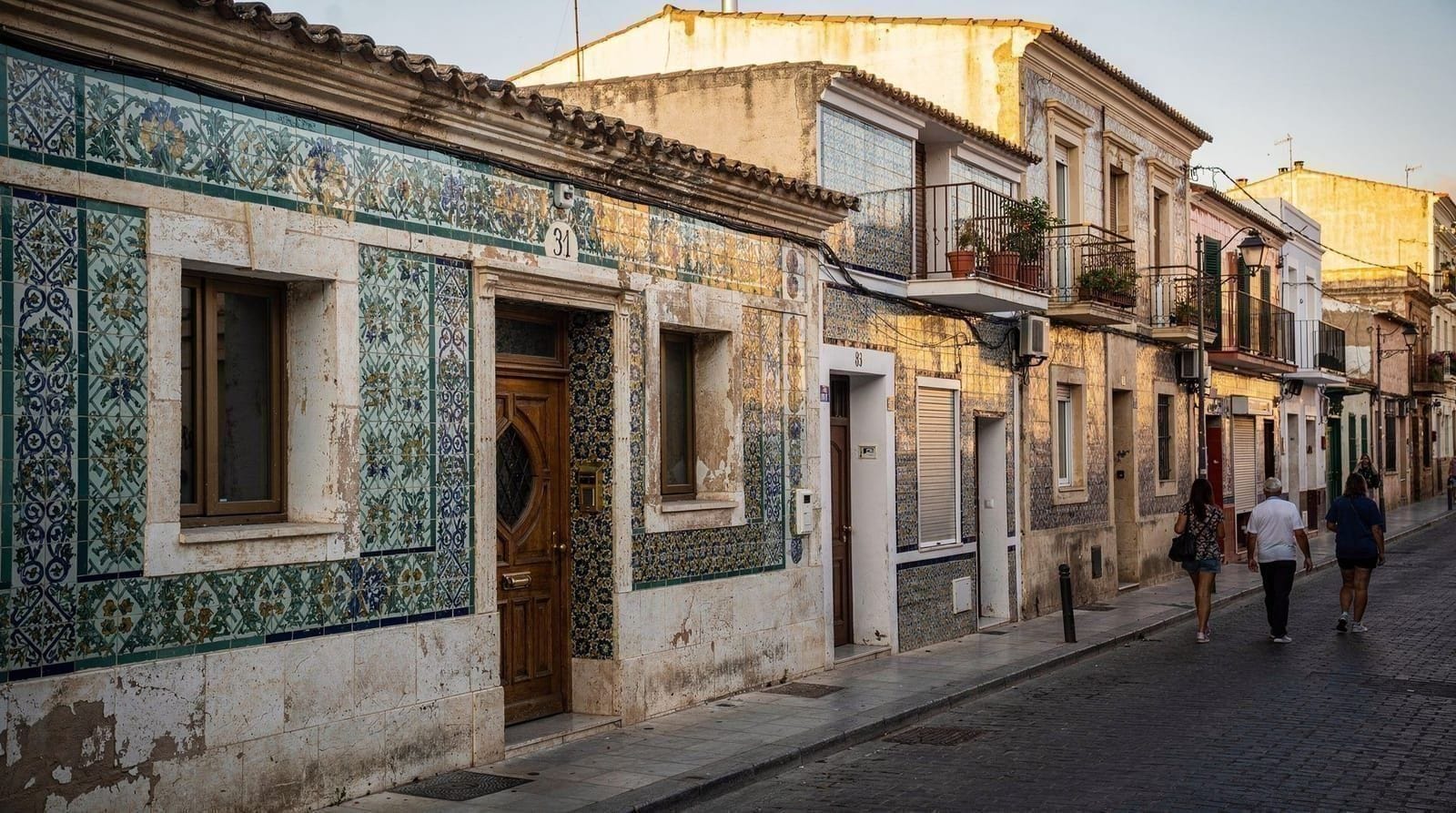
Valencia is exceptionally photogenic, and it’s not only the obvious subjects. Yes, the City of Arts and Sciences is one of the most architecturally spectacular complexes in Europe — the white Calatrava curves reflecting in shallow pools at golden hour are on postcards for a reason. But the photography opportunities extend to the 19th-century tiled facades of El Cabanyal, the ancient lanes of El Carmen, the Baroque excess of San Nicolás church’s frescoes, and the Turia Gardens park’s mixture of medieval bridges and modern cycling culture.
| Where | City of Arts and Sciences, El Carmen, El Cabanyal, La Malvarrosa |
| Cost | Guided tours from around €50; portrait sessions €80–250 |
| Time needed | 1–4 hours depending on format |
| Best light | Sunrise for the City of Arts; morning for El Carmen; afternoon for El Cabanyal |
| Booking | Advance booking recommended for dawn slots and summer weekends |
What type of photography tour are you looking for?
Valencia’s photography tour market divides into roughly three categories:
1. Guided street/documentary photography tours: These pair a guide who knows the city’s best visual locations with some instruction on composition and timing. Duration 3-4 hours, typically covering El Carmen and surrounding areas, or a route designed around a theme (street art, market life, architecture). Best for photographers who want to develop their own eye with local guidance.
2. Professional portrait / photoshoot sessions: A local photographer meets you at a location, poses you, and delivers edited images — for couples, solo travelers wanting Instagram-quality content, families, or anyone who wants professional holiday portraits. Duration 1-2 hours. Best for Instagram content creation or lasting holiday memories.
3. Specialist location tours (City of Arts dawn shoots, etc.): Focused on a single high-impact location with timing optimized for light. Best for photographers who already know what they want and need access and local knowledge to execute it.
Guided vs self-guided photography
| Guided tour | Self-guided | |
|---|---|---|
| Cost | €50–250 depending on format | Free (beyond transport) |
| Local access knowledge | Included — best light, angles, timing | You research it yourself |
| Editing / delivery | Included with photoshoot bookings | You edit your own images |
| Flexibility | Fixed route and schedule | Total flexibility on timing |
| Best for | First visit, time-pressed, want portraits | Photographers who know their gear and want to wander |
For a broader look at when a guide adds real value versus when Valencia rewards independent exploring, see the guided vs self-guided guide.
City of Arts and Sciences: the dawn shoot
The City of Arts and Sciences complex offers the most dramatic photography in Valencia, but the timing matters enormously.
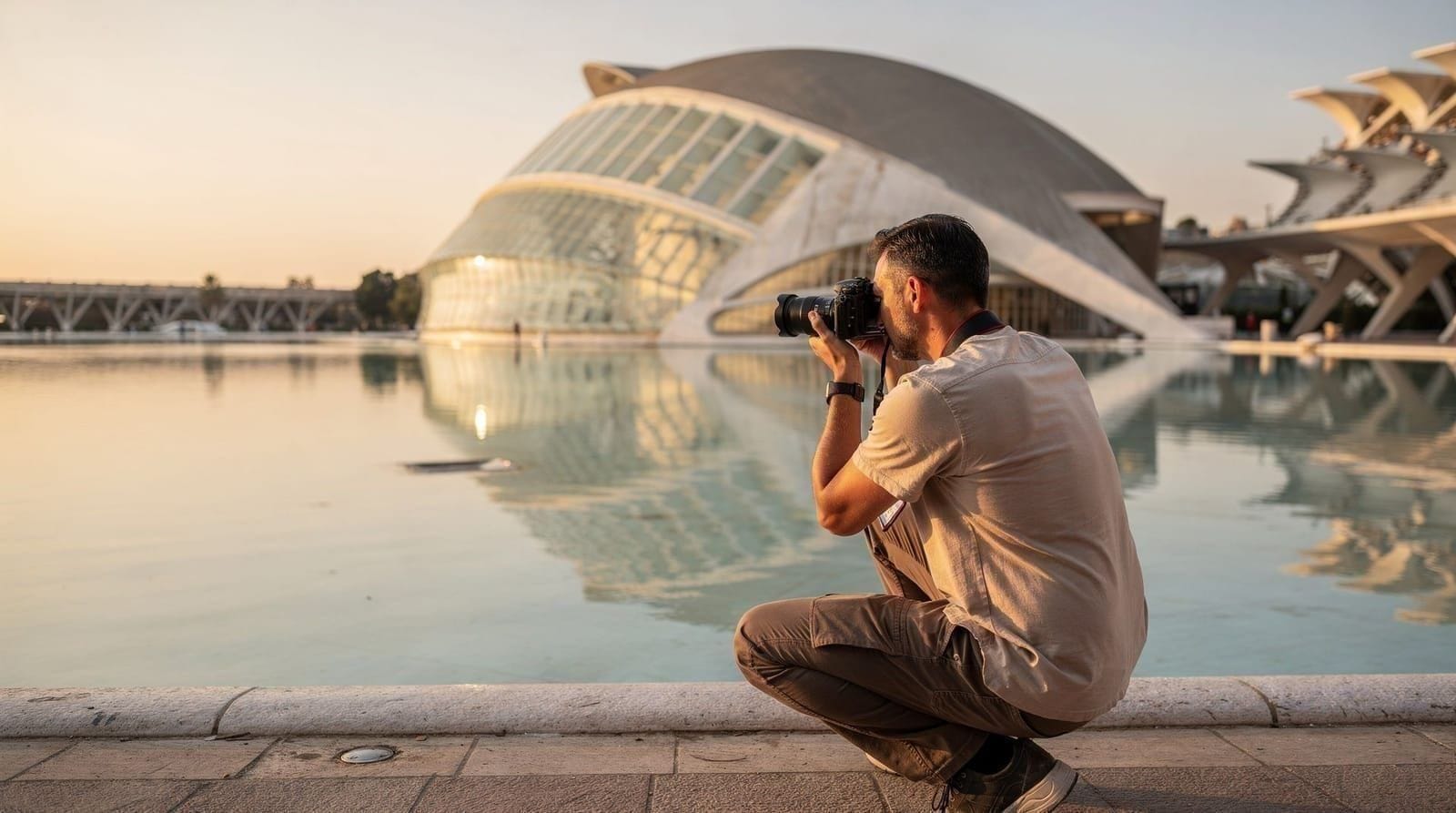
Best conditions: The 45-60 minutes around sunrise (approximately 06:30-07:30 in summer, 07:45-08:45 in winter). The reflection pools in front of the Hemisfèric and the pools at the Umbracle walkway are still, the light is soft and directional, and the crowds that fill the area by 10:00 have not yet arrived. At 07:00 in July, you can have some of Europe’s most spectacular architecture effectively to yourself.
Practical access: The complex grounds are free to enter at any time. The reflection pools are accessible on foot. No tickets are required for photography of the exterior.
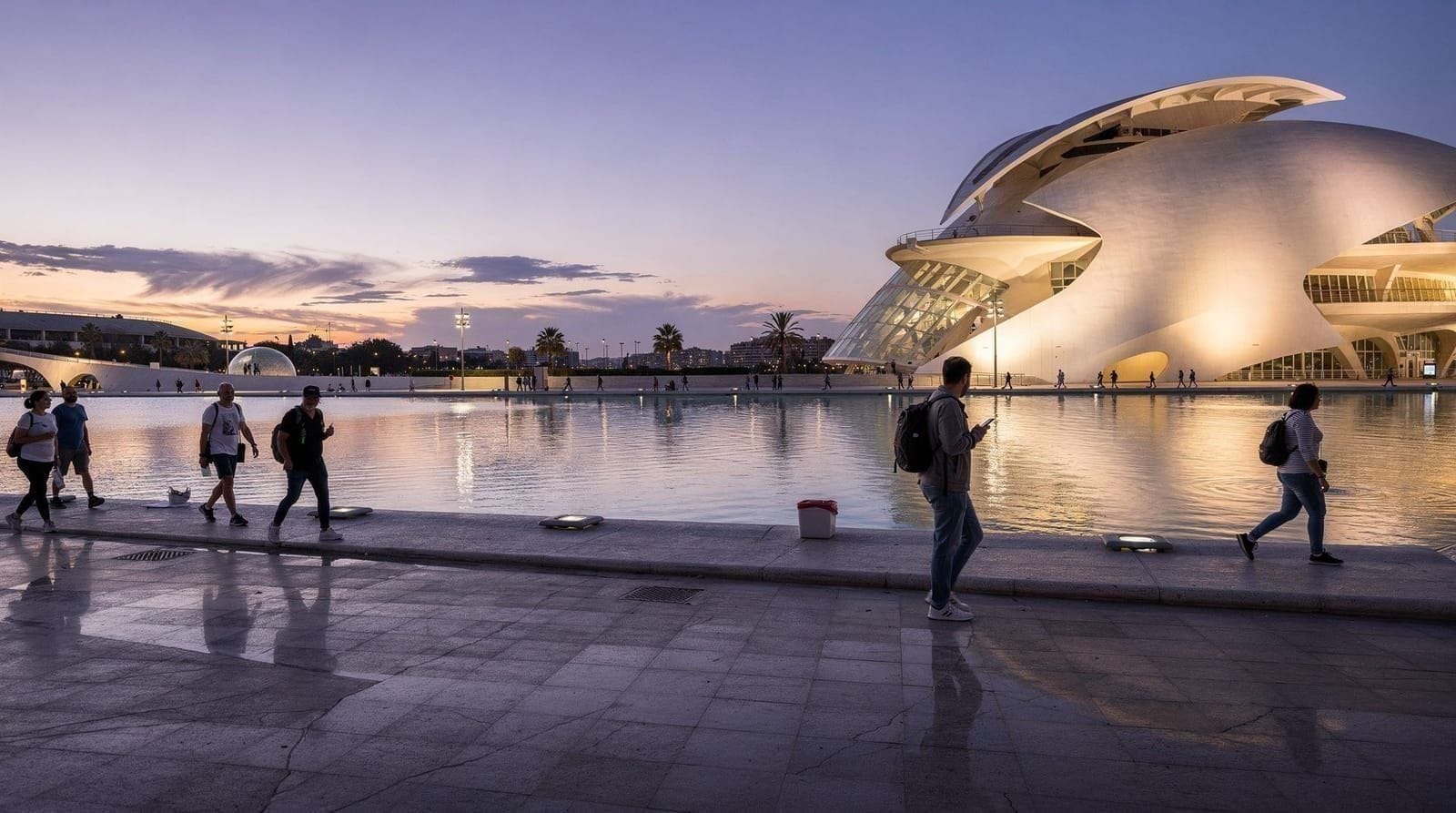 professional photoshoot at City of Arts & SciencesCheck availability
The Instagram composition: The most reproduced shot — the full east-west line of the complex reflected in the main pool, taken from the northern bank near the Hemisfèric — requires standing on or near the water edge and using a wide-angle lens. The key variables are: reflection pool water level (it changes seasonally; the pool is sometimes drained for maintenance), light quality, and crowd density.
The Palau de les Arts building (Calatrava’s opera house, 2005) at the eastern end of the complex offers a different angle: the ribbed white shell photographed against a blue sky or in dramatic overcast light. This is less photographed than the main pool view and offers more original compositions.
El Carmen walking photography tours
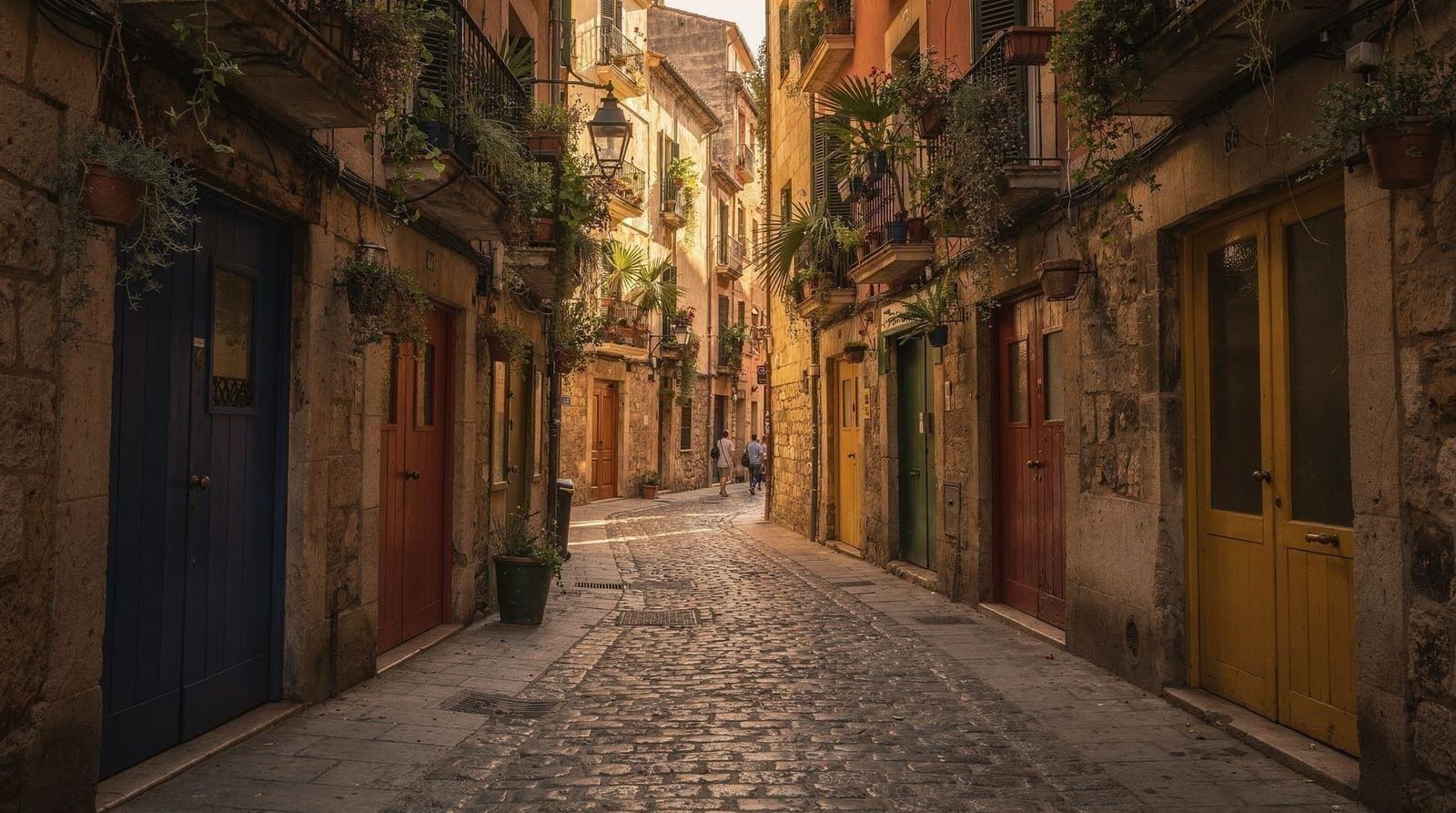
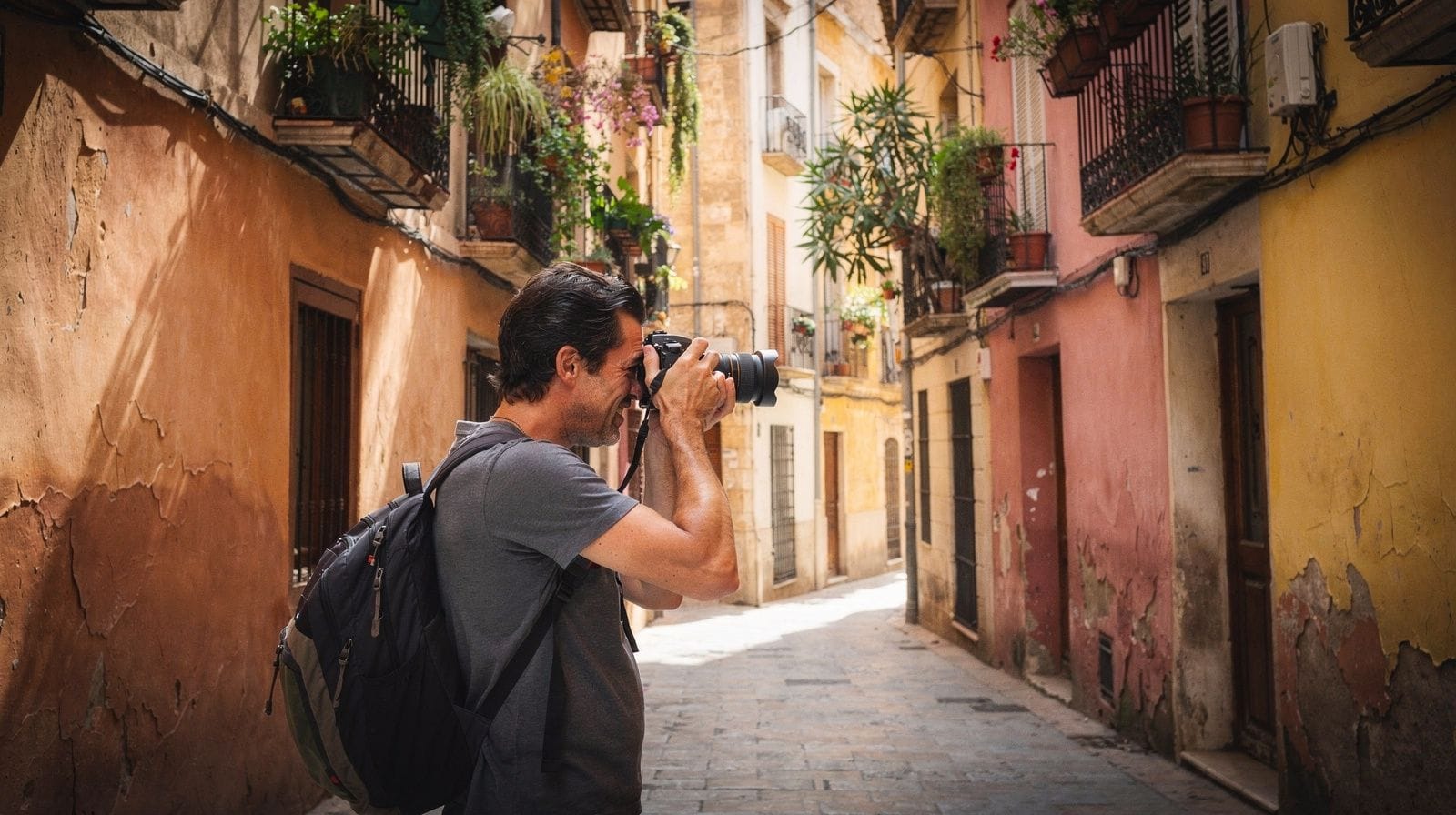
The medieval quarter is a photographer’s maze — unexpected light wells between tall buildings, layers of carved stone and ceramic tile, street art in contexts that amplify its impact, and the ordinary daily life of a working neighborhood.
Guided photography tours in El Carmen typically run in the morning (best for soft sidelight in the narrow east-west lanes) and last 3-4 hours. The best guides combine knowledge of the best compositions with understanding of the light conditions at different times of year.
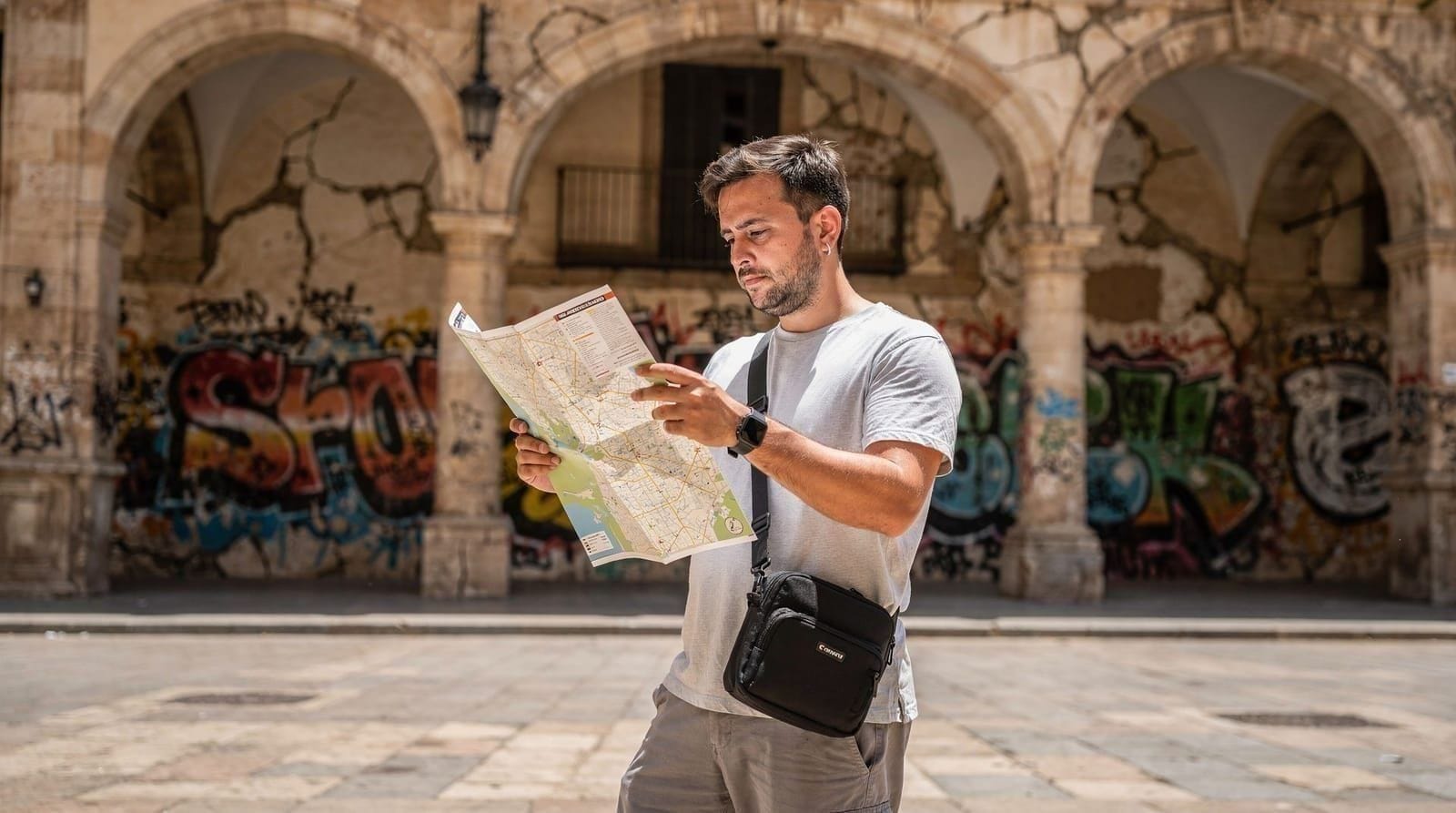
 private walking photography tourCheck availability
Self-guided photography in El Carmen: If you prefer to work alone, the following locations are the most productive:
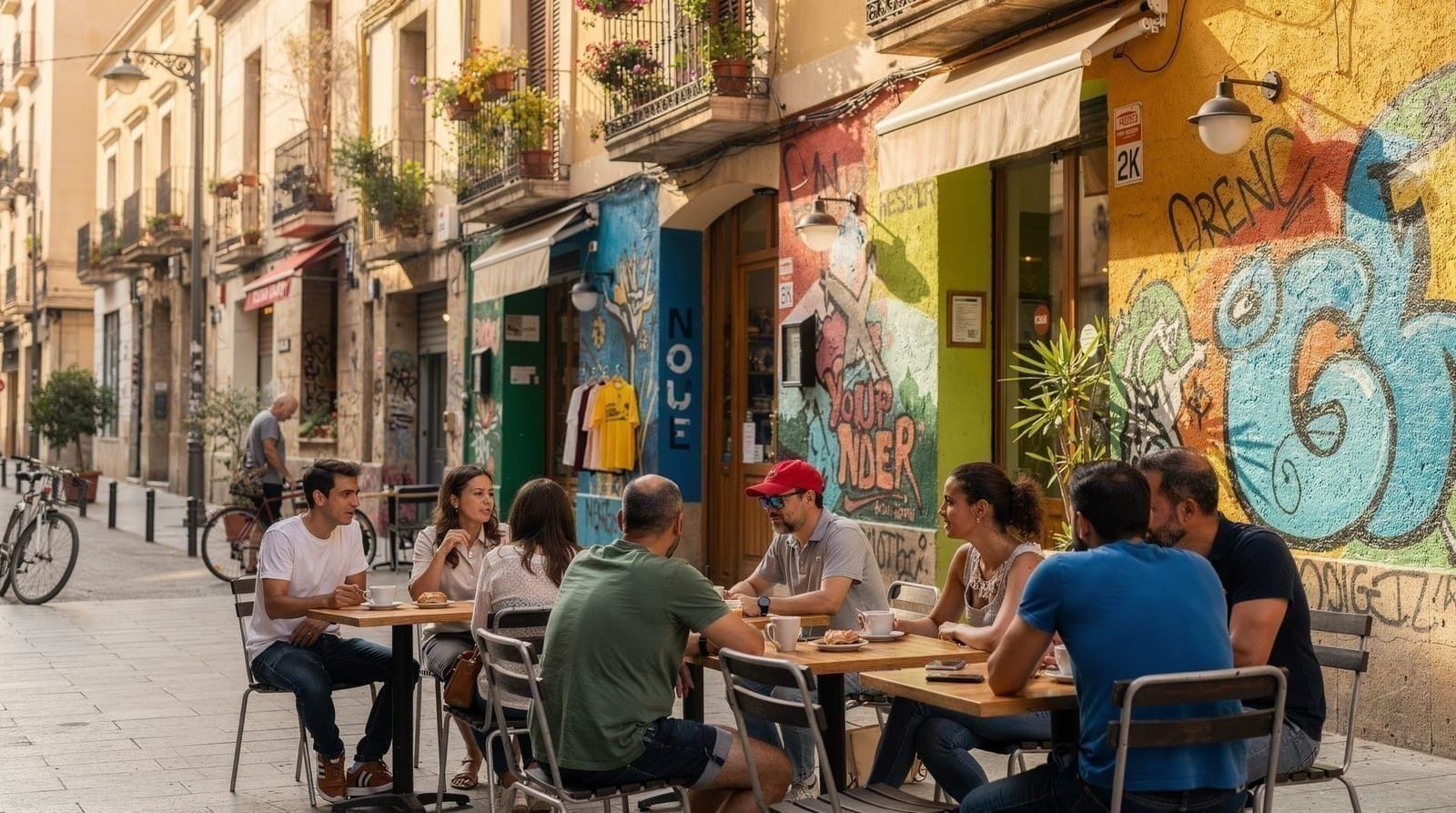
Calle de la Bolseria and surrounding lanes: The murals here are the densest concentration of street art in Valencia. The paintings are best photographed in overcast light (no harsh shadows) or just after sunrise when the buildings to the east are lit directly.
Torres de Serranos from the park: Standing in the Turia Gardens looking south at the two Gothic towers produces a strong symmetrical composition, especially at golden hour when the towers glow warm against a blue sky.
The Lonja de la Seda interior: The Hall of Columns is one of the best architectural interiors in Spain. The twisted spiral columns and the ribbed vault above need either a tripod (permitted with the standard entry ticket) or a camera capable of high ISO. The light is best 11:00-13:00 when the sun enters the west windows.
Mercado Central interior: The best photographic opportunity in the market is the morning light through the Art Nouveau iron and glass roof. Arrive at 09:00 when the market is fully operational and the light is at its best before direct sun causes harsh contrasts. The fish counter and produce stalls offer color and texture for detail shots. Ask permission before photographing individuals — most market vendors are used to cameras but not all are happy to be photographed mid-work.
El Cabanyal: tiled facades
The 19th-century tiled house fronts of El Cabanyal are undervisited by photographers compared to the City of Arts, but offer exceptional material for architectural photography.
Best approach: Walk Calle del Rosari and Calle de la Reina in the afternoon (eastern light, which illuminates the west-facing facades from behind you). The tiles are at their most vivid in direct sun at 15:00-17:00. Overcast conditions work better for detail shots (no reflections on the glazed tiles).
What to look for: The variety of tile patterns — geometric, floral, Art Deco — on adjacent houses. The best compositions typically juxtapose a well-preserved facade with a deteriorating one on the same street, showing the neighborhood’s renovation process. Wider shots of the street showing the houses at scale against the sky convey the neighborhood’s character.
 private photo tour at the Ciutat VellaCheck availability
Professional portrait photoshoots
Valencia has a growing market of professional photographers offering portrait sessions for tourists. The format typically works like this: you book a 1-2 hour session, you meet at the agreed location, the photographer manages composition and lighting, and you receive a set of edited images within 24-48 hours.
Popular locations for photoshoots:
- City of Arts and Sciences (the architecture provides strong graphic backgrounds)
- El Carmen lanes (medieval texture, atmospheric light)
- La Malvarrosa beach (open sky, beach light, sand colors)
- Turia Gardens (green, relaxed, good for families)
The Instagrammable photoshoot market is substantial in Valencia — several operators specifically target couples, solo travelers, and content creators who want high-quality images of themselves against the city’s architectural backdrops.
Instagram photo tour with private photographerCheck availability
 private video/photo shoot in old town with videographerCheck availability
Price range: 1-hour session with delivery of 20-30 edited images: €80-120. 2-hour session with 50+ images: €150-250. Location affects price — the City of Arts and Sciences sessions at dawn require the photographer to be on-site early and often command a premium.
La Malvarrosa beach photography
The beach is a different photographic environment. The flat sand, wide sky, and clear water are most productive at:
- Sunrise (spectacular, and the beach is usually empty until 09:00 in peak summer)
- Golden hour before sunset (approximately 20:30-21:30 in July)
- Winter mornings (the low winter sun creates extraordinary light on the empty beach and the Calatrava buildings visible from the beachfront)
The beach photoshoot operators primarily offer portrait sessions; landscape and documentary beach photography is entirely self-directed.
Equipment and practical tips
What works in Valencia: A wide-angle lens (16-24mm on full-frame) for architecture and street scenes. A standard zoom (24-70mm equivalent) for documentary work. A tripod for interior shots at the Lonja de la Seda and dawn shoots at the City of Arts.
What to avoid: Photographing people in the Mercado Central without asking. Photographing the inside of San Nicolás church — tripods and camera use inside the church is restricted; the lighting is controlled for the theatrical tour experience and photography is limited.
Drone photography: The City of Arts and Sciences is within a restricted airspace zone — commercial drone photography requires permits. Recreational drone use is restricted in the city center. Check current AESA (Spanish aviation authority) regulations before bringing a drone.
Planning a photo route around the landmarks
Most of the subjects in this guide have their own dedicated pages, and reading them before you go helps you decide where to spend your best light. The street art in El Carmen guide is the natural companion to the Calle de la Bolseria notes above, since it explains the murals you will be pointing a lens at. For the Hall of Columns, the Lonja de la Seda guide covers the building’s history, which makes it easier to know which details deserve a close-up. The two Gothic gates have their own page too: the Torres de Serranos and Quart towers guide helps you choose which tower to frame and from which side.
On the market side, the Mercado Central guide gives the wider context for the interior shots described below, and the Turia Gardens guide shows how the long green corridor connects most of the locations on this page. If your schedule allows only evenings, the night tours guide is worth a look for ideas that pair well with the after-dark City of Arts session.
A sensible rhythm is to put the single most demanding shot of the trip, the dawn session, on your first or second morning, so that a cloudy forecast can be answered with a second attempt rather than a missed chance. Keep the easier, more forgiving subjects, such as tiled facades and market stalls, for the days when the weather is less cooperative.
Night photography at the City of Arts
Long-exposure photography at the illuminated City of Arts and Sciences is one of the most technically rewarding photography experiences in Valencia, and one that almost no general tours offer. The grounds are freely accessible after dark, the complex is lit from approximately 20:30 to 23:00, and the shallow reflection pools become perfectly still in the evening air.
Equipment: A tripod is essential. The longest usable exposures are in the 2-8 second range, depending on your aperture and ISO. A remote shutter release reduces camera shake. Wide-angle lenses (16-24mm on full-frame) capture the full scale of the complex; telephoto compression of individual details can produce more abstract architectural studies.
The reflection pool at night: The main pool (approximately 200m long) in front of the Hemisfèric faces east-west. Shooting from the north bank toward the south gives you the pool reflection in the foreground, the Hemisfèric eye and the Príncep Felip Science Museum in the mid-ground, and the Palau de les Arts behind. This is the classic composition. The variation: shooting from the east end of the pool gives a full reflection of the Hemisfèric without competing elements.
Light variation: The complex uses white LED illumination — cool, bright, and consistent. In practice, this creates a slight color temperature challenge (images can trend blue-white). A warm white balance (approximately 4000K) corrects this toward a more natural architectural rendering.
The pre-sunrise window: From roughly 45 minutes before sunrise to 15 minutes after, the sky graduates from dark blue to orange/pink. During this 30-minute window, the artificial illumination on the buildings balances with the ambient sky light in a way that doesn’t occur at any other time of day. This is the photographic golden moment. In summer (June-August), this window opens around 05:45. In winter (December-February), it’s around 07:30 — a much more accessible time for most visitors.
The Turia Gardens as photography location
The Turia Gardens park is underused as a photography location, possibly because it’s not a single “wow” landmark. But its 9 km length contains exceptional photographic material in layers:
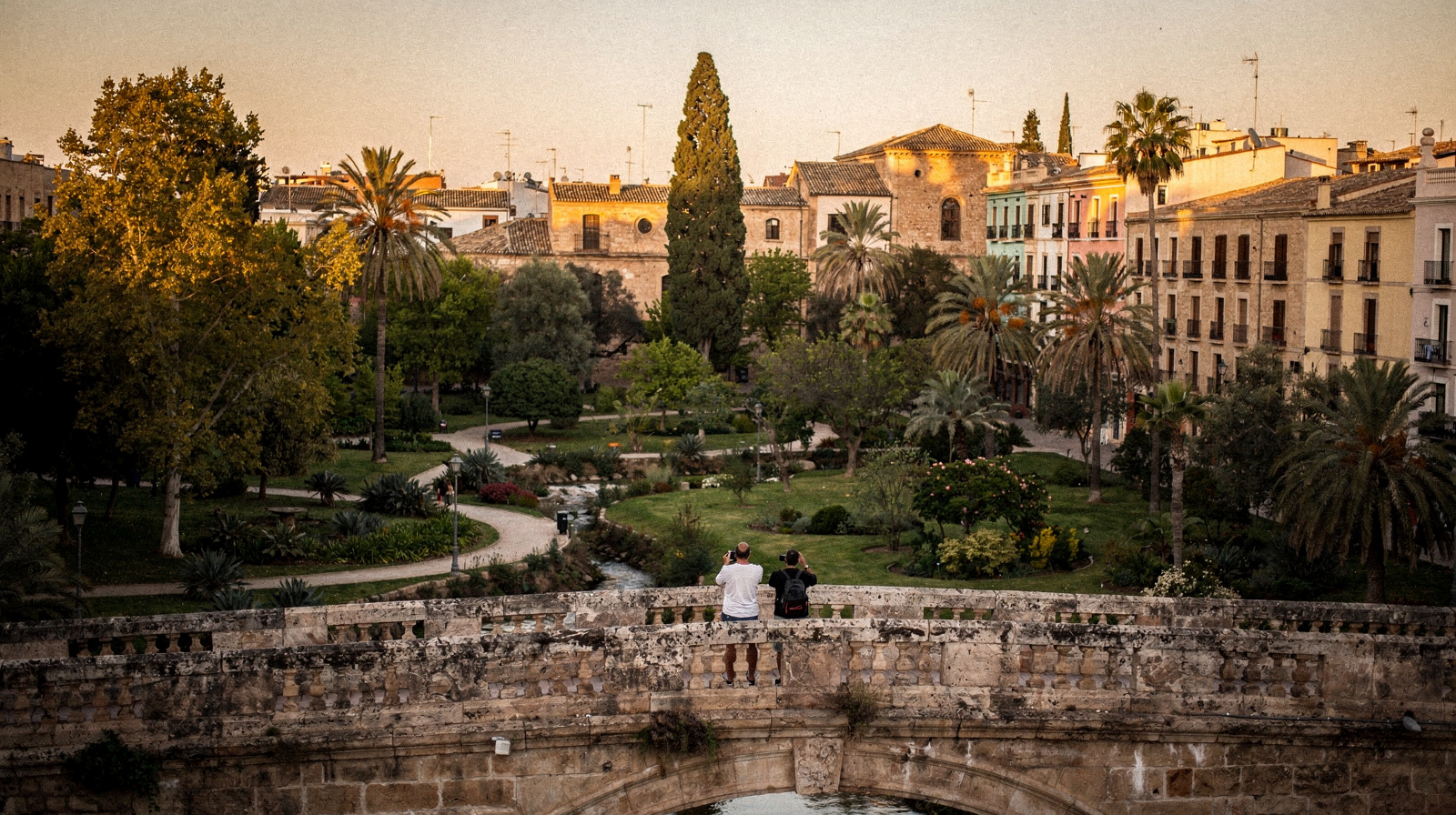
Medieval bridges from below: The bridges spanning the old riverbed were built between the 12th and 18th centuries. Photographed from the park floor looking up, they create strong geometric compositions against the sky — especially from directly below the central arches.
Gulliver Park: The giant figure embedded in the landscape, photographed at low angle in the early morning with children (or the absence of children in quiet moments), is one of the most surreal compositions in Valencia’s public spaces.
The cycle culture: The Turia Gardens are Valencia’s cycling artery. Morning commuters, recreational cyclists, and the occasional road cycling group create good documentary material between 07:00 and 09:00 on weekdays. The cycle path with the medieval bridges visible in the background is a distinctive Valencia image.
The park at Fallas: During Las Fallas (March), the park becomes an informal gathering and social space. The firecrackers, the street food, and the costumed groups who use the park between events create strong photojournalistic opportunities.
Mercado Central: interior photography
The Mercado Central interior is one of Spain’s great Art Nouveau spaces — the combination of iron structural arches, glazed tiles, and natural light from the central dome creates a photography subject that rewards careful composition.
Best time: 09:30-10:30 on weekdays, before the market reaches peak density. The morning light through the dome is strongest in winter months (lower sun angle enters more directly). In summer, the dome light is flatter but the color of the produce is exceptional.
The fish counter: The arrangement of whole fish, crustaceans, and shellfish on the counter — silver scales, orange-red claws, deep black mussels against white ice — is a classic still-life subject. Ask the vendor before photographing individuals (the vendor is usually agreeable; the shopper paying for fish is less reliably so).
Wide versus detail: Both work. Wide angle captures the architectural scale and the market’s organizational pattern. Telephoto or macro detail of individual products — a pile of blood oranges, a rosette of artichokes — produces strong still-life images.
Combining photography with other Valencia experiences
A photography-focused day works well layered onto sightseeing you would probably do anyway. The City of Arts and Sciences destination guide covers ticketing and visiting hours for the individual buildings, useful if you want to photograph the Oceanogràfic or Hemisfèric interiors as well as the exterior pools. In the old town, the El Carmen guide maps the neighbourhood’s lanes and landmarks beyond the specific photo spots covered here, and a slower walking pace works better for photography than the faster pace of a general sightseeing route. In El Cabanyal, pairing the tiled-facade photography with a proper visit — its market, its beach-town history — makes the detour worth the transport time rather than a quick in-and-out for a few shots.
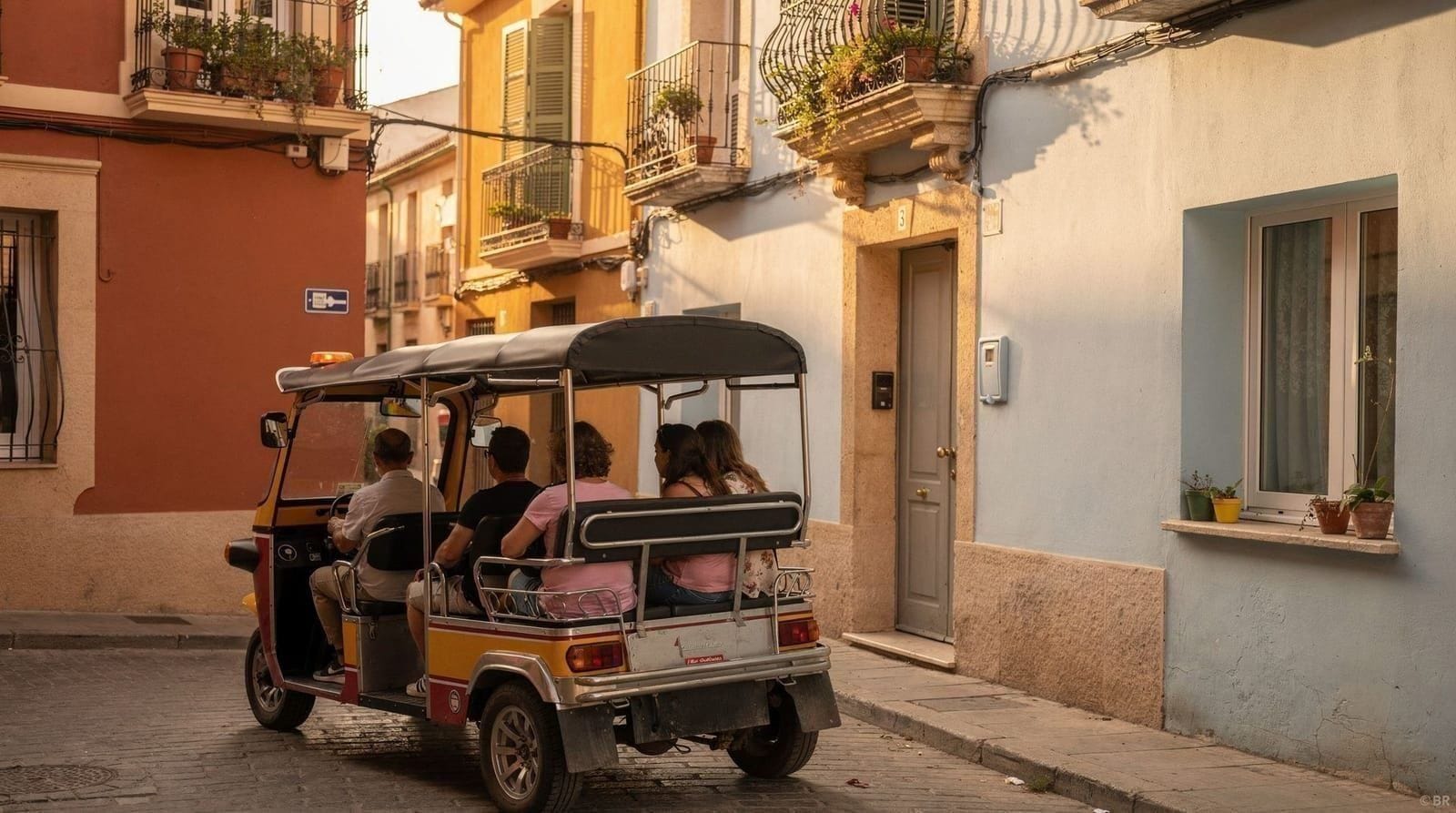
If carrying camera gear on foot for hours doesn’t appeal, a tuk-tuk tour covers more ground between locations with less walking, at some cost to the slow, deliberate pace that good photography usually needs — a reasonable trade-off for a shorter visit or hot afternoons. And after a morning of City of Arts photography, La Malvarrosa beach is a 15-minute tram ride away and offers a completely different set of subjects — open sky, water, and beach light — for the second half of the day.
Frequently asked questions about photography tours
What is the best time of day for photography at the City of Arts and Sciences?
Sunrise to 45 minutes after sunrise for the cleanest light and the fewest crowds. The reflection pools are still in the morning air. By 10:00, tour groups and general tourists fill the area. The second-best option is the last 45 minutes of sunlight before the orange evening light, though the crowds remain present until 20:00.
Can I take a tripod into Valencia’s historic buildings?
The Lonja de la Seda permits tripods with the standard admission ticket. The Cathedral has restrictions — check on entry. The Mercado Central has no formal tripod policy but expects you to stay out of vendors’ way. The City of Arts and Sciences exterior permits tripods freely.
How do I find a local photographer for a portrait session in Valencia?
GetYourGuide lists several vetted photography session operators. Check reviews specifically for image quality examples, not just for the experience. Ask operators for a portfolio sample before booking.
Are there photography workshops in Valencia?
Several operators offer half-day or full-day workshops combining technique instruction with location photography. These differ from the tour model in that they teach photography skills explicitly rather than simply showing you locations. Search for “photo workshop Valencia” on GetYourGuide or contact local photography schools.
Is the City of Arts free to photograph?
The exterior is entirely free. The grounds are accessible 24 hours (the pools are lit at night and offer dramatic long-exposure possibilities). Entry to the individual buildings (Oceanogràfic, Hemisfèric, Science Museum) is ticketed; photography inside these venues follows their specific policies.
Do I need to book a photoshoot session in advance?
Yes, especially for dawn slots at the City of Arts and Sciences and for weekend sessions in peak season (June–September), when the better-reviewed photographers book up several days ahead. Off-season and weekday sessions can sometimes be arranged with only a day or two’s notice.
Is a guided photography tour worth it if I already know how to use my camera?
It depends on what you’re after. If you already understand exposure and composition, a guide’s main value is local access knowledge — which spots catch the best light at which time, and where crowds thin out — rather than technique instruction. For that, a shorter specialist location tour or even a good written guide can substitute; see the guided vs self-guided comparison for how to decide.
Top experiences
Bookable activities with verified prices and instant confirmation on GetYourGuide.