Sagunto day trip from Valencia: Roman ruins, castle, and Jewish quarter
Valencia: private visit to Sagunto and Caves of San Josep
Is Sagunto worth a day trip from Valencia?
Yes, particularly if Roman history interests you. Sagunto is just 30 minutes from Valencia on the Cercanías C6 train. The Roman theatre (rebuilt controversially in the 1990s), the hilltop castle, and the medieval Jewish quarter can be seen in a comfortable half-day.
Sagunto (Sagunt in Valencian) sits 30 km north of Valencia on a coastal plain below the Serra Calderona — close enough to visit before lunch, historically significant enough to warrant a full half-day. The city was one of the most important in Iberian Spain, the flashpoint for the Second Punic War when Hannibal’s siege of the allied city in 219–218 BC triggered Rome’s intervention, and a layered archaeological site where Iberian, Carthaginian, Roman, Moorish, and medieval Christian remains stack on the same hilltop.
The Cercanías C6 from Valencia Estació del Nord delivers you to Sagunto station in under 35 minutes. From the station it is a short walk or bus ride to the old town and the castle approach. It is one of the clearest and cheapest half-day trips from Valencia.
| Where | Sagunto, 30 km north of Valencia city |
| Cost | Free castle entry; free Roman theatre entry |
| Time needed | Half a day (3–5 hours including lunch) |
| Getting there | Cercanías C6 train, 28–35 min, around €2.60 |
| Best time | Morning (before 10:30) to avoid midday heat on the exposed ridge |
Getting to Sagunto from Valencia
By train
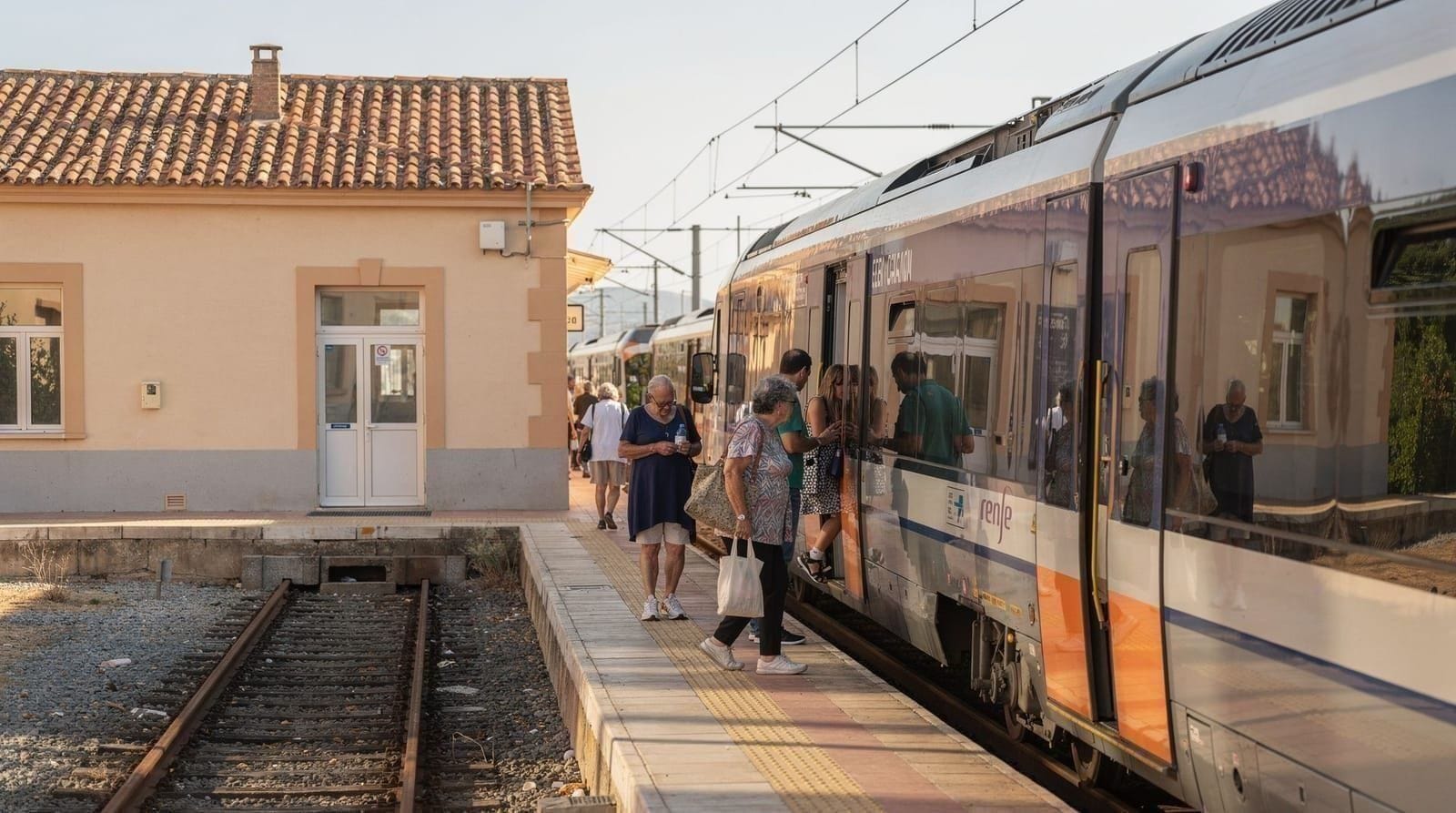
Cercanías C6 runs from Valencia Estació del Nord northward along the coast, stopping at Sagunto. Trains depart approximately every 30 minutes throughout the day. Journey time 28–35 minutes. Single fare approximately €2.60, or included in multi-zone Cercanías day passes. No advance booking needed.
From Sagunto station, the old town and Roman theatre are a 10-minute walk north. Follow Carrer de la Reina or take local bus lines that connect the station to Plaza Mayor. The castle entrance is uphill from the Roman theatre — a further 15-minute walk on a marked path.
By car
The A-7 motorway from Valencia reaches Sagunto in 25 minutes. Parking is available near Plaza Mayor and along the base of the old town. A car adds no significant advantage for Sagunto itself; the train is quicker and avoids parking.
 private visit to Sagunto and Caves of San JosepCheck availability
The Roman theatre
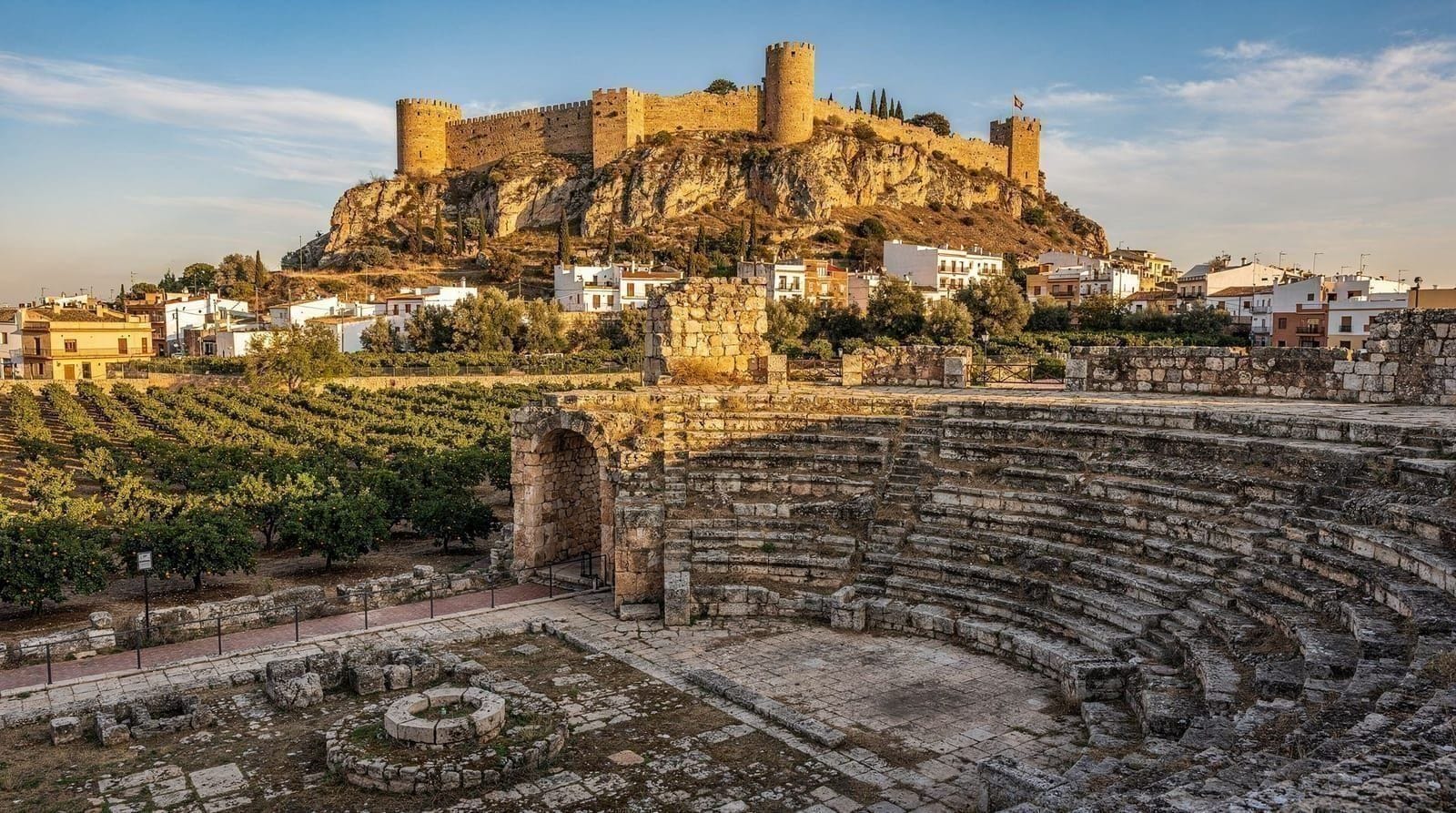
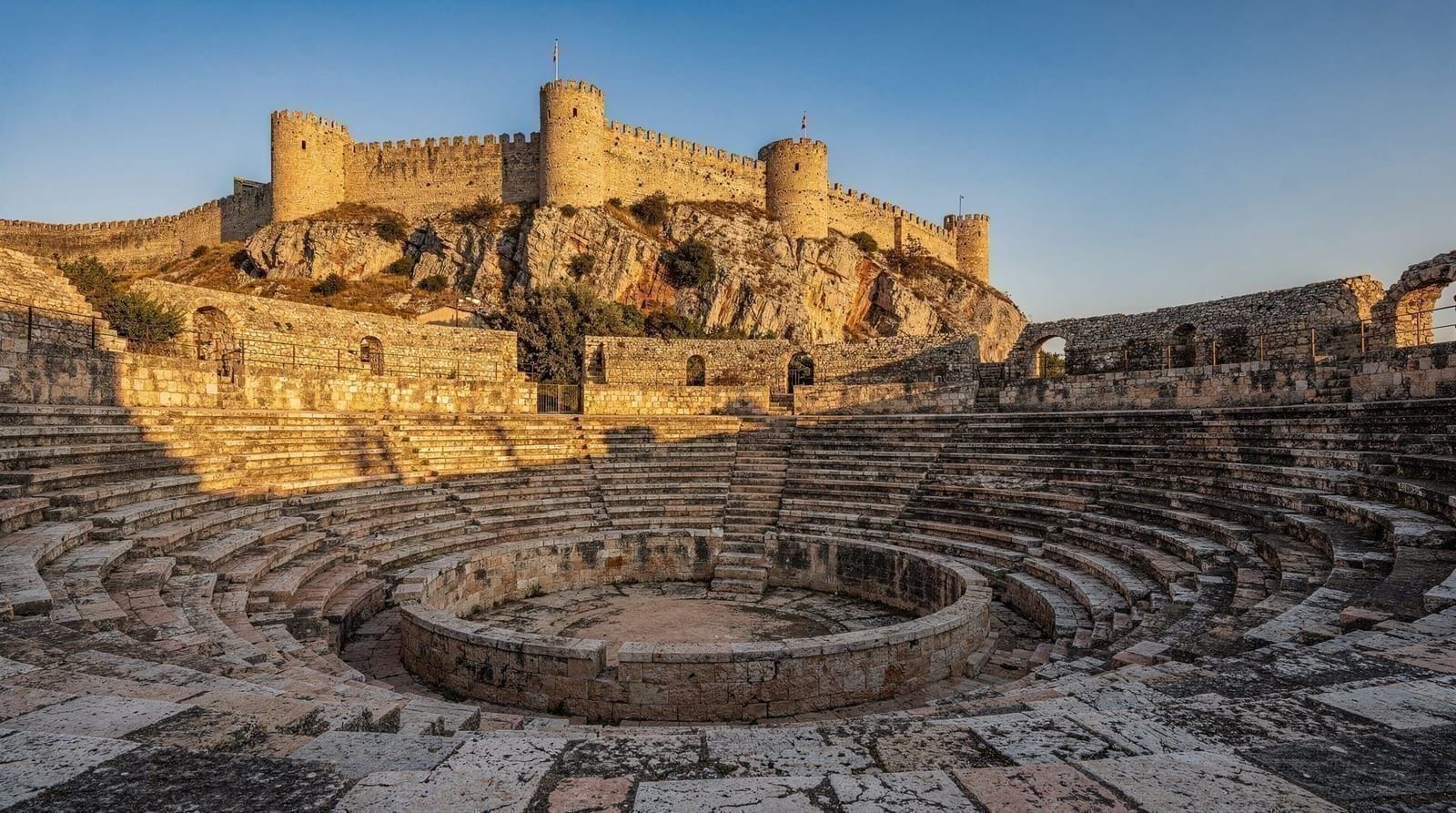
Sagunto’s Roman theatre is both the most famous sight and the most debated. The theatre was built in the 1st to 2nd century AD, carved into the southern slope of the castle hill in the classic Roman manner, with seating for around 4,000 spectators. What you see today is the result of a controversial late-1990s restoration that rebuilt the stage facade and upper seating in new stone and concrete. Archaeologists and heritage organisations protested; the European Commission briefly became involved. The result is genuinely split: the cavea (tiered seating area) cut into the hillside is original and impressive; the rebuilt stage building looks more like a modern abstraction than a Roman original.
That said, the theatre still functions — summer performances take place on the ancient stage under open sky. The views over the Sagunto plain from the upper seats are excellent. Entry is free all year, with free guided visits available without booking. The adjacent Museu Arqueologic houses finds from the site including Roman sculpture, Iberian metalwork, and coins.
The castle complex
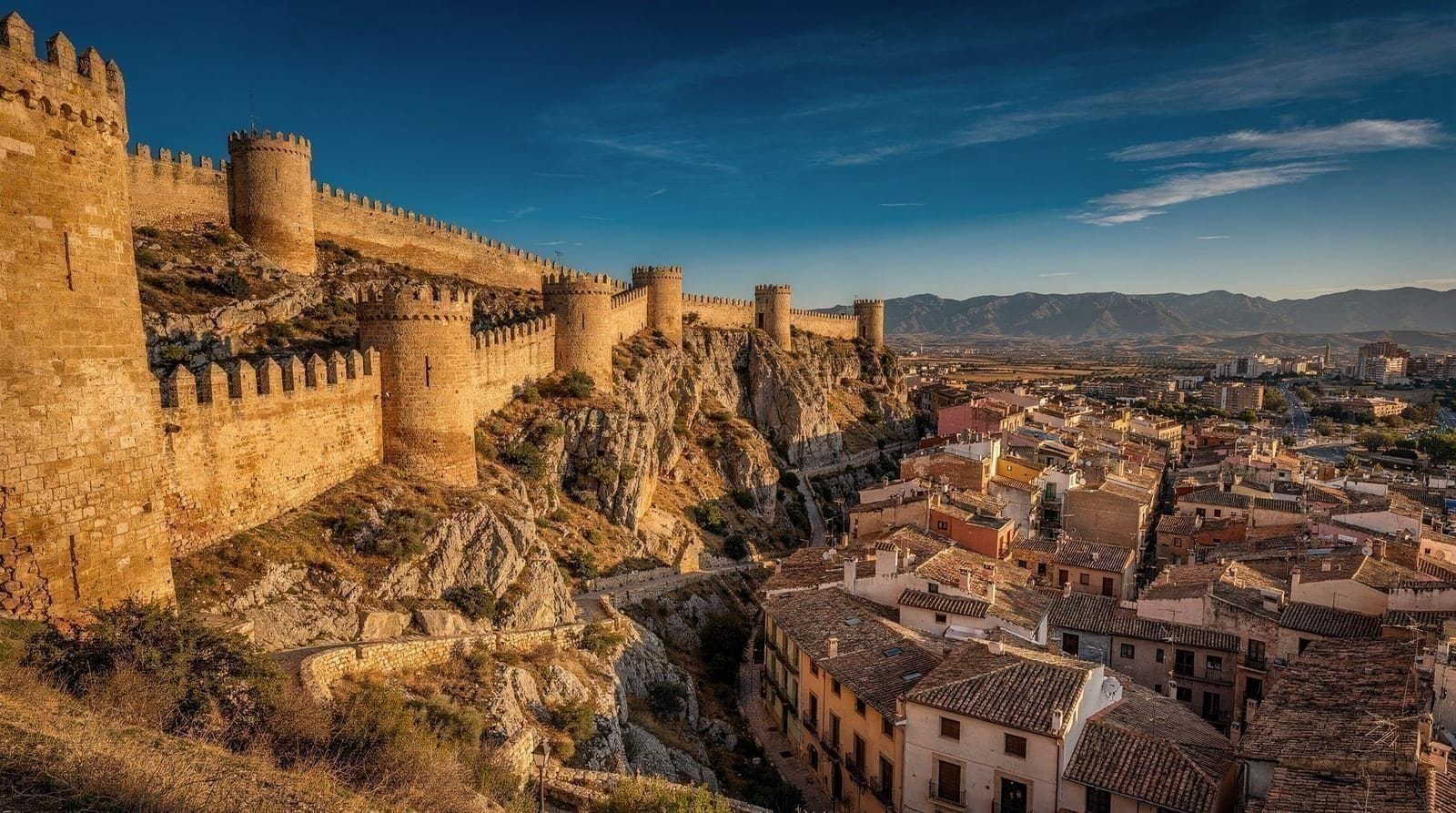
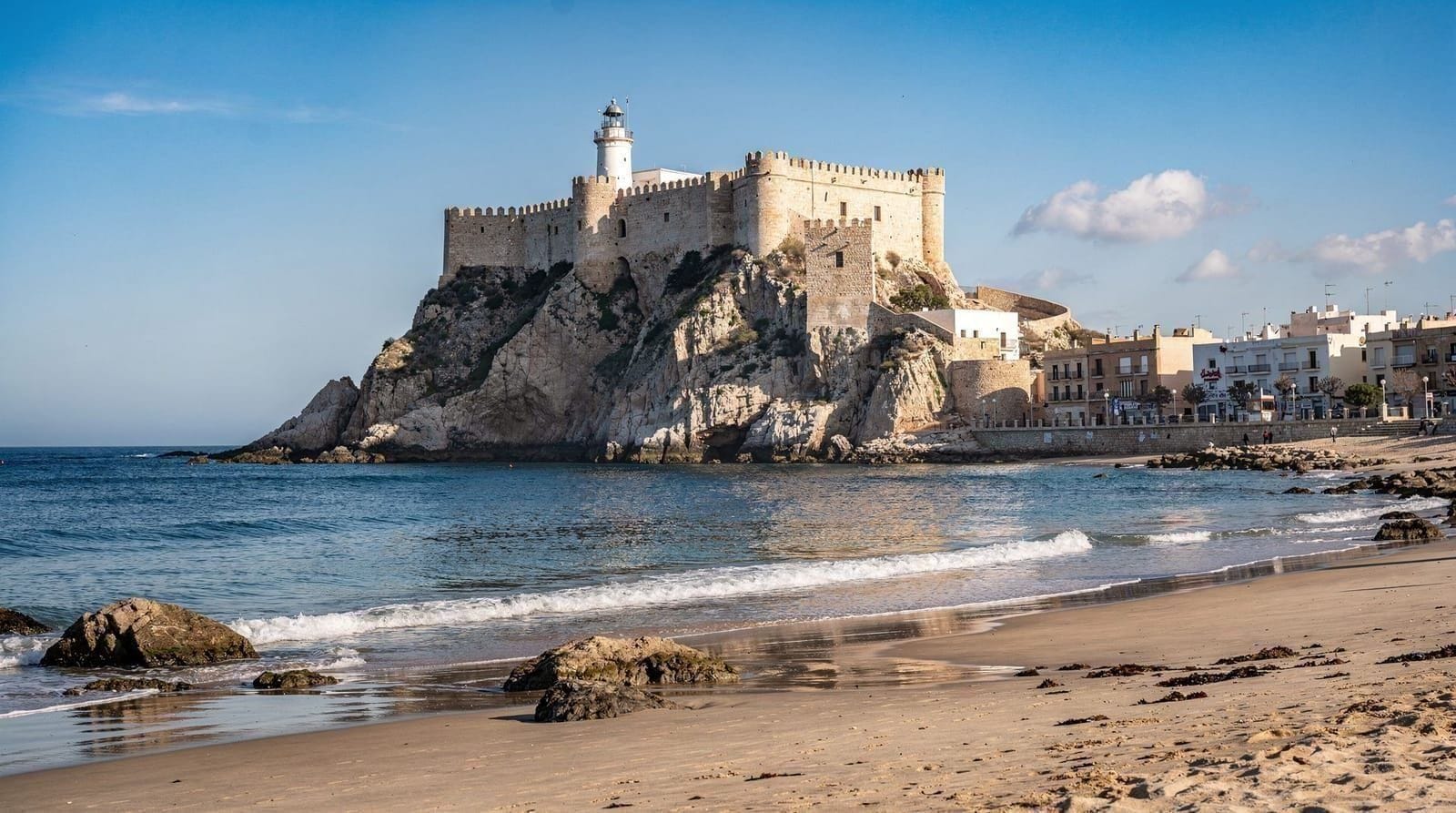
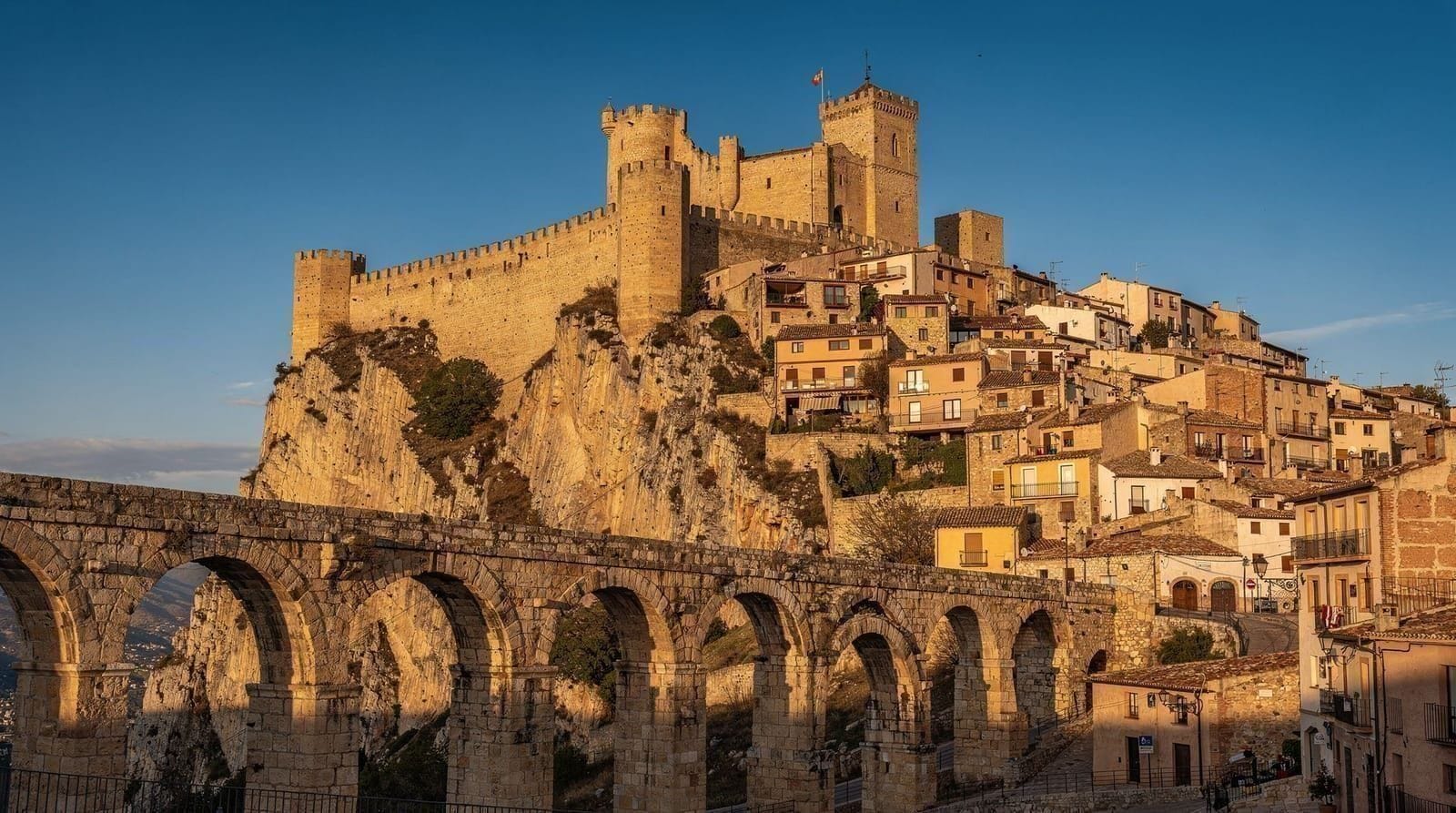
The Castillo de Sagunto runs nearly 1 km along the ridge above the town, divided into seven enclosures representing different periods of occupation and construction. The oldest parts include Iberian fortifications from before the Punic Wars; the most complete sections are the Arab and later Christian medieval walls. The views from the top — south toward Valencia, east to the Mediterranean, north toward the Millars plain — are excellent.
The castle is free to enter and open on a seasonal schedule (check the official visiting schedule before you go). The full walk from the Roman theatre end to the far western tower takes about 45–60 minutes at a comfortable pace. Wear sturdy shoes — some sections have uneven stone paths and steep drops.
Look for: the Torre dels Morors (Tower of the Moors), the Almohad cisterns cut into the rock, and the Iberian section at the east end where stone cuts from the original pre-Roman fortifications are visible beneath later layers.
The Jewish quarter (Jueria)
Below the castle and Roman theatre, the old town includes one of Spain’s better preserved mediaeval Jewish quarters. The Sagunto Jewish community was significant from the 11th to 15th centuries; the quarter’s layout of narrow parallel streets and internal courtyards survives largely intact. A small interpretive route marked with plaques follows the key locations including the old synagogue site (now a church) and the medieval mikveh (ritual bath).
The Jueria is most interesting as a piece of urban archaeology — the street pattern itself tells the story, even if most buildings are now residential. Pick up the free street map from the tourism office on Plaza Mayor.
A sensible order for the visit
The simplest route follows the geography. Walk up from the station into the old town, spend time in the Jewish quarter first while the streets are still cool and quiet, then climb toward the Roman theatre and continue up to the castle ridge. Doing it in this order means the steepest, most exposed part of the day comes when you are fresh, and you finish with the long ridge walk and its views rather than dragging yourself uphill after lunch.
If you prefer to save your legs for the end, reverse it: start at the theatre, do the castle early, then come back down for a slow lunch and a wander through the lanes of the Jueria. Either way, keep the museum for last or skip it entirely if the heat or your energy is running low. The theatre and castle are the heart of the trip; the museum is a pleasant extra rather than a requirement.
Keep your phone charged, because the castle enclosures are not always signposted clearly and a map helps you tell the Iberian, Roman, and medieval sections apart. The paths between enclosures are uneven, so this is not the day for sandals with no grip.
How Sagunto compares with other trips from Valencia
Sagunto sits at the history-heavy end of the spectrum. It is less about scenery or food and more about standing on a site where several civilisations left their marks. If that appeals, it pairs naturally with a city day built around Valencia’s own heritage: the Lonja de la Seda and the Valencia Cathedral and Miguelete give you the medieval and Gothic chapters that Sagunto’s ridge only hints at.
For a different flavour, the Xàtiva castle guide covers a better-preserved medieval fortress, while the Albufera day trip swaps stones for wetlands, rice fields, and boat rides. Families who want something gentler than a ridge walk may prefer the options in Valencia with kids. If you are weighing several excursions at once, the Sagunto town page and the Xàtiva destination page give a quick overview of what each place offers.
Making the day more comfortable
A few small choices change how the trip feels. Wear a hat and sun cream even outside summer, since the ridge offers almost no cover. Carry a light bag so your hands are free on the steeper stretches. Eat a proper breakfast before leaving Valencia, because the best views come before the old town cafés fill up and you will want to be on the hill early.
If you travel without a car and want to extend the day, day trips without a car lists how to chain destinations using public transport. For a guided alternative that adds a second sight in the same outing, the private tour option below handles transport and commentary so you can focus on the sites.
a private tailored tour that lets a local guide shape the route around your interestsWhere to eat in Sagunto
Sagunto is not set up as a gastronomic destination, but the old town has several honest restaurants serving the standard menú del día at €12–15. For paella the quality is better than Valencia beachfront tourist traps but not as good as the countryside specialists.
El Bruix (Carrer Forners) and Restaurante Cas Cervantes (near Plaza Mayor) have good local reputations. Avoid the handful of tourist-pitched places directly adjacent to the Roman theatre which have the inflated prices typical of attraction-adjacent restaurants.
What to combine with a Sagunto visit
Coves de Sant Josep (Caves of Sant Josep, near Vall d’Uixó, 25 km north by car): A navigable underground river system, one of the longest in Europe. Only reachable by car from Sagunto — the combination with the private tour above is the most practical option.
Benicàssim and Peñíscola are further north on the same coastal corridor — accessible by train but requiring more time than a single half-day allows. See Peñíscola day trip for the logistics.
For a comparison of all Valencia train day trips, see day trips by train. If you would rather skip the train timetable entirely, the car rental for day trips guide covers renting for the A-7 route north.
Sagunto shore excursion — Roman theatre and castle for cruise passengersSagunto through the seasons
Sagunto’s exposed castle ridge makes timing more important than for most Valencia day trips. Prices below are hedged — check current fares before travelling.
| Season | Weather on the ridge | Crowds | Notes |
|---|---|---|---|
| Spring (Mar–May) | Mild, 15–22°C, comfortable for the full walk | Low–moderate | Best all-round season for the castle circuit |
| Summer (Jun–Aug) | Intense midday heat, 30°C+, little shade | Moderate | Go before 10:30 or after 17:00; bring 1.5–2L water |
| Autumn (Sep–Nov) | Warm mornings, cooling afternoons | Low | Good light for photos on the castle ridge |
| Winter (Dec–Feb) | Cool, 10–15°C, occasional rain | Very low | Castle and theatre both open; quietest visit of the year |
For a broader read on when to visit the region generally, see best time to visit.
Reading the ridge: what each layer tells you
The castle makes more sense if you treat it as a timeline laid out along a hill. At one end you meet the oldest Iberian traces, then the Roman presence that turned the city into a thriving provincial town, then the Moorish walls and cisterns that adapted the ridge for defence, and finally the Christian additions that followed. You do not need an archaeology background to follow it; simply notice how the stonework changes in colour, size, and finish as you walk.
Standing at the highest points, it is easy to understand why every culture wanted this spot. The ridge commands the coastal plain and the routes running along it, which is also why the place was fought over so often. Take a few minutes at a viewpoint rather than rushing the circuit, and pair the walk with the story below so the ruins feel like a narrative rather than a pile of stones.
Sagunto’s place in the Second Punic War
The 219 BC siege that made Sagunto famous lasted around eight months: Hannibal’s Carthaginian forces surrounded the allied Iberian city, and its fall — after the defenders reportedly destroyed their own wealth rather than surrender it — gave Rome the pretext to declare war on Carthage. That war (218–201 BC) reshaped the western Mediterranean and eventually brought Iberia under Roman control, which is why Sagunto later received Roman civic status and the theatre, forum, and other Roman-era structures visible on the ridge today. Walking the castle’s Iberian sections at the eastern end, ahead of the Roman, Moorish, and Christian layers built on top, puts that sequence in physical order.
Who will enjoy Sagunto most
Sagunto rewards visitors who like to wander and imagine. History enthusiasts get the most from it, but so do photographers, who will find the ridge, the stone walls, and the open views over the plain a good subject in soft morning or late-day light. Travellers who enjoy slow, unhurried towns will like the old streets below the castle, where daily life carries on without much attention to visitors.
It is a weaker fit for anyone who wants polished attractions, interactive displays, or a long list of restaurants. The appeal here is atmosphere and layers of time, not entertainment. If that sounds right, pair it with a relaxed lunch and leave room in the afternoon for something different in the city, such as a stroll through the Turia gardens or a coffee in the El Carmen neighbourhood.
For anyone planning a longer stay, the three-day Valencia itinerary shows where a half-day excursion like this can slot in without squeezing the main city sights. Travellers on a tighter budget will also appreciate the guidance in Valencia on a budget, since Sagunto is one of the lower-cost outings available.
Practical tips for Sagunto
Heat warning: The castle ridge is fully exposed. In July–August, the midday sun on the hilltop is intense. Go in the morning (arrive before 10:30) or wait for late afternoon (after 17:00). Bring 1.5–2 litres of water. There are no facilities on the castle ridge itself.
Castle hours: Hours vary by season, so check the official visiting schedule. Free entry. The Roman theatre is also free to enter all year.
Duration: Half a day is comfortable. If you want a relaxed lunch and the full castle walk, 4–5 hours from arriving at the station to boarding the return train.
In combination with Valencia city: Sagunto works as a morning trip — leave Valencia at 09:00, arrive back before 14:00 — leaving the afternoon for Valencia city activities. See the getting around metro and EMT guide for Valencia city transport.
Frequently asked questions about Sagunto day trip from Valencia
How do I get from Valencia to Sagunto by train?
Take Cercanías line C6 from Valencia Estació del Nord or Sant Isidre station. Journey time is 28–35 minutes. Trains run roughly every 30 minutes. Single fare around €2.60 or included in multi-zone Cercanías passes. No reservation needed.What are the main sights in Sagunto?
The Roman theatre (Teatro Romano, one of Spain's best preserved, though its 1994 restoration is polarising), the hilltop castle complex stretching 1 km along a ridge, the medieval Jewish quarter (Jueria) in the old town below the castle, and the Museu Arqueologic. The castle contains ruins from Iberian, Carthaginian, Roman, Moorish and Christian periods layered on the same ridge.Is the Sagunto Roman theatre authentic?
The theatre is real — it dates from the 1st–2nd century AD — but its superstructure was controversially rebuilt in the 1990s to a design by architects Giorgio Grassi and Manuel Portaceli. The restoration is widely criticised by archaeologists for using modern materials and interpretations. The original cavea (seating area) carved into the hillside is genuine; the upper scaenae frons (stage building) is heavily reconstructed.How long does it take to see Sagunto?
Allow 3–4 hours: 45–60 minutes for the castle walk, 30 minutes for the Roman theatre, 30 minutes for the Jewish quarter, and a short museum visit if interested. A lunch stop in the old town adds another hour. A half-day return trip from Valencia is comfortable.Are there guided tours to Sagunto from Valencia?
Yes. Private guided tours combining Sagunto with the Cova de Sant Josep (cave system near Vall d'Uixó) are available from Valencia. The Sagunto tourism office also offers local guided visits on weekends. For most visitors, arriving independently is cheaper and the sites are self-explanatory with the free map from the tourism office.Is Sagunto or Xàtiva better as a day trip?
Different profiles. Sagunto is closer (30 min vs 50 min), free to enter, and stronger on Roman history and archaeology. Xàtiva castle is better preserved as a medieval fortress, has a more attractive old town, and the Borgia history adds narrative interest. If you can only do one, Xàtiva gives a more complete day; if you want Roman history, Sagunto wins.Can children enjoy Sagunto?
Yes, if they can handle a 45-minute castle walk. The ridge views are naturally engaging and the combination of Iberian, Roman, Arab, and medieval remains gives plenty to point at. The Roman theatre interior is safe and interesting. Younger children in the 8–14 range typically enjoy it more than the art history-heavy Valencia city attractions.Is there a direct bus from Valencia to Sagunto?
Yes, intercity buses (operated by ALSA and Globus) run from Valencia's bus station (Estació d'Autobusos) to Sagunto roughly every 30–60 minutes. Journey time is similar to the train. The train is generally more comfortable and reliable.
Top experiences
Bookable activities with verified prices and instant confirmation on GetYourGuide.