The silk route in Valencia: trading history and UNESCO heritage
Valencia: Silk Road tour with entrance to the World Heritage Silk Exchange
Duration: 3 hours
What was Valencia's role in the historic silk trade and what can I see today?
Valencia was one of Europe's most important silk-trading cities from the 14th to 18th centuries. The physical legacy includes the UNESCO-listed Lonja de la Seda (Silk Exchange, €2 entry), the Velluters neighbourhood (former silk weavers' quarter in El Carmen), and the Museu de la Seda (Silk Museum, in a historic guild hall). Guided tours specifically covering the silk route connect these sites in the context of the medieval Mediterranean trading network.
The silk trade shaped Valencia more profoundly than almost any other economic force in the city’s history. It is why the Lonja de la Seda was built — arguably the finest civic Gothic building in Spain. It explains the existence of the Velluters quarter in El Carmen. It generated the wealth that funded the Torres de Serranos, the Cathedral’s Renaissance chapels, and the bourgeois culture that would later produce Sorolla. To walk through Valencia’s old town is, in large part, to walk through the material legacy of silk.
| Where | Lonja de la Seda, Velluters quarter, Museu de la Seda (El Carmen) |
| Cost | Lonja €2; Museu de la Seda: see the museum’s official website |
| Time needed | 2.5–3 hours for the full walking circuit |
| Getting there | Walking distance within the old town / El Carmen |
| Best time | Weekday mornings, before the Lonja gets busy with tour groups |
The history of Valencia’s silk industry
Origins and growth (10th–14th centuries)
The cultivation and processing of silk in the Valencia region predates the Moorish period — mulberry trees, whose leaves feed silkworms, have been grown in the Valencian huerta since at least Roman times. The Moorish governance of Valencia (8th–13th centuries) developed and systematised the silk industry, creating the irrigation infrastructure that supported mulberry cultivation and establishing the weaving traditions that would survive the Christian reconquest of 1238.
Under Jaume I and his successors, Valencia’s silk industry continued and expanded. The city’s position as a Mediterranean port connected it to the broader trade networks carrying raw silk westward from Central Asia and China and finished goods eastward from the Iberian Peninsula.
Peak prosperity (15th–16th centuries)
The 15th and early 16th centuries were Valencia’s commercial golden age. The city was one of the largest in the Iberian Peninsula (population approximately 70,000 in 1500) and one of the wealthiest. Silk was the primary commodity driving this prosperity.
The industry operated in a structured system: raw silk arrived in the city, was sold wholesale in the Lonja, then distributed to the specialist workshops (obradors) in the Velluters quarter, where it was processed, spun, dyed (using alum, indigo, kermes, and other imports), and woven into finished fabric — velvet, damask, brocade, and satin. Finished goods were then exported via the port to markets throughout Europe.
The wealth generated by the silk trade financed the Lonja de la Seda (construction 1482–1548), the renovation of the cathedral chapels, and the foundation of the universities and hospitals that made Valencia a cultural centre. The Lonja is essentially a monument to silk money.
Decline (17th–18th centuries)
The silk industry declined from the late 16th century onward, for multiple reasons: competition from Italian centres (Lyon, Genoa), the expulsion of the Moors in 1609 (which removed a significant portion of the skilled weaving workforce), the disruptions of the War of Spanish Succession (1700–1713), and eventually competition from industrialised French and British textiles.
The Museu de la Seda preserves the later period (18th century) when the industry attempted to modernise with French techniques, but it never recovered its earlier dominance. By the 19th century, silk had been replaced by citrus agriculture as Valencia’s economic engine.
The physical legacy: what to visit
La Lonja de la Seda (the Silk Exchange)
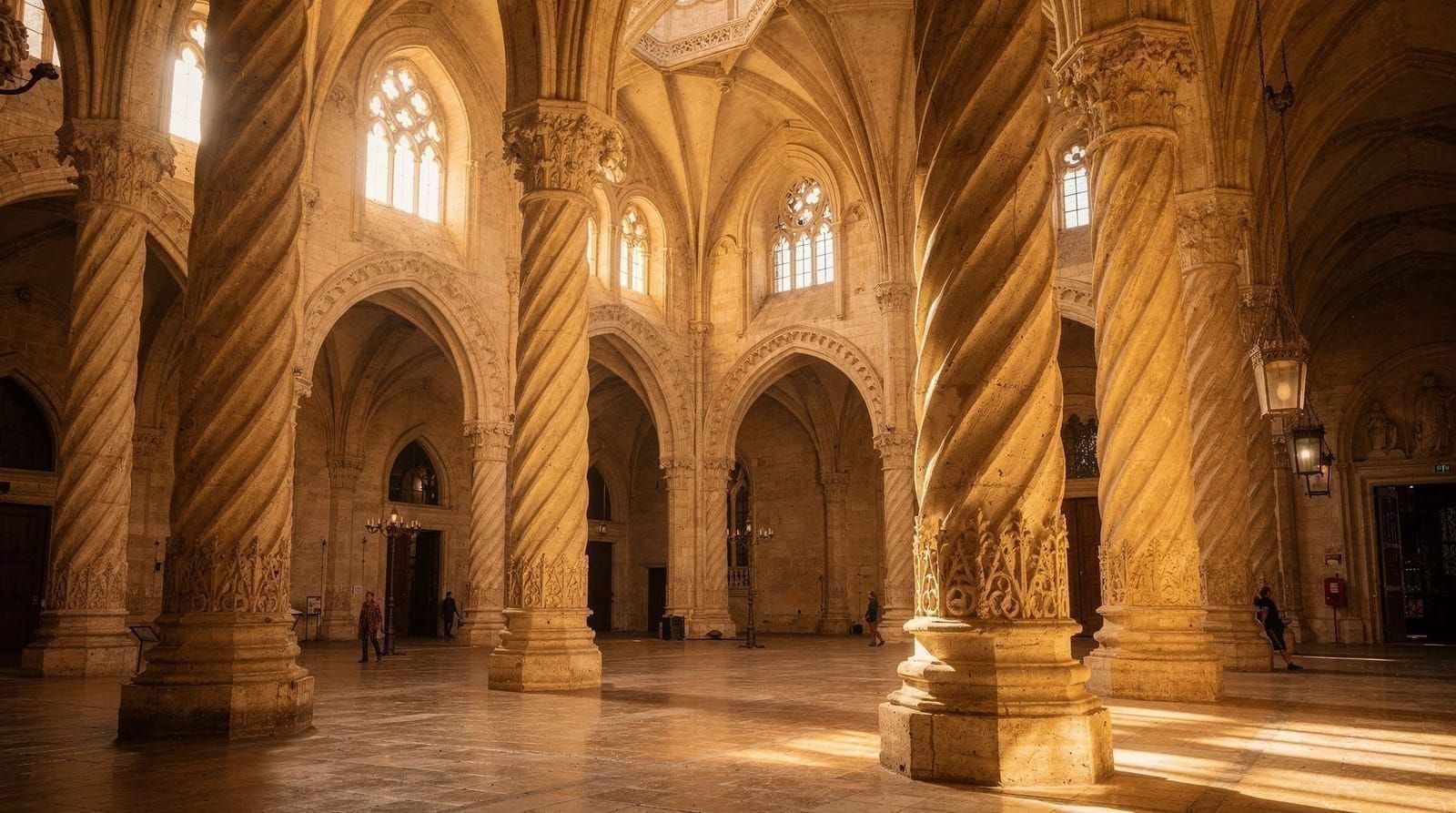
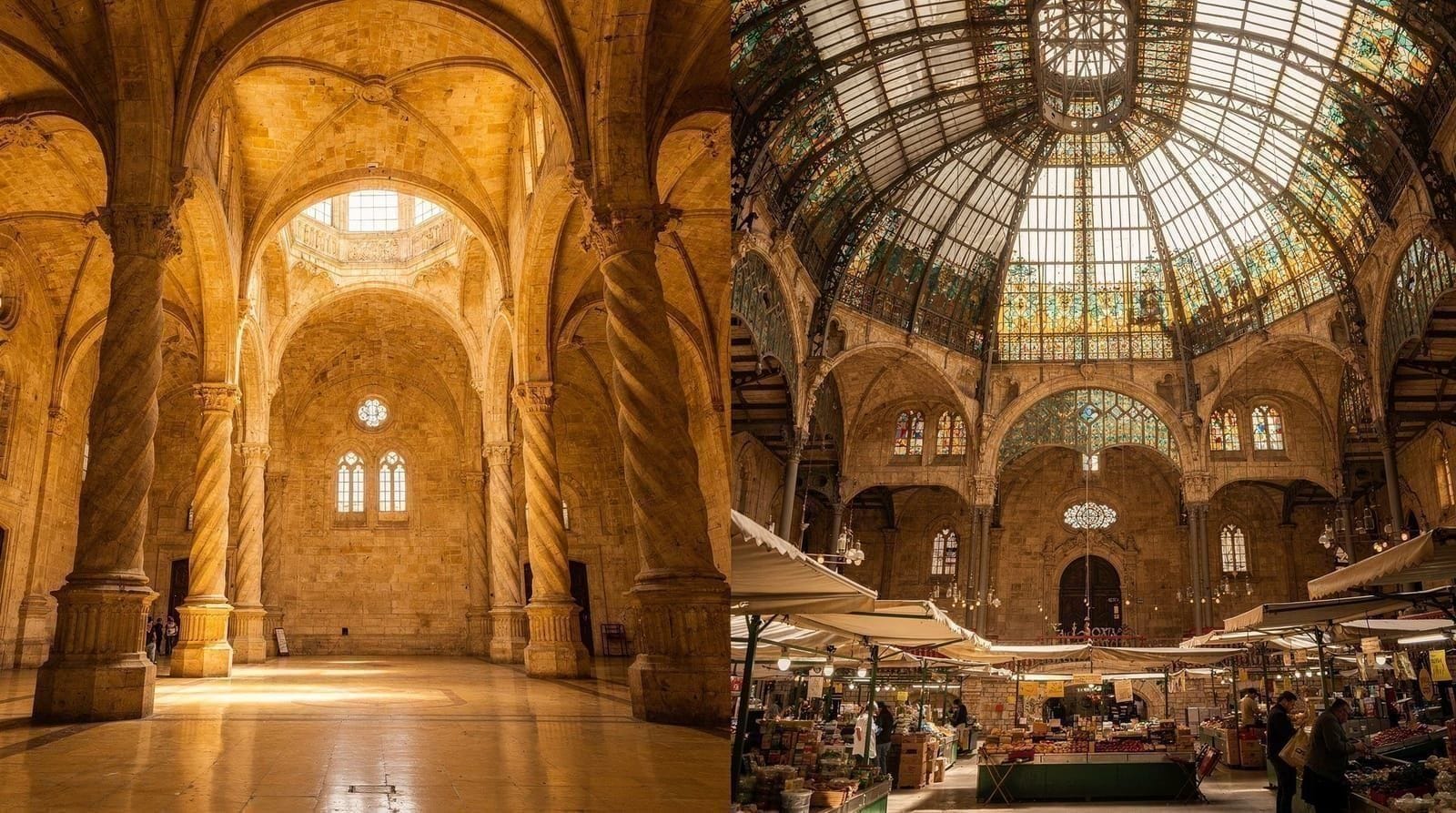
The Lonja is the most significant building produced by the silk trade and Valencia’s only UNESCO-listed architectural heritage site. The trading hall (Sala de Contratación) with its twisted helical columns was the commercial heart of the medieval industry — the place where wholesale silk contracts were made official.
Full visiting information: La Lonja de la Seda guide.
- Address: Plaza del Mercado (facing the Mercado Central)
- Price: €2 (free Sundays)
- Hours: Monday–Saturday 10:00–19:00, Sunday and public holidays 10:00–14:00
Silk Road tour with entry to the UNESCO-listed Silk Exchange — 3-hour guided exploration of Valencia’s medieval trading heritage
The Velluters quarter
The Velluters (velvet/silk weavers) quarter occupies the section of El Carmen between Calle del Hospital, Calle de Guillem de Castro, and the city walls. The name comes from the Valencian word for velvet (vellut) — a fine silk fabric that was one of Valencia’s specialties.
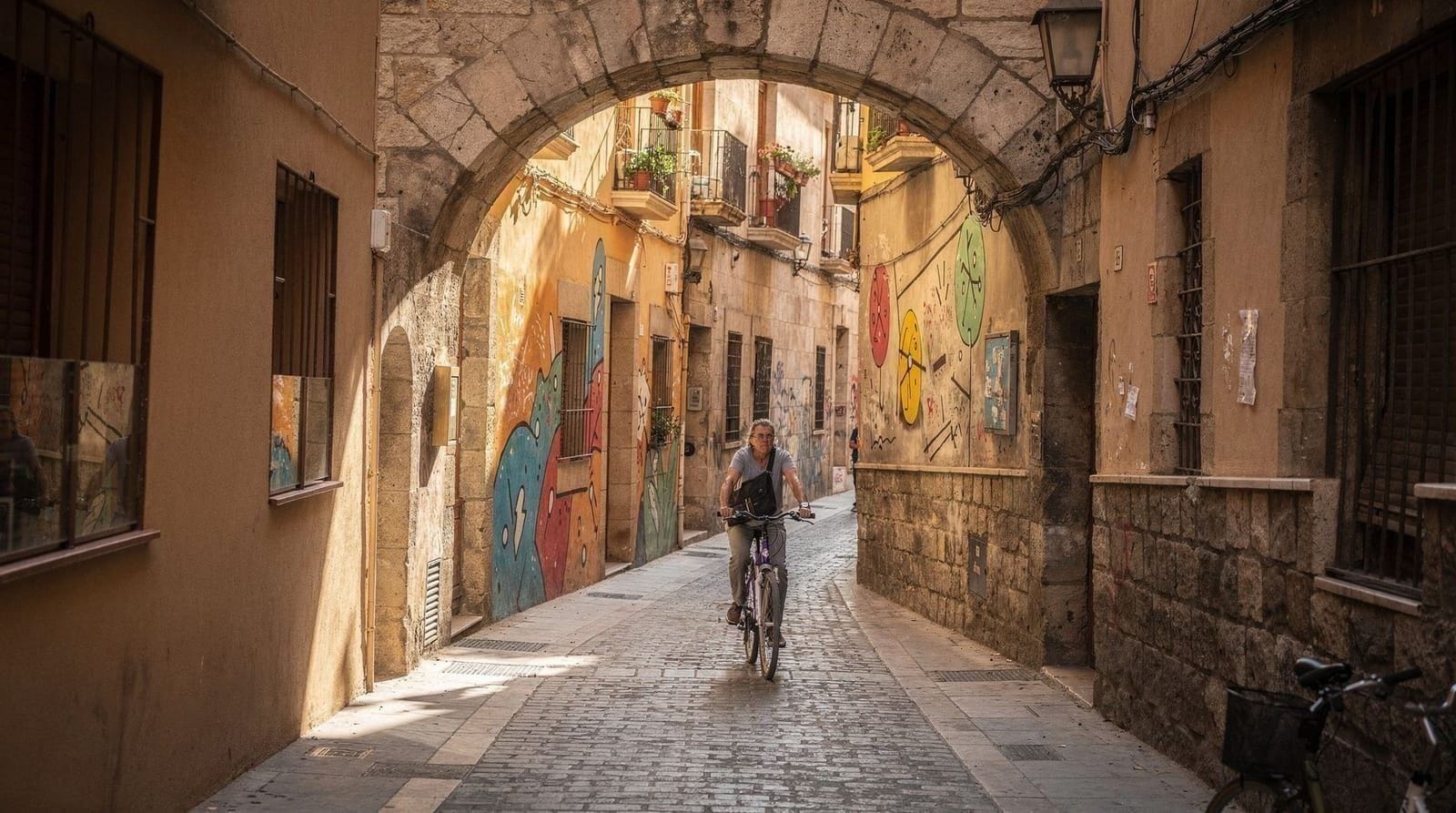
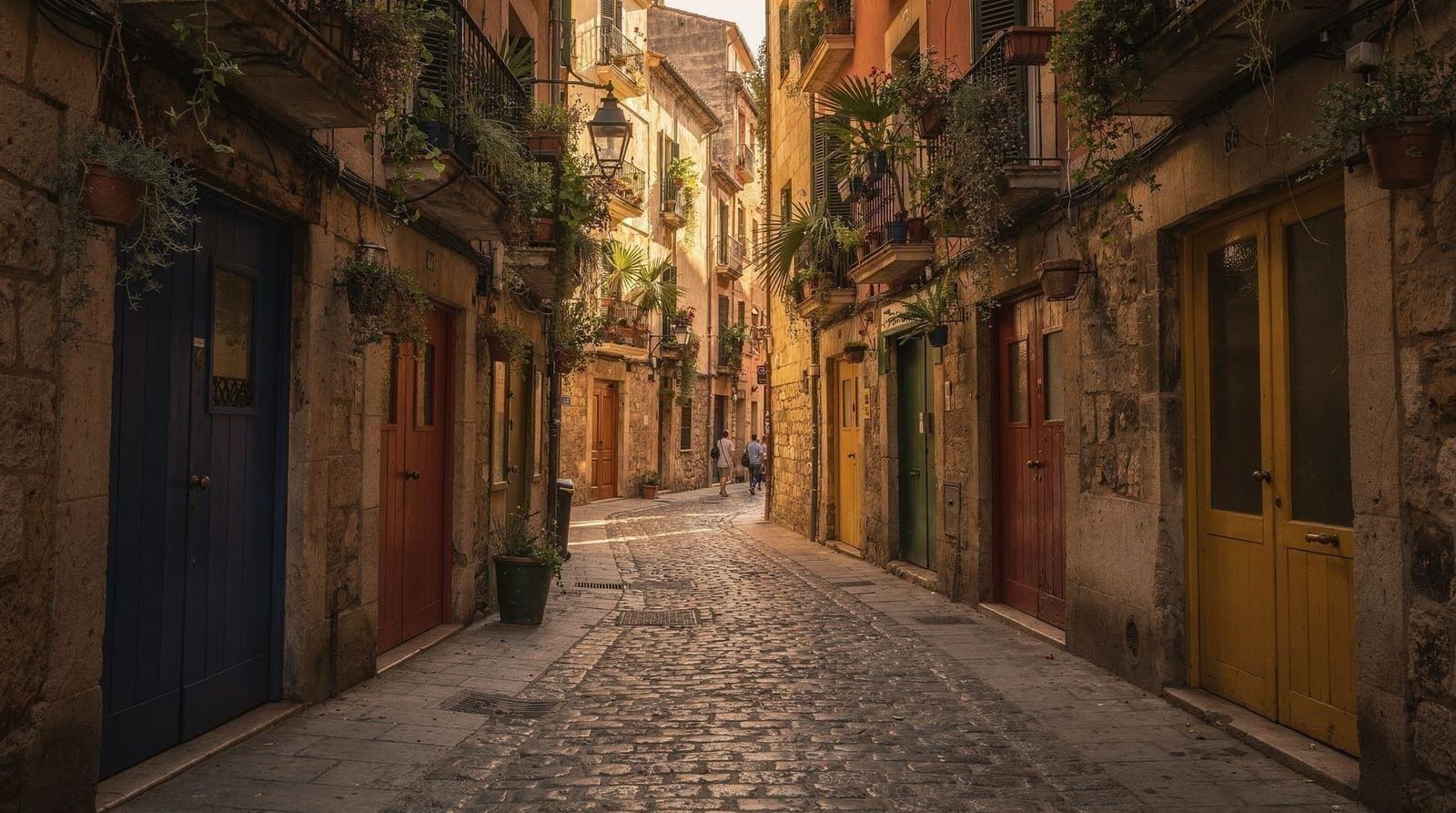
Today the streets here are quiet residential lanes with few tourist markers identifying their historic significance. Look for the width of the streets — narrower and more irregular than the Renaissance grid of the adjacent Eixample, reflecting medieval organic growth. Some buildings retain the large ground-floor openings (now garages or shops) that were originally weaving workshops (obradors), requiring maximum natural light and access for large looms.
The IVAM (Institut Valencià d’Art Modern) is located at the edge of the Velluters quarter on Calle Guillem de Castro — the museum’s building was partly constructed on the site of former silk workshops.
Museu de la Seda (Silk Museum)
The Museu de la Seda de València is housed in the former Casa de Oficios de la Seda (Silk Guild House) on Calle Hospital 7 — a mid-18th-century building in the heart of the Velluters quarter.
The museum’s permanent collection includes:
- Historic Jacquard looms (some operational, demonstrated on request)
- Raw materials: raw silk, cocoons, and processing equipment
- Historical documents including guild regulations and trade records
- Finished textiles: samples of Valencian silk production from different periods
- Audiovisual explanations of the silk production process from cocoon to finished fabric
Practical: Open Tuesday–Saturday 10:00–19:00, Sunday 10:00–14:30, closed Monday. Check the admission price on the museum’s official website. The building’s Baroque courtyard is one of the finest in El Carmen and worth seeing independently of the collection.
The Museu de Belles Arts connection
The Museo de Bellas Artes (Fine Arts Museum, free entry) holds paintings from the period of maximum silk prosperity — 15th and 16th-century altarpieces and portraits that show the textiles (rich brocades, velvets, damasks) that Valencia’s industry produced. The paintings function as a window into the material culture of the period.
Silk Museum and San Nicolás church with audioguide — covers both the silk heritage and Valencia’s finest 15th-century church interior
The silk route as a walking circuit
The physical remains of Valencia’s silk trade are concentrated in a compact area:
Starting point: La Lonja de la Seda, Plaza del Mercado — 45 minutes
Walk through El Carmen to Calle Hospital (10 minutes) — pass through the Velluters quarter’s narrow streets
Museu de la Seda — 45–60 minutes
Continue to the city walls (Torres de Quart, 5 minutes from the museum) — the towers were built partly from tax revenues on the silk trade
Return via Calle Caballeros through the heart of El Carmen to Plaza de la Virgen and the Cathedral — the Cathedral’s Renaissance chapels were financed with silk money
Total circuit: 2.5–3 hours walking plus visit times.
The Silk Road guided tour covers this circuit with a specialist guide and includes Lonja entry.
The broader context: Valencia in the Mediterranean trading network
Valencia’s silk industry was one node in a trading network that connected China’s silk producers to European consumers via the Central Asian Silk Road, the Levantine ports, and then across the Mediterranean. Understanding Valencia’s prosperity requires understanding that it was a maritime commercial city — not primarily an agricultural or military power but a trading centre whose wealth derived from processing and exchanging goods flowing through the western Mediterranean.
This trading identity is what makes the Lonja so significant. The building is not a palace or a church but a market — an institution serving commerce. That Valencia’s city government spent cathedral-level resources on a secular trading hall is a statement about what the city valued.
The UNESCO Valencia guide covers the Lonja’s inscription and its significance in the broader context of Valencia’s World Heritage sites.
What the silk trade tells you about medieval Valencia
The scale of the Lonja is worth pausing on. A civic trading hall built to the standard of a cathedral, funded not by the church or the crown but by merchants, says something specific about how Valencia’s medieval elite understood its own priorities. The Sala de Contratación’s Latin inscription — addressing merchants directly about honest dealing — is a rare surviving example of a secular, commercially-minded civic text from this period, distinct from the religious inscriptions that dominate most surviving medieval buildings in Spain. Reading the Lonja alongside the Cathedral built in the same general era makes the contrast concrete: one building serves God, the other serves trade, and both were built with comparable ambition.
The silk trade’s afterlife in modern Valencia
Although commercial silk production ended in the 19th century, its influence persists in ways many visitors miss. The traditional Valencian dress worn during Las Fallas — richly embroidered and structured — uses silk and silk-adjacent fabrics manufactured according to techniques descended directly from the Velluters workshops. Some of the region’s remaining specialist textile artisans supply this festival market specifically, which is one of the few places the historic craft survives as a living, commercially viable trade rather than as a museum display. It is worth remembering this connection when watching an Ofrenda de Flores procession during Las Fallas: the fabric on display has a direct, traceable lineage back to the same Velluters workshops covered on this walking circuit.
Fitting the silk route into a first-weekend visit
For visitors with limited time, the Lonja alone (45 minutes) is enough to appreciate the scale of Valencia’s silk wealth, and it fits naturally alongside a Central Market visit since the two buildings face each other across the same square. The full circuit including the Museu de la Seda and the Velluters walk is better suited to a second or third day, once the headline sights of El Carmen are covered. See the first weekend in Valencia itinerary for how this fits alongside the Cathedral and old town.
Reading the old town as a silk landscape
Once you know what to look for, the historic centre stops being a collection of separate monuments and becomes a single commercial machine. Raw material came in, was traded under supervision at the Lonja, was worked in the Velluters workshops, and left again through the port. The streets between these points were the working arteries of that system. If you stay in the area, our El Carmen neighbourhood guide and the wider Ciutat Vella destination page show how much of that fabric is still intact. For choosing where to base yourself, the best area for first-time visitors page explains why the old town works so well for a heritage-focused stay.
The same logic explains why so many of the city’s most beautiful buildings stand within a short walk of each other. Wealthy merchants and guilds wanted to be near the exchange, and they paid for churches, hospitals and civic buildings that reflected their status. The Holy Grail and Cathedral guide and the Fine Arts Museum guide both pick up threads of that same patronage, while the Modernisme guide shows how a later generation of Valencian builders returned to ornament and craft as a point of civic pride.
Choosing between a guided tour and walking it yourself
The circuit is easy to follow alone, because the sites are close together and the route is a simple loop. What a guide adds is context: someone who can point to a doorway or a street width and explain what it meant for the weavers who worked there. If you like to be told the story as you walk, a specialist-led historical walking tour of the old town places the silk story within the larger history of the city. Our guided versus self-guided comparison helps you decide which style suits you, and the free walking tours guide lists lower-cost ways to get an orientation before you explore the silk sites on your own.
If you prefer to go independently, read the history section of this page first, then let the buildings do the talking. The Torres de Serranos and Quart towers guide and the Serranos and Quart towers overview are useful companions, since the old walls frame the edge of the weavers’ district.
Making the most of your time
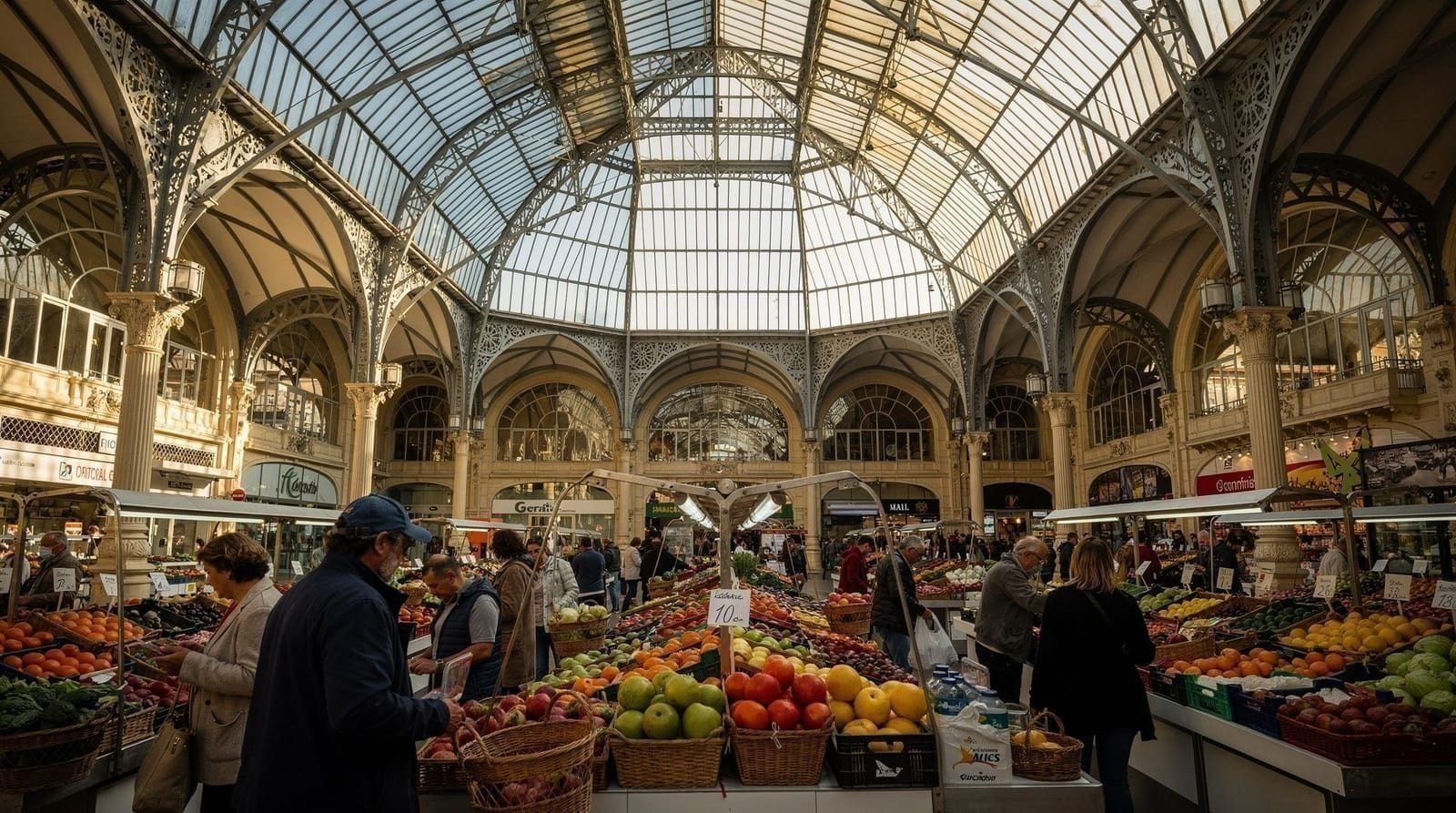
The silk route pairs well with other old-town sights, so it rarely needs a day of its own. A sensible approach is to combine the Lonja with a food stop at the market opposite, then use the afternoon for the quieter Velluters streets. The Central Market food guide will help you plan that stop, and the Mercado Colón guide suggests an alternative if you want a calmer setting later in the day.
If your trip is short, the one day in Valencia itinerary shows where a short silk stop can fit, while the 3 days in Valencia itinerary leaves room for the full circuit at an unhurried pace. Not sure how long to stay? The how many days in Valencia page covers that question. Because everything on the route is close together, you rarely need transport; for the occasions you do, the metro and EMT guide explains the options.
Heritage fans on a budget should also look at the museums with free entry on Sundays guide, and anyone weighing a pass can read the tourist card verdict before paying for entries that may not be worth it for a short visit.
Looking beyond the museum: street life in the old quarter
Part of the pleasure of this route is what sits between the headline stops. The lanes of the old quarter are lived-in, and a slow pace shows you small details: carved doorways, shuttered workshop openings, and the way light falls into a narrow street. The street art in El Carmen guide shows how contemporary murals now sit alongside these historic frontages, which makes for a surprising contrast on the same walk. If photography is your interest, the photography tours guide covers organised ways to capture the old town, and the night tours guide is worth a look if you would like to see the same streets after dark.
For a broader sense of how these traditions continue, the Valencia festivals calendar shows the moments in the year when traditional dress and craft are most visible. If the weather turns, the heritage sites on this route are a sound plan for a wet day, and the rainy day ideas guide has more indoor options to combine with them.
Frequently asked questions about The silk route in Valencia
What was the historic silk route in Valencia?
Valencia's silk trade was part of the broader Mediterranean silk network connecting China and Central Asia (the ancient Silk Road) to European consumers. Raw silk arrived in Valencia via Granada, Murcia, and Mediterranean trading routes; it was spun, dyed, and woven in Valencia's specialist workshops (particularly in the Velluters quarter of El Carmen); and finished silk goods were exported across Europe through Valencia's port and the Lonja trading system. At its peak in the 15th–16th centuries, Valencia was one of the major silk-finishing centres of the western Mediterranean.What is the Velluters quarter and can I visit it?
The Velluters (velvet makers / silk weavers) quarter is a section of the El Carmen neighbourhood where silk weavers were concentrated in the medieval and early modern period. Today it is part of the residential Barrio del Carmen, with narrow streets preserving the scale of the historic workshops. The Museu de la Seda (Silk Museum) is located here in the former Casa de Oficios de la Seda (Silk Guildhall), with preserved looms and textile collections.What is the Museu de la Seda and is it worth visiting?
The Museu de la Seda de València (Silk Museum) is housed in the 18th-century Casa de Oficios de la Seda on Calle Hospital. It displays historic silk looms (some still operating), raw materials, historical documents about the silk trade, and finished textiles. It is a specialist museum — best for visitors with an interest in craft history or textile heritage. The building's Baroque courtyard is worth seeing in its own right.How does the Lonja de la Seda relate to the silk trade?
La Lonja de la Seda was built specifically as the trading hall for Valencia's silk industry — the place where wholesale contracts for silk were negotiated under legal supervision. The inscription running around the upper walls of the Sala de Contratación (in Latin) addresses merchants directly, advising honest trade. The building is the physical embodiment of the silk industry's prosperity and civic ambition.Is the silk industry still active in Valencia?
Commercial silk production in Valencia essentially ended in the 19th century. There are a small number of artisan silk weavers in the region preserving traditional techniques, primarily producing textiles for festival use (Las Fallas traditional dress, for example, uses silk). The Museu de la Seda supports these artisan traditions.Can I buy silk textiles in Valencia?
Traditional Valencian silk textiles are available from specialist shops in the old town — primarily the formal silk used in traditional Valencian dress. These are expensive (traditional fallera dress uses significant quantities of silk and embroidery). For more accessible silk items, artisan markets and specialist textile shops in El Carmen carry limited stock.How does Valencia's silk history compare to other European silk cities?
Lyon (France) was the dominant silk centre in early modern Europe; Florence, Genoa, and Venice were also major players. Valencia's peak preceded most of these by a century or two — Valencia was more important in the 15th century than the 17th, when Lyon and the Italian cities dominated. The Lonja reflects this early peak: it is a late 15th-century building at the height of Valencia's commercial power.
Top experiences
Bookable activities with verified prices and instant confirmation on GetYourGuide.