Valencia Central Market: honest visitor and food guide
Valencia: daytime tapas tasting tour with Central Market visit
Duration: 3 hours
What is the best time to visit Valencia's Central Market?
Arrive between 09:00 and 10:30 for the best atmosphere and full stalls. The market closes at 15:00 Monday–Saturday and does not open on Sundays. Afternoons are quiet and many stalls close early. The market is also a working food market — buy ingredients, not just souvenirs.
The Mercado Central is both a working food market and a listed architectural monument, and the balance between these two identities has been strained in recent years by tourism. Between 08:30 and 10:00 on weekday mornings, it still functions primarily as a place where Valencia residents do their weekly shopping. By 11:30 on a summer Saturday, tourist groups substantially outnumber local shoppers in the central aisles. The honest visitor strategy is to arrive early, buy real food, and resist the tourist-facing smoothie stands.
| Where | Plaça de la Reina i Mercado, old city |
| Cost | Free entry; budget €15–30 cash for shopping |
| Time needed | 30–60 minutes, longer with breakfast at the counter |
| Getting there | Xàtiva metro, 10 min walk |
| Best time | Weekday mornings, 09:00–10:30 |
The building
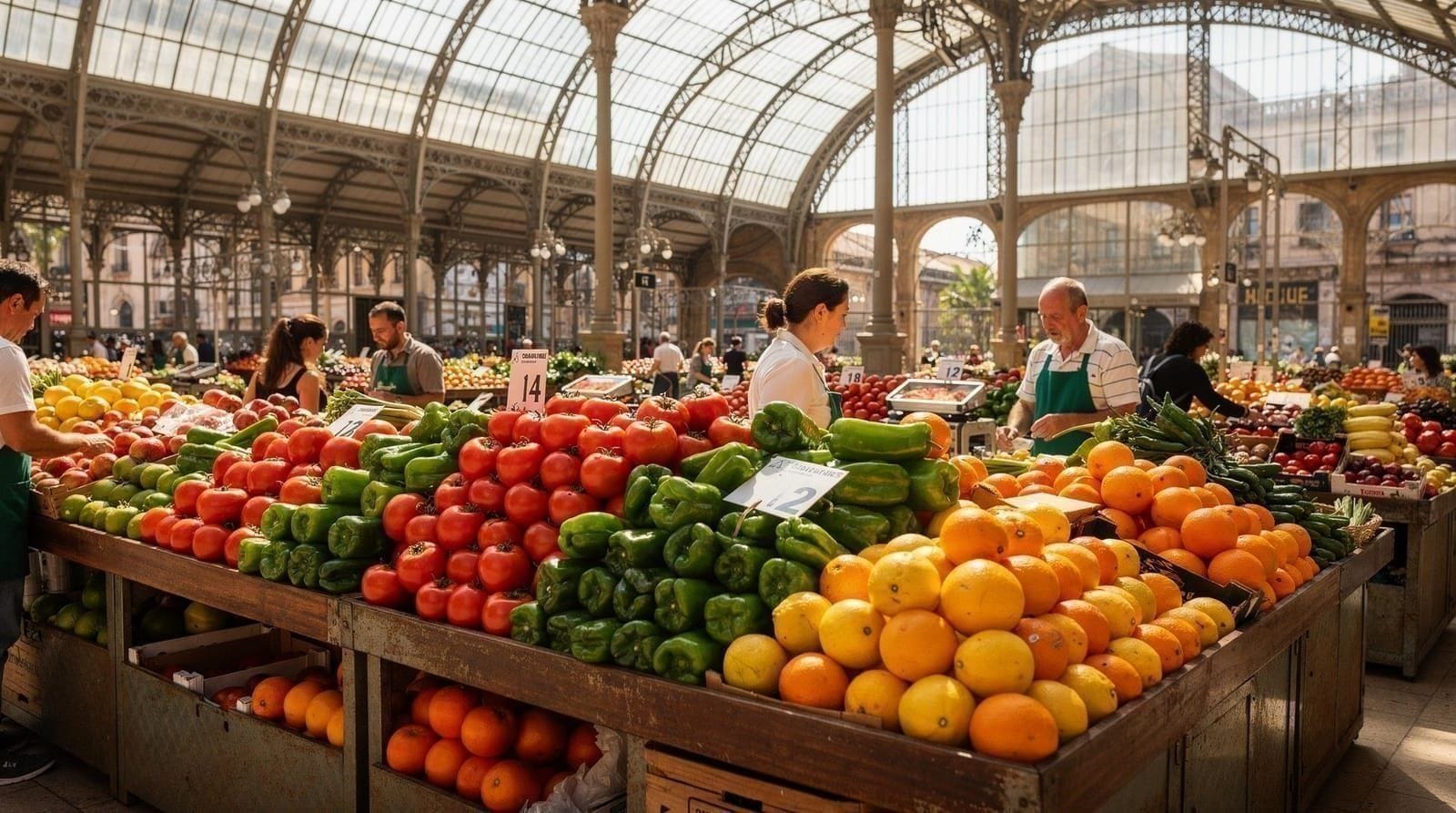
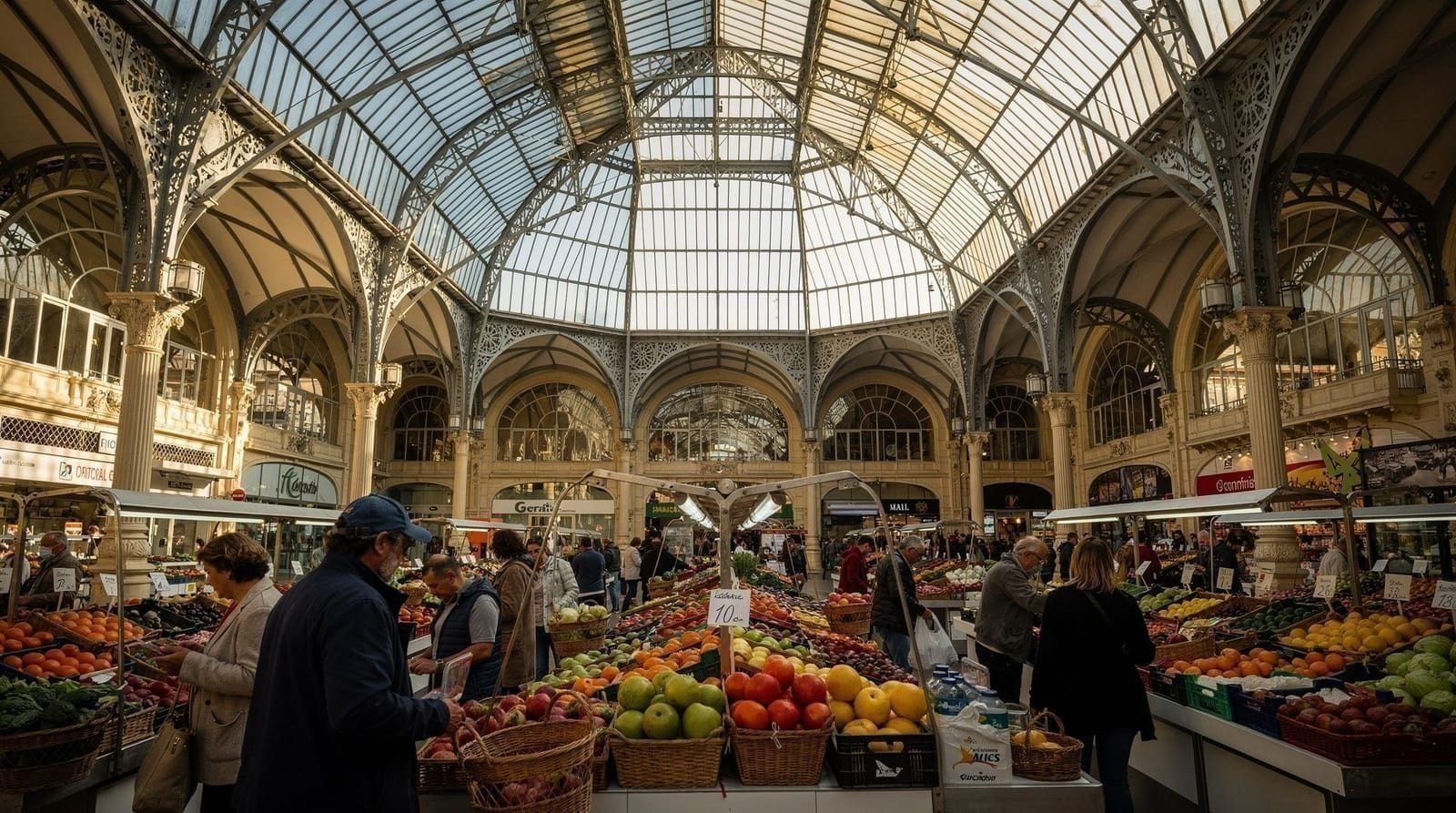
Valencia’s Mercado Central opened in 1928 after 11 years of construction. The architects Francesc Guàrdia and Alexandre Soler built it in Valencian Modernisme style — the Catalan/Valencian variant of Art Nouveau — with an elaborate iron and glass roof structure, two large ceramic-tiled domes, and stained glass in the upper windows that turns the light inside amber and green on sunny mornings.
The central dome rises 30 metres and is decorated with tiles depicting fruits and vegetables in deep blues and yellows. The octagonal apse at the north end of the building is the oldest section, and its proportions are more cathedral-like than market-like — deliberate, according to the original architects, who wanted to create a space that gave food shopping a dignity appropriate to its importance.
The exterior faces Plaza del Mercado and directly confronts La Lonja de la Seda — one of the great urban pairings in Spanish architecture, a 15th-century UNESCO Gothic trading hall facing a 20th-century Modernista market.
How the market is organised
The market is roughly divided by category:
- Fresh produce (fruit, vegetables, herbs): concentrated in the centre and northern sections. The chufa (tiger nut) stalls are near the Calle de Saragossa entrance — chufa is the raw ingredient for horchata, and buying it fresh to make your own is a worthwhile purchase.
- Fishmongers: the east and northeast sections have the densest concentration of pescadería stalls. The variety is wide — Valencian coast seafood including clams, sea urchin, red mullet, spider crab, and the small fish typically used for caldero or all i pebre.
- Butchers and charcutería: the south and west sections. Jamón ibérico from Salamanca and Huelva is well-priced here compared to tourist-facing shops; whole legs on display, sold by weight.
- Cheese and delicatessen: several stalls carry Manchego at different ages, Valencian artisan cheeses, and preserved foods.
- Central bar area: the cluster of counter seating and espresso bars near the centre of the building — excellent coffee, pan amb tomàquet, and small bocadillos.
A useful way to read the layout is to treat it as a loop rather than a grid. The aisles radiate around the central dome, so you can walk a full circuit without doubling back, and the stall types repeat often enough that you can compare two or three fishmongers or two or three jamón counters before you commit. If you want a second opinion on what is worth tasting, the dedicated Central Market food guide goes stall by stall, and the wider guide to Valencia’s food markets shows how this one sits next to the neighbourhood markets and the more polished Mercado de Colón.
What to buy, honestly
Tiger nuts (chufa): Valencia’s chufa — the tuber that gives horchata its flavour — is grown exclusively in the Valencia huerta around Alboraia. Buying a bag of fresh or dried chufa is an authentic and practical souvenir. The stalls near the north entrance sell it in 500g and 1kg bags; at markets outside Spain you would pay five times this price for inferior imported product.
Blood oranges (taronges de sang) and navels: Valencia’s oranges are in season from November to March. The blood orange season is shorter — January to February. Eating a fresh Valencia orange in Valencia in January is significantly better than eating one in London in January that was harvested the same morning.
Jamón ibérico de bellota: The quality range and price range are both wide. A reliable approach is to ask for a thin slice of a specific leg before committing to a purchase — most stalls will cut one. Price per kilogram for genuine bellota (acorn-fed) jamón ibérico is around €60–90. The lower-priced product in tourist-facing stalls is often cebo (grain-fed), which is fine food but not the same thing.
Saffron (azafrán): Real Spanish saffron is among the world’s best and is grown in the Castilla-La Mancha region (not Valencia, despite what some stalls imply). A small glass vial of genuine saffron from a trusted stall costs €8–15. Anything advertised as “Spanish saffron” for €2 at a tourist-facing stand is not saffron.
What not to buy at inflated tourist prices: Paella seasoning mixes in tourist packaging, olive oil in decorative bottles, anything in packaging that says “Valencia Authentic” in capital letters.
The smoothie trap
Near the main entrances on Plaza del Mercado, a cluster of stalls sell fresh-squeezed orange juice and tropical fruit smoothies at €7–10 per cup. These are excellent drinks at three times the price you would pay at a non-tourist stall 50 metres inside the market. This is one of the most discussed tourist traps in Valencia — the stands are attractive, the juice is genuinely good, and the price is reliably higher than identical products sold by the actual fruit stalls deeper in the building.
If you want fresh-squeezed orange juice at a Valencian price, walk to one of the produce stalls in the fruit section and ask them to juice three or four oranges. They will do it, it will cost €2–3, and the oranges will be the same ones grown 20 km from where you are standing.
Eating at the market
The central bar area provides one of the authentic Valencian breakfast experiences. Counter seating, strong espresso, a glass of horchata, or a bocadillo de jamón eaten standing at a marble counter while the market hums around you — this is how many Valencians start their working day and it is entirely accessible to visitors.
The bar Kiosco Central, near the centre of the building, is the most photographed of the market bars. It is reliably good. Arrive before 10:00 for the best chance of a counter seat.
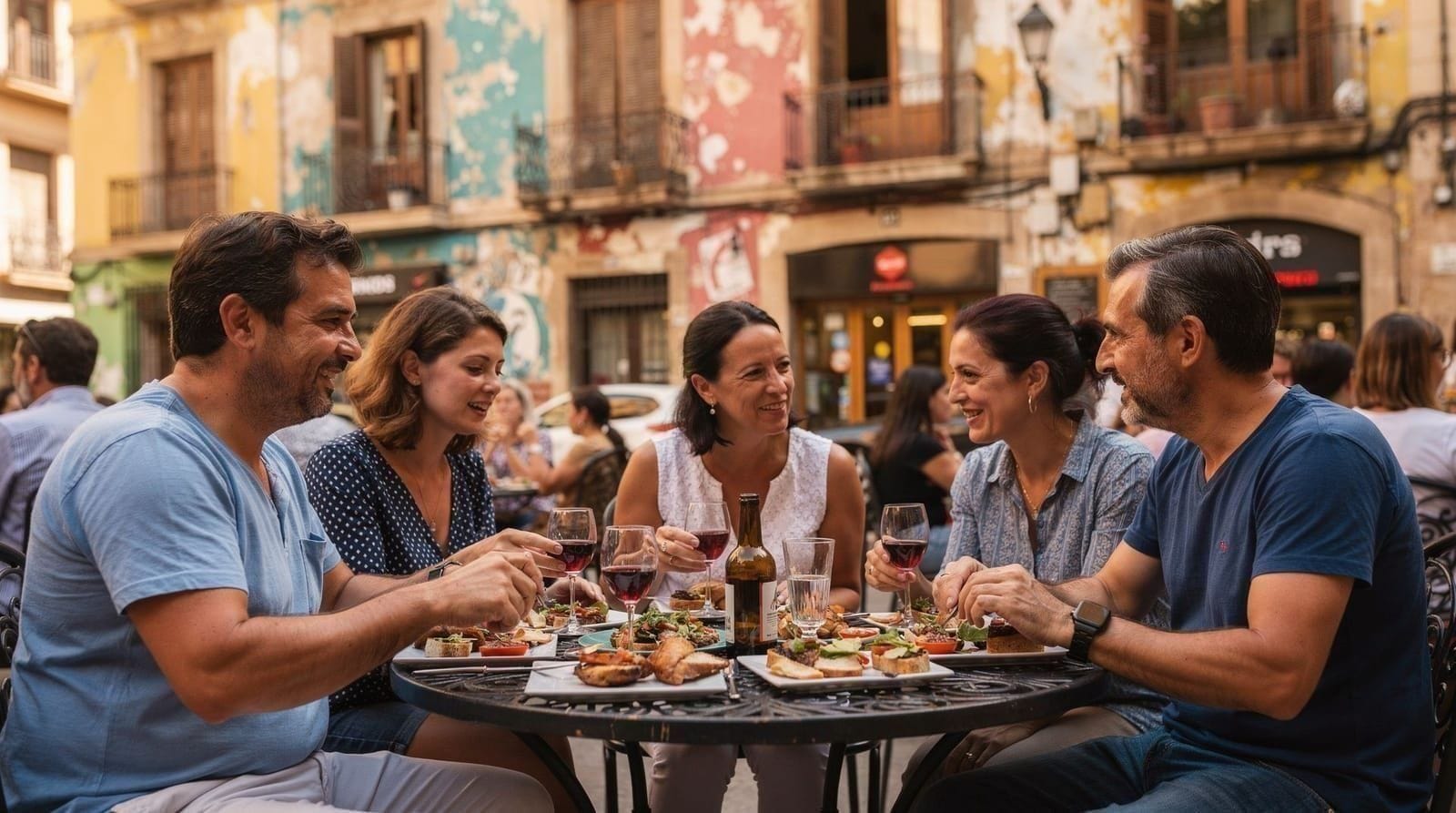
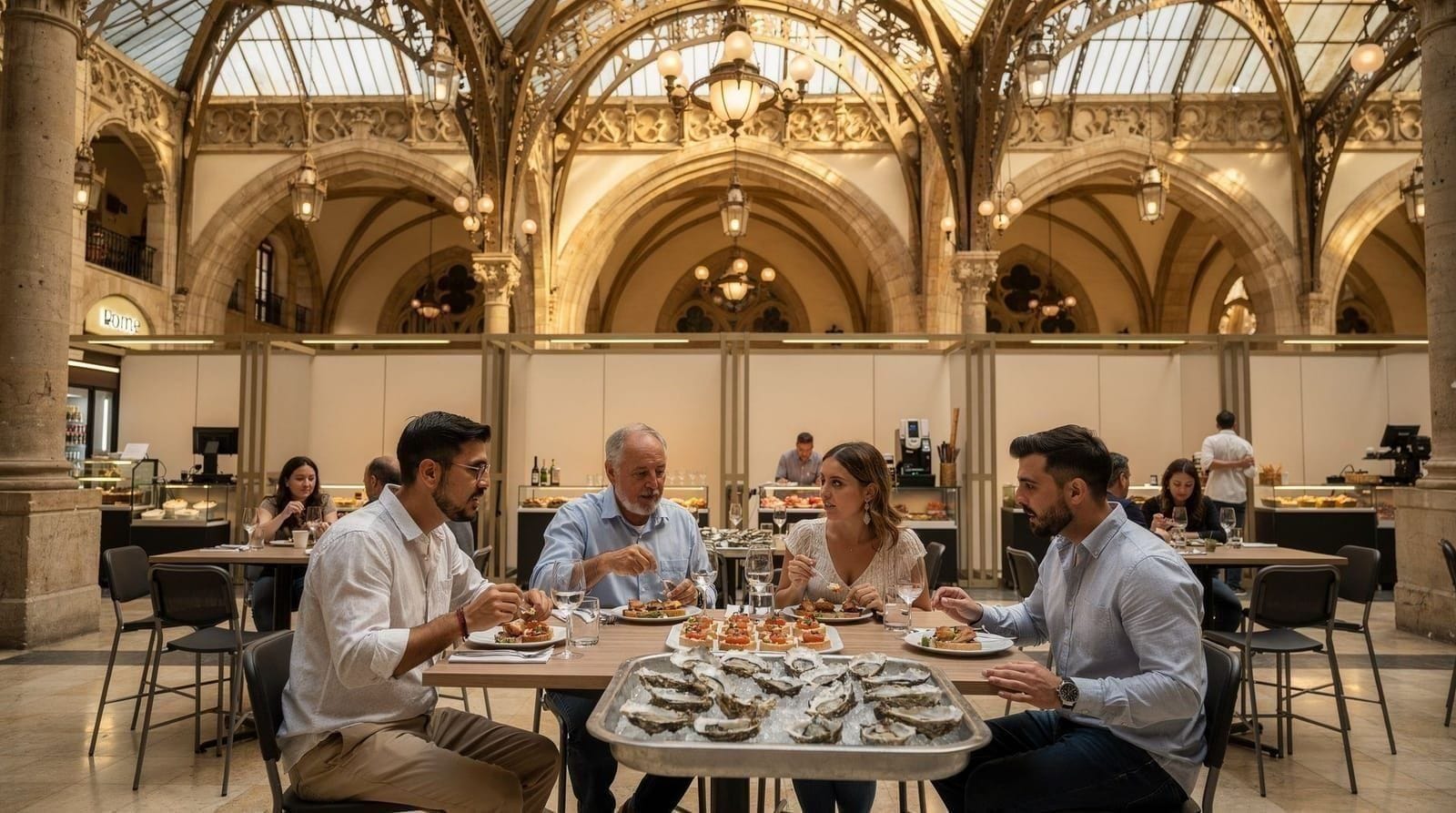
For a more structured food experience with context and multiple tastings, the morning food tour that uses the market as its anchor is one of the best guided food activities in Valencia. It is not a replacement for independent exploration but it provides a Valencian expert to explain what you are eating, where it comes from, and what to avoid.
 daytime tapas tasting tour with Central Market visitCheck availability
 tapas tour — market, history and local bitesCheck availability
Breakfast the Valencian way
Breakfast at a market counter is a small ritual with its own vocabulary. Locals talk about the esmorzaret or almuerzo, a mid-morning bocadillo with a drink that is closer to a second breakfast than a snack; the esmorzaret guide explains how it works and what to order. If you would rather have something sweet, pair a glass of horchata with fartons, the soft sugar-glazed pastries made for dipping, as described in the horchata and fartons guide. Either way, you are eating what the people around you are eating, which is the whole point of choosing the market over a café on the square.
Bring cash for the small purchases, keep your bag zipped and in front of you in the busiest aisles, and read the pickpocket and safe areas guide if you want to know what to watch for around the old city on a crowded morning.
From market ingredients to a proper paella
Browsing the stalls makes it obvious why a good paella depends on ingredients rather than technique alone. The rice, the beans, the rabbit and the chicken are all on display, and the saffron conversation at the spice stalls is a quick lesson in why cheap shortcuts show in the pan. When you are ready to eat the dish rather than shop for it, the guide to ordering paella and the list of where to eat authentic paella will keep you away from the restaurants that trade on the market’s reputation without using its produce. The paella traps guide and the tourist menu traps guide cover the warning signs near the square, and the paella versus fideuà comparison is worth a read if you are unsure which of the two to try. For a calmer lunch plan, the menú del día guide explains how locals eat well at a fixed price once the market has closed for the day.
Paella cooking class with market visit
Some of the city’s best paella cooking class operators begin at the Central Market, selecting ingredients with the class group before heading to a kitchen for the cooking session. This two-stage approach gives you both the market experience and a practical cooking lesson. The morning commitment is typically 4 hours.
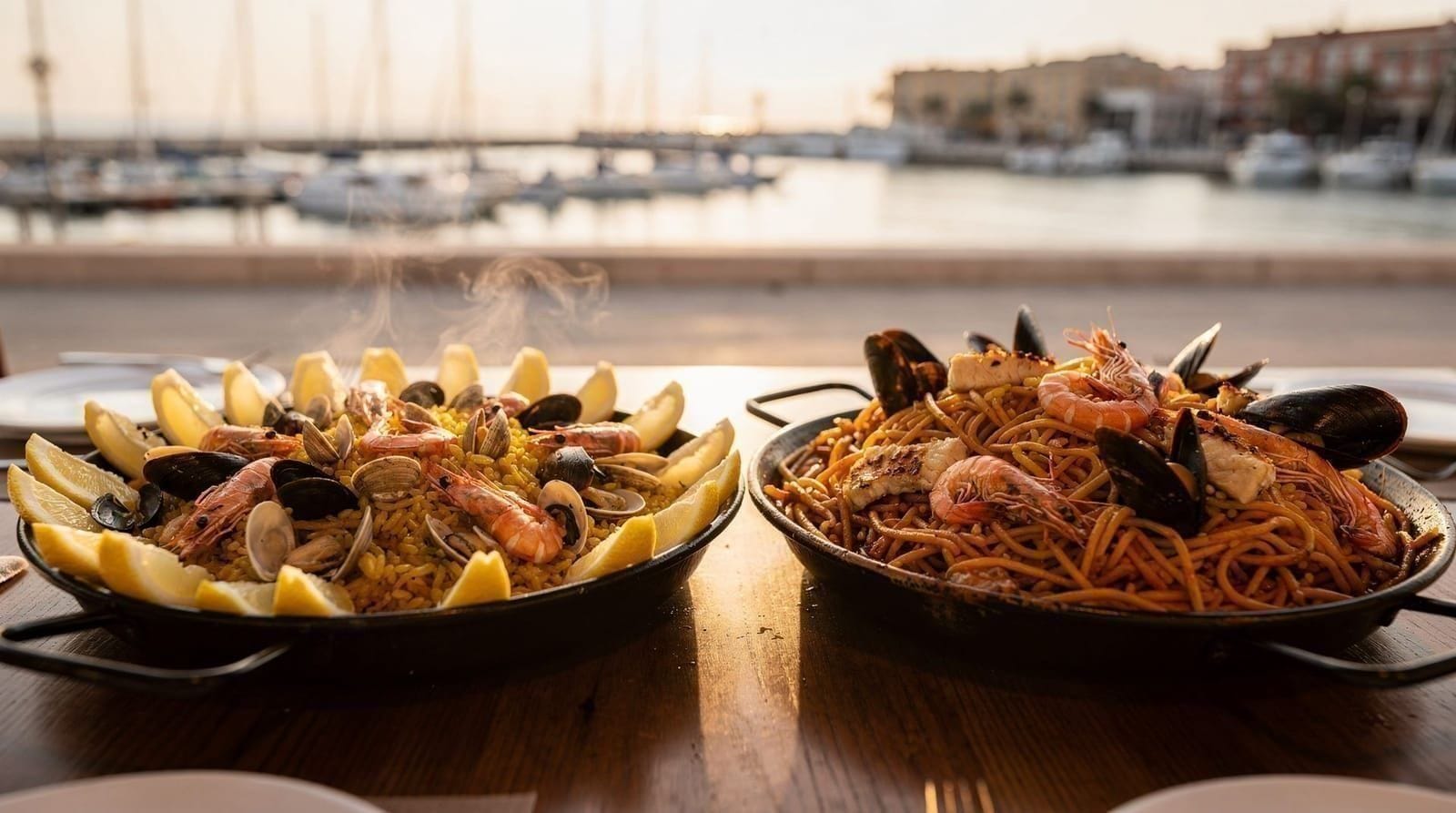 paella cooking class with Central Market tourCheck availability
Central Market vs. Lonja de la Seda: order of visit
| Central Market | La Lonja de la Seda | |
|---|---|---|
| Character | Loud, working, free | Quiet, contemplative, ~€2 entry |
| Best time | 09:00–10:30 | Right at opening or late afternoon |
| Time needed | 30–60 min | 30–45 min |
| Pair order | Second (after Lonja) | First (before the market fills) |
Visiting the Lonja first, while it’s still calm, then crossing the square to the market for breakfast once the stalls are in full swing, is the order that works best logistically — you get the contemplative space before the crowds and the market at its liveliest.
Connecting your visit
The Central Market and La Lonja de la Seda are the best argument for a morning in Valencia’s historic commercial district. From the market, the Cathedral and Miguelete tower are 8 minutes north on foot. The Barrio del Carmen begins 3 minutes north — the street art, Roman archaeology, and medieval street plan of El Carmen are a natural continuation of a morning that starts at the market.
For afternoon food: the Russafa neighbourhood, 20 minutes south by foot, has the best concentration of authentic restaurants in the city. See the Russafa guide and the tapas in Russafa guide.
For planning a complete food-focused day, the Valencia food itinerary connects the Central Market with paella lunch, afternoon horchata, and evening tapas.
Shopping like a local: a short route
For a first visit that mimics how a Valencian resident actually shops, a practical route works well: enter from Plaza del Mercado, head first to the produce section for whatever looks best that day rather than a fixed shopping list, stop at the chufa stalls near the north entrance if horchata ingredients interest you, then work toward the central bar area for a coffee once the shopping is done. Resist the urge to buy at the first stall you see — prices and quality both vary more than the uniform-looking stalls suggest, and a short walk deeper into the building consistently pays off, whether for saffron, jamón, or fruit. For a broader sense of Valencian food culture beyond this one market, the Valencia food itinerary and the Russafa tapas guide extend the theme into a full day.
Fitting the market into a longer trip
The market works as an anchor for a morning whether you have one day or several. If you are short on time, the one day in Valencia itinerary slots a market visit into a compact route, while the three days itinerary leaves room to return for a second, slower browse. If you are still deciding how long to stay, the guide on how many days to spend in Valencia helps you decide, and the best time to visit page explains how the season changes what is on the stalls. To place the market in its historic setting, the Valencia Modernisme guide and the silk route guide tie the building and the Lonja into the wider story of the city’s commerce, and the UNESCO guide covers the heritage listing of the Lonja across the square. For getting around afterwards, the metro and EMT guide covers the practical side, and the eat like a local guide carries the same approach into the rest of your meals.
Practical notes
Photography: The market is one of the most photographed interiors in Valencia. The morning light through the dome tiles is spectacular between 09:00 and 11:00. Photography for personal use is fine; commercial photography requires a permit from the market administration.
Accessibility: The main entrances are step-free. The interior is wheelchair accessible, though some stall areas are narrow during peak hours.
Parking: There is no practical parking near the market. Take metro (Xàtiva station, 10 minutes’ walk) or bus.
Children: The market is generally a good experience for children who are engaged with food. The fishmongers’ stalls, with live seafood in some cases, tend to produce strong reactions. The central bar area can be crowded and loud during peak hours.
The Mercado Central is at Plaça de la Reina i Mercado — easily findable in any navigation app. It is open every weekday and Saturday morning, and the architecture alone is worth a visit even if you buy nothing.
Frequently asked questions about Valencia Central Market
What are the opening hours of the Mercado Central?
Monday to Saturday 07:30–15:00. Closed Sundays and public holidays. Individual stallholders set their own hours — most fresh produce stalls are at full capacity from 08:30 to 13:00.Is the Mercado Central free to enter?
Yes, entry is free. You pay only for what you buy. The architecture alone justifies a visit — the Art Nouveau ironwork, tiled domes, and stained glass are among the finest in Spanish market architecture.What should I buy at the Central Market?
Fresh produce: naranjas (blood oranges and navels in season), persimmons, tiger nuts (chufa, the base for horchata), local vegetables from the Valencia huerta (garden). Charcutería: jamón ibérico at competitive prices. At the central bar: a coffee and a pastry standing at the counter.What should I avoid?
The smoothie stands near the main entrances charge €7–10 for fresh fruit juice. The same quality is available at half the price inside the market at non-tourist-facing stalls. Pre-packaged paella spice mixes sold near tourist stalls are overpriced. A bag of saffron for €2 is almost certainly not real saffron.Is there a food tour of the Central Market?
Yes — the morning food tour with Central Market visit is one of the best activity options in the city. It combines 3 hours of guided tastings with context about Valencian food culture that you will not get from simply walking around. Recommended for food-focused visitors.Can I eat inside the market?
Yes. The central bar area has standing and counter seating. Several fishmongers and charcutería stalls will prepare small plates. The atmosphere of eating at a market counter is one of the authentic Valencia experiences worth seeking out.How large is the Mercado Central?
The building covers 8,000 m² and houses around 1,200 stalls, making it one of the largest covered food markets in Europe. Built in 1928 in Art Nouveau Modernista style, with a central dome 30 metres high tiled in ceramic, it is also an architectural landmark in its own right.Is there paella at the Central Market?
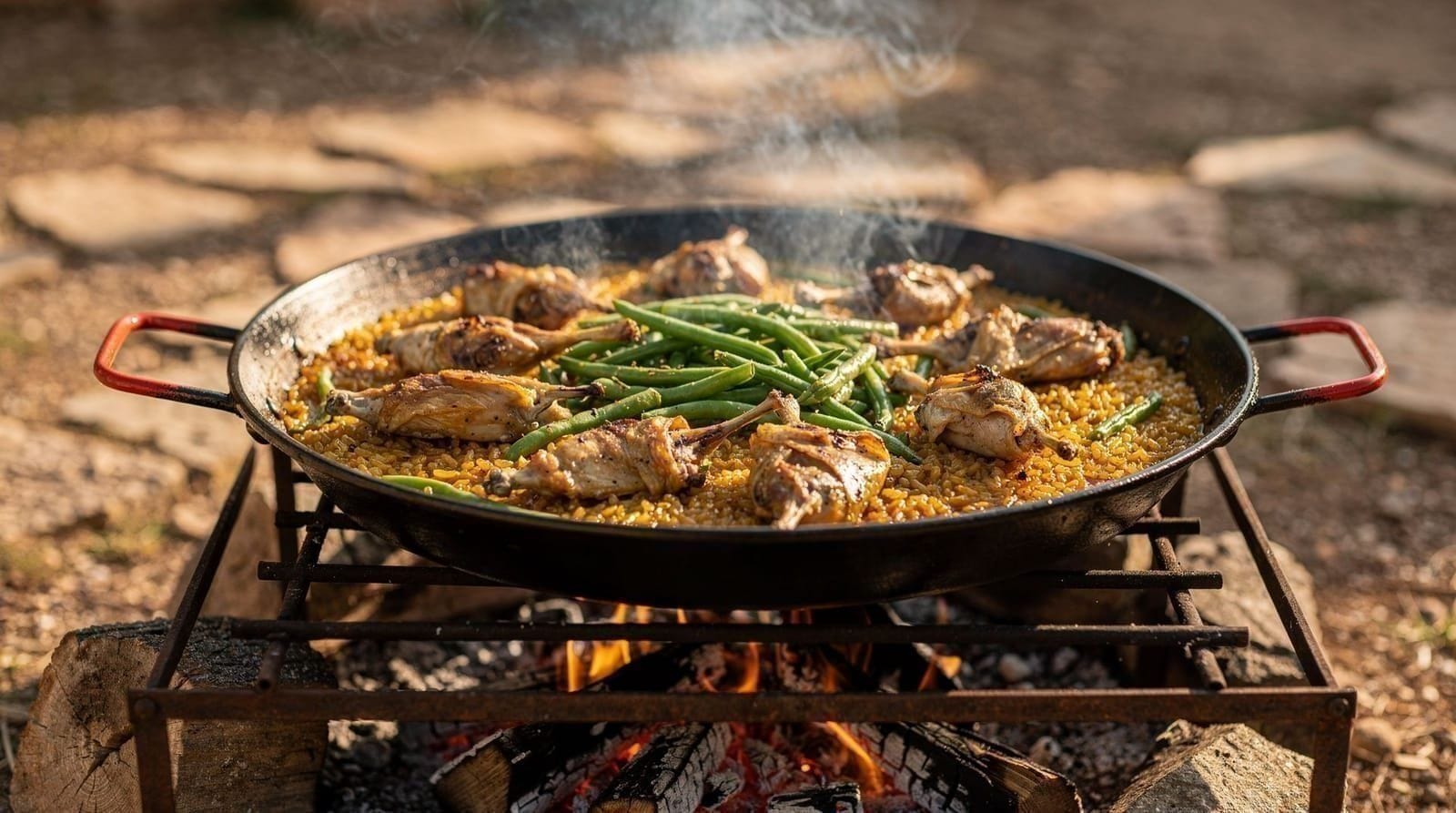
No hot paella is sold inside the market — the market is for raw ingredients. You can buy all the ingredients for a paella (Valencian rice, rabbit, chicken, flat green beans, garrofons) from market stalls. For cooked paella, the nearby restaurants use market-sourced ingredients — but vet them carefully (see tourist traps section).How does the Central Market compare to visiting the Lonja de la Seda?
They pair naturally and sit directly across the square from each other. The Lonja is a 15th-century Gothic silk exchange, quiet and contemplative, with an entry fee of around 2 euros; the market is loud, working, and free to enter. Visiting both in one morning — Lonja first while it is calm, market second for breakfast — is the efficient order.Is the Central Market open on public holidays?
No, it follows the same closure pattern as Sundays on official Valencian and national holidays. If your visit falls on a holiday, check the Ajuntament de València calendar in advance, since several fall during Fallas week in March, when much of the surrounding old city is also on a modified schedule.
Top experiences
Bookable activities with verified prices and instant confirmation on GetYourGuide.