The menú del día in Valencia — how to eat well for 12-16€
Valencia: Secret Food Tours — 10 tastings
What is a menú del día and how much should it cost in Valencia?
The menú del día (daily set lunch menu) is a full three-course meal — starter, main course, dessert, bread, and often a drink — offered Monday to Friday at lunch. In Valencia, a genuine menú del día costs 12-16€. Near Plaza de la Reina and the cathedral, tourist menus can reach 18-25€ for noticeably worse food.
The menú del día is one of Spain’s most functional food institutions. For 12-16€, you get a three-course lunch with a drink and bread at a proper restaurant — not fast food, not a tourist menu. Understanding how it works, where to find genuine versions, and how to avoid the tourist approximation is worth knowing before you eat a single meal in Valencia.
| Where | Neighbourhood restaurants — Ruzafa, Eixample, near Mercado Central |
| Cost | Around 12–16€ genuine; 18–25€ tourist-centre version |
| Time needed | 45–75 minutes, best 14:00–14:30 |
| When served | Monday–Friday lunch (13:00–16:00); patchy on Saturday, rare on Sunday |
| Best value day | Thursday, when paella often appears on the menu |
What the menú del día actually includes
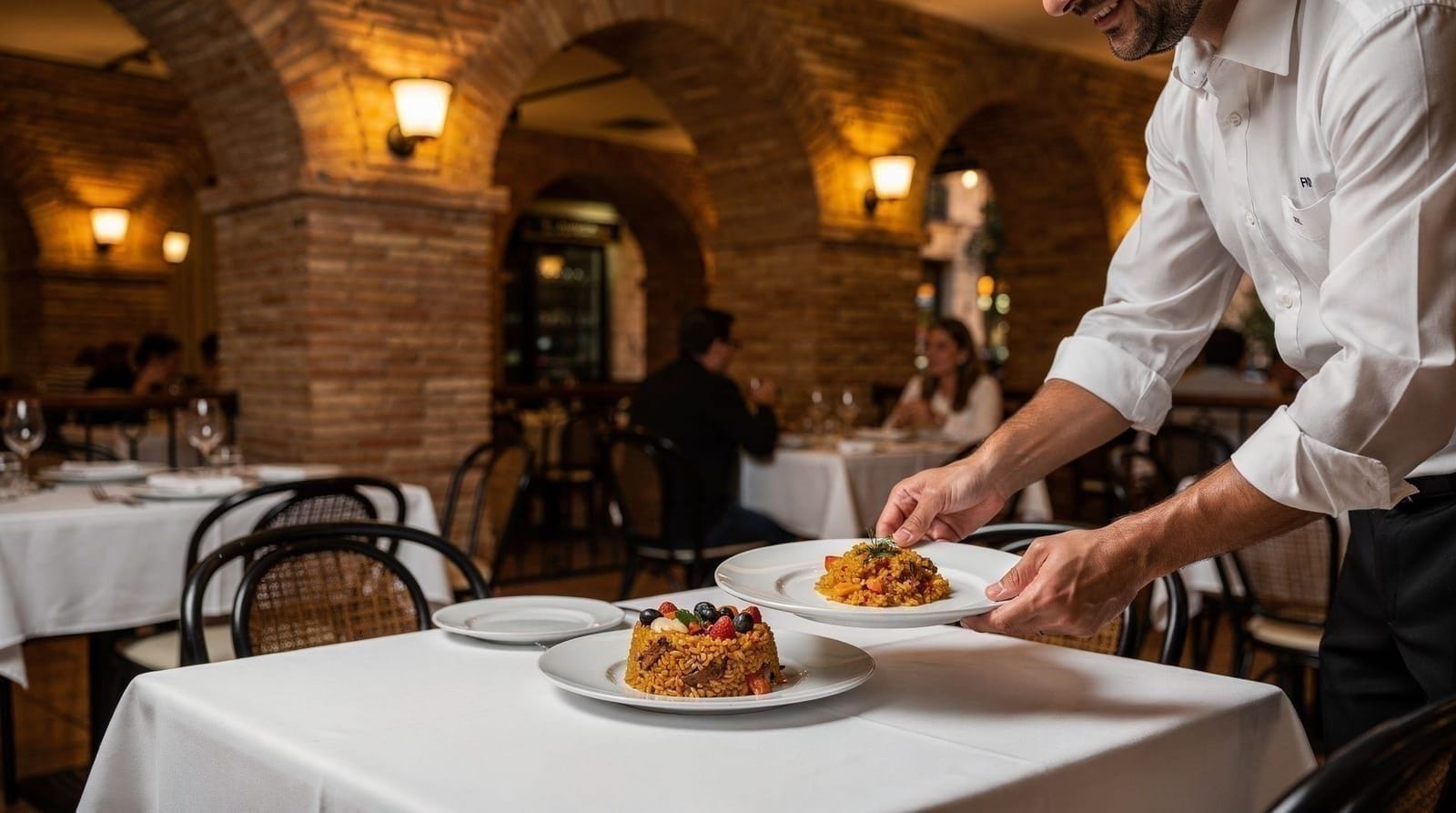
A standard menú del día consists of:
- Primer plato (first course/starter): usually a soup, salad, vegetable dish, or small pasta
- Segundo plato (second course/main): typically meat or fish with a side
- Postre o café (dessert or coffee): often a flan, fresh fruit, yoghurt, or ice cream; frequently you can choose coffee instead
- Pan (bread): a small basket, usually included
- Bebida (drink): typically a glass of house wine, beer, water, or soft drink — your choice
This is a full midday meal. Most Valencians eat the menú del día as their main meal of the day, then have a light dinner at 21:00-22:00.
Opening hours: Menú del día is served Monday to Friday at lunch, typically 13:00-16:00. On Saturdays, some restaurants offer it but others do not. On Sundays, virtually no working-neighbourhood restaurant serves it — Sunday lunch is a family occasion with a different format and price.
Why the price matters
The legal minimum for a menú del día is set by each restaurant, but the economic logic is clear: this is a lunch product aimed at working people eating near their offices, not at tourists. A restaurant that needs to fill its lunchtime tables efficiently offers a set menu at a competitive price and makes reasonable margin on volume.
The tourist version of a “menú del día” near the cathedral does something different: it takes the same concept, increases the price to 18-25€, includes tourist-friendly dishes (often featuring paella), and positions it for visitors who do not know the difference. The food quality is often lower, the service more rushed, and the value worse.
The honest test: if a restaurant near a major monument has a menú del día on a chalkboard outside with photographs and English translation prominently featured, it is a tourist menu. Walk 10 minutes in any direction.
Where to find genuine menús del día in Valencia
The working-neighbourhood approach
The most reliable strategy for finding a genuine menú del día: walk into any non-tourist-facing neighbourhood 15-20 minutes from the cathedral. Ruzafa has many reliable options on Carrer de Suècia and surrounding streets. The Eixample neighbourhood around Gran Via is good. The university district north of the old city works well on weekdays.
Look for restaurants where the lunchtime crowd is predominantly local — people in work clothes, not tourists with city maps. If the menu is handwritten on a chalkboard in Spanish only, that is a positive sign. If it is printed on a laminated card in four languages, less so.
Near the Mercado Central
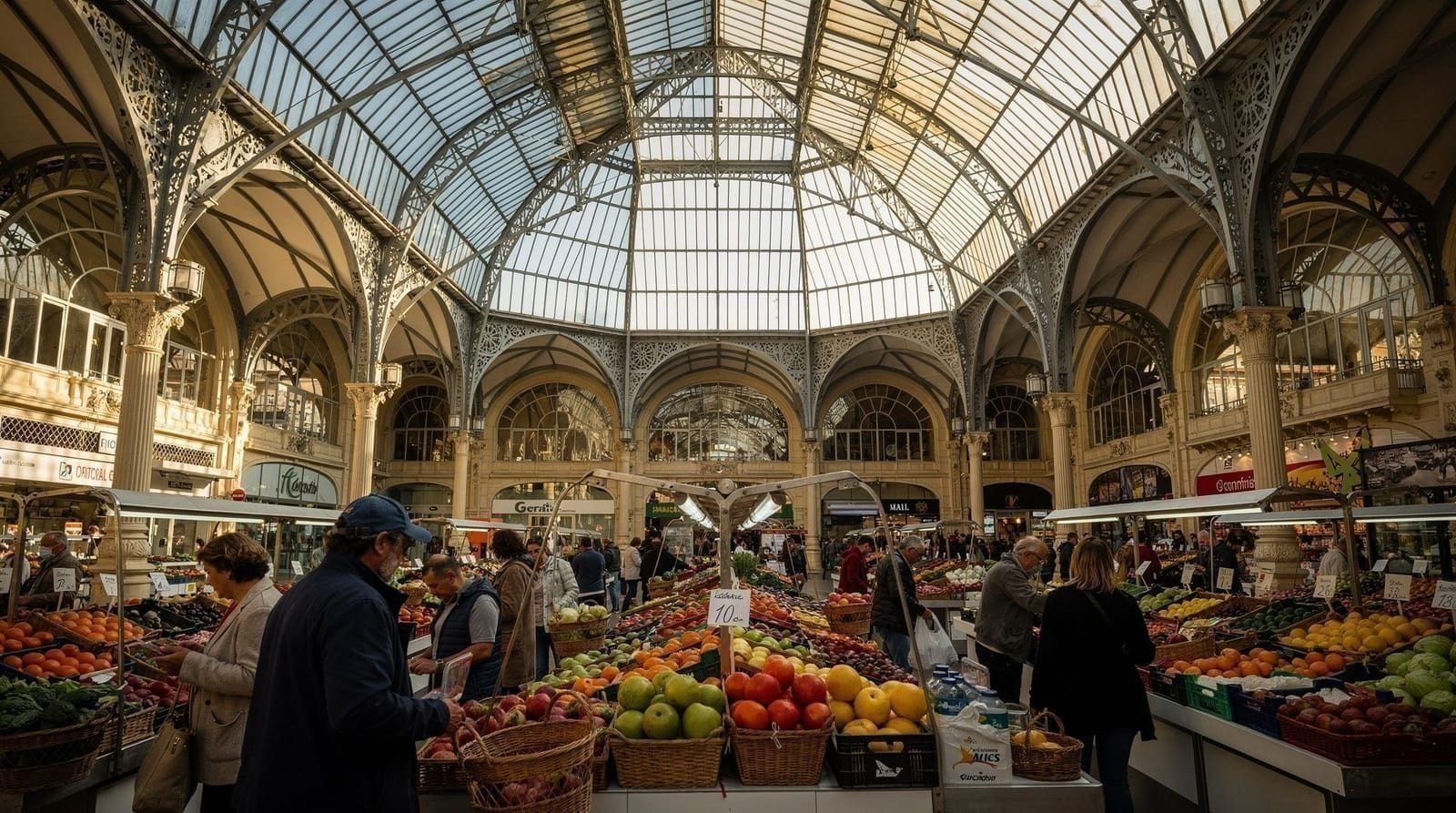
Several restaurants in the streets immediately surrounding the Mercado Central offer excellent menús del día, sourcing fresh ingredients directly from the market. This is one of the better-value lunch options close to the tourist centre. Budget 12-14€ and you will eat well.
If markets are part of your plan, the guide to Valencia’s food markets and the one on Mercado Colón help you pair a morning of browsing with a proper sit-down lunch nearby. Browse first, then pick a place where the room is already filling with locals.
Ruzafa and surrounding streets
For a fuller picture of the area before you go, see the Ruzafa neighbourhood guide. Visitors staying in the old town can also look at the El Carmen guide to understand which streets lean tourist and which are lived-in.
Ruzafa has dozens of restaurants offering genuine menús del día on weekdays. The quality ranges from decent to very good, and prices stay in the 12-15€ range. The Mercat de Russafa area in particular has several good options.
What to expect on a menú del día in Valencia
The Valencian menú del día will often include regional dishes that you will not find in tourist menus:
Starters (primer plato) typical in Valencia:
- Ensalada valenciana (simple salad with tomato and onion)
- Verduras a la plancha (grilled seasonal vegetables from the huerta)
- Crema de calabacín (courgette cream soup)
- Ensaladilla rusa (potato salad with mayonnaise, tuna, and vegetables)
- Macarrones o espaguetis (pasta, common in Spain as a starter)
Main courses (segundo plato) typical in Valencia:
- Pollo al ajillo (garlic chicken)
- Merluza a la plancha (grilled hake)
- Bacallà amb tomate (salt cod with tomato)
- Filetes de cerdo or entrecot (pork or beef steaks)
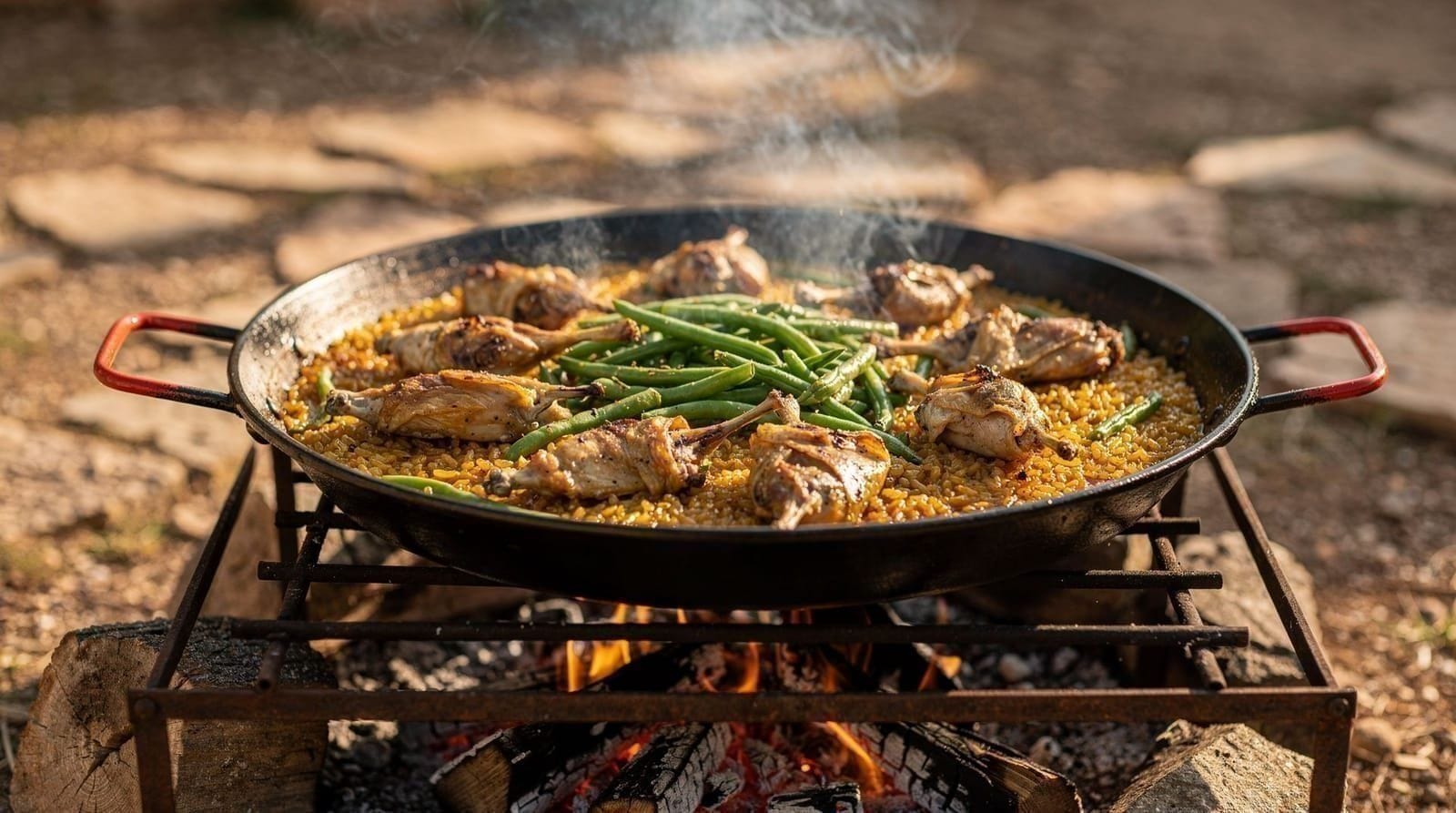
- Arroz con conejo (rice with rabbit, a simple weekday version of the paella tradition)
On Thursdays, many restaurants in Spain have paella or rice on the menú del día — Thursday is the traditional paella day in working restaurants. If you want to eat paella at menú del día prices, aim for a Thursday lunch at a neighbourhood restaurant.
Desserts at menú del día level are typically simple: flan casero (homemade custard), fruta del tiempo (seasonal fruit), arroz con leche (rice pudding), or a commercial ice cream.
The paella tourist menu problem
Near Plaza de la Reina and the cathedral, you will find many restaurants advertising a “menú turístico” or “menú del día” that includes paella for 15-20€. This is worth addressing directly.
At this price, including three courses with paella, the restaurant cannot be cooking authentic paella over wood fire for you individually. What you are getting is either:
- A paella cooked in bulk earlier and reheated
- A rice dish made with rice-cooking shortcuts (insufficient fire time, low-quality stock)
- A paella valenciana that contains ingredients that do not belong there (seafood mixed with meat, etc.)
This is the classic tourist trap Valencia scenario. The most honest statement: if you are in Valencia and want authentic paella, pay the proper price (15-25€ per person, minimum two people, at a rice-specialist restaurant at lunch). If you want a good-value weekday lunch, the menú del día is excellent but look for it away from the paella tourist circuit.
See also the paella traps guide for a more detailed breakdown.
Practical Spanish you need
When you arrive:
- “¿Tiene menú del día?” — Do you have a daily menu?
- “¿Cuál es el menú del día?” — What is today’s menu?
- “Quiero el menú, por favor” — I’ll have the set menu, please
When choosing:
- “¿Qué recomienda?” — What do you recommend?
- “Para el primero, [dish]” — For the first course, [dish]
- “Para el segundo, [dish]” — For the second course, [dish]
- “Para beber, agua / vino / cerveza, por favor” — To drink, water / wine / beer, please
At the end:
- “¿Está incluido el café?” — Is coffee included?
- “La cuenta, por favor” — The bill, please
Budget overview
| Setting | Price | What you get |
|---|---|---|
| Tourist centre near cathedral | 18-25€ | Three courses, often mediocre, tourist-facing |
| Neighbourhood restaurant, Ruzafa | 12-15€ | Three courses, fresh ingredients, local clientele |
| Near Mercado Central | 12-14€ | Three courses, market-fresh produce |
| University district | 10-13€ | Three courses, basic but honest |
Timing: when to go
Arrive between 14:00 and 14:30 for the best experience. Spanish lunch peaks later than Northern European habits — arriving at 13:00 finds the restaurant quiet and the kitchen perhaps not at full speed. By 14:00 the room fills with the working lunch crowd, the kitchen is in rhythm, and service is faster.
If you arrive after 15:30, some dishes will be sold out. The menú del día is served as long as supplies last, not until a fixed time. Popular dishes — the fish of the day, any paella or rice option — sell out first.
What to do if bread arrives uninvited
A common practice at tourist-facing restaurants: a basket of bread arrives at your table unsolicited. You will be charged 3-5€ per person for this. At genuine neighbourhood restaurants on a menú del día, bread is usually included in the price and does not arrive separately charged.
If you are at a tourist restaurant and unsolicited bread arrives, you can refuse it: “No hemos pedido pan” (we did not order bread). If it has been touched, you will likely pay regardless. This is worth knowing in advance.
Valencia: Secret Food Tours — 10 tastingsA food tour is an efficient way to understand Valencia’s eating culture and identify specific restaurants for future visits — including places that do the menú del día well.
The menú del día also fits naturally into a broader approach to eating well on a modest budget. Our guide on how to eat like a local shows where lunch sits in the rhythm of a Valencian day, and the Valencia on a budget guide explains why a set lunch is the easiest way to keep daily costs under control. If you are also curious about the mid-morning habit, the esmorzaret guide covers the other great value meal, and the tourist menu traps guide goes deeper on how to spot the inflated versions before you sit down.
Menú del día vs à la carte: when each makes sense
The menú del día is not always the right choice. If you specifically want authentic paella cooked to order, à la carte at a rice specialist is the better route — see authentic paella: where to eat it — because a set-menu paella is almost always pre-cooked in bulk. If you want to sample several small dishes and drink through an evening, tapas is the better format; the menú del día is a fixed, single-sitting lunch, not a grazing meal.
If an evening of small plates sounds more appealing, an evening tour of tapas bars with drinks is a guided way to do it, and for a more varied introduction to the local table, a gastronomic tour combining tapas and paella lets you taste the dishes without committing to a full sit-down meal. Where the menú del día wins clearly is efficiency and value: a full, freshly cooked lunch for 12-15€ with no need to compare prices across multiple small plates, and no risk of the bill creeping up the way an à la carte tapas order can. For a broader sense of how it fits into a day of eating, see the best restaurants in Valencia guide.
Frequently asked questions about the menú del día
Do all restaurants offer a menú del día?
No. Tourist-facing restaurants near major attractions may not offer one, or offer an inflated tourist version. Fine-dining restaurants rarely offer a set lunch at this price. The menú del día is primarily a feature of neighbourhood and mid-range restaurants on weekdays.
Can I have the menú del día on a Saturday?
Some restaurants offer it Saturday, fewer on Sunday. Weekend menus tend to be slightly more expensive (often 15-18€) and may have a different format than the weekday version.
What if I only want two courses?
You can ask — some restaurants will accommodate this at a slightly reduced price. However, the menú del día is priced as a package and the margin assumes you take all three courses. At 12-15€ for three courses, asking for a discount on two courses is not unreasonable but may be politely declined.
Is the menú del día good for vegetarians?
It depends on the restaurant. Traditional Spanish cooking is meat and fish heavy, and the primer plato options at a standard menú del día often assume a non-vegetarian. However, most restaurants can accommodate at least a vegetable-focused first course, and a plain omelette (tortilla de patatas) is almost always a secondary option for the main course. Ask when you arrive: “¿Hay opciones vegetarianas?” (Are there vegetarian options?).
Top experiences
Bookable activities with verified prices and instant confirmation on GetYourGuide.