Best neighbourhoods to stay in Valencia — an honest comparison
The honest framing
Every “best neighbourhoods” list tells you to stay in the area with the best restaurants and boutique hotels. This one is going to tell you something different: where you stay in Valencia matters less than in many cities, because the city is compact, the metro works, and nothing you actually want to see is more than 20 minutes away by foot or transit from anywhere you’d reasonably choose to stay.
| Most atmospheric | El Carmen — old town, noisy at night |
| Best food/drink scene | Russafa — 1.5 km south, cheaper too |
| Most practical | Near North Station — trains, metro, market all close |
| Quietest | Eixample — sensible, well-connected, low-key |
| Best for the beach | El Cabanyal — 20 min from the old city |
That said, some areas genuinely suit certain types of travellers better than others. Here’s the honest breakdown.
El Carmen: atmosphere at the cost of noise and tourist saturation
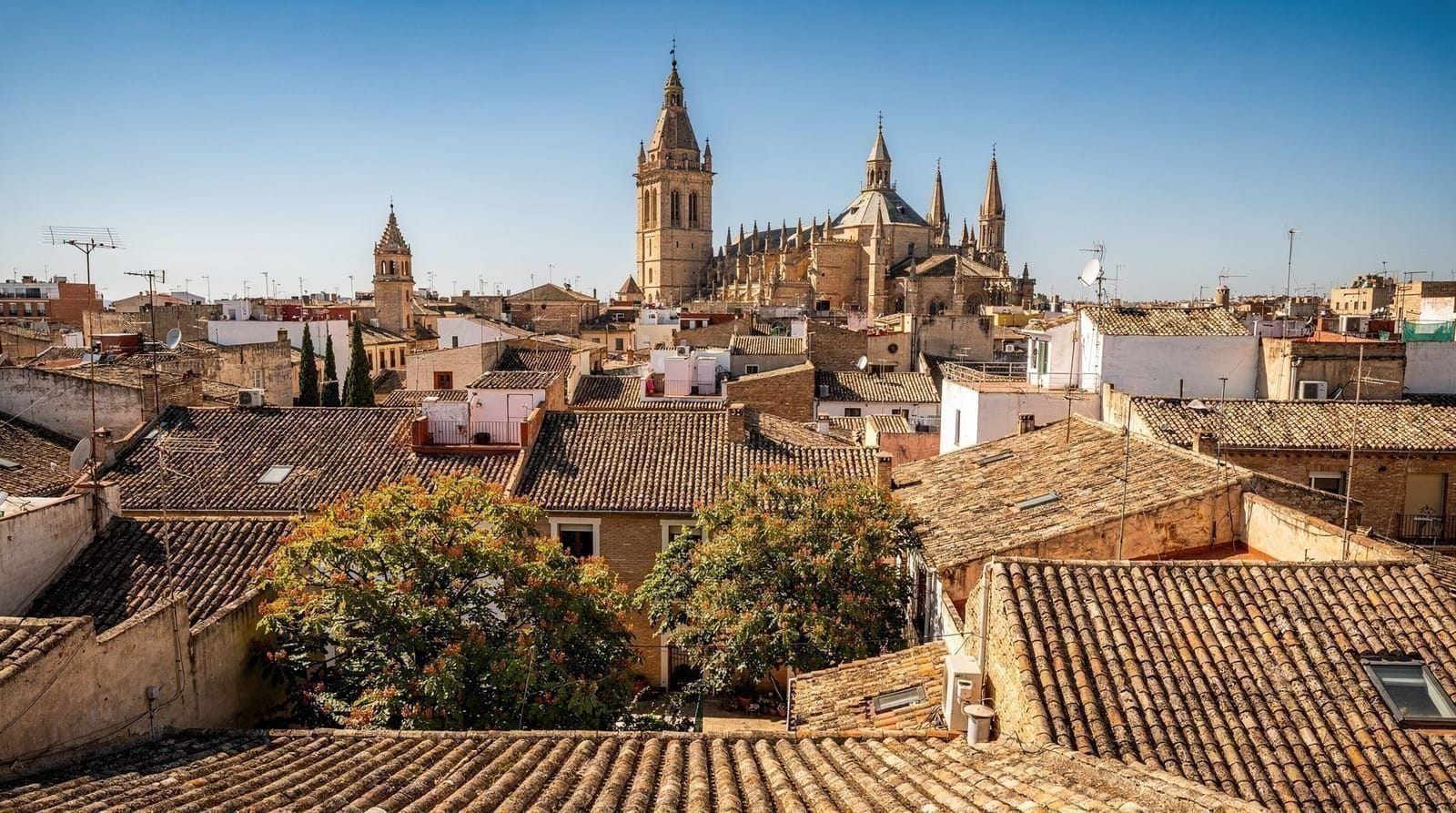
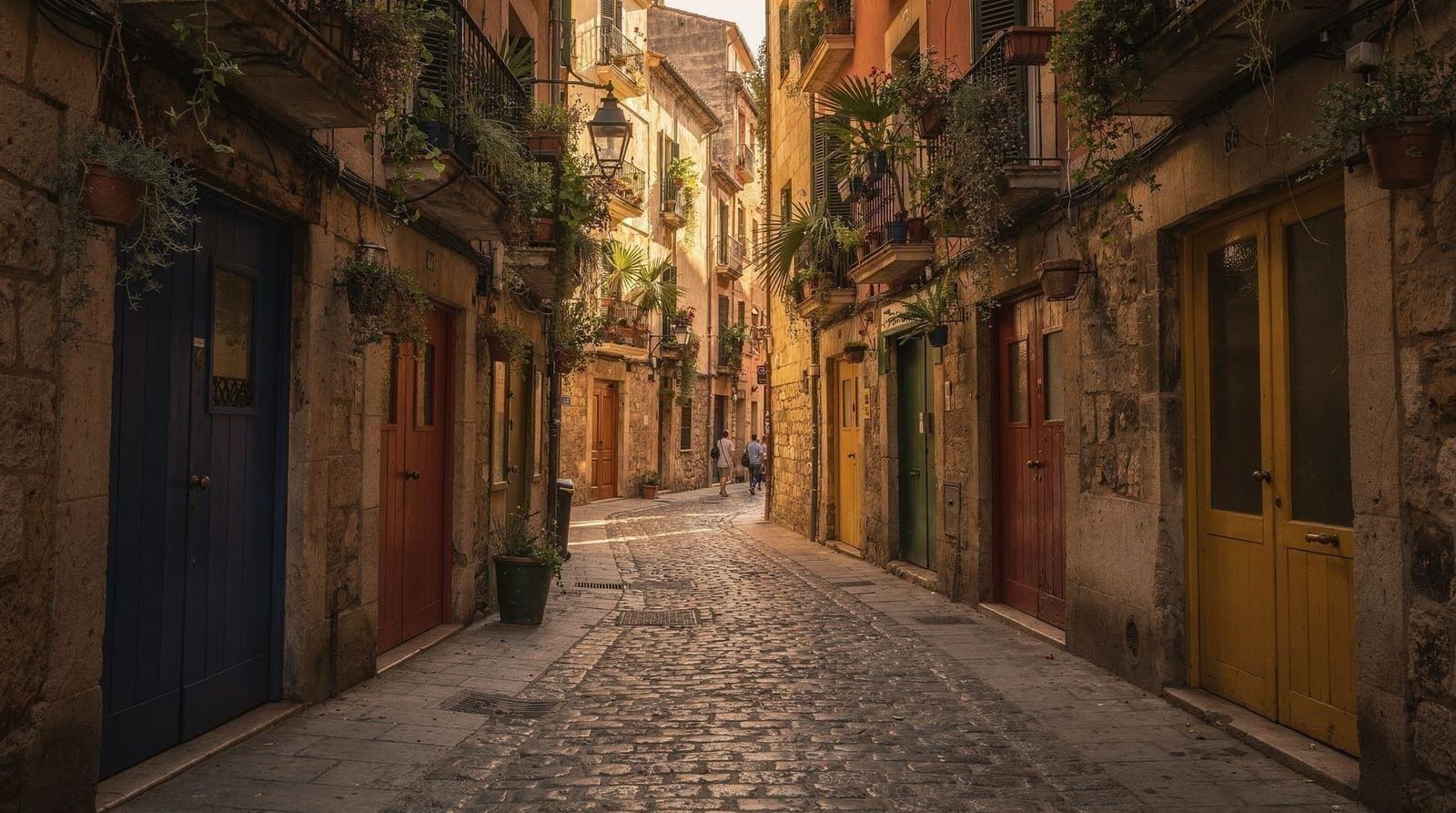
El Carmen is Valencia’s medieval heart — the neighbourhood within the old city walls, criss-crossed by narrow streets, with the Torres de Serranos and Torres de Quart as its northern gates. During the day, it’s genuinely beautiful: murals by the Escif collective, independent bookshops, artisan workshops, quiet café terraces on small squares.
At night it’s different. El Carmen is Valencia’s nightlife district, and the bars along Carrer dels Cavallers and the surrounding streets run late. The street noise in upper floors of some buildings can be significant from Thursday through Sunday.
Best for: first-time visitors who prioritise walking to everything, atmosphere, and proximity to the Cathedral, the Lonja de la Seda, and the Central Market. Also good for anyone who sleeps through urban noise.
Less ideal for: families with young children needing early bedtimes; anyone with noise sensitivity; budget travellers (central El Carmen accommodation runs 30–40% above outer neighbourhood prices).
The El Carmen neighbourhood guide covers the area in detail. Staying inside it also puts you steps from where most historic walking tours begin, which is worth factoring in if you’d rather explore with context than wing it.
Historical walking tour through El Carmen and the old town — good orientation if you’re basing yourself here
If you stay here, a lot of the old-town sights come to you: the Cathedral and Miguelete tower, the Lonja de la Seda and the Central Market are all a short stroll away. Anyone curious about the city’s merchant past can pair the Lonja with a guided tour of the silk trade heritage, which gives the buildings around you a story. The Serranos and Quart towers mark the edges of the district, and the street art around the Carmen rewards a slow wander on a quiet morning.
Russafa (Ruzafa): the local choice
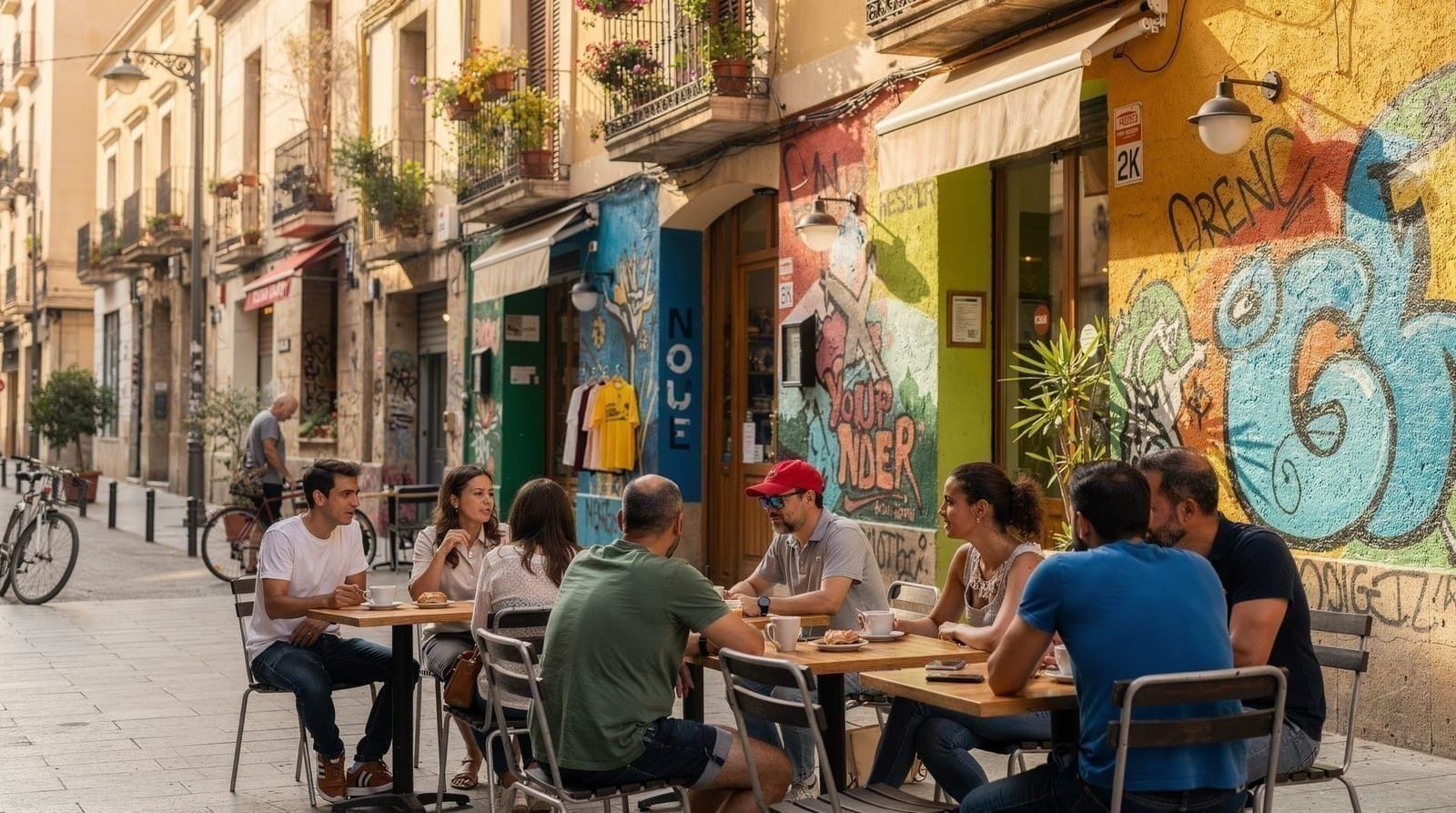
Russafa is Valencia’s most talked-about neighbourhood for good reason. About 1.5 km south of the old city, it’s a 19th-century working-class district that gentrified from the late 2000s onward, producing a concentration of independent restaurants, natural wine bars, vintage shops, and coffee spaces that feels genuinely lived-in rather than tourist-facing.
The food and drink scene in Russafa is notably better, and notably cheaper, than the tourist zone around the Cathedral. A café con leche in Russafa costs €1.30. The same drink 500 metres north near the Llotja de la Seda costs €2.50.
Accommodation in Russafa runs slightly below El Carmen prices and has grown significantly in recent years — several boutique hotels and well-reviewed Airbnbs operate in the neighbourhood.
Best for: food-focused travellers, return visitors to Valencia, anyone wanting a neighbourhood feel rather than tourist-zone saturation, and younger travellers.
Less ideal for: visitors whose primary itinerary is tightly focused on the historic sites (each one requires a 15-minute walk or a metro/bus trip). Also less ideal if you need to be at the North Train Station early for day trips — it’s a 15-minute walk.
The Russafa guide has the full picture, and the Ruzafa tapas guide is worth reading before you choose a restaurant for your first evening. The Russafa destination page adds more context on the area itself.
Near the North Station (Estació del Nord): practical and underrated
The area around Valencia’s ornate 19th-century North Station — bounded roughly by Calle Xàtiva, Gran Via Marqués del Túria, and the Bullring — is functionally excellent for most visitors and consistently underappreciated in “best of” lists.
Here’s why it works: you’re 10 minutes’ walk from the Central Market and Cathedral; you’re 5 minutes from the metro interchange at Xàtiva; you have access to AVE trains to Madrid and Barcelona without a taxi or transit trip; and you’re 15 minutes from Russafa on foot.
Hotel prices in this zone tend to be slightly lower than El Carmen for equivalent quality, because the area lacks the historic character premium.
Best for: travellers doing significant day trips (you’re at the train station), business travellers, and anyone wanting practical logistics over neighbourhood atmosphere.
Eixample: sensible and quiet
The Eixample is the 19th-century grid district between Russafa and the Gran Via — wide streets, solid architecture, good transit links, and a noticeably quieter night scene than El Carmen. Several well-established mid-range hotels occupy this zone.
There’s less reason to “be” in the Eixample — it’s not a destination neighbourhood for restaurants or sightseeing the way Russafa or El Carmen are. But as a base, it’s comfortable and well-connected.
Best for: families with children, travellers prioritising sleep, anyone staying more than 3–4 days who wants to feel like they’re living in the city rather than visiting it.
See the Eixample guide for what the area offers beyond its accommodation function. If you are travelling with children, the Valencia with kids guide helps you plan around a quiet base like this one.
El Cabanyal: for experienced Valencia visitors
El Cabanyal — the traditional fishing district 3 km east of the old city on the coast — has been going through a long renovation cycle that’s produced both genuine neighbourhood character and some excellent new accommodation options. It’s on the edge of what was a significant preservation battle (the city government’s plan to extend Avenida Blasco Ibáñez through the neighbourhood was eventually cancelled), which has contributed to a more locally engaged residential feel.
The beach at Malvarrosa is a short walk. The neighbourhood’s tiled facades and colourful houses are genuinely distinctive. But it’s a 20-minute walk or bus ride from the old city centre, which makes it less convenient for a primarily historic-sightseeing trip.
Best for: beach-focused travellers, return visitors, creative types interested in urban character, and anyone primarily visiting the coast rather than the monuments.
The El Cabanyal guide covers the full neighbourhood, while the Malvarrosa beach guide and the Valencia beach season guide help you decide when the coast is worth building a stay around.
If the monuments of the Ciudad de las Artes y las Ciencias are the main draw of your trip, none of these five areas is right next door, but the complex is easy to reach from any of them. The City of Arts and Sciences guide explains the layout, and a guided visit of the City of Arts and Sciences is a practical way to see it without planning each entrance yourself.
A note on apartment versus hotel
For stays of 3 days or more in Valencia, self-catering apartments offer genuine savings, particularly if you eat breakfast in and manage to cook even one or two meals. The major Spanish platforms (Booking, Airbnb, local agencies like Minty Stay) all have strong Valencia inventory.
The trade-off is consistency: hotel service is predictable; apartments vary. For a first visit or a tight schedule, the reliability of a hotel often wins. For a more relaxed extended stay where cooking and grocery shopping are part of the experience, apartments in Russafa or El Carmen make sense.
The where to stay in Valencia guide covers the full neighbourhood breakdown including tier-by-tier hotel recommendations, and the best area for first-time visitors addresses the specific first-timer question directly. For the rest of your planning, see getting around by metro and bus, the airport to city transfer guide and our post on the best time to visit Valencia. Visiting in March? Read where to stay during Fallas before booking anything.
Neighbourhood comparison
| Neighbourhood | Distance to old town | Noise at night | Price | Best for |
|---|---|---|---|---|
| El Carmen | In it | High (Thu–Sun) | Highest | First-timers, walkability |
| Russafa | 1.5 km | Moderate | Slightly below El Carmen | Food, return visitors |
| Near North Station | ~1 km | Low | Slightly lower | Day trippers, business |
| Eixample | ~1 km | Low | Mid-range | Families, longer stays |
| El Cabanyal | 3 km | Low | Variable | Beach-focused, experienced visitors |
So, where should you actually book
If it’s your first visit and you want to walk everywhere, El Carmen wins despite the noise — book a room on an upper floor or towards the quieter western streets. If you’ve been before or care more about eating well than sightseeing pace, Russafa is the better decision. Families and light sleepers are consistently happier in the Eixample or near the North Station, both of which get you everywhere in Valencia within 20 minutes without the weekend soundtrack.