Fallas first-timer guide — what nobody tells you before you go
The thing that surprises almost everyone
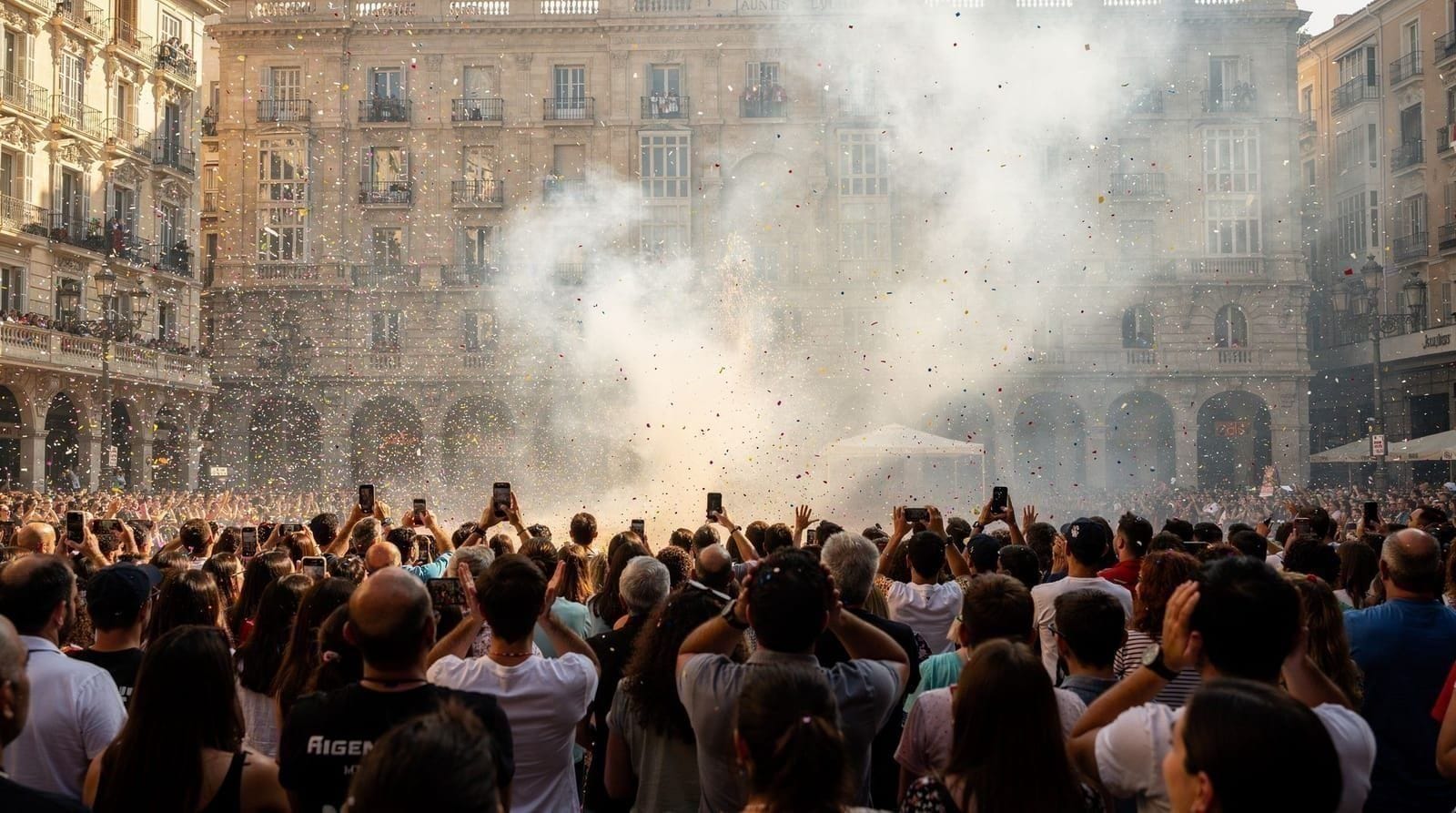
People come to Las Fallas expecting a spectacular fireworks show. What they don’t expect is that the fireworks are secondary. The Mascletà — a daily ground-level percussive explosion at 2pm in the town hall square — is the emotional centrepiece of the festival for Valencians. It’s not visual. It’s a physical experience. The first time you stand in Plaza del Ayuntamiento as five minutes of precisely orchestrated explosions build to a finale that rattles your ribcage and drowns out every other sound in the city, you understand something fundamental about why this festival has lasted for centuries.
Go to the Mascletà on your first day. Stand as close to the square as possible. Bring earplugs if you want them (locals wear them too). Don’t try to see it from a side street on your phone.
| When | Full festival 1–19 March; the “real” experience is 15–19 |
| Cost | Fallas menus €30–50; free viewing of monuments and Mascletà |
| Book ahead | Accommodation (6 months+), paella lunches, fixed-price menus |
| Not for | Infants, young children, or significant noise sensitivity |
| Ideal arrival | 16–17 March, departing the morning after the 19th |
The monuments are bigger than you think
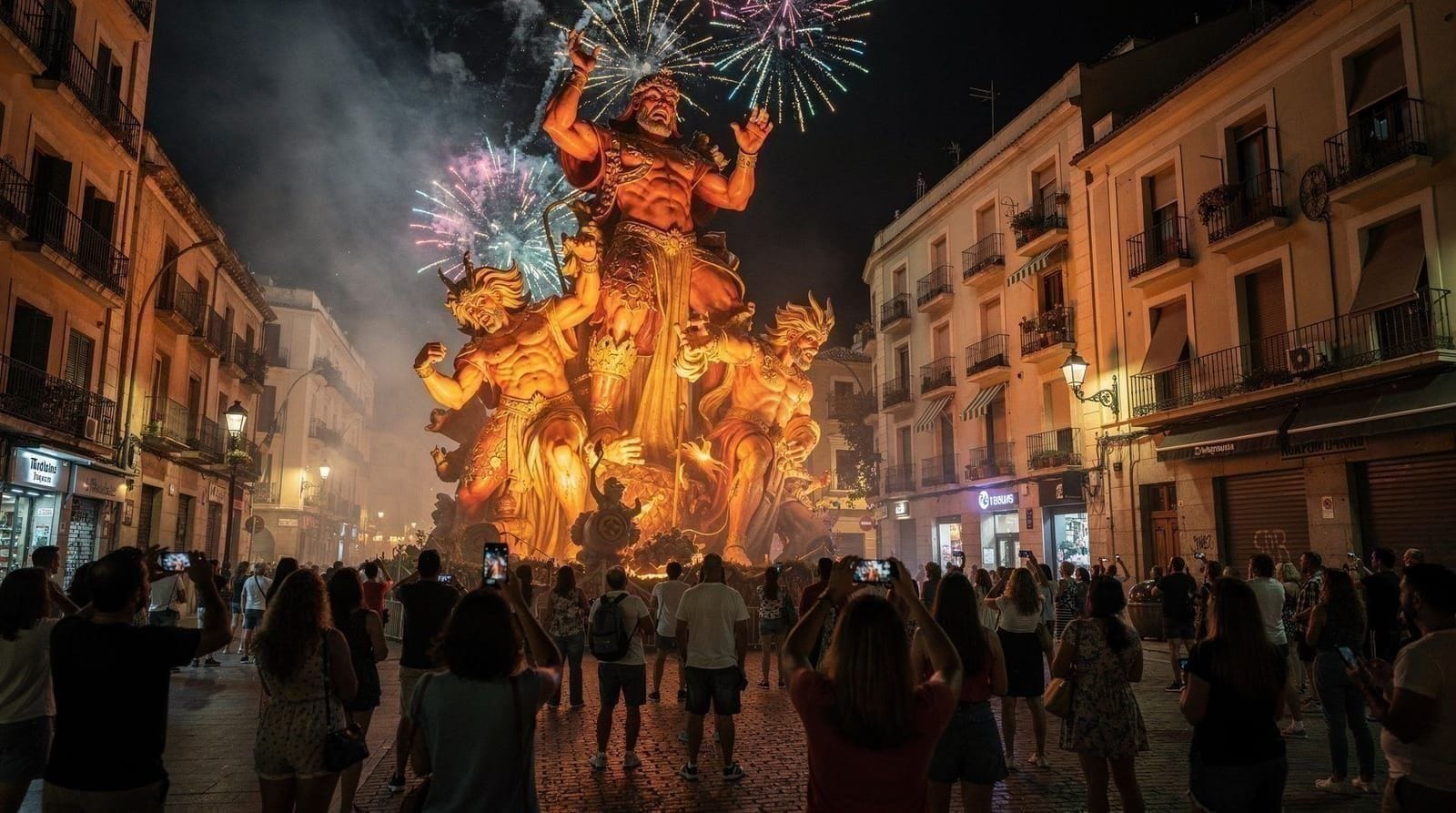
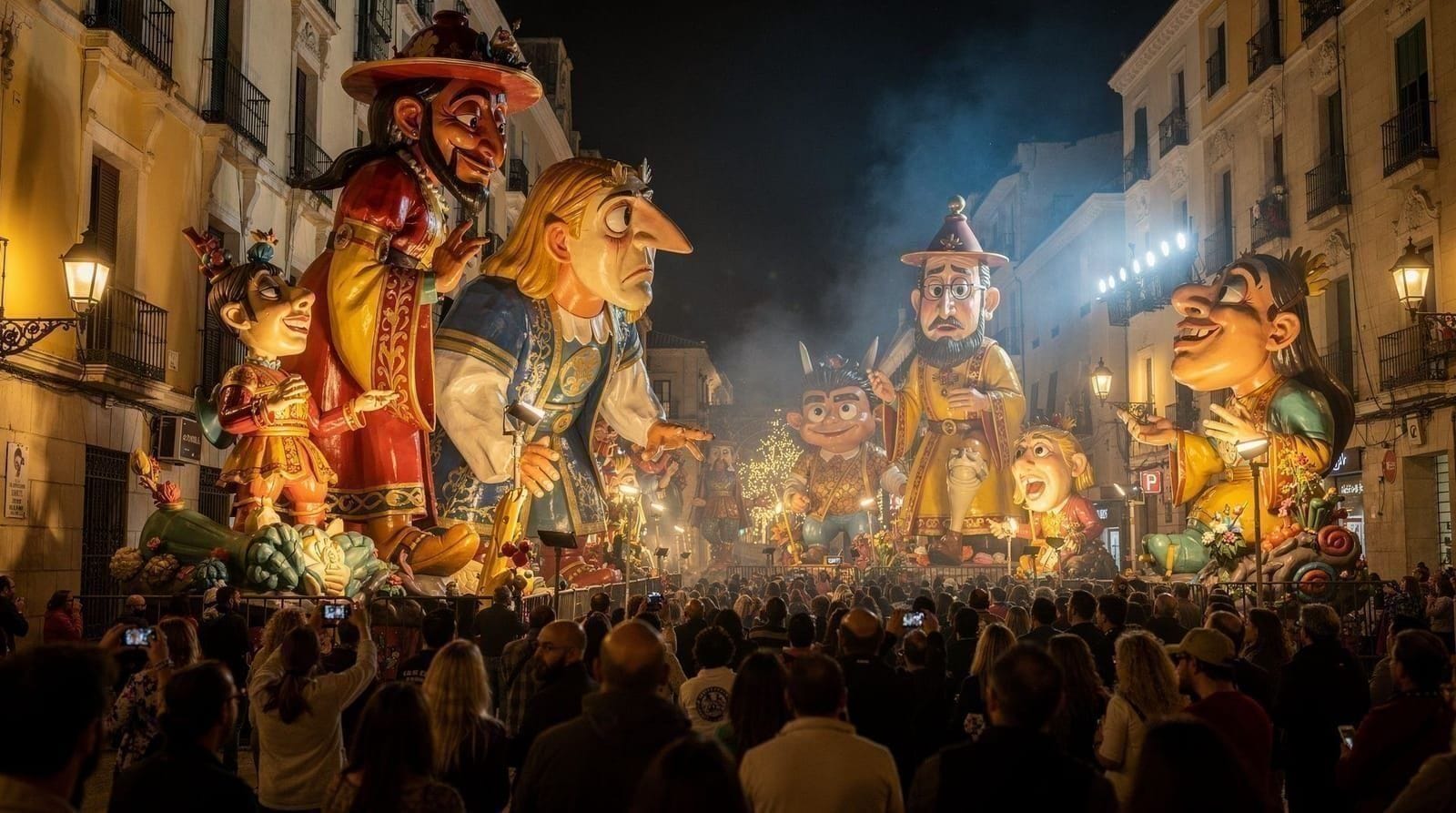
Every year, dozens of neighbourhood commissions — the Fallas commissions or casal falleros — spend an entire year and budgets ranging from €10,000 to €400,000 building satirical papier-mâché monuments called fallas. These are not decorations. The larger ones are four or five storeys tall, packed with caricatures of politicians, cultural figures, and local characters, with nested scenes inside scenes.
Walking through the streets of Valencia during the final five days of the festival, surrounded by these monuments, is genuinely disorienting — like being inside a satirical comic strip that’s somehow been made three-dimensional and placed in the streets where you were trying to find a coffee.
The Monument Municipal (the official city falla, usually near the Town Hall) is typically the largest and most expensive. But some of the neighbourhood fallas are more creative and interesting. A guided tour helps enormously here — the symbolism and jokes embedded in the figures are largely inaccessible without context.
Book the ultimate Fallas guided tour to navigate the monuments with a local who can translate the satire and show you the best burning spots
If you would rather see how the monuments are made before they burn, there is also a guided visit to a fallas artists’ workshop, which makes the street monuments easier to appreciate when you meet them later. For a wider look at the festival’s heritage status, the UNESCO guide to Valencia puts Fallas in context.
When to arrive (and what to skip in the first days)
The official Fallas period runs 1–19 March, but the final five days (15–19) are when it actually feels like a festival. The first week and a half are predominantly for locals — Mascletà, smaller parades, the Ninot Exhibition (open until about 14–15 March, worth an hour).
If you’re flying in specifically for Fallas and have limited time, arrive 16 or 17 March and leave the morning after the 19th. You’ll catch the monuments, the full street-party atmosphere, the Nit del Foc fireworks (18 March) over the Turia riverbed, and La Cremà. That’s the full arc.
If you arrive on the 14th or 15th, you get the mounting excitement, the end of the Ninot Exhibition and the Plantà. The Crida proclamation from the Torres de Serranos is held much earlier, on the last Sunday of February (28 February 2027, 7:30pm); it is a beautiful spectacle in its own right and far less crowded than the final days.
The noise is constant — plan accordingly
From early morning through 3am or later, there is noise. Not occasional noise. Constant noise. Petards (small firecrackers) are set off by children, adults, and entire neighbourhoods throughout the day. The smell of spent fireworks is everywhere. The Mascletà at 2pm concentrates this into five minutes of controlled intensity, but the ambient soundtrack of Fallas is a continuous low-level percussion.
If you’re travelling with infants, very young children, or anyone with significant noise sensitivity, Fallas is not the right moment. This is a factual statement, not a critique of the festival. The noise is inseparable from what makes Fallas what it is.
Earplugs are genuinely useful: bring at least three pairs per person — one for the Mascletà, one for Nit del Foc, one backup. Pharmacies throughout the city sell them during festival week.
The Nit del Foc is not what you expect either
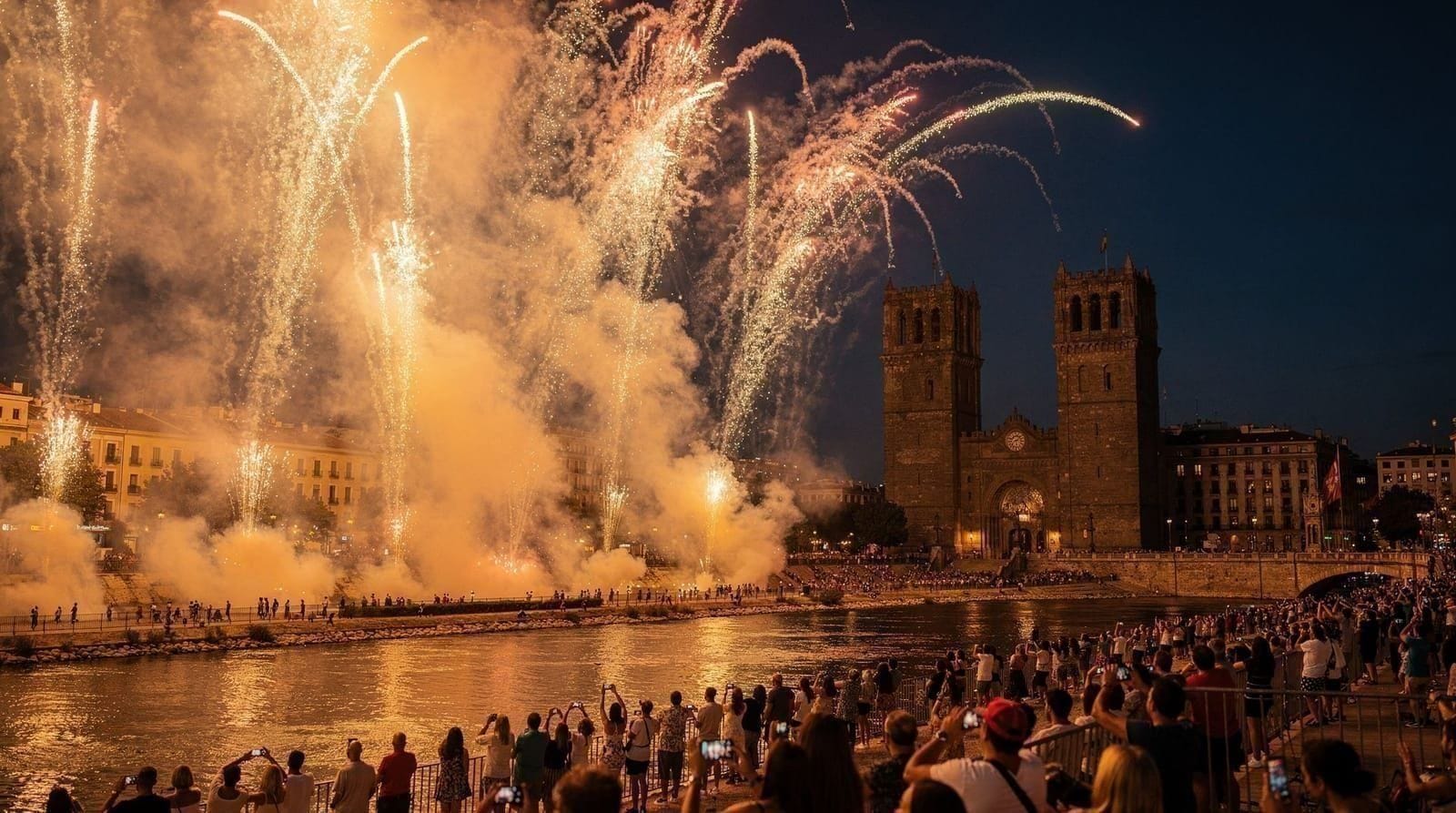
The “Night of Fire” is advertised as fireworks. It is fireworks, but held over the dry bed of the Turia river — meaning a 9-kilometre green park becomes one of the best fireworks-viewing spaces in the world. Hundreds of thousands of people line the riverbanks. The big castillo (fireworks display) is fired from the Monteolivete bridge area at 23:59 on 18 March.
Getting a good spot means arriving 2–3 hours early. The best viewing is from the pedestrian bridges or from within the riverbed itself. The detailed Nit del Foc guide covers this in full, but the core advice is: don’t wait until the official start time and then wonder why you can’t see anything.
If you want the full story behind that evening, the Nit del Foc blog guide goes deeper, and the Fallas 2027 dates post helps you plan around the calendar.
La Cremà: a controlled wildfire in the city streets
On the evening of 19 March, the fallas burn. In 2026 the children’s fallas went up at 8pm, all the other fallas at 10pm, and the Falla Municipal in Plaza del Ayuntamiento was the last at 11pm (check fallas.com for the 2027 times). The city-wide burning is surreal in a way that photographs fail to capture. The pyrotechnicians control the burning carefully, but the scale means the heat is intense and the smoke billows.
Stand at least 15 metres from any falla being burned. The heat is real and can be uncomfortable closer. Locals typically watch a few neighbourhood burnings and then make their way to the Falla Municipal for the finale.
What’s left the next morning: ash on the cobblestones, a smell that lingers for days, and a city that transitions to ordinary life with the quiet efficiency of a place that has done this for three hundred years.
Food during Fallas: book ahead or eat badly
Restaurants in the historic centre during Fallas either do fixed-price Fallas menus (typically €30–50 per person, covering four courses and sometimes a drink) or switch to table service at tourist-facing prices that bear no relation to normal Valencian eating. The menú del día (the regular fixed lunch, usually €12–16) sometimes disappears at the restaurants most visible to tourists.
Paella is particularly important to get right. Book a lunch reservation at a proper paella restaurant well in advance — they fill up early during festival week. Do not order paella for dinner. The short version: paella in Valencia is a midday meal cooked over a wood fire; the restaurants that do it properly (La Pepica, Restaurante Levante, Ca’n Lluís) serve it for lunch only, and they will be full without a booking during Fallas.
The food markets — the Mercado Central especially — are worth visiting in the morning before they get overwhelmed. Come before 11am for the best experience.
Transport advice for Fallas week
Check the current Fallas operating hours for the metro and EMT buses on metrovalencia.es and emtvalencia.es. Expect them to be extremely crowded on the nights of 18 and 19 March.
Taxis and rideshares: surge pricing during Fallas nights is real. Some travellers budget an extra €15–20 for the last-night trip back from the burning. It’s worth having cash.
Walking: most of the main Fallas monuments are concentrated within a 2–3 km radius of the old city. Walking between them is the most practical approach, especially given traffic restrictions during the final days. Comfortable shoes are essential; the cobblestone streets of El Carmen are beautiful but brutal over six hours.
Where to base yourself: proximity matters more during Fallas than any other time of year, since the crowds and traffic restrictions make cross-city travel slow. The where to stay during Fallas guide covers which neighbourhoods stay walkable when the centre closes to traffic.
Between the big events, the metro and EMT guide explains how the public network works, and the airport to city centre post covers the first leg of your trip. Crowded streets are also prime territory for thieves, so read the pickpockets and safe areas guide before the big nights.
The Ninot Exhibition: underrated
Before the festival concludes, a jury selects one ninot figure from each of the main fallas to be spared from burning. These “indultados” (pardoned figures) are displayed in the Ninot Exhibition, which closes around 14–15 March with the verdict (see fallas.com for venue, hours and entry). It gives you the closest encounter with the craft of the sculptures — including figures that would otherwise be impossible to see in context once they’re installed on the street or on fire.
This is also one of the few genuinely calm Fallas experiences. Worth an hour on a quieter afternoon in the first half of the festival.
For the complete day-by-day schedule and logistics, the Las Fallas complete guide is the reference. The Fallas day-by-day breakdown helps you sequence your visit once you know your arrival and departure dates.
If you want a complete plan built around the festival, the Valencia during Fallas itinerary strings these pieces together, and a dedicated Fallas tour is a good way to cover the monuments without planning every street yourself. Once the festival is over, the best time to visit Valencia guide shows what the city is like in calmer months.
A first-timer’s four-day arc
| Day | Focus |
|---|---|
| 16 March | Arrive, catch the 2pm Mascletà, walk the neighbourhood fallas in the evening |
| 17 March | Monuments and Central Market in the morning, second Mascletà if you want it again, Ofrenda de flores in the afternoon and evening (17–18 March) |
| 18 March | Paella lunch, Mascletà, then Nit del Foc fireworks at 23:59 over the Turia |
| 19 March | Last Mascletà, then La Cremà from 8pm to 11pm (2026 times); depart the next morning |