Paella vs fideuà — what's the difference and which to order
The question restaurants get all the time
You’re sitting at a lunch table somewhere in Valencia and the menu offers both paella and fideuà. You know what paella is — or think you do. You’ve probably never had fideuà. The waiter waits. What do you actually order?
The honest answer is: it depends on what you want from the meal. But before you can make that call, you need to understand what each dish actually is.
| Paella valenciana | Rice, rabbit/chicken, beans — no seafood, no alioli |
| Fideuà | Short noodles, usually seafood broth, served with alioli |
| Where each is best | Paella: everywhere serious; fideuà: coastal towns |
| Texture | Paella: absorbent rice; fideuà: crisped noodle ends |
| Order it at | Lunch, 2–4pm, at a restaurant that cooks to order |
Paella: the rice dish that defines Valencia
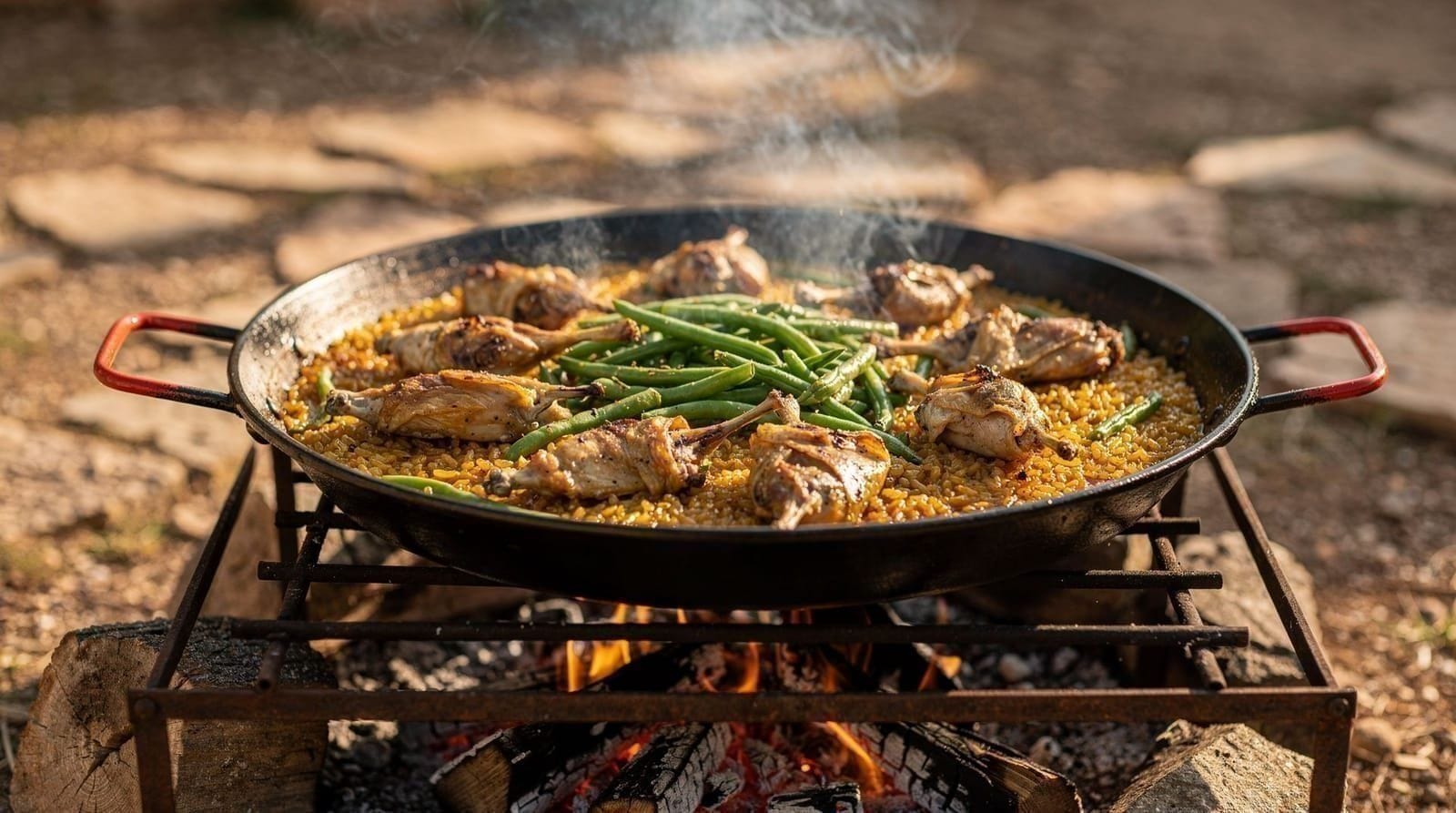
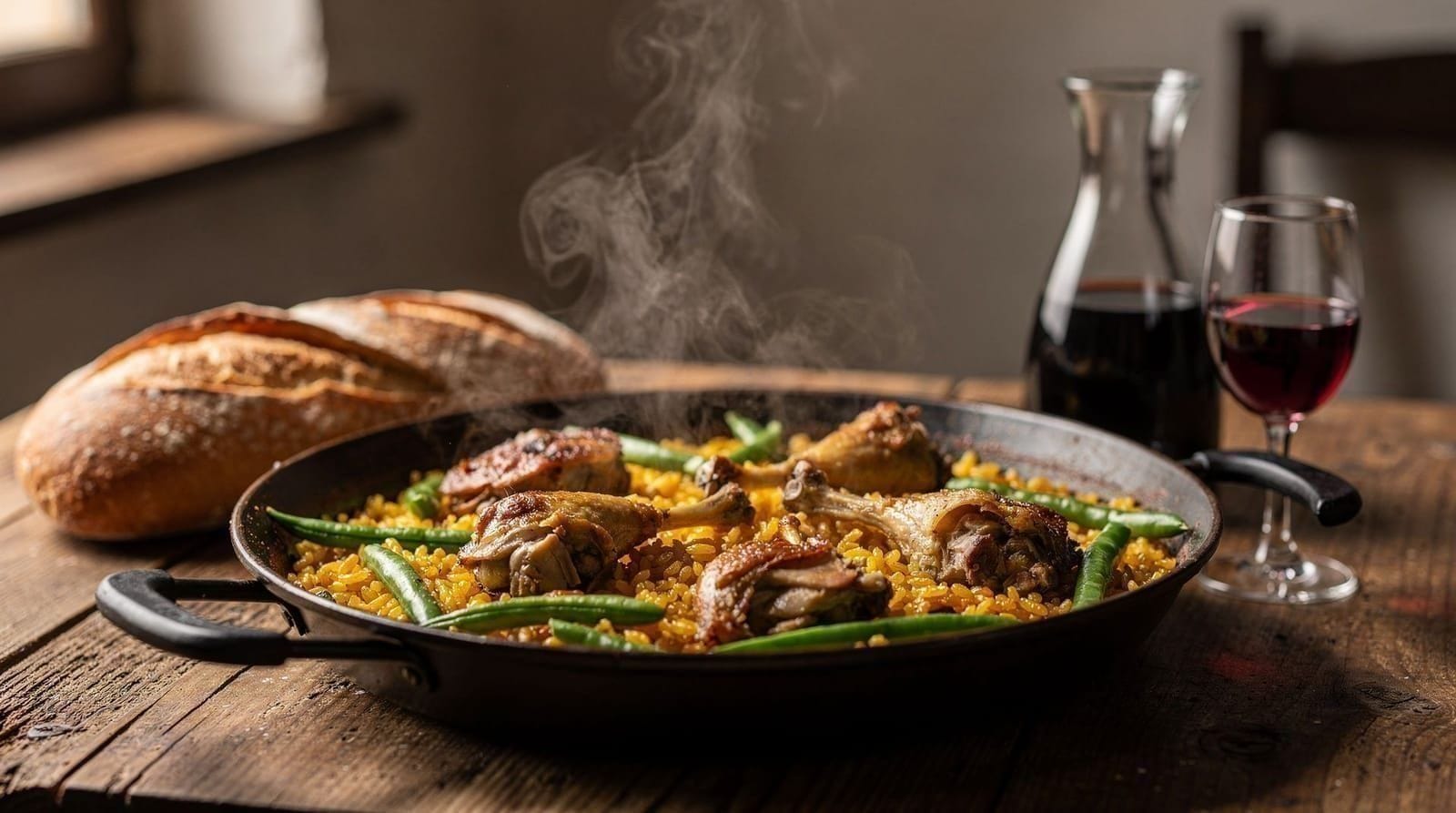
The canonical Valencian paella is a rice dish cooked in a flat, wide pan (the paellera) over a wood fire. The base ingredients — for paella valenciana, the original — are chicken, rabbit, ferraura (flat green beans), garrofó (large white beans), tomato, olive oil, saffron, and water from the local area. The rice (short-grain Bomba or Senia variety, grown in the Albufera rice paddies south of the city) is added to the sofrito and cooked uncovered, absorbing the broth.
The signature quality marker is the socarrat: a thin caramelised crust of rice at the bottom of the pan, achieved when the heat is calibrated correctly in the final minutes of cooking. A good socarrat has a slight crunch and a toasty, savoury flavour without being burnt. Getting it right requires attention and skill. Restaurants that pre-cook their paella cannot produce a real socarrat.
There are many paella variations — arroz al horno (baked rice), arroz a banda (rice with fish broth and alioli), arroz negro (squid-ink rice) — but none of them are paella valenciana. When you’re in Valencia, “paella” means the land version with rabbit and chicken. The seafood version is primarily a tourist adaptation.
See the paella vs fideuà complete guide for the full culinary history.
Fideuà: the noodle answer to paella
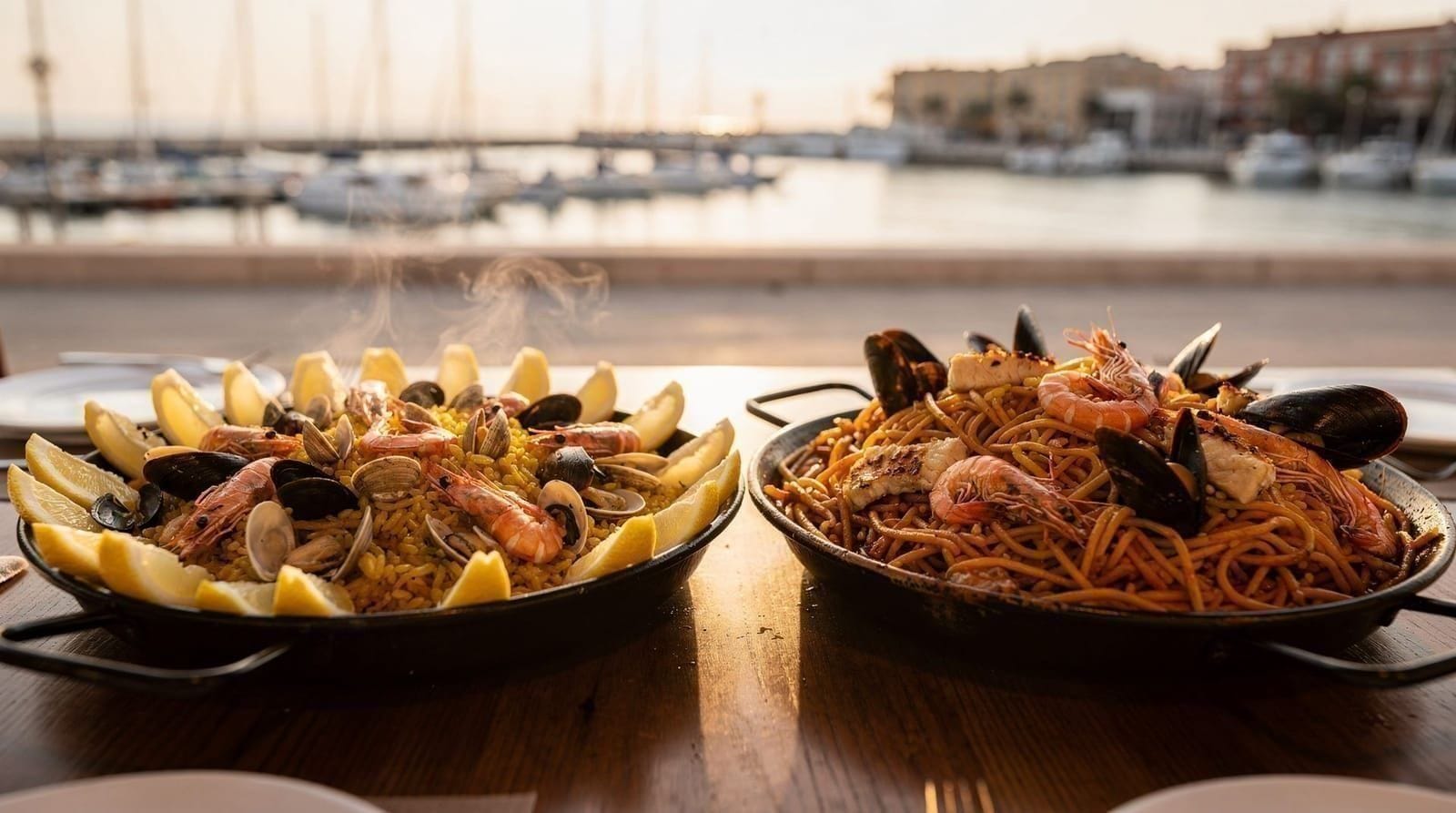
Fideuà uses the same pan, the same technique, and similar flavour logic as paella — but replaces the rice with short, thin noodles (fideos) toasted in oil before the broth is added. The result is a dish with a similar character to paella but a different texture: the noodles soak the broth differently, and the best fideuà achieves its own version of the socarrat, with the bottom layer of noodles crisping up in the final stages.
Fideuà is typically served with a side of alioli (garlic mayonnaise) — the standard accompaniment that paella does not usually come with. The combination of rich seafood or fish broth noodles and sharp, creamy alioli is excellent.
The origin story holds that fideuà was invented in Gandia, the coastal town south of Valencia, when a fisherman substituted noodles for rice because the ship captain ate too much rice. Whether true or not, fideuà is now solidly associated with the Valencian coast, and restaurants in Valencia, Gandia, and Cullera all have legitimate claim to doing it well.
The practical difference for ordering
Paella valenciana is the dish you came to Valencia specifically for. If you’re here to understand Valencian food culture, order paella valenciana at lunch at a proper restaurant. This is the dish with the deepest roots, the most rigorous tradition, and the most clearly defined quality markers.
Fideuà is the correct choice if: you prefer noodles to rice, you’re in a coastal location where fresh seafood is the focus, or you’ve already had paella and want to explore what else the pan tradition offers. Several of the best restaurants in Gandia are particularly known for their fideuà.
If you can’t decide: most honest restaurants that do both do them well. Ask the waiter which they’re proudest of today. A restaurant that cooks to the season and their morning market run will typically have a preference worth following.
Where to have fideuà specifically
Fideuà tends to be better at coastal restaurants than central city ones, which makes sense given its seafood associations. The Albufera area — particularly the village of El Palmar — does both rice dishes and fideuà well. The restaurants there have direct access to fresh Albufera eels and the local rice, and they take the pan tradition seriously regardless of which version you order.
In the city itself, Casa Carmela (Calle Isabel de Villena, near Malvarrosa beach) makes an excellent fideuà as well as their well-known paella. The combination of the two dishes on the same menu is a reliable quality indicator — it suggests the kitchen is committed to the pan tradition rather than catering to the widest possible tourist expectation.
A note on the alioli question
Paella valenciana does not traditionally come with alioli. If a tourist restaurant brings you alioli with your paella valenciana without being asked, it’s a signal that the kitchen is making an adjustment for international expectations rather than serving the dish as Valencians eat it.
Fideuà with alioli is correct and expected. The alioli for fideuà is typically a thick, hand-pounded version (mortar and pestle, egg-free in the strictest Valencian tradition) with a sharp garlic heat that cuts through the richness of the seafood broth.
Trying both without committing to a full trip
If you can’t decide and don’t want to choose between two full lunches on two separate days, a guided food tour that pairs tastings of both dishes alongside other Valencian classics is a practical shortcut — useful especially early in a trip, before you’ve built up a sense of which restaurants to trust on your own.
Gastronomic tour with paella and other Valencian classics — a practical way to taste widely early in your tripFor practical ordering guidance — what the Spanish on the menu means, how to communicate dietary restrictions, the minimum order sizes for paella, and how to identify quality — see the how to order paella like a local guide and the best paella restaurants guide.
The rice question
Both dishes use short-grain Spanish rice (or noodles in fideuà’s case) that are not interchangeable with other varieties. Bomba rice, the premium Valencian variety, has an unusual property: it expands lengthways rather than widthways when it absorbs liquid, meaning it stays firmer and produces a better texture. The Albufera Natural Park is the heart of this rice production, which is one of the reasons the dish originated here and not somewhere else.
When you eat paella in Valencia made from Albufera rice, cooked over a wood fire in a flat pan above the place where the rice was grown, it’s one of those moments where geography and food are genuinely inseparable. It tastes different here. That’s not romance; it’s provenance.
Learning the dish by cooking it
If the difference between the two pans still feels abstract, the quickest way to make it concrete is to stand at a stove and do it yourself. A hands-on session shows you why the sofrito matters, why the pan is left alone in the last minutes, and how the socarrat forms — details that are hard to appreciate from the other side of a restaurant table. It also makes you a sharper judge afterwards: once you’ve watched the rice or noodles toast, you spot a pre-cooked pan at once.
Some people like to combine this with a market visit, so the ingredients are part of the story. Booking a paella cooking class that starts at the central market keeps the whole thing close to the source, and the Central Market guide explains what to look for among the stalls if you want to browse beforehand.
Where the rest of your food trip fits
Paella and fideuà are a lunch, so plan the rest of the day around them rather than the other way round. A long midday meal leaves the evening free for lighter eating, and the tapas in Ruzafa guide is a good place to look for something small after a heavy rice lunch. If you want a broader sense of how locals structure their meals, the eat like a local guide covers the rhythm of the Valencian day, and the paella traps guide lists the warning signs worth knowing before you sit down.
Travelling with a food-first agenda? The Valencia for foodies itinerary strings meals, markets and neighbourhoods together, and the blog post on why you should never eat paella for dinner explains the timing rule in more depth. For a coastal outing built around the same dishes, the Albufera day trip guide is the natural companion to this page.