IVAM Valencia: guide to the Institute of Modern Art
Valencia: historical city tour
What is IVAM and is it worth visiting?
IVAM (Institut Valencià d'Art Modern) is Valencia's main modern and contemporary art museum, housed in a purpose-built building in the El Carmen neighbourhood. Entry is €5 (free on Sundays and on Wednesday afternoons). The permanent collection is strong on 20th-century Spanish avant-garde, particularly the sculptor Julio González. Worth an hour to two hours if you are interested in modern art.
IVAM (Institut Valencià d’Art Modern) opened in 1989 as the first museum specifically dedicated to modern and contemporary art in the Valencian Community. It occupies a purpose-built building on Calle de Guillem de Castro at the northwestern edge of the El Carmen neighbourhood, adjacent to the medieval city walls. Its permanent collection centres on the work of the Valencian sculptor Julio González, along with significant holdings in 20th-century European avant-garde art. Temporary exhibitions change every two to three months and maintain a consistently high curatorial standard.
| Where | Calle de Guillem de Castro, edge of El Carmen |
| Cost | €5 general admission, free under 16 |
| Free entry | Every Sunday and Wednesday 16:00–19:00 |
| Time needed | Around 1-2 hours |
| Getting there | Metro Túria (line 5), 5-minute walk |
The permanent collection
The museum’s most important holding is the world’s largest collection of works by Julio González (1876–1942), the Valencian sculptor who pioneered the use of wrought iron as a medium for sculpture and who had a formative influence on Pablo Picasso’s sculptural practice. González is one of the central figures of 20th-century modernist sculpture and is substantially underrecognised outside Spain. The IVAM collection includes roughly 380 works — sculptures, paintings, and drawings — spanning his entire career.
The González collection occupies the ground floor of the main gallery wing. The sculptures are displayed with enough space between them to walk around each piece and see the spatial qualities that define González’s approach to iron as a drawing medium in three dimensions.
Beyond González, the permanent collection includes significant works in:
- Constructivism and geometric abstraction (primarily Eastern European and Russian, early 20th century)
- Dadaism and Surrealism (strong photomontage holdings, including work by John Heartfield)
- Spanish post-war abstraction (including Grupo Pórtico and Grupo El Paso)
- Contemporary Valencian and Spanish work from the 1970s through the present
The second gallery wing, the Galería del Carme, incorporates remains of the medieval city wall into its architecture — one of the few places in Valencia where the original wall fabric is visible inside a building rather than from the street.
Temporary exhibitions
IVAM’s temporary exhibition programme is ambitious by Spanish regional museum standards. The museum regularly hosts retrospectives of 20th-century figures who receive minimal exhibition space elsewhere in Spain, as well as contemporary solo shows by international and Spanish artists. Programming tends toward conceptual and politically engaged contemporary work — the exhibitions are less accessible than those at major national institutions but more intellectually interesting than most regional museum programmes.
The temporary exhibition space is on the upper floor and is separate from the permanent collection. A single ticket covers both.
Practical information
Opening hours:
- Tuesday–Sunday: 10:00–19:00
- Closed Mondays and major public holidays
Ticket prices:
- General admission: €5
- Reduced rates: see the official IVAM website (ivam.es) for current concessions
- Under 16: free
- Sunday: free entry for all
- Wednesday 16:00–19:00: free entry
The museum participates in Valencia’s museums free Sunday scheme — see the free Sunday museums guide for the full list.
Getting there:
- By foot from the old town: The IVAM is 10 minutes’ walk from Plaza del Ayuntamiento via Calle de Guillem de Castro. It is on the western edge of the El Carmen neighbourhood.
- Metro: Túria station (line 5) is a 5-minute walk. Àngel Guimerà (lines 1, 2, 9) is also walkable.
- Bus: Multiple lines along Calle de Guillem de Castro pass within 100 metres of the entrance.
The building and its context
The IVAM building, designed by Emilio Jiménez Julián and Carlos Salvadores, is a confident piece of 1980s institutional architecture — not architecturally significant in itself but well-adapted to its function. The Galería del Carme wing, which was added to incorporate the archaeological remains of the medieval Carmelite convent that previously occupied the site, is the more interesting piece architecturally: a long white gallery where sections of the original monastery fabric and city wall are visible through glass panels in the floor.
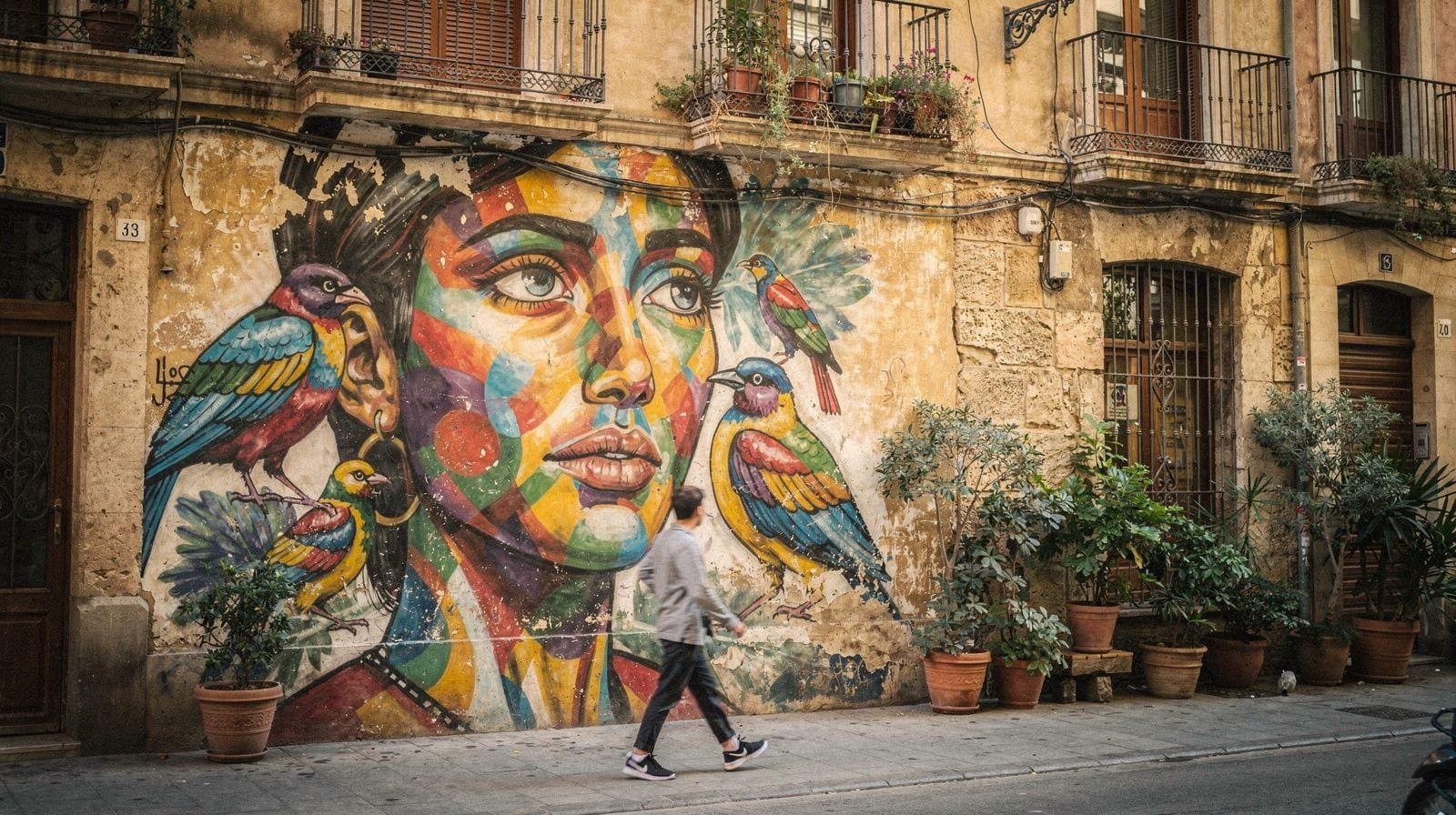
The museum sits at the edge of the Barrio del Carmen, one block from the Torres de Serranos and close to several important street art pieces. Combining an IVAM visit with a walk through El Carmen’s street art and Roman archaeological sites is a natural half-day programme.
Honest assessment
IVAM is a well-run regional art museum with a genuinely important permanent collection. The Julio González rooms alone are worth the €5 entrance fee for anyone interested in modernist sculpture — this is the deepest collection of his work anywhere in the world and it is displayed with care.
The temporary exhibitions are variable: ambitious at their best, dense and self-referential at their worst. The museum is not a crowd-pleaser — it does not have the popular appeal of the Fine Arts Museum or the spectacular architecture of the City of Arts and Sciences. It serves an audience that comes specifically for the work, and that audience is served well.
For a first visit to Valencia without a specific interest in contemporary art, the IVAM is optional — there are stronger claims on your time. For repeat visitors or those with art backgrounds, it is essential.
Who should prioritise IVAM
IVAM rewards a specific kind of visitor more than a general one. If you have any interest in 20th-century sculpture, Julio González’s rooms are genuinely rare — no other collection in the world covers his work in this depth, and seeing an artist who directly influenced Picasso’s sculptural period is a real find for anyone with an art background. If modern and contemporary art generally interests you but González specifically doesn’t, the temporary exhibition programme is still worth checking before you visit — its quality varies more than the permanent collection’s, so a quick look at what’s currently showing helps set expectations. For visitors more interested in Sorolla and Valencian classical painting or Modernisme architecture, time is better spent elsewhere in the city.
A practical half-day with IVAM
Because IVAM sits at the edge of El Carmen, it slots naturally into a half-day that also covers the neighbourhood’s medieval streets and street art. A reasonable sequence: start at Torres de Serranos for the rooftop views and orientation, walk south through El Carmen taking in the street art along the way, visit IVAM around midday when it’s typically quieter than opening or closing hours, then finish with coffee or lunch in one of El Carmen’s cafés. This sequence works well on a free Sunday, since you can time the IVAM visit around the free entry window without needing to plan your whole day around a ticket purchase. If you’d rather have the context filled in by a guide rather than reading gallery labels, a walking tour that covers El Carmen’s history alongside its art scene is a useful add-on.
Valencia: best street art 2-hour walking tourHow to look at the González rooms
Julio González’s work rewards a slower, more deliberate way of looking than most museum galleries invite. The sculptures are made of iron, and the most useful habit is to circle each piece rather than read it from the front. Many of them behave like drawings in space: lines, gaps and cut shapes matter as much as the solid mass. Stand still for a moment at each one, then move a few steps and watch how the silhouette changes. A piece that looks flat and almost graphic from one angle can turn out to be open and airy from another.
Read the wall labels after you have looked, not before. The labels give the dates and the context, but the pleasure of this collection is in noticing how the artist handles metal, how he cuts and joins it, and how he leaves empty space inside the form. If you arrive with a friend who is less interested in sculpture, agree to split up in this section and meet afterwards; the pace that suits one person rarely suits the other.
Bring that attention to the drawings as well. They show the thinking behind the metalwork and make the sculptures easier to understand, especially if you have walked through the iron pieces first and then see how the same ideas appear on paper.
Making sense of the wider collection
After the González rooms, the rest of the permanent collection can feel like a change of register. The Constructivist and geometric abstraction works are about structure and clarity, while the Dada and Surrealist photomontages are noisy, political and playful. Moving between them in one visit is stimulating, but it helps to decide in advance what you want from the museum. If you are short on energy, choose one theme and follow it through; an hour spent with a single strand is more memorable than an hour spent rushing past everything.
The Spanish post-war abstraction is worth a pause for anyone who wants to understand how Spanish artists worked through a difficult period, and how that story connects to the rest of European art. For context on Valencian painting from a very different tradition, the Fine Arts Museum and the Sorolla guide make a useful contrast and show how far the local art scene travelled over a few generations.
Planning around the temporary exhibitions
Because the temporary programme changes regularly, two visits a few months apart can feel like two different museums. Before you go, check the museum’s current programme and decide whether the show on the upper floor appeals to you. If it does, give it the time it deserves; these exhibitions are often dense, with a lot of text and a lot of material, and they are tiring if you arrive already fatigued after a long day of sightseeing.
If the current show does not interest you, do not feel obliged to see it just because the ticket covers it. Spend the time in the permanent rooms, return to the González sculptures, or walk through the Galería del Carme again. A shorter, focused visit is better than a long one in which you stop paying attention halfway through.
Visiting with other people
IVAM is not a museum that works for everyone in a group. Adults with an interest in art will have a good time, and teenagers who like unusual objects and strong images often respond well to the sculpture and the photomontage. Younger children are harder to keep engaged, and a long visit is unlikely to work. If you are travelling as a family, the Valencia with kids guide and the rainy-day ideas for kids suggest places that are easier to enjoy with children, and Gulliver Park is a good counterweight after a quiet morning.
For couples or friends who want a relaxed cultural day, IVAM pairs well with a slow lunch afterwards. Take your time over the food and talk about what you saw; modern art is more fun when you argue about it a little. For accessibility questions on getting around the city, the accessible Valencia guide is a good starting point.
Fitting IVAM into a longer stay
If you have only a short stay, treat IVAM as an optional extra and look at the one-day Valencia itinerary or the first weekend plan to see what usually takes priority. With more time, the three-day itinerary leaves room for a slower morning in a museum, and the how many days in Valencia guide helps you judge how much culture you can reasonably fit in.
Budget travellers will like that this is an inexpensive museum, and it sits comfortably in a low-cost day alongside free sights; the budget guide and the tourist card guide explain how to weigh up paid entries across the city. Anyone deciding between a guided or independent approach to the old town can read the guided vs self-guided comparison before choosing.
Eating and resting nearby
A museum visit is better when it is paced with breaks. The streets of El Carmen around the museum have plenty of places for coffee, and the eat like a local guide will help you avoid the obvious tourist options. If you want a proper lunch after the galleries, the menú del día guide explains how the set lunch works, and the tourist menu traps guide warns about places to skip. Plan the meal for the usual local lunch time rather than an early tourist slot; it matches the rhythm of the day and the food is better.
Combining with nearby attractions
The IVAM’s location on the edge of El Carmen puts it within walking distance of several other important sites:
- Torres de Serranos (300 m north): the northern gate of the 14th-century city walls, with rooftop access
- El Carmen neighbourhood (immediate): medieval streets, Roman archaeological remains, street art
- Torres de Quart (600 m south along the wall): the western gate, impressive from outside and offering access to the wall walk
 medieval guided walking tourCheck availability
The El Carmen guide covers the neighbourhood surrounding the IVAM in detail, including the best nearby cafés for a post-museum coffee.
Frequently asked questions about IVAM Valencia
Do I need to book IVAM tickets in advance?
Advance booking is not usually necessary outside major exhibition openings. The museum rarely reaches capacity on regular weekdays. For the free Sunday and Wednesday-afternoon slots, arriving earlier in the day avoids the busiest window around midday.How much time should I budget for IVAM?
One to two hours covers the permanent Julio González collection and a temporary exhibition at a comfortable pace. Visitors specifically interested in modernist sculpture may want closer to two and a half hours to take in the full González holdings.
Top experiences
Bookable activities with verified prices and instant confirmation on GetYourGuide.