Valencian language: what it is, where you'll hear it, and useful phrases
Valencia: historical city tour
Do people in Valencia speak Valencian and will I need it as a tourist?
Valencian (Valencià) is a co-official language in the Valencian Community alongside Spanish. Approximately 50–60% of Valencians understand Valencian; active speakers are more concentrated in rural areas and specific urban communities. All residents speak Spanish fluently. As a tourist, you do not need Valencian — Spanish or English works everywhere. But encountering Valencian (on street signs, menus, in festivals) is part of understanding the city.
Language is one of the elements of Valencia that surprises many visitors — not because communication is difficult (Spanish works everywhere, and English is widely understood in tourist contexts) but because the city’s linguistic situation is more complex and politically charged than most visitors expect. Understanding Valencian — even at a basic level — significantly deepens the experience of being in the city.
| What it is | co-official Romance language, close relative of Catalan |
| Do you need it | no — Spanish and English work everywhere for tourists |
| Where you’ll hear it | street signs, Las Fallas, traditional menus, Tribunal de las Aguas |
| Useful for | food terms (horchata, fideuà, all i pebre), greetings |
| Sensitivity | avoid debating “language vs dialect” with locals |
What Valencian is
Valencian (Valencià in Valencian, Valenciano in Spanish) is a Romance language descended from Old Catalan, brought to Valencia by settlers from Catalonia and Aragon following the Christian reconquest of the city by Jaume I in 1238. It displaced Arabic (the language of the previous Muslim population) and has been spoken in the Valencia region continuously since the 13th century.
The language is closely related to Catalan spoken in Catalonia — linguists generally consider them dialects of the same language (Catalan-Valencian-Balearic), while the official Valencian position is that Valencian is a distinct language with equal standing. The mutual intelligibility between Valencian and Catalan is high enough that speakers of either can generally understand written texts in the other. The main differences are phonological (sound patterns differ) and lexical (some vocabulary items are specific to one or the other).
As a visitor, this debate is not something you need to engage with, but knowing it exists explains why you will sometimes see Valencian referred to as a dialect and other times as a language, and why the topic can produce heated reactions from locals.
Where Valencian is spoken
Valencian has about 2.4 million speakers in the Valencian Community (out of a population of approximately 5 million). The geographic and social distribution of speakers is uneven:
Rural and inland areas: The strongest Valencian-speaking communities are in the inland towns and villages of the Valencia region, particularly in the comarcas (districts) away from the coast. In towns like Xàtiva, Ontinyent, and the inland municipalities, Valencian is the everyday language.
Valencia city: In Valencia city itself, the situation is more complex. The city has traditionally been more Spanish-dominant than the interior, partly because of migration from other parts of Spain during the 20th century industrial boom. Active Valencian speakers in Valencia city are a minority, concentrated in specific communities (older residents, politically engaged groups, the academic community). However, understanding of Valencian is widespread, and switching between Spanish and Valencian in conversation (code-switching) is common in certain contexts.
El Cabanyal and older neighbourhoods: The former fishing quarters of El Cabanyal and the older working-class barrios have maintained more Valencian use than the newer Eixample neighbourhoods.
Encountering Valencian as a tourist
Street signs and urban signage
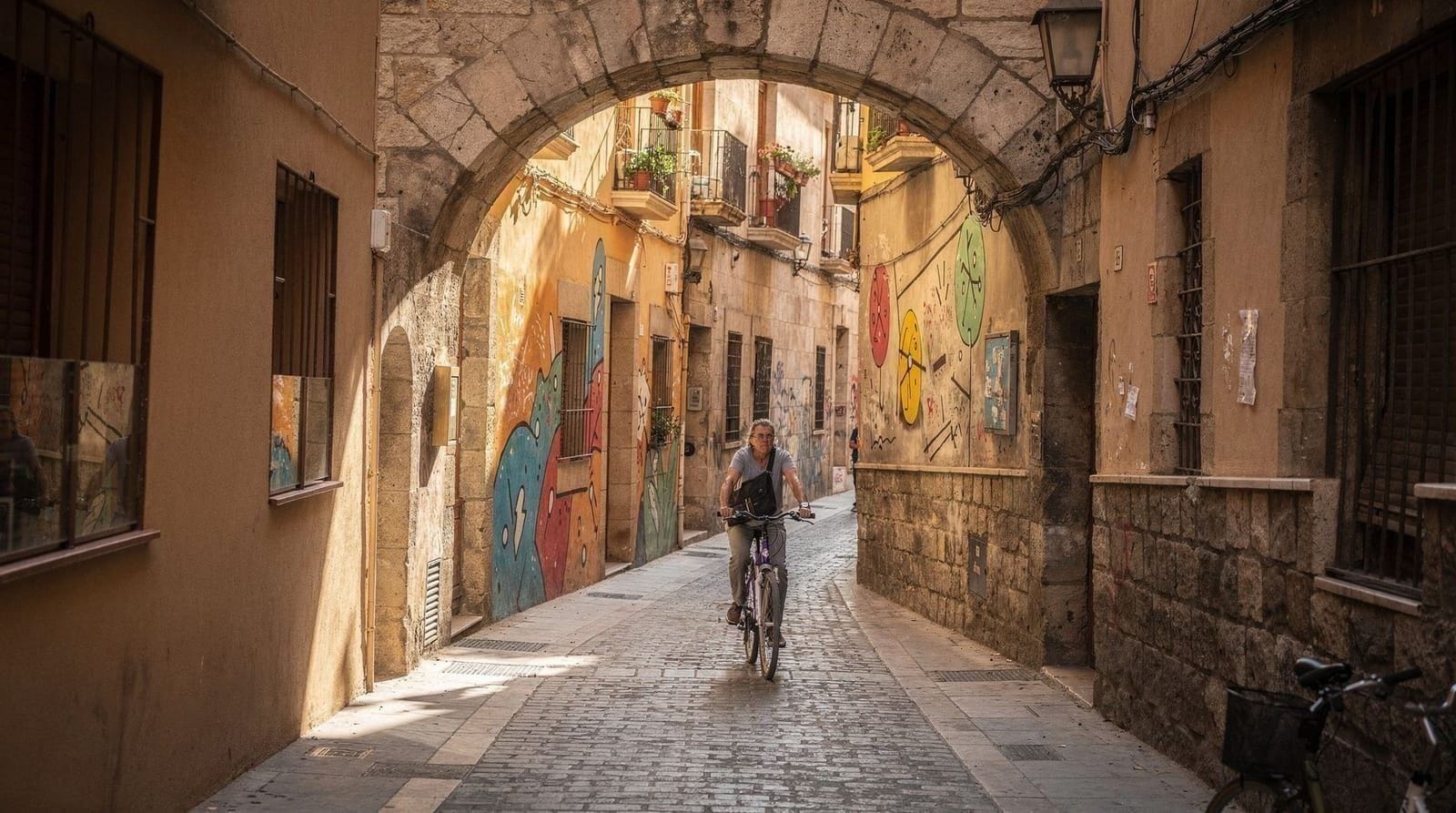
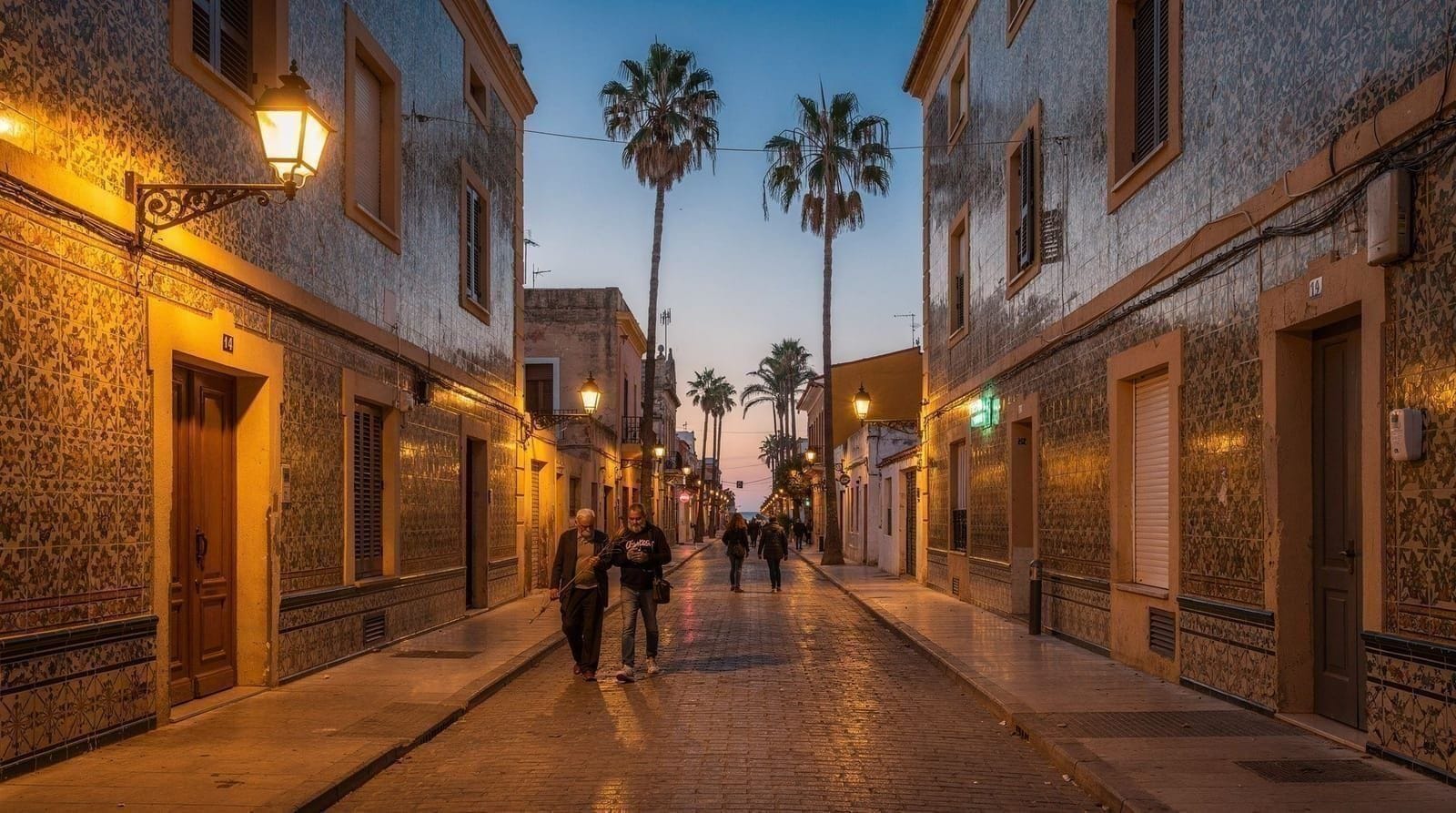
Valencia’s street names are officially in Valencian. The historic centre uses Valencian forms: Plaza de la Virgen becomes Plaça de la Mare de Déu; Calle Caballeros becomes Carrer dels Cavallers; Calle del Hospital becomes Carrer de l’Hospital. Many signs are bilingual; some are Valencian-only.
Metro and EMT bus stops use both languages depending on the line and station, sometimes varying within the same journey. Google Maps generally shows Valencian forms in the city centre.
Key navigation terms:
- Carrer = calle (street)
- Plaça = plaza (square)
- Avinguda = avenida (avenue)
- Passeig = paseo (promenade)
- Pont = puente (bridge)
- Jardins = jardines (gardens)
- Nord/Sud/Est/Oest = norte/sur/este/oeste (north/south/east/west)
Menus and food culture
Traditional Valencian food has a vocabulary in Valencian. The names you will encounter:
- Arròs = arroz (rice) — arròs negre (black rice), arròs al forn (baked rice)
- All i pebre = ajo y pimienta (garlic and pepper) — the classic Albufera eel stew
- Fideuà = the noodle-based dish served in the same format as paella
- Horchata de xufes = horchata de chufas (tiger nut horchata)
- Fartons = the finger-shaped pastry served with horchata
- Bunyols = buñuelos (fritters — the Las Fallas traditional snack)
- Menú del dia = same in Spanish (daily set lunch menu)
Many traditional restaurants in Valencia present their menus in Valencian or bilingual format. This is a sign of authenticity rather than a tourist affectation. See the horchata and fartons guide and the all i pebre guide for more on two dishes whose names come straight from Valencian.
The Tribunal de las Aguas
The Water Court, which meets every Thursday at noon outside Valencia Cathedral’s Apostles’ Door, conducts its proceedings entirely in Valencian. The legal tradition of the Tribunal — unchanged for over a thousand years — predates the political debates about the language’s status and represents Valencian as a living functional medium rather than a heritage language preserved for ceremonies. See the UNESCO Valencia guide for the full story of the Tribunal.
Las Fallas and other festivals
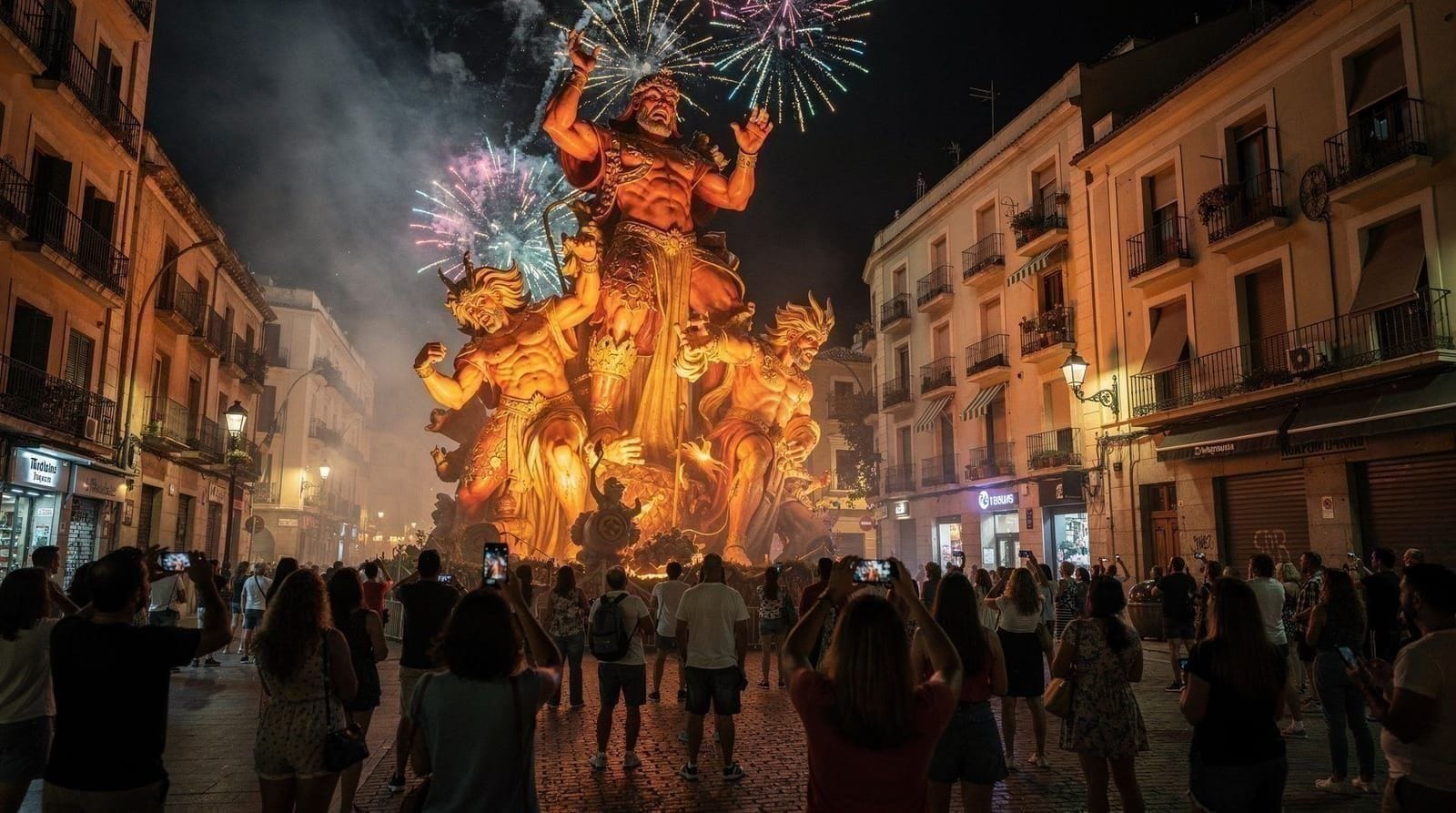
The official language of Las Fallas is Valencian. The Crida (opening ceremony from Torres de Serranos at the end of February), the announcements during the festival, the Ofrenda de Flores ceremony, and the formal elements of the festival are conducted in Valencian. The festival’s governing body (Junta Central Fallera) publishes its communications in Valencian. See the complete Las Fallas guide for how the language threads through the whole festival.
Semana Santa Marinera processions in El Cabanyal are announced and organised in Valencian. The songs, prayers, and ceremonial elements use Valencian.
This is not performance or preservation for tourists — these are communities using their language in the contexts where they have always used it.
Basic Valencian phrases for visitors
You do not need Valencian to navigate Valencia. But using a word or two demonstrates awareness and is almost always well-received:
| Valencian | Spanish equivalent | Meaning |
|---|---|---|
| Bon dia | Buenos días | Good morning |
| Bona vesprada | Buenas tardes | Good afternoon |
| Bona nit | Buenas noches | Good evening/night |
| Gràcies | Gracias | Thank you |
| De res | De nada | You’re welcome |
| Per favor | Por favor | Please |
| Perdona | Perdona | Excuse me |
| La conta, si us plau | La cuenta, por favor | The bill, please |
| On és…? | ¿Dónde está…? | Where is…? |
| Molt bé | Muy bien | Very good |
Valencian pronunciation differs from Spanish. The “l·l” (geminate l) is a double consonant. The letter “x” is typically pronounced /ʃ/ (like English “sh”). The “v” and “b” are distinguished (unlike in most Spanish dialects). Final consonants are often reduced. None of this matters for a tourist using a phrase or two — the effort is noted regardless of accent.
The language debate: a primer for visitors
The question of whether Valencian is a separate language from Catalan is genuinely politically sensitive. Some points to understand:
The official position: The Valencian Language Academy (Acadèmia Valenciana de la Llengua, AVL), established by the Valencian regional government in 2001, has an official standard for Valencian that is close to but not identical to the Institut d’Estudis Catalans standard for Catalan.
The linguistic position: Most Romance linguists classify Valencian as a variety of Catalan — a political statement in Valencia that can provoke strong reactions. The argument for “same language” is based on mutual intelligibility and structural similarities.
The political dimension: The identification of Valencian as a separate language (rather than a dialect of Catalan) has historically been associated with right-wing nationalist politics in Valencia. Left-wing parties have generally been more receptive to the Catalan-Valencian linguistic unity position. This is a crude simplification, but the language debate is genuinely embedded in Valencia’s political landscape.
What this means for tourists: Do not wade into this debate with locals unless you know the person well and understand the political context. Referring to Valencian as “a dialect of Catalan” to a speaker who identifies as Valencian may be received poorly.
Historical city tour of Valencia — covers the cultural and linguistic history of the city alongside its monuments
Valencian literature and culture
Valencian has a significant literary tradition. The 15th century was a golden age for Valencian literature — the same period as the construction of the Lonja. Major works:
Tirant lo Blanch (1490, Joanot Martorell): A chivalric novel often cited as the first modern novel in European literature. Written in Valencian; cited by Cervantes in Don Quixote as the best book of chivalry ever written.
Ausiàs March (1400–1459): The great Valencian poet of the 15th century, considered one of the finest medieval lyric poets in any Iberian language. He abandoned the Provençal troubadour tradition and wrote directly in Valencian rather than the literary Occitan of his predecessors.
Both authors are monuments in Valencia’s cultural self-image; you will see their names on street signs and institution names throughout the city.
Hearing the language on a walking tour
A walk through Ciutat Vella is one of the easiest ways to notice Valencian in context — street names and building inscriptions are everywhere. For a guided option, a walking tour of the medieval centre covers the old town streets, including El Carmen, where many of those names appear.
Valencia medieval guided walking tour — the historic centre, including El Carmen, on footPutting a few words to work around the city
The easiest way to use Valencian is to attach it to places you are already visiting. At the market, the stall labels and the names of produce are often written in Valencian first, so the Central Market guide and the food markets guide pair well with the vocabulary above. Ask for something with a simple “bon dia” and a smile, then switch to Spanish or English if the conversation needs it. Nobody expects more, and the greeting is what gets remembered.
In a café or bar, the same logic applies. A “gràcies” when your order arrives costs nothing. If you are working through breakfast and mid-morning snacks, the esmorzaret guide explains a very local ritual whose name is itself Valencian, and the menú del día guide shows how set lunches are written on chalkboards, often with Valencian dish names mixed in with Spanish ones.
Reading Valencian on signs, plaques and menus
You do not need to speak a language to read a good deal of it. Valencian is close enough to Spanish, and to French and Italian, that many written words can be guessed from context. Plaques on historic buildings, museum labels and monument signs are a good place to practise. At the Lonja de la Seda and around the cathedral and Miguelete, you will often find the Valencian form first and the translation after it.
A few habits help when you read:
- Look for the apostrophe: forms like l’Hospital or d’Alboraia show Valencian contractions that Spanish does not use.
- Expect a final “-ció” where Spanish ends in “-ción”, so “estació” is the station and “informació” is information.
- Treat “x” as a soft “sh” sound in many words, which explains why some place names sound unlike their spelling.
- When a menu line looks unfamiliar, assume it is a regional dish rather than a mistake, and ask the waiter to explain it.
Language and place names in the wider region
Once you leave the city, Valencian place names become even more visible. Towns such as Xàtiva and Sagunto carry their Valencian spelling on road signs, and the same is true for the Albufera and the villages around it. If you are planning day trips, the Albufera day trip guide and the Xàtiva castle guide will help you recognise the names you meet on the way. For the village of Bocairent and the hills inland, signage often leans more heavily on Valencian than in the city centre.
This is also why the same place can appear under two spellings on a map, a bus timetable and a booking confirmation. Check the destination against the spelling on your ticket rather than assuming something has gone wrong.
How the language shows up in everyday city life
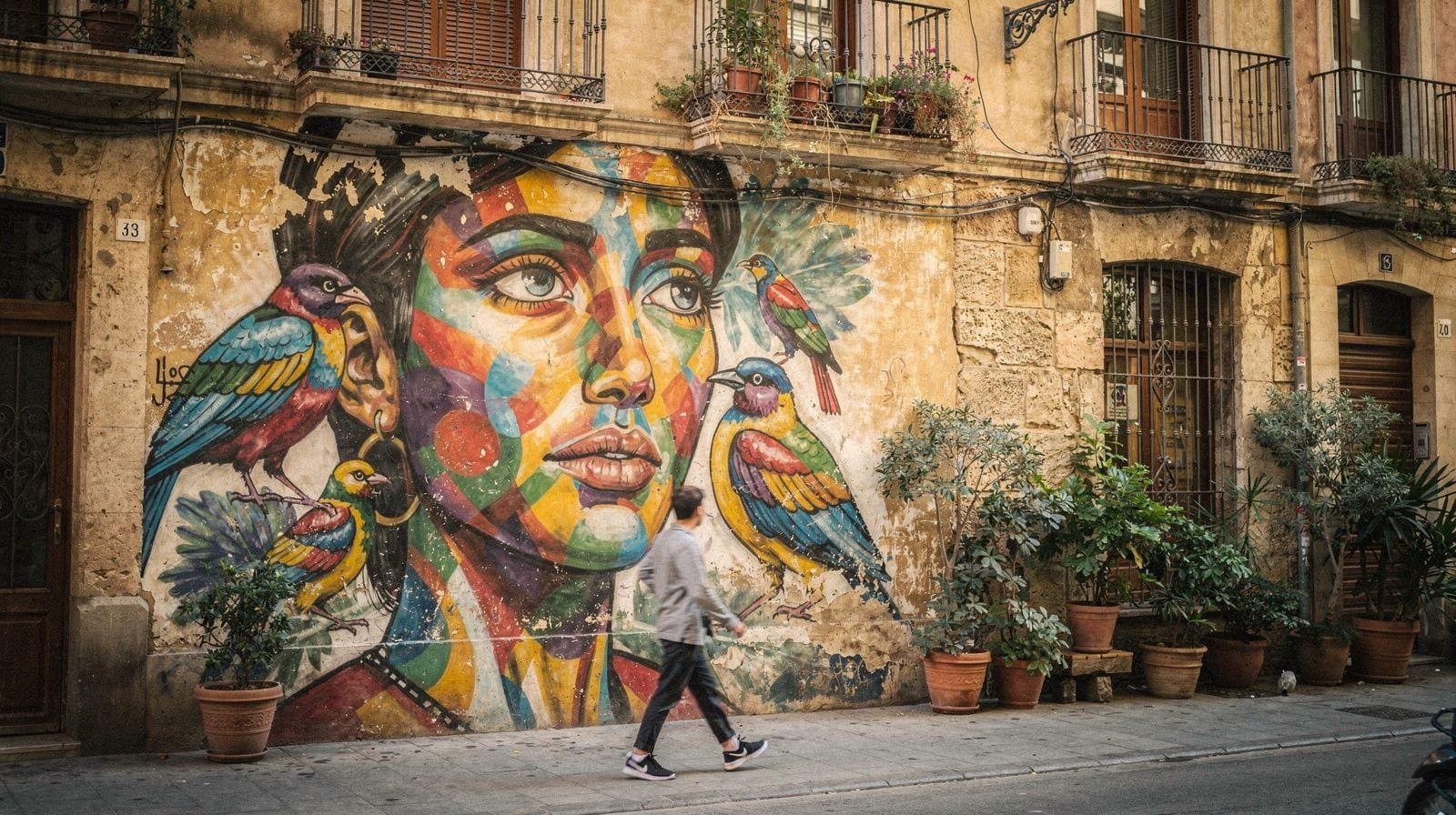
Valencian is not only a matter of signs and menus. You may overhear it between friends in a bar, in announcements at a neighbourhood festival, or from a guide who slips between languages mid-sentence. In the neighbourhoods with a more local feel, such as El Carmen and Russafa, the mix of Spanish, Valencian and international visitors is part of the street atmosphere. A walk through the street art of El Carmen is a pleasant way to notice slogans and murals written in Valencian alongside Spanish and English.
If you want more cultural context before you go, the Valencia festivals calendar shows where the language is most audible through the year, and the Semana Santa Marinera guide explains the neighbourhood traditions where it is used. For the wider picture of how the city sees itself, the Valencia city page is a good starting point, and the honest tourist guide to overrated and underrated sights is useful for deciding how much time to give to culture versus other priorities.
Frequently asked questions about Valencian language
Is Valencian the same as Catalan?
Linguistically, Valencian and Catalan are closely related varieties of the same language family (Eastern Ibero-Romance). Mutual intelligibility between Valencian and Catalan speakers is high. Whether they are the 'same language' is a politically contested question in Spain: the Valencian government officially considers Valencian a separate language; Catalan linguistics generally considers it a dialect of Catalan; the Real Academia Española is neutral on the question. For practical purposes as a tourist, they are close enough that a Catalan speaker can understand Valencian writing and speech.Where will I encounter Valencian as a tourist?
Street signs in Valencia's historic centre are often bilingual (Spanish/Valencian) or Valencian-only. The Tribunal de las Aguas (Water Court) holds its sessions in Valencian. Las Fallas and Semana Santa Marinera announcements are in Valencian. The Diputació de València and municipal institutions use Valencian in official communications. Many restaurant menus in traditional establishments have Valencian names for dishes (all i pebre, fideuà, arròs amb fesols i naps). Names on buildings, squares, and streets are often in Valencian.What is the difference between Spanish and Valencian street names?
Valencia uses bilingual street naming. The official form is in Valencian (e.g., Carrer del Consolat del Mar, Plaza del Mercat); the Spanish versions are often in common use but not official. Some key differences: carrer (Valencian) vs. calle (Spanish) = street; plaça vs. plaza = square; avinguda vs. avenida = avenue; passeig vs. paseo = promenade. Maps and Google Maps usually show Valencian forms in the city centre.What is the political situation around the Valencian language?
The Valencian language question has been politically contested for decades. In simplified terms: left and nationalist parties support expanding Valencian use in education and public life; centre-right parties have historically been more conservative on language policy. The current Valencian government (as of 2026) has policies that promote Valencian in public education. The debate is ongoing and is reflected in electoral politics.What Valencian words are useful to know as a tourist?
Gràcies (thank you), bon dia / bona vesprada / bona nit (good morning / good afternoon / good night), per favor (please), i la compte (the bill please). Food terms: all i pebre (garlic and pepper, the Albufera eel stew), arròs (rice), fideuà (noodle paella), horchata de xufes (horchata of tiger nuts), bunyols (fritters). Festival terms: les Falles (Las Fallas), la Cremà (the burning), la Nit del Foc (Night of Fire).Will locals be offended if I only speak Spanish?
No. Spanish is an official language throughout the Valencian Community and every resident speaks it fluently. Using Spanish is completely normal and expected from visitors; Valencian is a bonus, not an obligation.Are Valencian classes available for visitors staying longer term?
Yes, informally — some language schools and the Universitat de València offer Valencian courses, though most are aimed at residents rather than short-term tourists. For a short visit, learning a handful of greeting and food-related phrases is more practical than formal study.If I speak Spanish, do I need to learn any Valencian?
No — Spanish works perfectly everywhere in Valencia for tourism purposes. Valencian phrases are an optional cultural courtesy, not a practical necessity.Is English widely spoken in Valencia?
In tourist-facing contexts (hotels, restaurants near major sights, tour operators), English is adequate. Away from the tourist circuit — in markets, small neighbourhood bars, transport — Spanish is more reliable. Young people in Valencia have generally better English than older generations, but Spanish remains the safe default.Why are some streets on maps listed differently than on the physical signs?
Maps and GPS systems do not always agree on Valencian vs. Spanish forms of street names. Google Maps tends toward Valencian forms in the historic centre; older print maps may use Spanish. The physical signs on streets are the official form (usually Valencian in the centre). Both forms refer to the same street; if you are confused, cross-reference with a nearby building number.
Top experiences
Bookable activities with verified prices and instant confirmation on GetYourGuide.