Valencia during Las Fallas — the complete 5-day festival itinerary
Valencia: the ultimate Fallas tour — celebrate like a local
Duration: 3 hours
Las Fallas is the most intense and unmissable festival in Spain. For five days in March (with the climax 15–19 March), Valencia becomes a city of fireworks, monumental sculptures, 10,000 tonnes of papier-mâché art and a quantity of explosive charges that genuinely shakes buildings. It is also one of the most misunderstood tourist experiences in Spain — many visitors arrive not knowing when the key events happen, end up in the wrong places, and miss the real experience.
Quick answer: The Fallas climax is 15–19 March. Key events: daily mascletà at 14:00 in Plaza del Ayuntamiento (the most violent fireworks display in Europe), Ofrenda de Flores (flower offering to the Virgin) on 17–18 March, Nit del Foc (Night of Fire) on 18 March, Cremà (burning of all sculptures) on 19 March starting at 22:00. Book accommodation 3–6 months in advance. Prices triple.
| Where | Ciutat Vella (El Carmen), Ruzafa and Plaza del Ayuntamiento |
| Cost | Around €80–120/day mid-range, excluding accommodation |
| Time needed | 5 days for the full climax (15–19 March), 2–3 days for a taster |
| Getting there | Valencia Airport (VLC), metro Line 3/5 to city centre, around 25 min |
| Best time | 15–19 March for the climax; 1–14 March for fewer crowds, same monuments |
Fallas basics: what you need to understand
What is burned and what is not
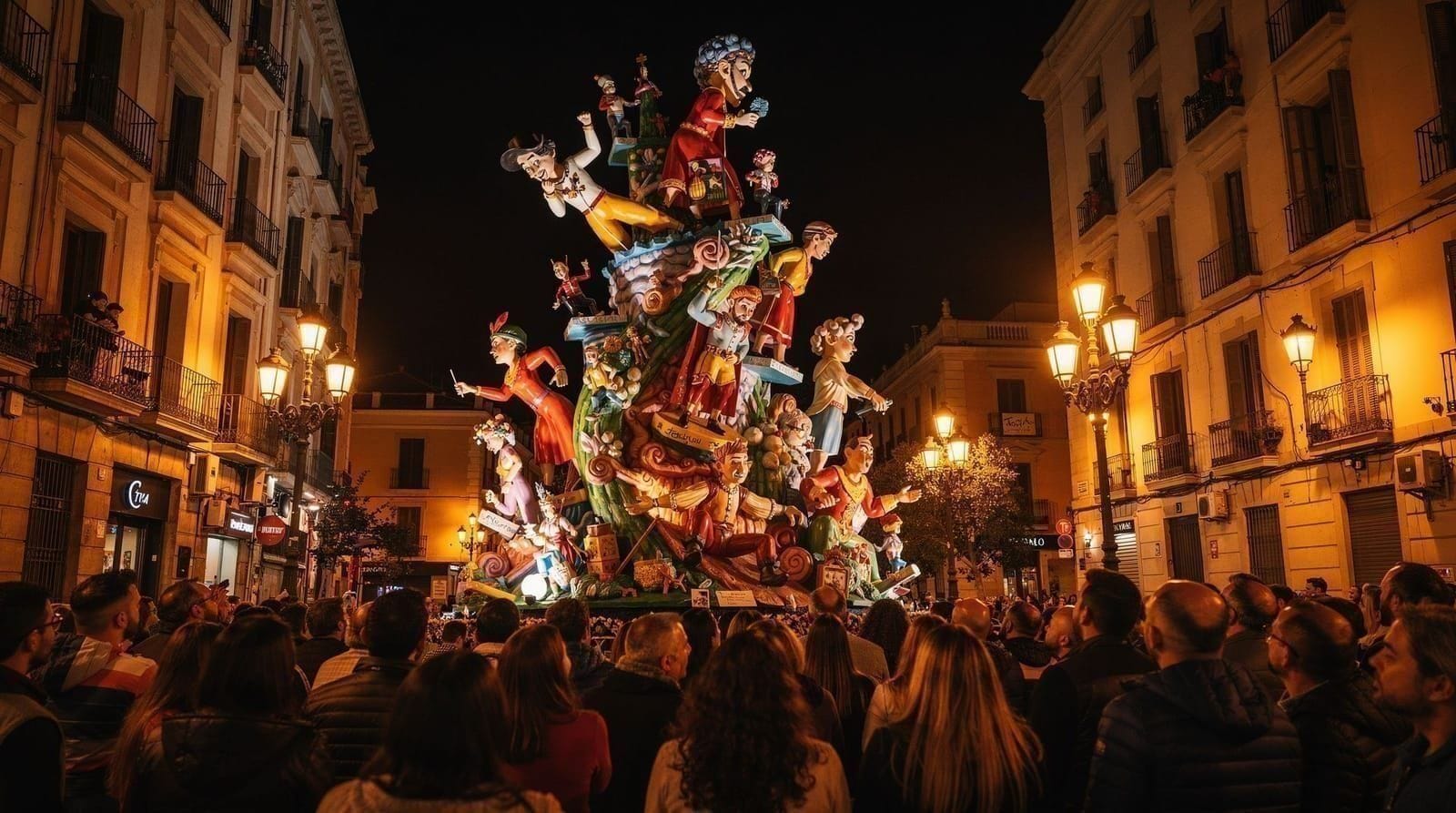
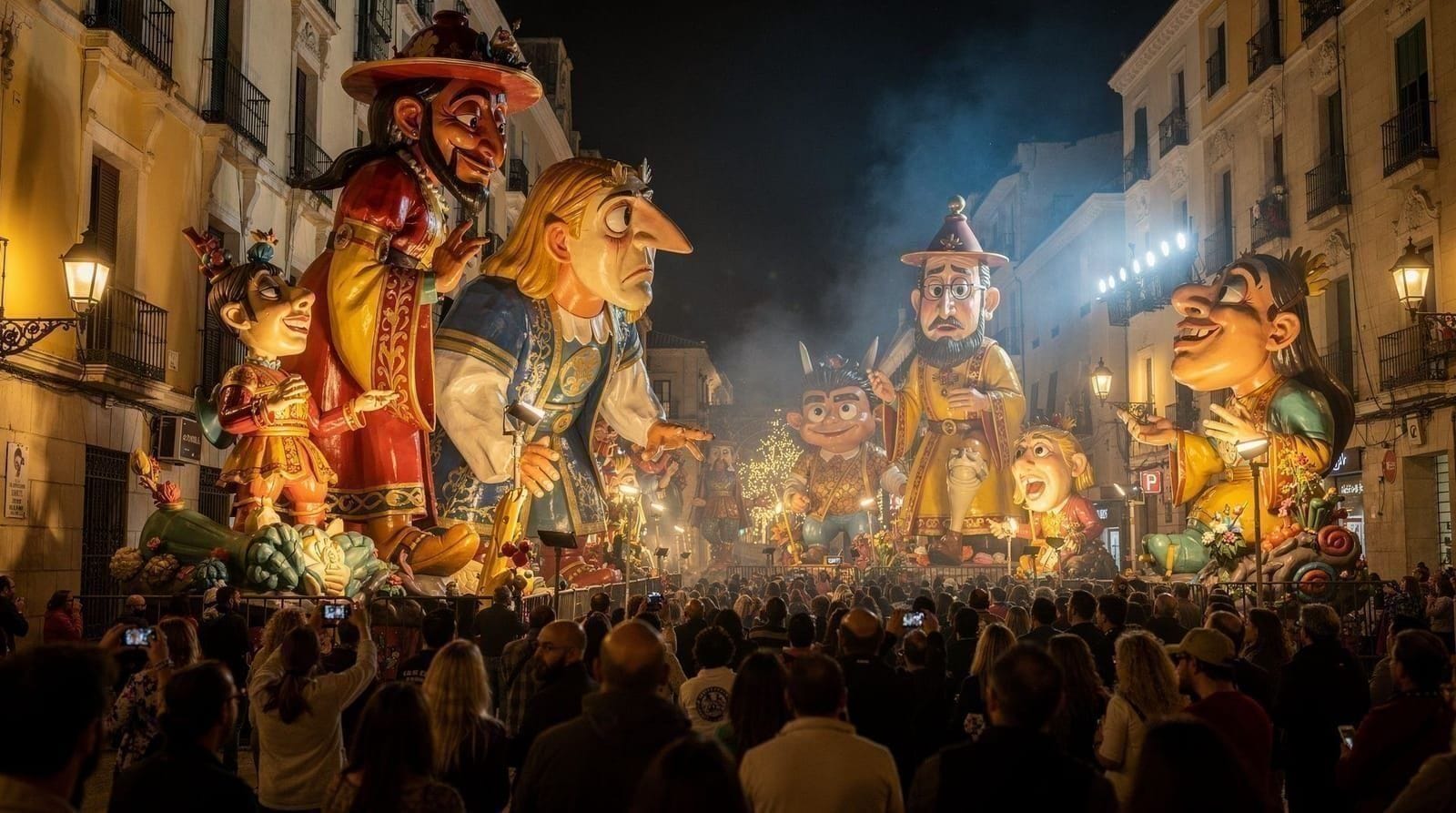
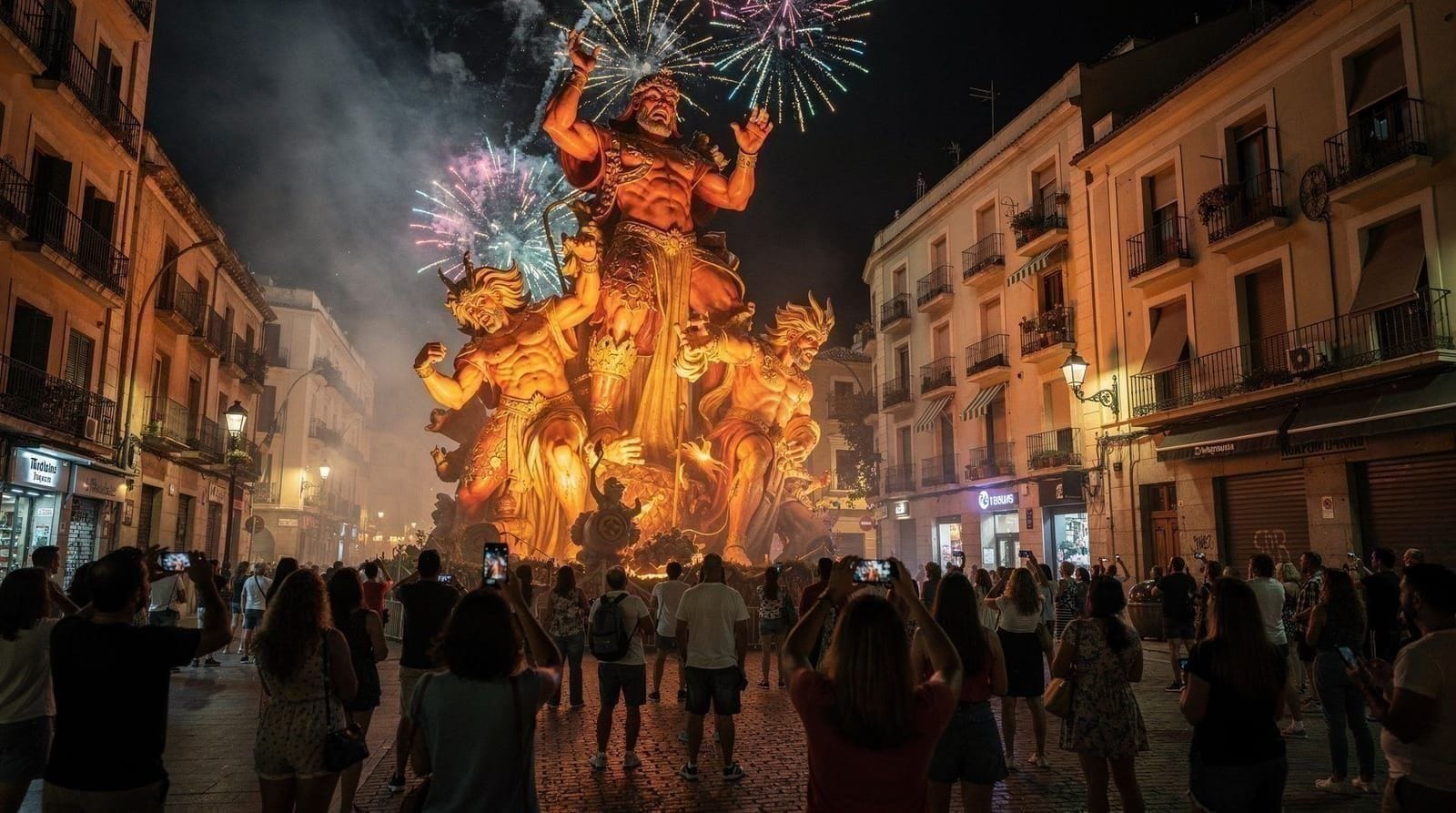
The falla (plural: falles) are sculptural tableaux — sometimes 20 metres tall, often satirical, always extraordinary — constructed by neighbourhood associations called comissions falleres and displayed in the streets from around 1 March. Every single one except the winner is burned on the night of 19 March. Around 800 fallas burn simultaneously across the city. This simultaneous burning is the Cremà.
The child falla (falla infantil) — the scaled-down version dedicated to children — is also burned, before the main one.
The noise
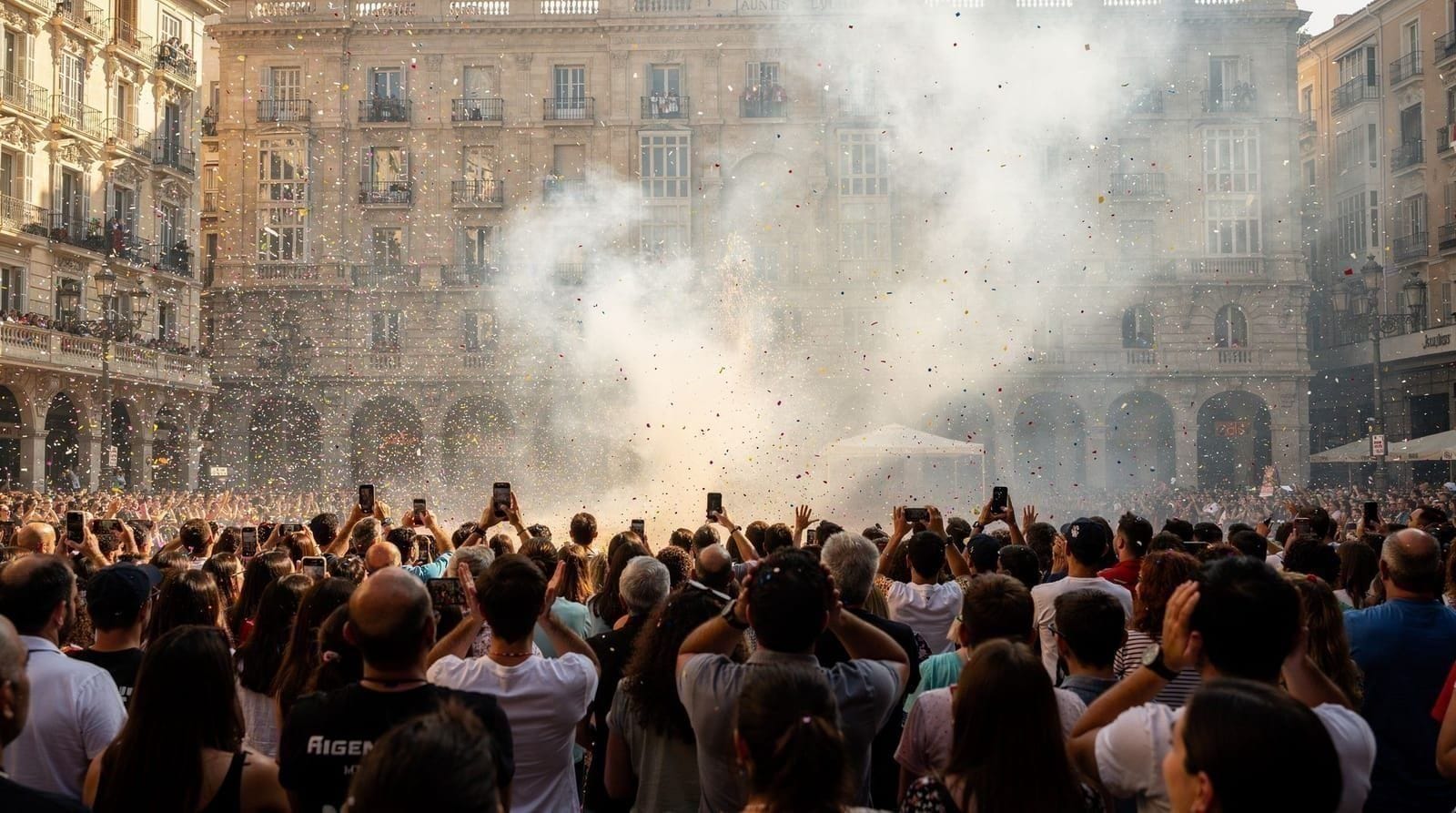
Fallas is the loudest festival in Europe. The mascletà — a 5-minute daytime fireworks display of percussion charges at 14:00 in Plaza del Ayuntamiento — reaches 120 decibels. The Nit del Foc fireworks are genuinely terrifying if you’re not expecting them. Bring foam earplugs and keep them accessible at all times. Children under 8 should have full ear protection.
The scale
During the peak days (17–19 March), the streets in the historic centre become genuinely difficult to navigate. The city’s population effectively triples. If you are claustrophobic, have mobility limitations, or don’t manage large crowds well, the fringes of the festival (further neighbourhoods, earlier in the day) are more manageable.
Booking accommodation — the most critical logistics point
Book 3–6 months in advance for the 15–19 March period. Hotels triple or quadruple their prices and still sell out. Apartments in the Ruzafa or Eixample neighbourhoods give you more space and are marginally cheaper than hotels. Accommodation within 500 metres of Plaza del Ayuntamiento commands the highest premium — it’s convenient but not essential.
Budget minimum: €100/night for basic accommodation during peak Fallas. Mid-range: €180–300/night. See our where to stay during Fallas guide.
If you can’t do all five days
Not everyone can block out a full working week. If you have to pick, the two non-negotiable days are 17 March (the biggest Ofrenda) and 19 March (the Cremà). 18–19 March together give you Nit del Foc and the Cremà back to back, arguably the most intense 30 hours of the whole festival. Arriving on 16 March and leaving on 20 March gives a realistic 4-day version that still covers every headline event. See our Fallas day-by-day breakdown for how the schedule compares across the full nine days if you’re weighing which window to fly in for.
Choosing a base
Most visitors end up in either El Carmen or Ruzafa. El Carmen puts you in the middle of the procession routes and the oldest streets; Ruzafa is livelier at night and easier to retreat to when you need quiet. If you are weighing neighbourhoods for a non-festival trip as well, our best area for first-timers guide compares them more broadly.
Getting to Valencia for Fallas
Valencia Airport (VLC) runs a normal schedule through Fallas, though flights fill up faster and cost more the closer you book to 15–19 March. The AVE high-speed train from Madrid (under 2 hours) or Barcelona (around 3 hours) is a realistic alternative and avoids airport transfer stress on the busiest nights. Once in the city, expect the metro and EMT buses to be your main transport — see the practical logistics section below for extended Fallas-week hours.
Day 1 (15 March): arrival and orientation
Morning — arrive and settle
Arrive as early as possible on the 15th. The city is already in full festival mode — the main fallas have been installed since around 15 March, and fireworks start from 8:00 with the despertà (dawn fireworks wake-up call). If you didn’t sleep well because of the despertà: congratulations, you’re in Fallas.
Buy earplugs immediately if you haven’t already. They sell out in pharmacies by 17 March.
11:30 — Walk the fallas in your neighbourhood
The fallas are distributed across every neighbourhood. Each comissió fallera competes for prizes. The best approach is to walk your immediate neighbourhood first — every street has at least one falla, some have two or three. The monuments are free to view. The largest and most technically impressive are in the centre (section especial), but the neighbourhood-level ones in Ruzafa or El Carmen are often more creatively interesting.
A guided tour with a local guide who knows the prize-winning fallas and the context is well worth doing on day 1:
 the ultimate Fallas tour — celebrate like a localCheck availability
14:00 — Mascletà (first one, most important)
Go to the mascletà. Plaza del Ayuntamiento, 14:00 sharp. The square fills to capacity by 13:30. Position yourself at least 200 metres from the platform where the charges are set — at closer distances the concussive force is physically uncomfortable. The mascletà lasts exactly 5 minutes and is structured: it begins with individual firecracker strings, builds to rolling thunder, and climaxes in a final sequence of simultaneous charges that turns the air white. Conversation is impossible throughout.
Honest assessment: it is extraordinary and unique. It is also 120 decibels without ear protection and can cause temporary hearing damage at close range. Wear earplugs.
16:00 — Rest
Fallas is a marathon, not a sprint. Use the break to sit down properly, drink water and charge your phone. If you want a gentler cultural contrast later in the trip, the Cathedral and Miguelete and the Lonja de la Seda are both close to the festival routes.
Fallas runs from dawn to 3:00 AM. Do not attempt to keep up with the full schedule on day 1. The veterans pace themselves. Rest from 16:00–19:00.
19:00 — Street food and the falles falleres
Fallas street food is a genuine event: bunyols (doughnut-like fritters cooked in oil), churros, roasted nuts, and grilled sardines. The friture stalls appear only during Fallas. Price is usually €2–4 per portion. Not all of it is good — stick to stalls where the queue is locals, not tourists.
The falleres (women in traditional Valencian dress — intricately embroidered silk, elaborate jewellery, ornate hairstyles) appear throughout the festival. They are not performers; they are members of the neighbourhood associations who have spent months and significant money on their costume. Photograph with respect.
For sit-down meals, the festival crowds make planning ahead worthwhile; the eat like a local guide and the menú del día guide help you avoid the places that lean hardest on festival demand.
21:00 — Nit de la Pòlvora (night fireworks)
Every night during Fallas has a professional fireworks display. The 15 March display is smaller than the Nit del Foc (18 March) but still impressive. The Parc de Capçalera viewing point gives the best non-crowd view. The display typically begins at 23:30 and lasts 15–20 minutes.
Day 2 (16 March): the City of the Fallas Artist and the Museu Faller
10:00 — Museu Faller (Museu de l’Artista Fallero)
The City of the Fallas Artist is a complex of studios where the ninots (figures) and fallas are built throughout the year. An organised guided tour of the working studios in the weeks before the Cremà is available:
 guided tour and Fallas workshop in the City of the Fallas ArtistCheck availability
This is the best way to understand the scale of the craft: these are professional artists working with cardboard, polystyrene, paper, paint and fire effects. A single major falla represents 6–12 months of work by a team of 10–20 people.
The Museu Faller (Plaça de Monteolivete 4) displays the ninot indultat — the single figure from each year’s competition that is voted to be saved from the burning. Entry €2.
12:30 — Paella lunch
The tourist restaurants around the Plaza del Ayuntamiento during Fallas are even more tourist-trap oriented than usual (prices 30–40% higher, quality dropped). Walk 10 minutes to Ruzafa for honest restaurants: Bar Suc, La Riua (book ahead), or any menú del día bar away from the main festival circuits.
14:00 — Mascletà day 2
Same place, same time. You can position differently on day 2 — try the balconies of the side streets feeding into the plaza if a resident offers access (some sell tickets for their balcony). Distance from the platform gives a different experience than being in the crowd.
16:00 — Visit the major fallas in the centre
The section especial fallas (the highest-category, largest-budget monuments) are concentrated in the streets between the Cathedral and the Eixample. Walking this route takes 2–3 hours because the crowds require patience. Keep an eye on your bag throughout; our pickpockets and safe areas guide explains what to watch for in dense crowds. The most discussed fallas are usually near Plaça de Mossèn Sorell, Calle de Convento Jerusalem and around the Plaza del Ayuntamiento itself.
20:00 — Ofrenda de Flores begins (days 17–18, starts evening of 16)
The procession of falleres and falleros carrying flowers to build a cloak around a statue of the Virgin Mary in Plaza de la Virgen begins on 16 March evening and continues through 17 and 18 March. Over 100,000 people participate in the offering across the two main days. The statue of the Virgin — approximately 4 metres tall — is progressively covered in fresh carnations, roses and natural flowers until she has a floral dress. By 18 March evening, the flowers are 10–15 cm deep on the statue.
The Ofrenda is more moving than it looks in photos. Arrive at Plaza de la Virgen between 19:00 and 22:00 for the most active period — expect to wait and not to have a clear view unless you arrive extremely early. Being in the surrounding streets and watching the processions arrive is arguably better than trying to access the plaza itself.
Day 3 (17 March): Ofrenda and city-wide fallas walk
Morning — quieter streets
Mornings before 12:00 during Fallas are the best time to see the fallas without crowds. Walk the Ruzafa neighbourhood — the section 4 and section 5 fallas there are often among the most visually interesting in the city. The streets around Calle de Sueca are good.
14:00 — Mascletà day 3
The mascletà on 17 and 18 March tends to be more elaborate than the early days. By 17 March the crowd is fully experienced — the reactions to each phase of the mascletà become a performance in themselves.
17:00 — Ofrenda de Flores (the main day)
The largest day of the Ofrenda is 17 March — up to 80,000 participants in traditional dress, organised by neighbourhood. The processions start from different parts of the city and converge on Plaza de la Virgen. The most photogenic sections are in El Carmen and near the Cathedral, where the falleres walk through historic streets.
Honest logistics: Plaza de la Virgen becomes a sardine tin by 19:00 on 17 March. If you’re not there by 17:30, you will be watching from three rows back at best. The side streets give moving views of the procession without the crush.
22:00 — Night walk through the illuminated fallas
The fallas are lit at night from approximately 22:00. This is the best time to see them — they are designed with night illumination in mind, the LED effects and internal lighting create effects that aren’t visible in daylight. A slow walk through Ruzafa to the city centre takes 2 hours if you stop to look properly.
Day 4 (18 March): Nit del Foc — the Night of Fire
14:00 — Mascletà day 4 (often the largest)
The mascletà on 18 March is often the technical peak — the competing pyrotechnics company saves its most elaborate sequence for this day.
16:00 — Rest. Seriously.
The Nit del Foc starts after midnight. Sleep from 16:00–21:00 if you can. The fireworks last over 25 minutes at extreme volume. Being tired going in makes it worse.
21:00 — Dinner and positioning
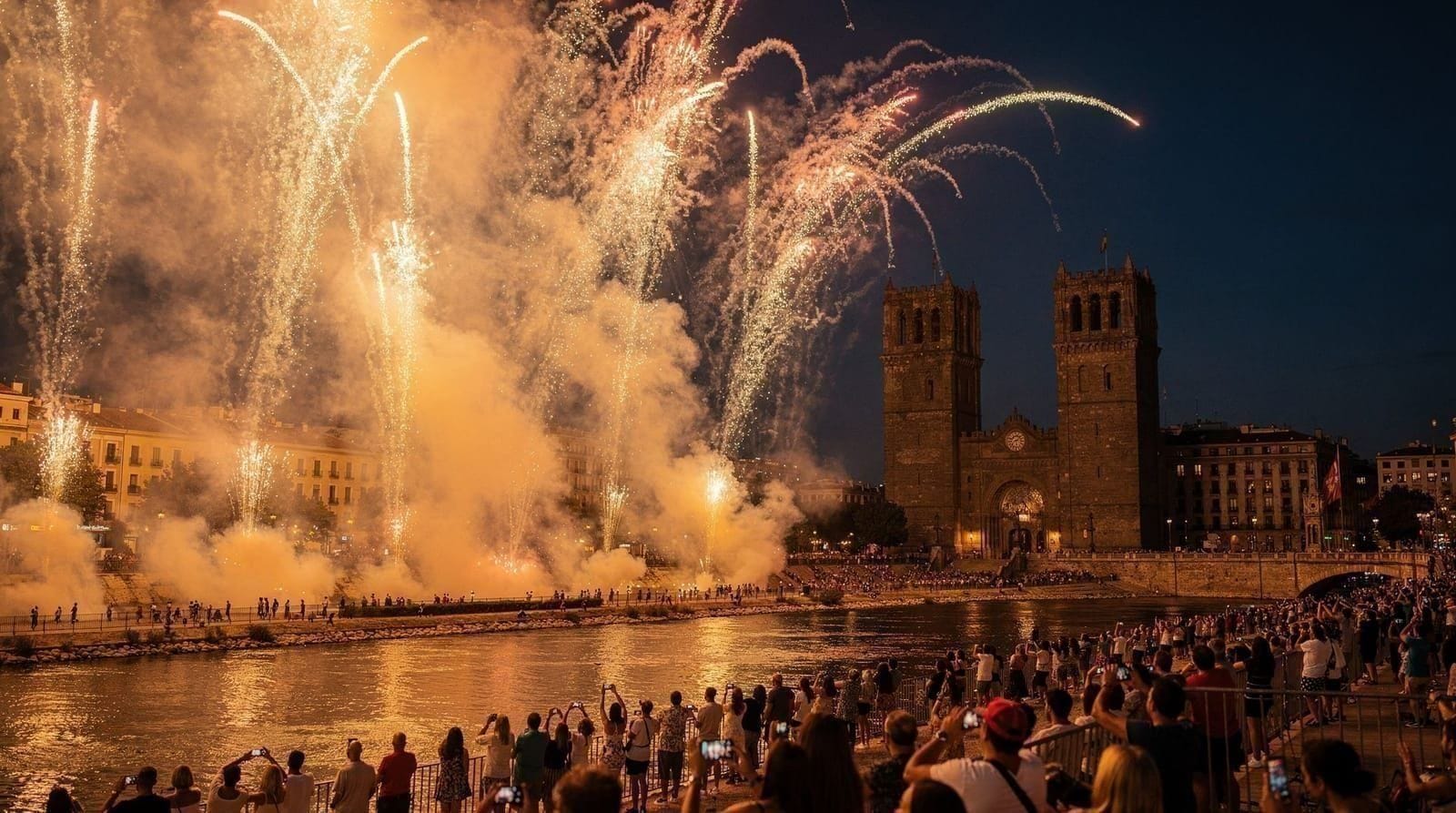
Eat dinner early. The best viewing positions for the Nit del Foc fireworks — launched from the Turia gardens riverbed, traditionally from the Pont del Real section — fill by 22:00. The Palau de la Generalitat gardens and the Pont de Fusta bridge give elevated views. Being in the Turia gardens section itself gives the clearest view of the vertical shell bursts.
00:30 — Nit del Foc (Night of Fire)
Valencia’s competition-winning pyrotechnics show. The display traditionally begins just after midnight and runs for 25–30 minutes. It is the largest single fireworks display in Europe and one of the most technically sophisticated in the world. The competition between pyrotechnics families (Caballer, Borrull, Ricasa) runs for generations — they work year-round on this one display.
What to expect: sustained heavy artillery at volumes that are physically felt, aerial choreography that covers the whole sky, and a finale of simultaneous charges that the crowd responds to with screaming applause. The Spanish word for this experience is granazo — there is no English equivalent.
Bring earplugs or proper hearing protection. This is not a recommendation; it’s a safety instruction.
Day 5 (19 March): the Cremà — everything burns
Morning — the last day
19 March is the Día de Sant Josep (Father’s Day in Spain, and the official feast day of the falles). The city is quieter in the morning as everyone recovers from the previous night. The fallas stand in the streets looking spectacular and slightly surreal — in 12 hours they will all be ash.
14:00 — Final mascletà
The last mascletà of the festival is traditionally the most bombastic. The crowd says goodbye.
16:00 — Walk all the fallas one final time
This is the last chance to see the monuments. Many people spend the afternoon photographing them knowing they’ll be gone by morning. The mood is celebratory-melancholy.
22:00 — La Cremà begins
The fallas are burned in order of size — the child falla of each section burns first, starting at 22:00. The most famous falla in the city centre section (Plaza del Ayuntamiento) burns at midnight.
The fire is surreal. Monuments that took months to build turn to flame in minutes. The fire departments are present at each falla but the burning is intentional — the flames reach 10–15 metres, the heat is intense from 20 metres away, and the smoke fills the entire city. By 01:00 on 20 March, almost every falla in Valencia is burning simultaneously.
Positioning: you cannot be close to the burning falla — the heat requires 30+ metres of distance and fire department controls. The crowds are immense around the major fallas. For a calmer experience, watch a smaller neighbourhood falla burn in Ruzafa or El Cabanyal where the crowd is lower density.
By 03:00, Valencia smells of smoke and the streets are covered in ash. The street-cleaning crews begin immediately. By morning, there is nothing left.
If you are staying on after the festival, the city returns to normal quickly. Our Valencia in spring guide covers what the season looks like once the fallas are gone, and the three-day itinerary is a good way to see the sights the festival crowds kept you from.
Practical Fallas logistics
Accommodation
Book 3–6 months ahead. Minimum budget in March 15–19: €100/night (hostel/shared apartment), €200–350/night (hotel). The Eixample and Ruzafa areas are slightly cheaper than El Carmen but still walkable to all events. Do not book anywhere more than 1.5 km from the centre for the 15–19 period — the streets are so full that taxi and transport become impractical on peak nights.
Transport during Fallas
If you are unsure how the network works, read our metro and EMT guide before you arrive, and see the airport to city guide for the first transfer. Walking is still the default on peak nights.
Metro runs extended hours during the festival (until 02:00 or 03:00 on peak nights, check the EMT Fallas schedule). Many streets in the centre are pedestrianised for the duration. Taxis are essentially unavailable after 22:00 during the Cremà. Plan to walk.
Costs during Fallas
All prices increase during Las Fallas: restaurants 20–40% higher, accommodation 200–400% higher, tourist attractions same price. A mid-range day during Fallas (meals, drinks, no accommodation) runs €80–120 versus €50–70 normally.
Hearing protection
Not optional. The mascletà at 120 dB can damage hearing over 5 minutes without protection. The Nit del Foc fireworks are comparable. Foam earplugs (€1–2 at pharmacies) are adequate for the mascletà with some distance. Full ear defenders are better for the Nit del Foc finale.
What to pack
Beyond earplugs, pack clothes you don’t mind smelling of gunpowder smoke by day three — it gets into everything, including hotel rooms with open windows near the centre. Comfortable, closed shoes are essential; the crowds and standing make sandals impractical, and ash on the ground during the Cremà nights can be hot underfoot. A light scarf or bandana helps with smoke on Cremà night itself. Bring cash — many street food stalls and smaller bars during Fallas don’t take cards, and ATM queues build up in the centre. A portable phone charger is worth the space; constant photos and the crowds’ effect on network signal drain batteries fast.
Photographing the fallas and falleres
The monuments themselves are fair game for photography at any time, and night photography (from 22:00) captures the internal lighting effects best. The falleres and falleros in traditional dress are a different matter — they are private citizens in family heirloom or custom-made costumes, not paid performers, so ask before a close-up portrait rather than shooting from a distance with a long lens. During the Ofrenda, photographing the procession from the street is standard and welcomed; crowding the flower-laying itself at the Virgin’s statue is not. If crowds during peak hours frustrate your photography, the morning window before 12:00 described above gives clean shots of the monuments without people in frame.
Five days at a glance
| Day | Date | Headline event | Rest window |
|---|---|---|---|
| 1 | 15 March | Arrival, neighbourhood fallas, first mascletà, Nit de la Pòlvora | 16:00–19:00 |
| 2 | 16 March | Museu Faller, Ofrenda begins in the evening | Afternoon |
| 3 | 17 March | Biggest Ofrenda day, illuminated fallas at night | Mornings before noon |
| 4 | 18 March | Mascletà peak, Nit del Foc after midnight | 16:00–21:00 (mandatory) |
| 5 | 19 March | Final mascletà, La Cremà from 22:00 | Morning |
Use this table alongside the Nit del Foc guide if you’re deciding which single night to prioritise on a shorter trip.
Frequently asked questions about visiting Valencia during Fallas
When exactly is Las Fallas 2027?
Las Fallas runs 1–19 March annually. The climax period is 15–19 March. The key events (mascletà, Ofrenda, Nit del Foc, Cremà) are fixed at the same dates each year. See Las Fallas complete guide for full context.
Is Las Fallas suitable for children?
With proper hearing protection, yes — children often love it (the visual spectacle is extraordinary). Without hearing protection, no — 120 dB is dangerous for children’s hearing. Bring quality ear defenders (not foam earplugs) for anyone under 10. The daytime fallas viewing and the Ofrenda are the best events for families. The Nit del Foc is difficult with young children due to the crowds and late timing.
How far in advance should I book accommodation for Fallas?
6 months minimum for the core nights (17–19 March). 3 months is possible but your selection is limited and prices are higher. 1 month before: you will find almost nothing in the centre at any price. See where to stay during Fallas.
Is it possible to see the fallas without the crowds?
Yes — visit any falla before 12:00 or after 23:00. The afternoons and evenings in the main tourist areas are extremely crowded. The neighbourhood fallas in Ruzafa, Benimaclet or Patraix are accessible with lower crowds at almost any time.
What is the Nit del Foc and when does it happen?
The Nit del Foc (Night of Fire) is the competition-level professional fireworks display, launched from the Turia gardens on the night of 18–19 March (starting just after midnight). It’s the largest fireworks display in Europe and runs 25–30 minutes. See our dedicated Nit del Foc guide.
Can I visit Valencia during Fallas if I don’t like crowds?
Yes, but manage your expectations. The 15–19 period is unavoidably dense. Visit earlier in the Fallas season (1–14 March) for the same fallas monuments with fewer crowds — many of the large sculptures are already installed by 10 March. The mascletà and Nit del Foc are unique to the peak days, however.
Top experiences
Bookable activities with verified prices and instant confirmation on GetYourGuide.