Las Fallas 2027 dates, schedule and what to expect
When exactly does Las Fallas 2027 happen?
Las Fallas 2027 runs from 1 to 19 March 2027, peaking with La Cremà (the burning) on the night of 19 March. This is the single most consistent fact about Fallas: the dates never change. The festival always starts on 1 March and ends on the feast of Saint Joseph — San José — on 19 March. That’s your anchor. Everything else, from hotel prices tripling to entire streets getting closed for giant papier-mâché sculptures, flows from that immovable calendar.
| Dates 2027 | 1–19 March |
| Peak window | 15–19 March |
| Mascletà | Daily, 14:00, Plaza del Ayuntamiento |
| La Cremà | Night of 19 March (exact hours on fallas.com) |
| Hotel prices | 2–4x normal rates in the peak window |
Valencia declared Las Fallas a UNESCO Intangible Cultural Heritage in 2016, though locals would tell you they didn’t need the certificate. The city has been burning enormous satirical sculptures every March since at least the 18th century, and the ritual shows no signs of mellowing.
The full Las Fallas 2027 schedule
Here’s the official framework you can plan around. Times are approximate — Valencia runs on its own schedule.
Last Sunday of February — La Crida The official opening of the festival from the Torres de Serranos, with a speech by the Fallera Mayor (a young woman elected each year as the symbolic queen of the festival), followed by a light-and-fireworks show. In 2027 the last Sunday of February is 28 February. Even if you don’t understand a word of Valencian, the scene with the old city gate as backdrop is memorable.
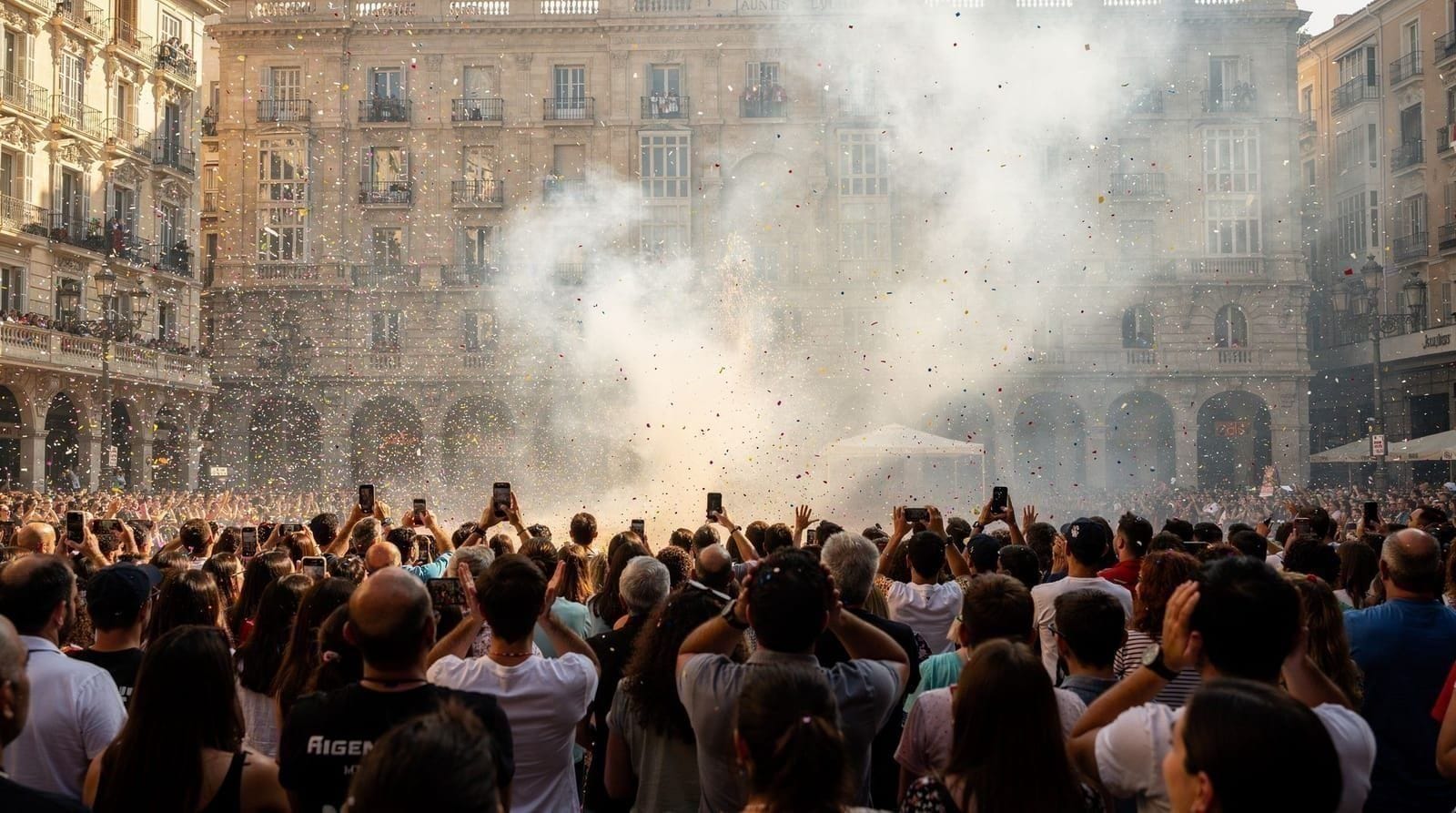
1–19 March — La Mascletà (daily at 14:00) Every single day at 2pm, the Plaza del Ayuntamiento (Town Hall Square) hosts a daytime fireworks display called the Mascletà. This is not visual — it’s a percussion experience. The ground shakes. Arrive by 13:15 if you want a spot with a view. Don’t bother otherwise; you’ll still hear and feel it anywhere in the old town.
Until 15 March — Ninot Exhibition The ninots — the individual figures that make up the monuments — are displayed ahead of the festival, and the public votes for the ones to be spared from the flames (the “Ninot Indultat”). The exhibition closes around 14–15 March with the reading of the popular verdict. Check the Junta Central Fallera (fallas.com) for the venue and opening hours.
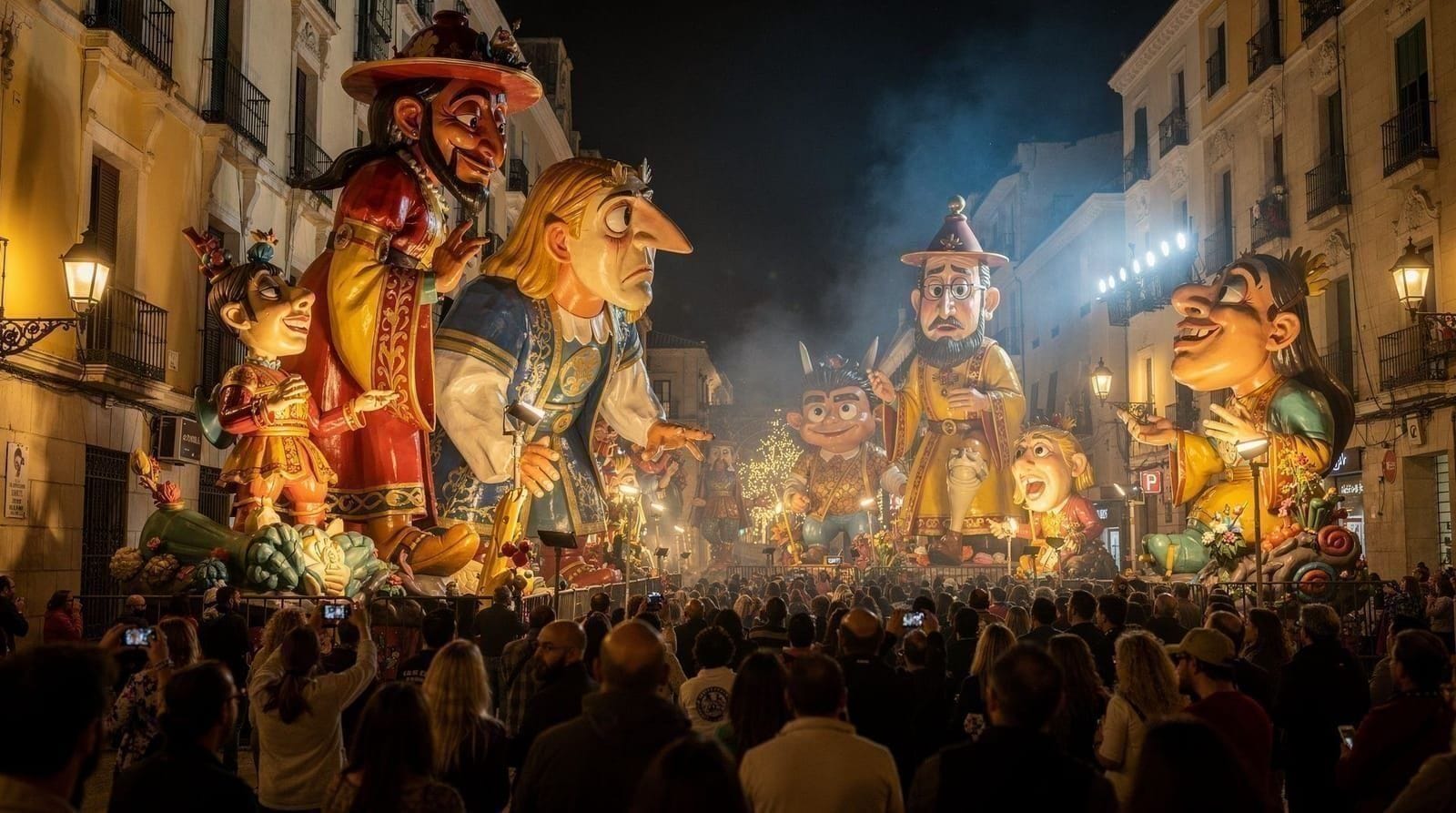
15–16 March — Plantà This is when the monuments are erected in the streets: the children’s fallas on 15 March, then all the main fallas, with the work finishing in the early morning of 16 March. Valencia transforms almost overnight. The nights of 15–19 March see the biggest street parties, the most fireworks, and the densest crowds. If you’re only in town for a few days, these are the ones to prioritise.
17–18 March — Ofrenda de Flores Thousands of falleros in traditional dress parade through the old town to offer flowers to the Virgen de los Desamparados in Plaza de la Virgen. It runs from the afternoon until after midnight on both days.
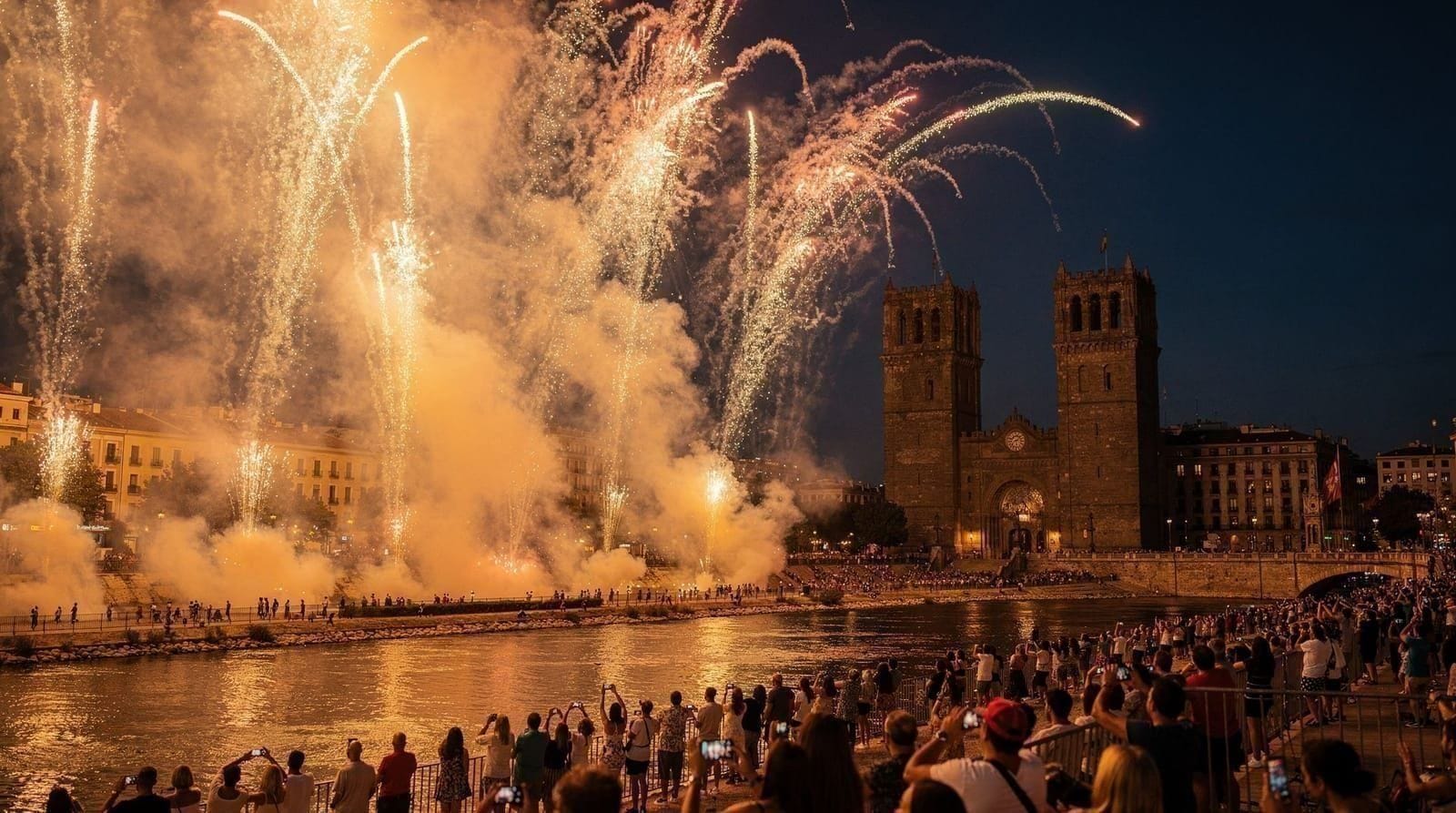
18–19 March — Nit del Foc (Night of Fire) The Nit del Foc is the big fireworks display (a “castillo”) held on the night of 18 March, shortly before midnight, and set off in the Turia riverbed area. See the dedicated guide to Nit del Foc for viewing spots and timing.
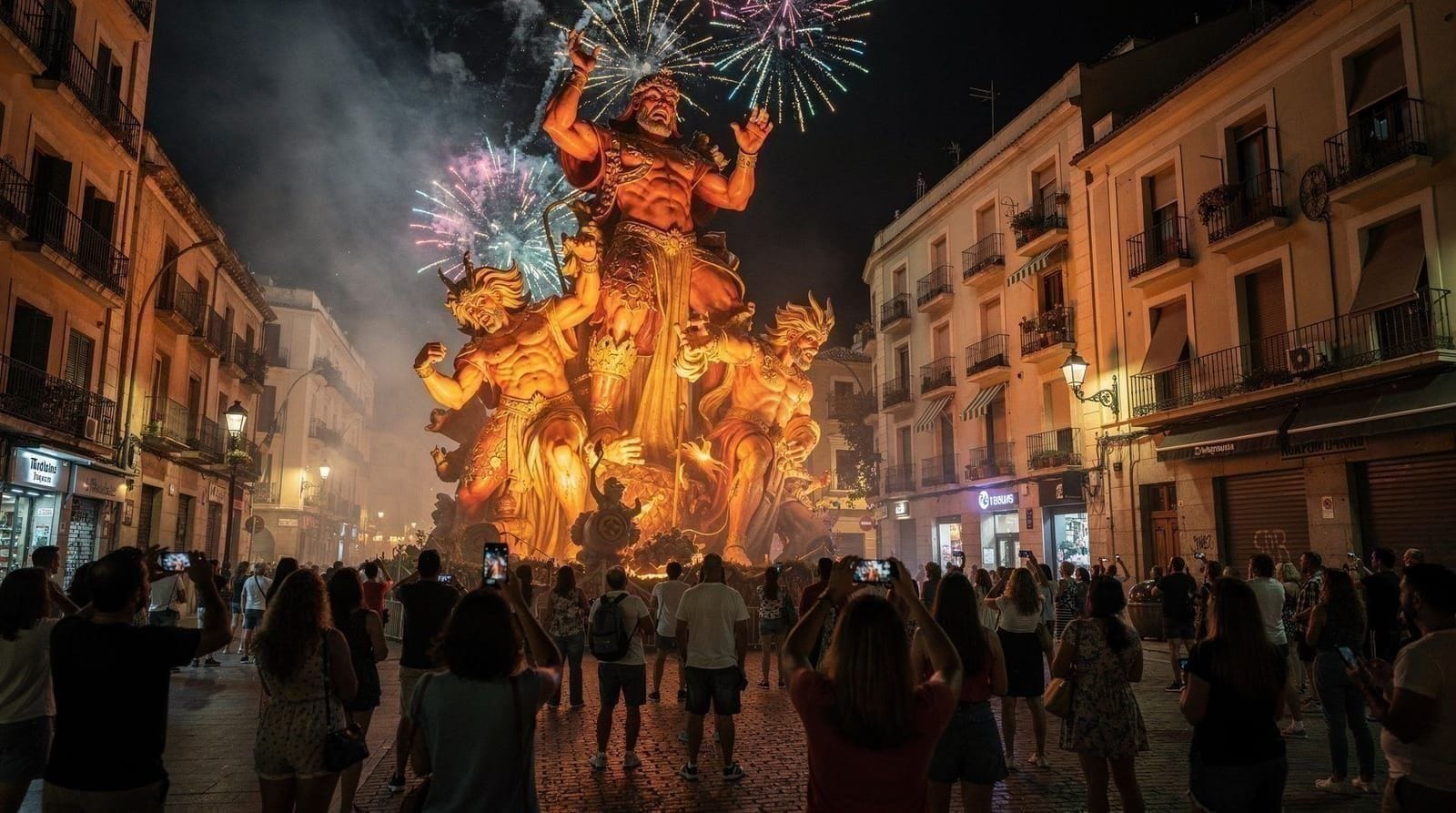
19 March — La Cremà Everything burns on the night of 19 March. The fallas monuments — some reaching four storeys, costing up to €400,000, built over an entire year — are set on fire in the evening, the children’s fallas first and the big ones later, and the Falla Municipal in front of the Town Hall is the last to be lit. The air smells of smoke and fireworks for days afterward. The detailed 2027 timetable is published by the Junta Central Fallera closer to the festival, so confirm the exact hours at fallas.com.
Neighbourhood fallas vs the main city events
Valencia has around 350 separate fallas commissions (comisiones falleras), each responsible for building and burning its own monument in its own neighbourhood. What most first-time visitors picture — the huge sculptures near the Town Hall — is only a small fraction of what’s actually happening. Wandering through residential streets in Russafa, El Carmen, or Benimaclet during the peak window reveals dozens of smaller, more intimate monuments, often more satirical and locally specific than the official showpieces, surrounded by neighbours who built them.
If your time is limited, prioritise this way:
| Priority | What to see | Why |
|---|---|---|
| 1 | Falla Municipal (Town Hall) | The largest, most technically ambitious monument, burns last |
| 2 | Two or three neighbourhood fallas near your accommodation | More intimate, less crowded, genuinely local |
| 3 | Mascletà at Plaza del Ayuntamiento | Daily ritual, best experienced at least once regardless of crowding |
| 4 | Nit del Foc from a Turia riverbed viewing spot | The single most spectacular fireworks night |
Hotel prices during Fallas 2027
Book now. I mean it. Prices for the peak Fallas window (15–19 March) typically run two to four times normal rates for anything in the city centre. Even mediocre hotels in Ruzafa or El Carmen reach prices you’d associate with Paris or Amsterdam during high season.
The sweet spot, if budget matters, is staying just outside the historic core: Benimaclet, Campanar, or properties near the North Train Station (Estació del Nord) still have decent connectivity without peak-zone pricing. For a thorough breakdown, the guide on where to stay during Fallas covers this in detail.
What you should absolutely avoid: booking anywhere that advertises “no minimum stay” in mid-March on Valencia booking platforms. Most honest hotels enforce three-to-five-night minimums during Fallas. The ones that don’t are either very expensive or charging rack rate on short stays.
Getting to Valencia for Fallas
By train (AVE): From Madrid, the high-speed AVE takes around 1h55 to Valencia’s North Station. From Barcelona it’s just under three hours. Train tickets open roughly three months in advance and Fallas-window slots sell out fast — especially the Friday before the final weekend.
By air: Valencia Airport (VLC) sits about 8 km from the city centre. The metro (lines L3/L5) runs directly into the city for around €2 and takes 25 minutes. Taxis run around €20-25 to the centre. See the airport to city centre guide for full transport options including bus and rideshare.
By car: Don’t. The city restricts vehicle access during the final days of Fallas, and finding parking is essentially impossible at any price during peak dates. If you’re doing a wider trip that involves day trips from Valencia, leave the car at a suburban car park and use public transport.
What to actually prepare for
Noise: Fallas is relentlessly loud. The Mascletà is designed to shake buildings. Children and pets roam the streets setting off petards (small firecrackers) from morning till late at night. Sleep quality drops for many visitors. Bring earplugs and accept this as part of the deal — or consider visiting for the daytime elements and staying in a quieter suburb each night.
Crowds: The historic centre during the final weekend is as densely packed as any major city centre festival in Europe. Pickpocket risk increases significantly. Keep valuables in front pockets or a body bag. The pickpocket and safety guide for Valencia has practical advice.
The smoke: La Cremà produces extraordinary amounts of smoke. People with respiratory sensitivities should know this in advance. The burning runs from the evening of 19 March into the early hours of 20 March, and depending on wind direction the whole city can be hazy for the next day.
Paella for lunch, not dinner: One of the most common first-timer mistakes during Fallas is eating paella at a tourist-facing restaurant in Plaza de la Reina at 8pm. Paella is a midday meal in Valencian culture — the restaurants that serve it properly open for lunch, not dinner. If you want the real experience, see the best paella restaurants guide and book a lunch reservation well in advance.
Is Fallas worth the effort?
Yes, with clear eyes. The scale is genuinely astonishing — nothing quite prepares you for seeing an entire street filled with multi-storey burning sculptures at midnight. The communal energy is real and the festival genuinely belongs to ordinary Valencians, not a tourist production. But it’s also exhausting, expensive, and often chaotic in ways that make relaxed sightseeing difficult.
If you’ve never been to Valencia at all, consider whether you want your first visit to coincide with Fallas. The city is worth knowing beyond the festival. If you’ve already visited and want to experience something truly specific to this place, Fallas 2027 is worth planning around.
Join a guided Fallas walking tour to navigate the monuments, understand the symbolism, and see the best burning spots with a local guide
For the complete Fallas experience — what happens day by day, the neighbourhood fallas versus the main city events, and how to pace three days properly — the Las Fallas complete guide is the definitive reference. The Fallas day-by-day schedule is worth bookmarking to your phone before you arrive.
Planning around the dates when you only have a few days
Because the calendar is fixed, the real decision is which part of the 1–19 March stretch suits you. Early March is calmer: the daily Mascletà is already running, the city is easier to move around, and you can see how the neighbourhoods slowly fill with scaffolding and half-built monuments. The final days are the opposite: bigger, louder and far more crowded. Neither is wrong; they are simply different trips, so pick based on whether you value atmosphere or ease.
If you want a guide to explain the satire and the symbolism rather than just point at the sculptures, a guided visit built around the Fallas festival makes the monuments much easier to read, especially on a first visit. Pair it with an unhurried evening in the neighbourhoods rather than trying to see everything in one night.
A few pointers that tend to help:
- Use the Fallas day-by-day guide to decide which days to prioritise, and the Fallas first-timer blog post for a more personal view of what the first visit feels like.
- Sort out accommodation early with the where to stay during Fallas blog post and, for a wider choice of areas, the general where-to-stay guide.
- Get your bearings in the city using the Valencia destination page, the Turia gardens guide and the metro and bus guide, since streets close and routes change while the monuments are up.
- If you are travelling with children, the Valencia with kids guide helps you pace the days around the noise.
- For a ready-made route that fits the festival, look at the Valencia during Fallas itinerary.
- The Nit del Foc blog post goes deeper on the fireworks night, and the Valencia festivals calendar shows what else is on if you extend your stay.
- If the crowds start to wear you down, a quiet day out of town helps; the Sagunto day trip is an easy change of pace once the monuments are burned.
Quick facts for 2027
- Festival dates: 1–19 March 2027
- Mascletà: Plaza del Ayuntamiento, daily at 14:00
- La Crida: last Sunday of February (28 February 2027)
- Nit del Foc: night of 18 March
- La Cremà: night of 19 March (exact hours on fallas.com)
- Ninot Exhibition: until about 15 March
- Hotel booking window: open now; do not wait
The rest of the planning — neighbourhoods, transport, budget, honest tourist-trap warnings — is covered in the Valencia travel planning guides.