Nit del Foc — how to watch Valencia's most spectacular fireworks display
What is Nit del Foc?
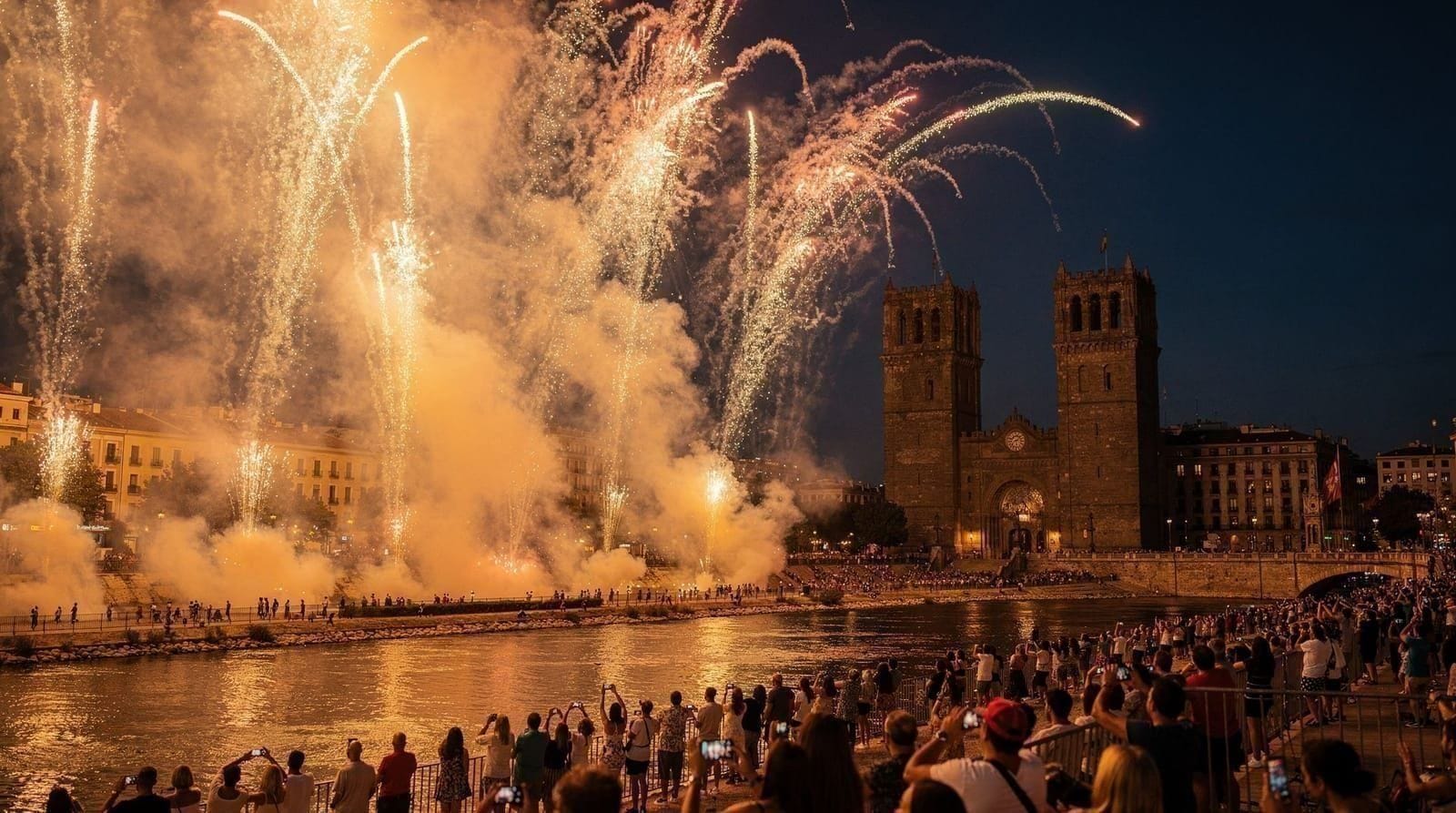
Nit del Foc — “Night of Fire” in Valencian — is the grand fireworks display of Las Fallas, held over the dry Turia riverbed that cuts through the heart of Valencia. The Nit del Foc proper is the night of 18 March, with the castillo launched at 23:59 from the Monteolivete bridge; the exact programme for each year is published on fallas.com.
The display is launched in the riverbed from the Monteolivete bridge area, so it sits low over the crowd. The riverbed — now the Turia Gardens after it was transformed from a waterway into a 9-kilometre linear park in the 1980s — becomes one of the most unusual fireworks venues you’ll encounter anywhere.
There’s no cost to watch. Hundreds of thousands of people do. The question isn’t whether to go, but where to position yourself.
| Where | Turia riverbed, launched from the Monteolivete bridge |
| Cost | Free |
| When | 18 March, 23:59 |
| Arrive by | 22:00 for a good spot |
The four best viewing zones
Zone 1: Bridges over the Turia (Pont de Fusta, Pont de l’Exposició, Pont del Real) The pedestrian bridges give you elevation and a clear line of sight along the riverbed. The trade-off: they fill up well before the display begins. The Pont de Fusta (Wood Bridge) in particular is a traditional gathering point. Arrive 90 minutes before the display starts — 2.5 hours if you want a bridge railing spot rather than a mid-bridge position.
Zone 2: Inside the Turia riverbed itself Counterintuitively, standing in the riverbed rather than above it can be spectacular during Nit del Foc. The launches are close and the sound is immersive in a way that looking down from a bridge isn’t. The lower-lying sections between the Puente de San José and the Pont de Serrans fill up but with somewhat less competition than the bridges. Bring something to sit on — the wait is long.
Zone 3: Jardins del Túria, near the Palau de la Música The stretch of the Turia gardens adjacent to the concert hall (Palau de la Música de la Comunitat Valenciana) has traditionally been a good balance between launch proximity and crowd management. It’s far enough from the most obvious tourist entry points to be slightly less crushed, while still offering a full view.
Zone 4: El Carmen rooftops and high-floor hotel balconies If you’re lucky enough to have a room or know someone with a balcony overlooking the Turia, this is the quietest option and arguably the most enjoyable. The explosions still shake your windows, but you’re watching with something like perspective rather than being inside a crowd of several hundred thousand people.
Comparing the four zones
| Zone | Arrival needed | Crowd level | Best for |
|---|---|---|---|
| Bridges (Pont de Fusta etc.) | 2–2.5 hours early | Very high | Elevated, classic view; photographers |
| Inside the riverbed | 1.5–2 hours early | High | Immersive sound, surround-launch feel |
| Turia Gardens near Palau de la Música | 1.5 hours early | Moderate | Balance of view and breathing room |
| Rooftop / balcony | N/A (fixed) | None | Families, anyone avoiding dense crowds |
If you’d rather not stand in a riverbed crowd for two hours, a room booked with a Turia-facing balcony is worth the premium during Fallas — check the where to stay during Fallas guide for which streets actually have a sightline to the display.
What time does Nit del Foc start?
In the official programme the Nit del Foc castillo is scheduled for 23:59 on 18 March; check the current programme on fallas.com. If you want a position, plan around 22:00 as your arrival target for popular viewing spots.
After the display ends, the crowd dispersal is slow and the streets remain packed for another hour or two. If you’re staying nearby, walk home after the main crowd has started moving rather than trying to leave immediately.
If you’d like the festival explained as you move through it, a guided visit built around the Fallas monuments and their traditions is a good way to spend the daytime before a late night by the river. It gives the fireworks a context that you won’t get from standing in a crowd. For the day-by-day order of events around the display, the Fallas day-by-day guide lays out what happens when.
Practical logistics
Getting there: check the festival-night metro hours on the official Metrovalencia site; the stations serving the Turia area (Alameda, Colón, Xàtiva) will be at capacity on Nit del Foc night. Many people simply walk from the old city, which is reasonable for most accommodation zones. Leave early enough to reach your position.
What to bring: comfortable shoes (you’ll be standing for hours on grass or pavement), a light jacket (March nights can be cool), and ideally earplugs or at minimum the ability to cover your ears. At close range, major fireworks displays cause hearing discomfort for those not prepared.
Photography: mobile phones capture the general scene but struggle with the complexity of a multi-launch display. Low-exposure settings help marginally. This is one event where looking with your eyes rather than a screen pays off more than usual.
Children: Nit del Foc starts at 23:59 and involves extremely loud sustained noise in very dense crowds. Factor this into your planning if you’re travelling with young children. Our Valencia with kids guide has calmer ideas for the daytime, and the rainy day and family options help fill the hours before a late night.
Pickpockets: dense, distracted crowds are exactly where pickpockets work. Keep phones and wallets in front pockets or a zipped bag, and read the pickpockets and safe areas guide before you go.
Getting around afterwards: if you plan to rely on public transport at all, the metro and EMT guide explains how the network works, though on this night walking is usually the more reliable choice.
The night before: the preliminary displays
Late-night fireworks also run on the nights before: 15 March (“L’Alba de les Falles”, from Plaza del Ayuntamiento), then 16 and 17 March (castillos from the Monteolivete bridge), all at 23:59. They are genuinely impressive by the standards of any other city, even if the 18 March display is the main event.
Nit del Foc versus La Cremà
First-timers sometimes conflate the two, understandably. They are very different experiences.
Nit del Foc is a single massive fireworks display over the Turia, with the city as audience. It’s spectacular in a conventional sense — designed to be watched, a production with an obvious beginning, middle, and end.
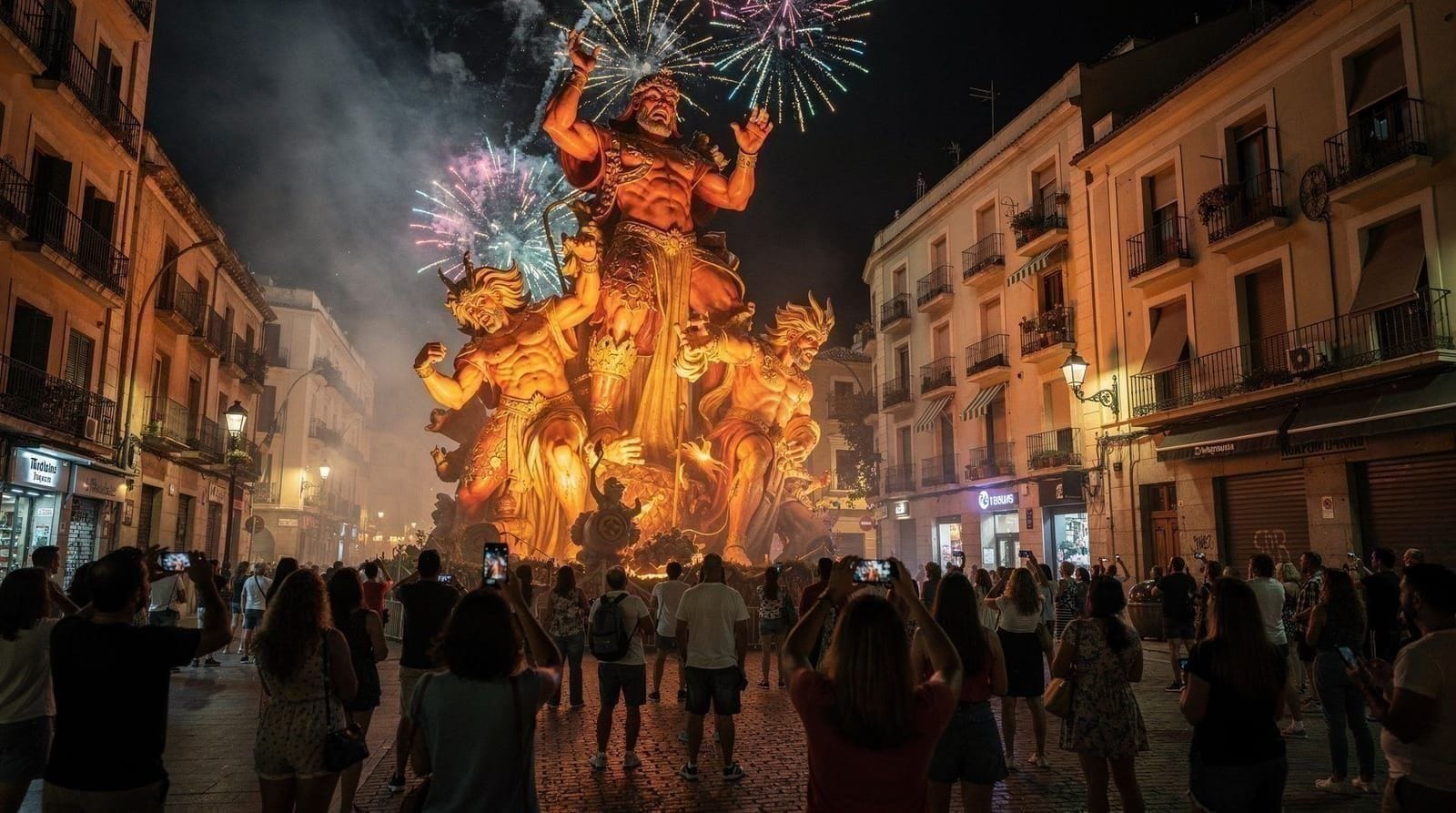
La Cremà (the burning on the night of 19 March) is the burning of the fallas monuments throughout the entire city, simultaneously. It’s not organised as a spectacle for an audience — it’s a city ritually destroying its own creations. You move between burning monuments, feeling the heat, watching four-storey structures of papier-mâché and polystyrene collapse into flames, smelling the smoke drifting through medieval streets. It’s stranger and more affecting than Nit del Foc.
Both are worth experiencing. If you can only choose one night to be in position, 19 March (La Cremà) is the one. But if you’re in Valencia for the peak window (15–19 March), attending both in sequence is the complete Fallas experience.
For the full festival calendar and context, see the Las Fallas complete guide and the Nit del Foc detailed guide. For planning your accommodation around these events, the where to stay during Fallas guide covers the neighbourhood trade-offs.
The morning after
A word on what follows Nit del Foc: the city is carpeted in ash, tinsel, and spent fireworks casings. The smell of smoke is pervasive. The next morning is typically quiet, as many people (locals and visitors alike) recover before La Cremà that evening.
Use this day for unhurried museum visits, a long lunch, or walking through the Turia Gardens — which look entirely different when emptied of the Nit del Foc crowds. The Ciudad de las Artes y las Ciencias is only a short walk from the river and is quieter than on festival peak days.
The Valencia 3-day itinerary includes Fallas-optimised routing if you’re trying to see the city properly alongside the festival events. The Valencia during Fallas itinerary is built specifically around the festival days.
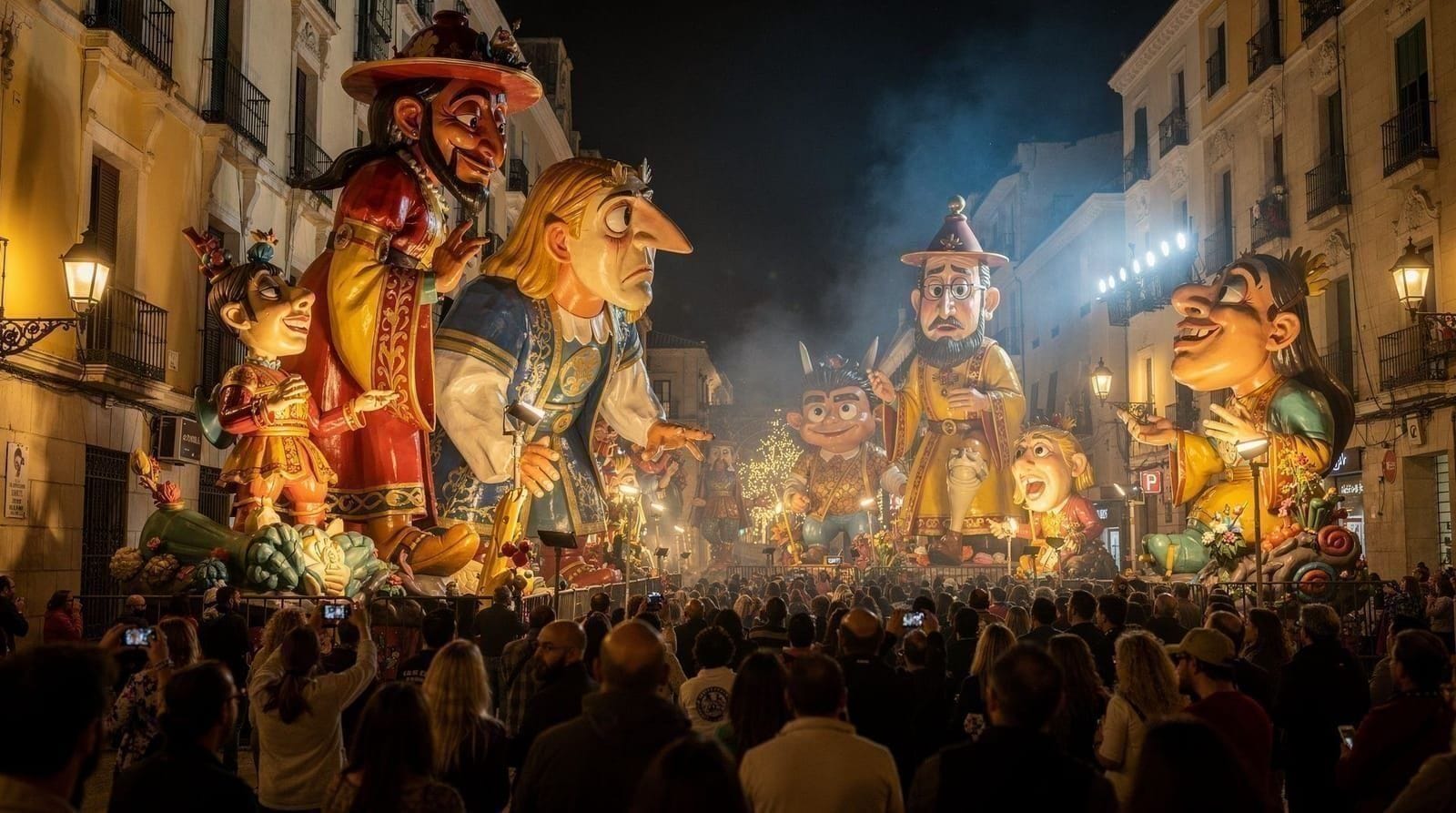
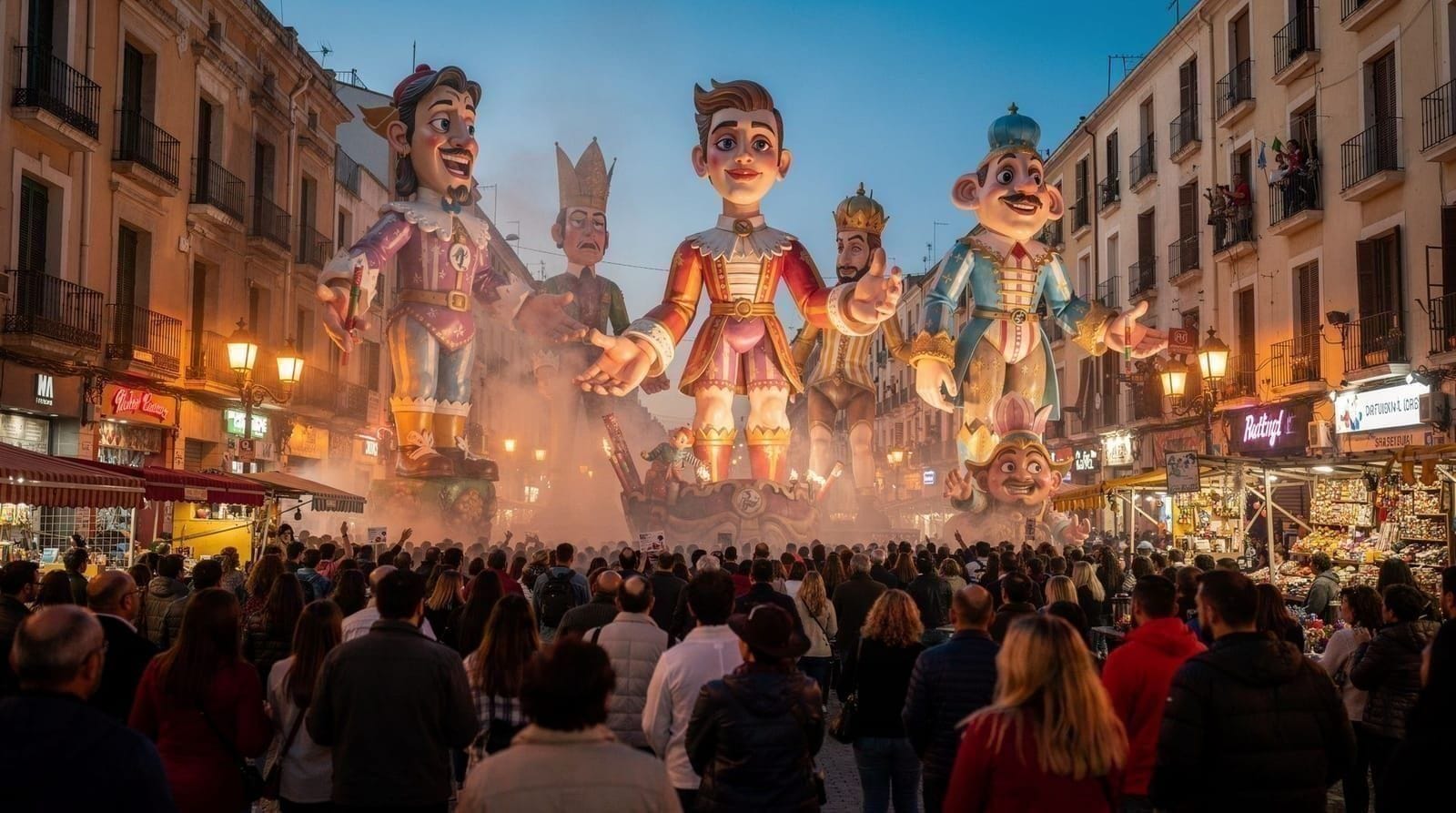
If the monuments themselves interest you as much as the fireworks, a tour that takes you to the main fallas monuments across the city is an easy way to see them with someone who can explain the satire and the craft behind each one. Pair it with a first read of our Fallas first-timer blog guide and the Las Fallas practical overview so you know what to expect.
Before you commit to a particular night, it also helps to see how the festival fits into the rest of the year in the Valencia festivals calendar, and to keep the Semana Santa Marinera guide in mind if you’re planning a return trip in spring.