How to order paella like a local in Valencia — the complete guide
Start with the timing
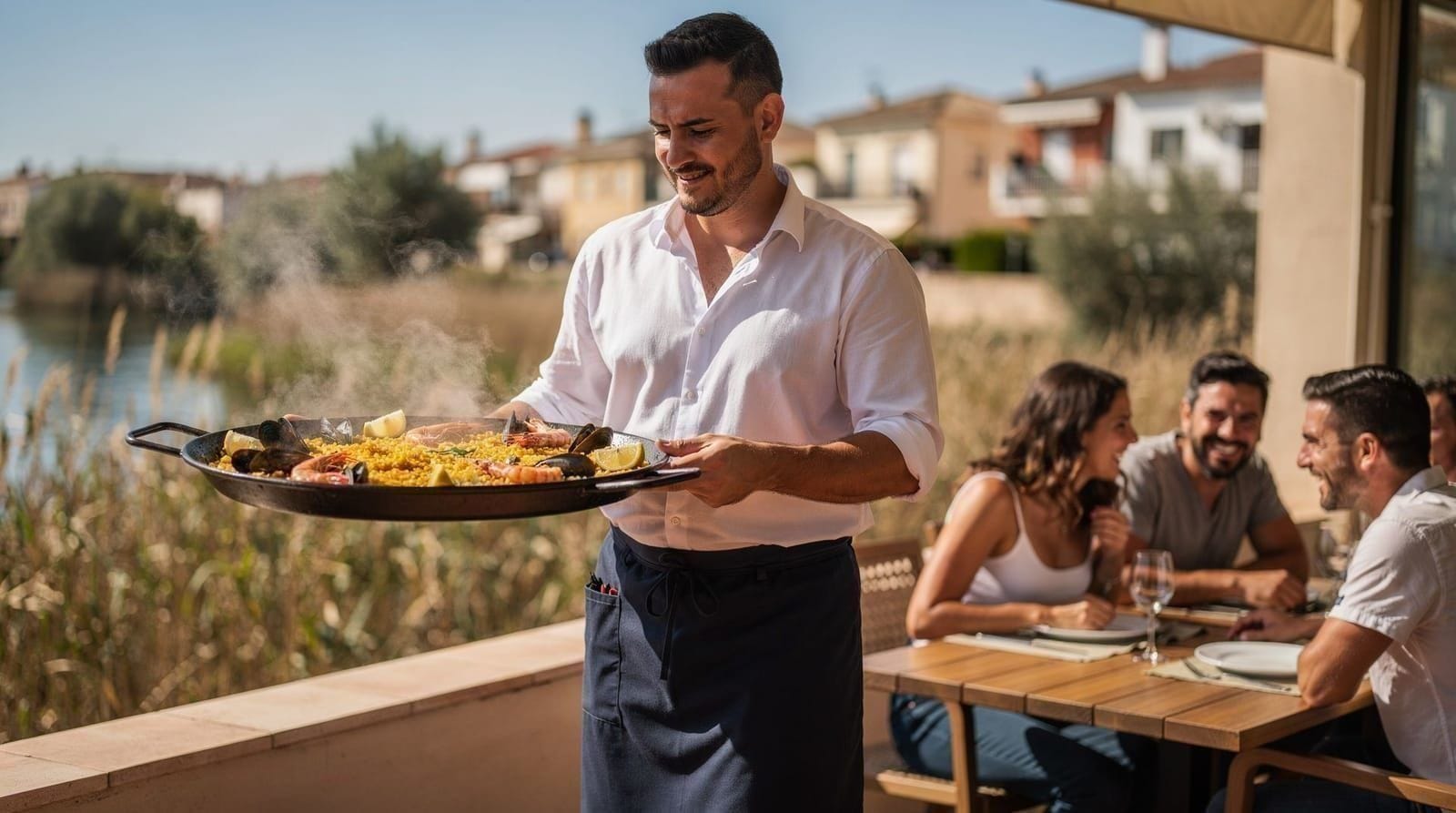
The single most important thing you can do to order paella like a local is to show up for lunch, not dinner. Arrive between 13:30 and 14:30. Ordering at 14:45 at a serious paella restaurant is pushing your luck; arriving at 20:00 and expecting the real thing is wishful thinking. This point is non-negotiable at genuine Valencian paella restaurants — the full explanation of why covers the cultural and practical reasons in detail.
If you’re booking ahead (recommended for weekends and any time during Fallas), note in your booking that you want paella valenciana. Some kitchens appreciate advance notice for wood-fire preparations, especially for smaller groups.
| Best window | 13:30–14:30 |
| Minimum order | Usually 2 people per pan |
| Wait time | 25–40 minutes, cooked to order |
| Fair price | Around 15–20 € per person |
| Vocabulary to know | Socarrat, garrofó, ferraura |
Before you sit down anywhere, it helps to know which places are worth the effort. The how to order paella guide covers the practical routine, while paella traps shows what the weaker restaurants do to catch visitors who haven’t read up. For named addresses, the best paella restaurants in Valencia is the place to start.
Understanding the minimum order
Paella is cooked in pans. The smallest practical pan serves two people. At many serious restaurants, the minimum order for paella valenciana is two people — you cannot order a personal portion from a pan designed for a table.
This isn’t arbitrary. The rice-to-pan-surface ratio matters for the socarrat. Cooking a single portion produces wrong results. If you’re eating alone, a good restaurant will often have smaller individual rice dishes (arroz meloso, a creamy rice dish, is sometimes available for one) or you can ask if they do a smaller version. But don’t expect it.
For a table of four or more, it’s normal to order one large paella to share rather than individual pans.
The menu vocabulary you need
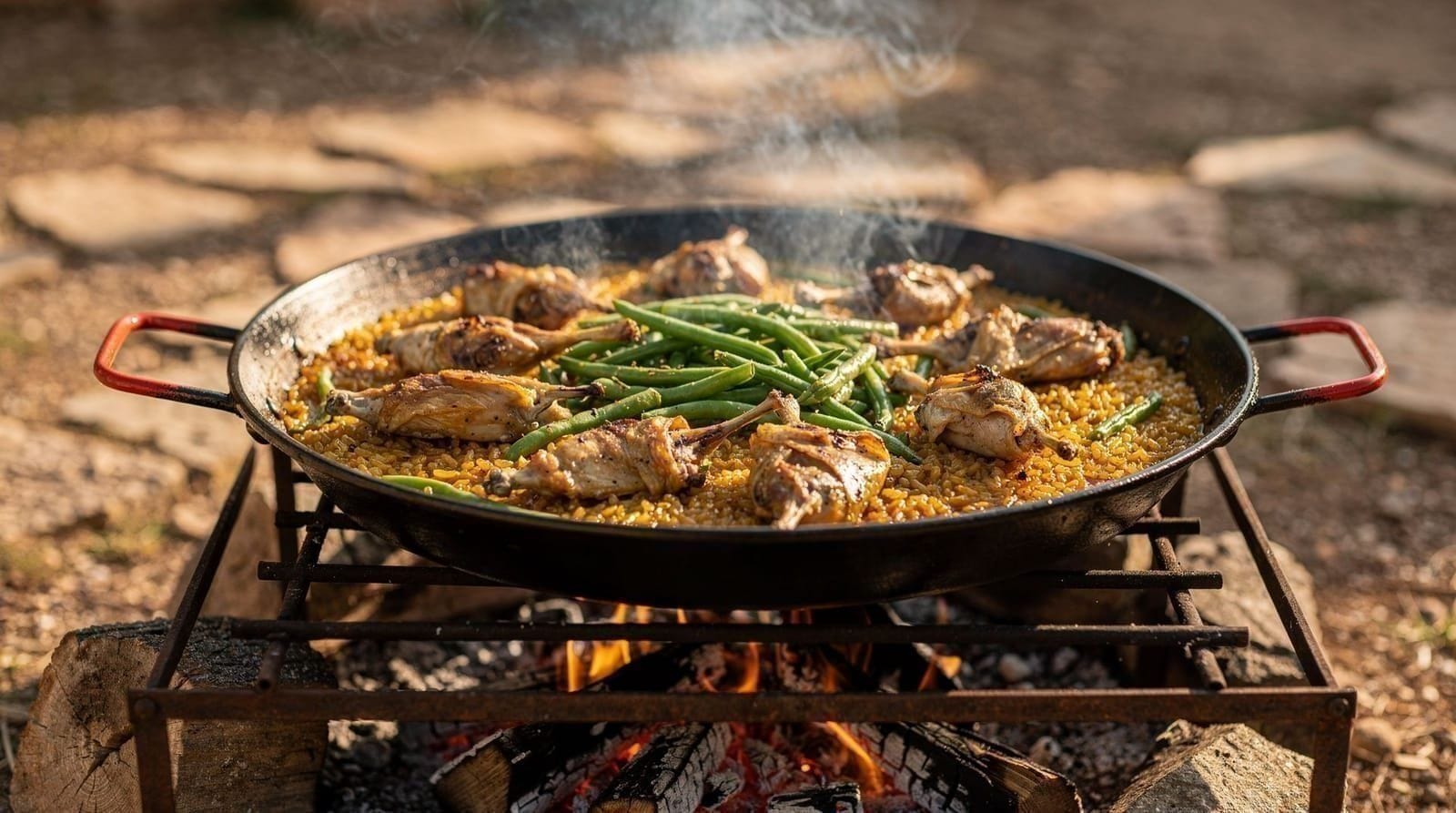
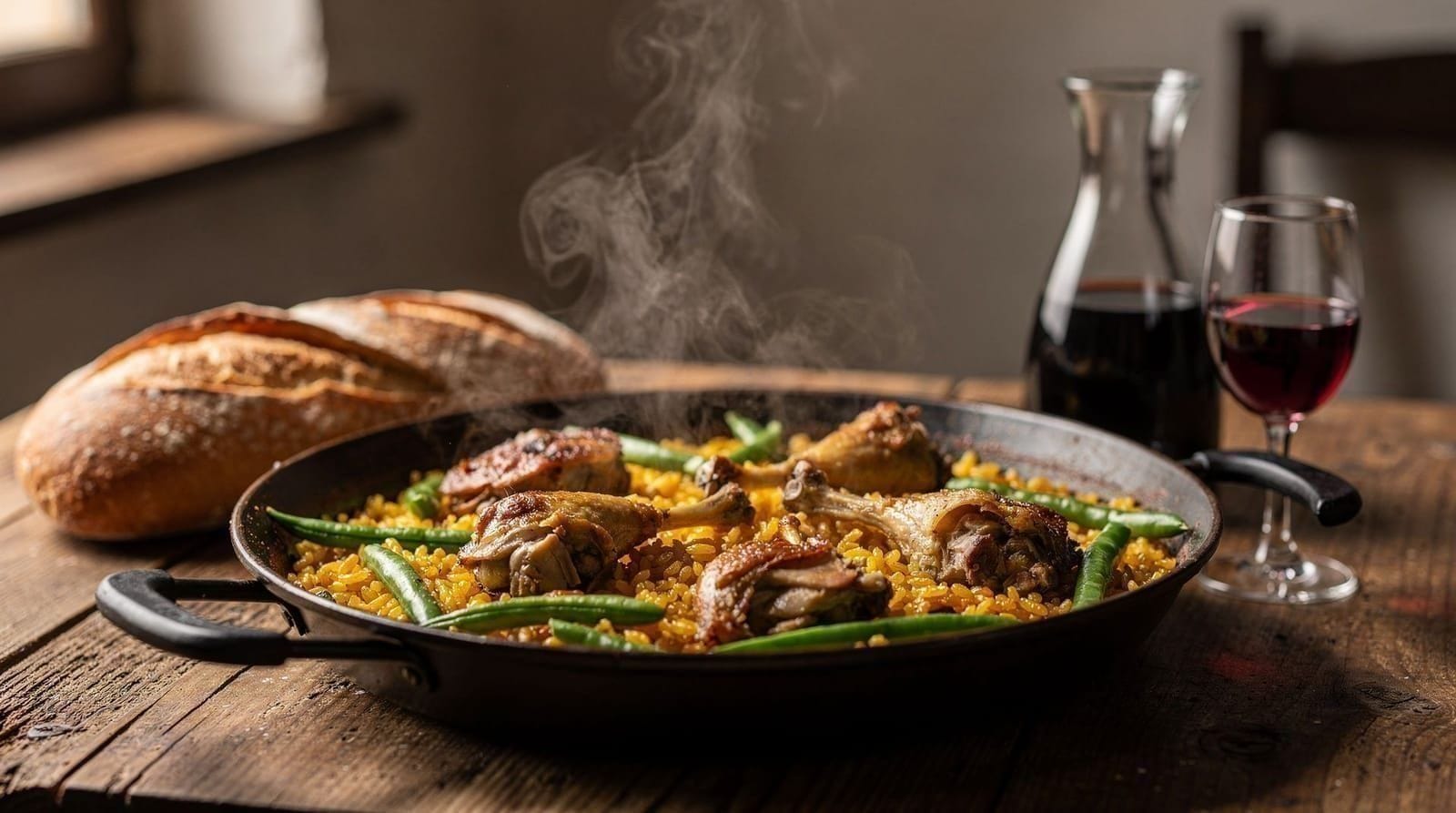
Paella valenciana: the original — rabbit (conejo), chicken (pollo), flat green beans (ferraura or judía verde plana), large white beans (garrofó), tomato, olive oil, saffron, water, and short-grain rice. This is the benchmark.
Arroz a banda: rice cooked in fish broth, served with alioli. “Banda” means the rice and the fish are presented separately; you eat the rice first, then the fish as a second course. One of the best rice preparations in Valencia.
Arroz negro: rice cooked with squid ink and squid. Dark, rich, savoury. Best at coastal restaurants with fresh squid.
Fideuà: noodle version, always served with alioli. See the paella vs fideuà comparison for the full breakdown.
Arroz al horno: baked rice, cooked in the oven with chickpeas, morcilla, and sometimes pork ribs. A winter variation worth trying in cooler months.
Socarrat: the caramelised bottom crust — you want this. Don’t be embarrassed to scrape the pan. A server at a proper restaurant will not flinch; this is the prize, and they know it.
What to ask when you arrive
A few questions that will be received well at a proper paella restaurant:
“¿Cuánto tiempo de espera para la paella?” — How long is the wait for the paella? (This establishes that you understand it’s cooked to order and that you’re willing to wait. Expect 25–40 minutes.)
“¿Está hecha con fuego de leña?” — Is it made with a wood fire? (At the serious restaurants, yes. It’s a reasonable question that signals you know what you’re asking about.)
“¿Cuántas personas mínimo?” — How many people minimum? (If you’re a party of two and uncertain whether they’ll make a pan for two.)
The socarrat negotiation
If you want extra socarrat — the crisped bottom layer — you can ask: “¿Puedes dejarla un poco más para el socarrat?” — “Can you leave it a little longer for the socarrat?” Not all restaurants will appreciate this intervention (it implies distrust of their timing), but at casual family restaurants it’s completely normal.
If you receive your paella and the bottom layer is not properly caramelised, you’ve either been served something that wasn’t cooked over a proper heat source, or the restaurant is over-cautious about burning. Neither is ideal, but the former is the bigger problem.
What not to do
Don’t ask for mixed paella: if you’re at a restaurant known for paella valenciana, asking for “paella mixta” (combined seafood and meat version) marks you as someone who doesn’t understand what the restaurant does. It’s not rude — it’s just wasted at a specialist restaurant.
Don’t add anything: some tourists add lemon, hot sauce, or other condiments to paella valenciana. At most restaurants this is fine, but it’s not how the dish is intended to be eaten. Try it as served first.
Don’t order paella and expect immediate service: this is a dish that takes 25–40 minutes from when you sit down, and that’s at a prepared restaurant. Factor this into your lunch planning. Order a small starter and some drinks while you wait.
Don’t confuse garnish with the dish: the slice of lemon sometimes placed on the rim of the paella pan in tourist restaurants is a concession to northern European expectations. In strict Valencian tradition, lemon is not part of paella valenciana. At honest restaurants it simply won’t appear.
Ordering for a group vs ordering alone
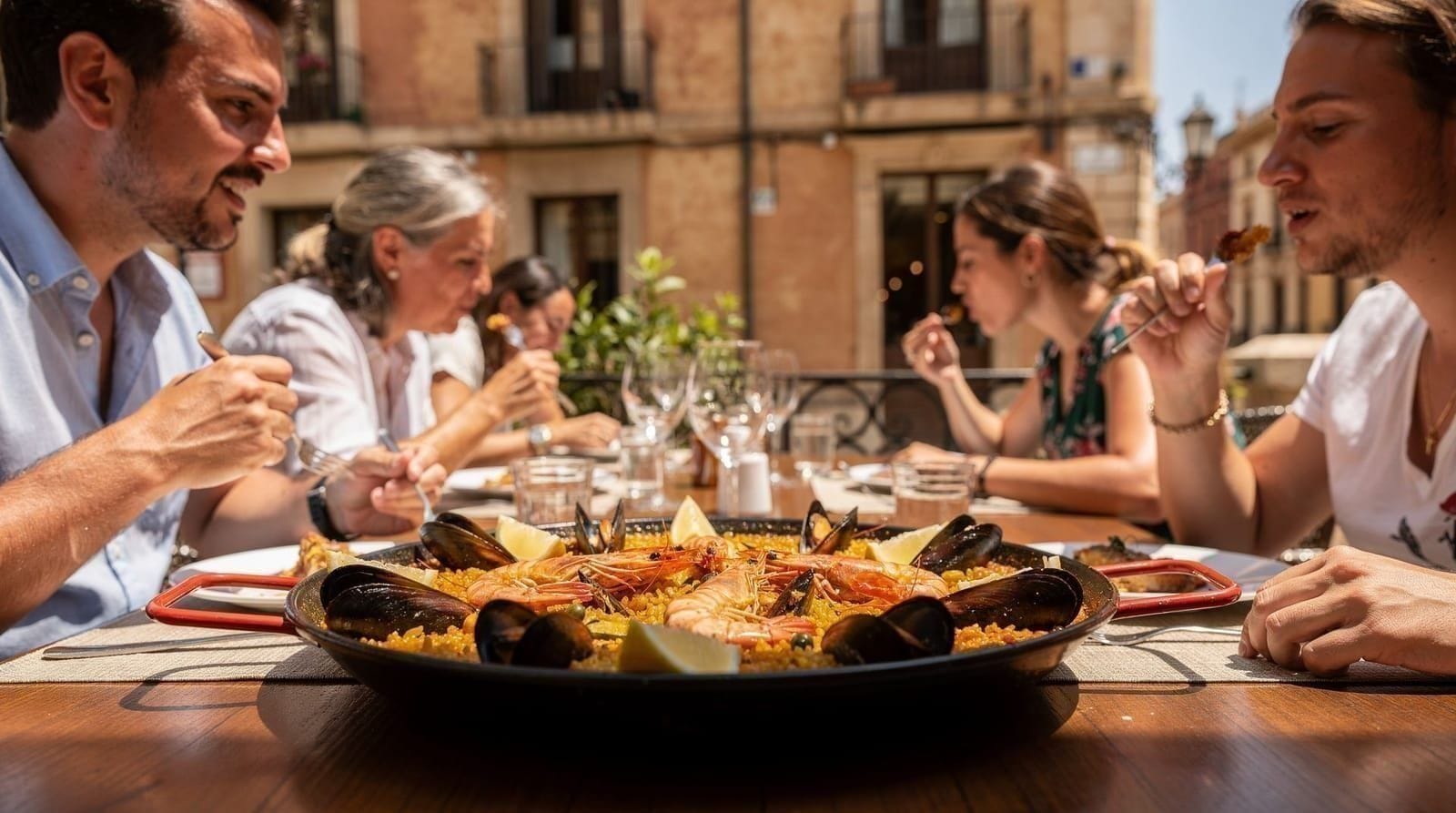
Paella genuinely rewards a group. A table of four or more sharing one large pan gets a better ratio of socarrat to soft rice, and the communal serving style — the pan set in the middle, everyone eating from it or serving themselves onto plates — is how the dish is meant to be eaten. If you’re travelling solo, don’t assume you’re locked out: ask whether the kitchen does arroz meloso (a creamy, individually-plated rice) as a substitute, or consider timing a solo trip around a paella cooking class instead, where you’ll eat what you cook regardless of party size.
What to drink with it
Paella is traditionally paired with a simple, chilled red or rosé from the region — nothing elaborate. A jug of water and bread round out the table. Ordering Agua de Valencia alongside your paella is common among tourists but less common among locals, who tend to treat the cocktail as its own separate occasion rather than a meal pairing. If you want the fuller picture on rice dishes beyond paella valenciana, the authentic paella guide lists specific restaurants by dish and neighbourhood.
A cooking class as a shortcut to understanding
There’s a limit to how much you can learn about a dish by eating it. Taking a paella cooking class — even a 2-hour introduction — dramatically changes how you eat paella for the rest of your life. You’ll understand the sofrito stage, the rice-to-broth ratio, why the pan width matters, and how the socarrat forms. Every subsequent paella you eat anywhere in the world will be evaluated against this knowledge.
Master the full paella technique in an authentic Valencian kitchen — from the sofrito through to the socarrat
If you’d rather learn the dish while seeing the city’s food culture at the same time, a guided tasting is another route: a gastronomic walk combining tapas stops with a paella lets you compare the real thing with the small plates around it, with a local explaining what you’re eating. Pair it with a morning at the Central Market and the whole day becomes a lesson in how Valencians eat.
After the paella
A proper paella lunch in Valencia ends with coffee (espresso, typically), possibly a digestif if the restaurant has horchata or hierbas valencianas (local herbal liqueur). The meal rarely extends beyond 4pm, when the kitchen closes for the afternoon.
If you still have appetite, the restaurants in Russafa — about 15 minutes’ walk south of the old city — are excellent for an afternoon coffee or evening pintxos. The neighbourhood operates on a slightly later schedule than the historic centre. The Russafa guide and tapas in Ruzafa give you places to continue the afternoon, and if the day is still young, the Turia gardens make a gentle walk to settle a heavy lunch.
If you’re planning a longer stay around the meal, the Valencia for foodies itinerary strings lunches like this one into a full trip, and the menú del día guide explains the weekday set lunch that locals eat when it isn’t a paella day.
For the broader guide to Valencia’s food scene — the Central Market, tapas culture, horchata, Agua de Valencia (a cocktail to approach with caution), and the menú del día — see the eat like a local guide and the best restaurants in Valencia guide.