Why you should never eat paella for dinner in Valencia
A local told me this on my second day
I was standing at the entrance of a restaurant near the Valencia Cathedral, studying the menu with paella listed under both “lunch” and “dinner,” when the man at the next table leaned over and said something I remember years later: “You can order it. They’ll bring it. But it won’t be what you came here for.”
He was from Valencia, eating a simple menú del día — a starter, main, and dessert for €13 — at 2pm on a Tuesday. The restaurant next to us was doing roaring business with tourists ordering paella at 8pm. The tourists looked satisfied. They were eating a pale copy of the real thing and didn’t know it.
| When locals eat paella | Lunch, 2–4pm |
| When restaurants serve real paella | Usually gone by 4pm |
| Fair price (lunch, proper restaurant) | Around 15–20 € per person |
| What to order at dinner instead | Tapas in Ruzafa, fideuà if cooked to order |
| Where to eat it properly | Casa Carmela, La Pepica, El Palmar restaurants |
Why paella is a lunch dish
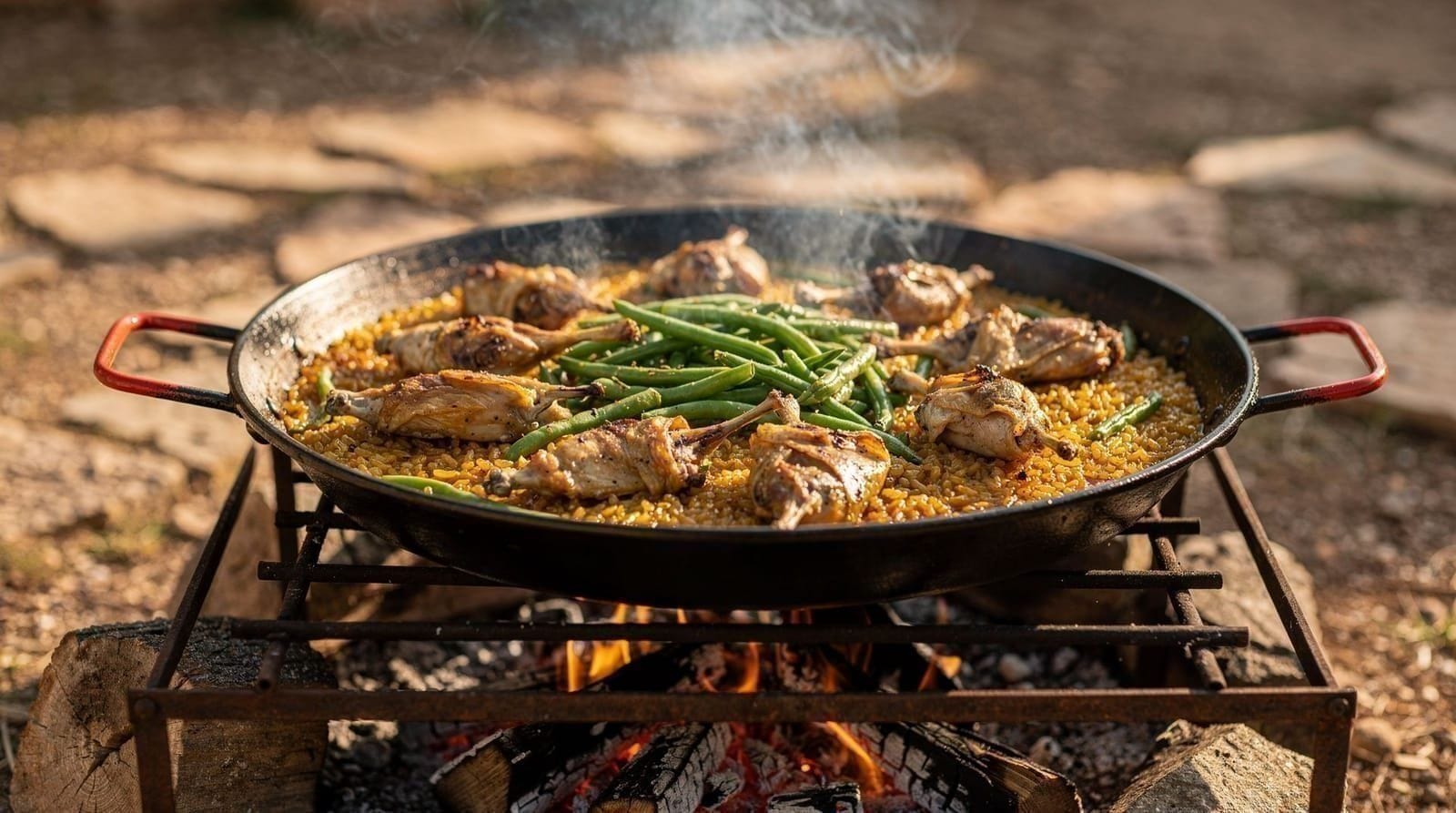
The traditional Valencian paella evolved as a farmworkers’ meal — a midday dish cooked over a wood fire in the fields, using whatever was to hand: rabbit, chicken, the flat green beans (ferraura) and large white beans (garrofó) grown locally. The fire had to be built, the sofrito done properly, the rice cooked slowly. This takes time and attention. It is inherently a lunch preparation.
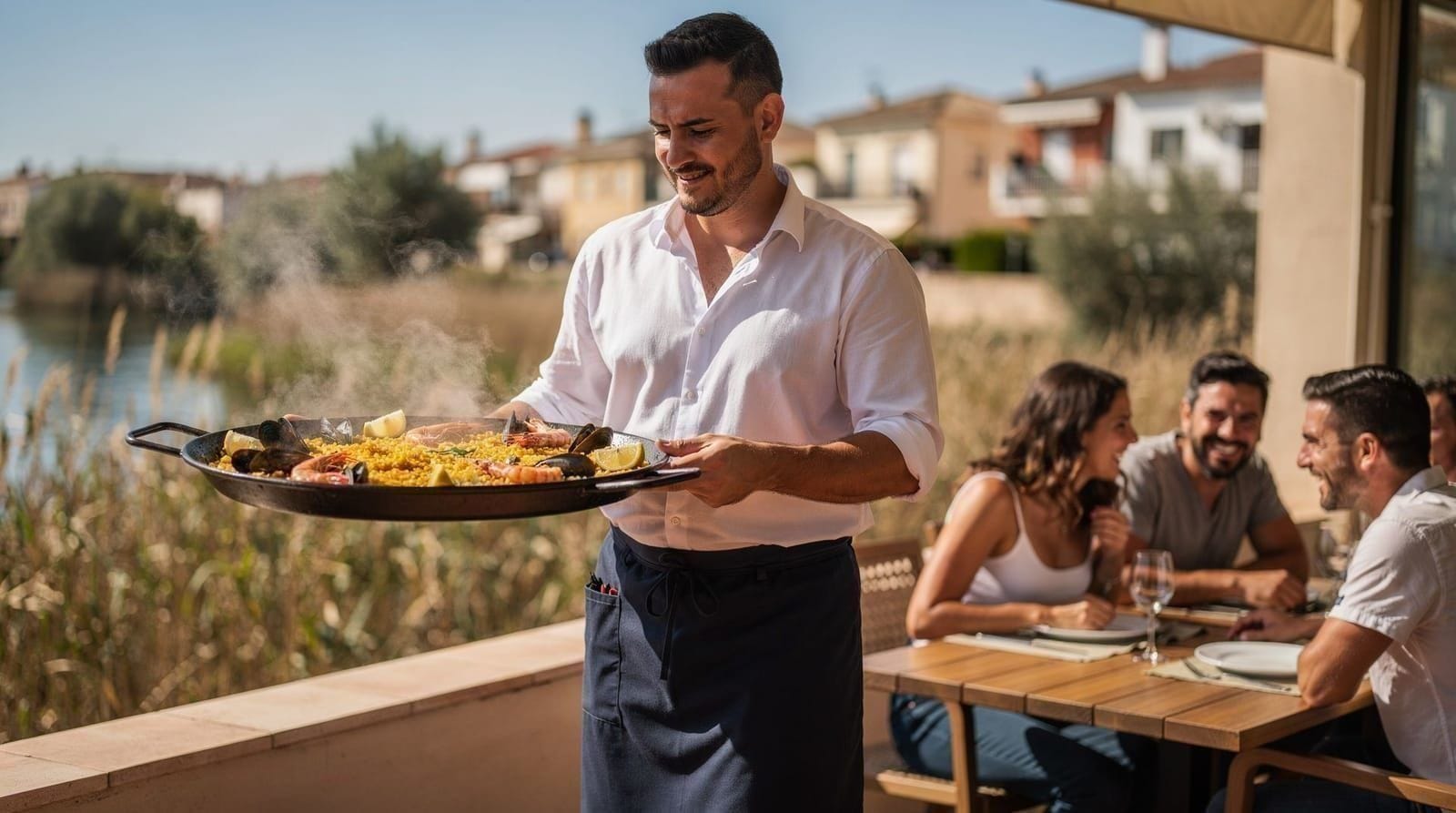
The authentic restaurants in Valencia — Casa Carmela, La Pepica on Malvarrosa beach, the cluster of proper paella houses in El Palmar — operate on this principle. They cook paella over wood fires for the midday service. By 4pm, the paella is gone. The restaurants that serve paella at 8pm are working from a different system entirely.
What “paella for dinner” actually is
When you order paella at a tourist-facing restaurant in the evening in Valencia, you are typically receiving one of the following:
Pre-cooked and reheated: the paella was made at lunchtime, portioned into a pan, and reheated for the dinner service. The socarrat (the caramelised rice crust at the bottom, the benchmark of good paella) is either absent or fake. The rice texture is wrong — overcooked and slightly mushy from sitting.
Made in bulk from a gas burner: proper Valencian paella requires wood fire or at minimum a very hot flame. Industrial gas burners can produce an acceptable result for a skilled chef cooking a small pan, but the “big tourist paella” restaurants operate industrial gas systems producing large batches. The heat distribution is wrong.
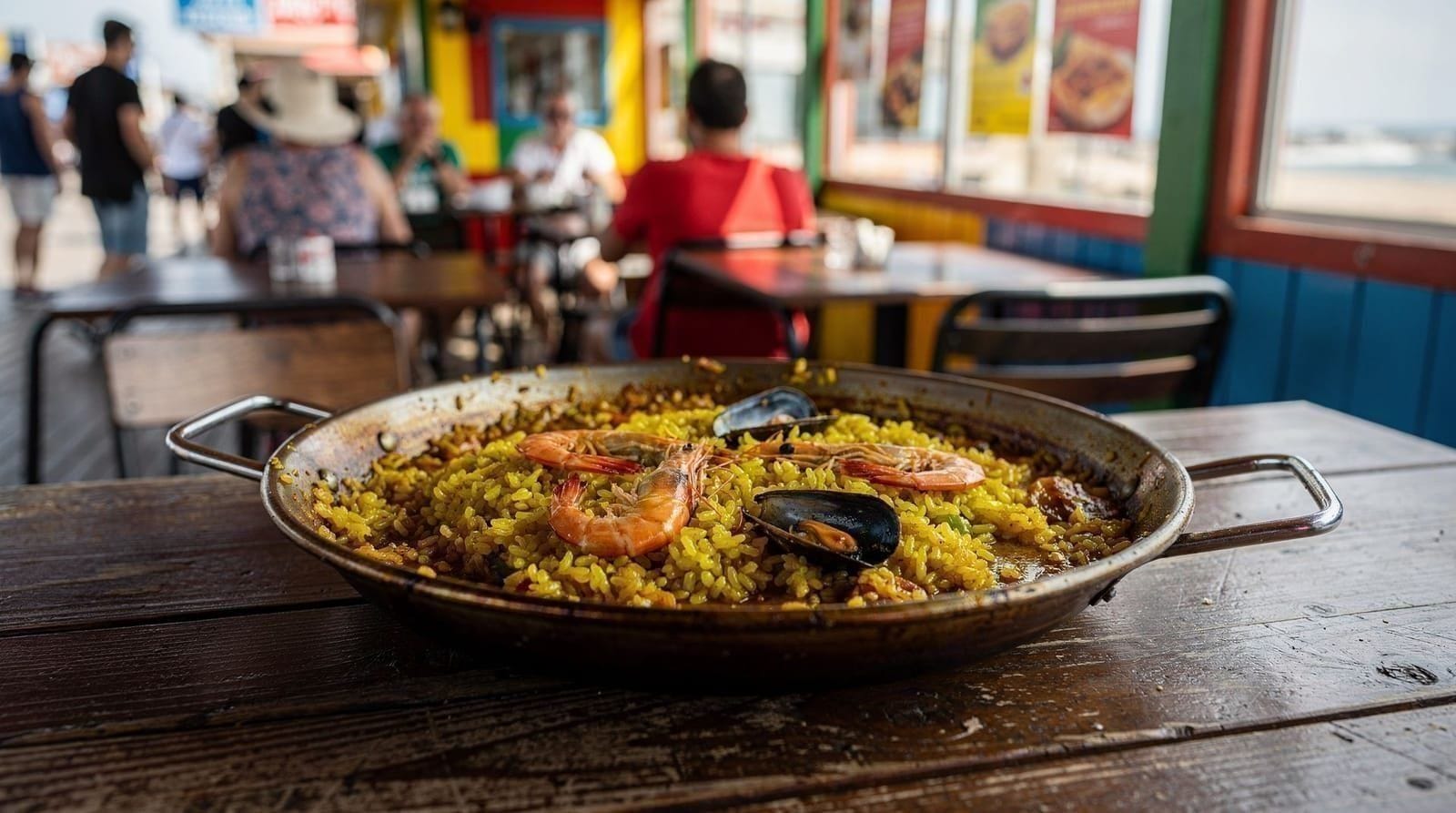
A tourist product: some restaurants near Plaza de la Reina have essentially decoupled their paella from Valencian tradition entirely and are producing a product calibrated to what tourists expect paella to be, rather than what it actually is. Mixed paella with shrimp, chicken, mussels, peppers, and peas, covered in a uniform yellow from artificial saffron. This isn’t paella valenciana; it’s a souvenir dish.
What to eat for dinner instead
Valencia’s evening food culture is wonderful — it’s just not centred on paella. Here’s what actually happens at dinner in Valencia:
Tapas in Ruzafa: the neighbourhood of Russafa is where most of Valencia’s food scene actually lives. Small bars, natural wine, innovative bocadillos, jamón, small plates of razor clams, pan con tomate done well. Dinner around 9pm in a Russafa bar is one of the real pleasures of the city.
Fideuà at dinner (sometimes): fideuà — the noodle equivalent of paella, cooked in the same pan with similar broth — is slightly more forgiving to evening preparation than rice paella. Some honest restaurants in the old city do serve it at dinner. Ask specifically if it’s cooked to order.
Arroz negro (at lunch): like paella valenciana, squid-ink black rice is a lunch dish at proper restaurants. Don’t confuse the “available at dinner” tourist version with the real preparation.
Menú del día at lunch: the fixed-price lunch menu (€12–16 for three courses including wine or water at honest restaurants) is one of the great bargains of Valencia. If you eat your main meal at lunch — paella at a proper restaurant — dinner becomes a lighter affair of tapas, pintxos, or a simple shared plate. This is how Valencians actually eat.
The menú del día guide explains how the fixed-price lunch works, and the eat like a local guide shows how the rest of the day’s meals fit around it. If you like the idea of a morning bite before the big lunch, the esmorzaret and almuerzo guide covers that habit too. For more on Russafa after dark, see the tapas in Ruzafa guide.
If you would rather not choose bars on your own, a guided evening is an easy way to eat well after dark: a guided evening tapas and drinks tour keeps dinner light and sociable, which suits a day that already included a proper paella lunch.
The geography of the trap
The tourist paella restaurants are concentrated in a specific zone: Plaza de la Reina, Calle del Mar immediately around the Cathedral, and any restaurant with a laminated photo menu visible from the street. The further you walk from the Cathedral — east toward El Cabanyal, south into Russafa, or north to El Carmen’s quieter streets — the more likely you are to find restaurants operating on local logic rather than tourist expectations.
The tourist traps guide maps this out in more detail. The paella traps guide specifically lists the warning signs for restaurants best avoided. The tourist menu traps guide does the same for the fixed-price menus aimed at visitors, and the Cabanyal neighbourhood page is a good starting point if you want to eat away from the Cathedral crowds.
If you’re determined to eat paella in the evening
There is one honest way to eat paella for dinner in Valencia: cook it yourself, or pay for someone to cook it specifically for you. Paella cooking classes that run into the evening include the cooking, the explanation, and then the meal — this is the real experience of paella preparation because you’re the one doing it.
Evening paella cooking class at the Central Market — cook it yourself, eat it whenever you wantIf the noodle version appeals, the paella vs fideuà guide explains how the two dishes differ, and the El Palmar destination page tells you more about the village where many of the proper paella houses sit.
For the full paella story — history, varieties, ordering guidance, and real restaurant recommendations — see the authentic paella guide and the best paella restaurants roundup.
How to order it correctly at lunch instead
Given that paella is fundamentally a lunch dish, the more useful skill is ordering it well during the window when restaurants actually make it properly. That means arriving between 13:30 and 14:30, understanding that most serious restaurants require a minimum order of two people per pan, and being prepared to wait 25-40 minutes since it’s cooked to order rather than pulled from a warming tray. The full how to order paella like a local guide covers the vocabulary and etiquette in more detail, including how to ask for extra socarrat without offending the kitchen.
One last thing
The irritating irony of the paella trap is that the real version, eaten at lunch at a proper restaurant in El Palmar or on Malvarrosa beach, is not dramatically more expensive than the tourist dinner version. The honest lunch paella valenciana at Casa Carmela or La Pepica runs €15–20 per person. Tourist restaurants near the Cathedral charge similar prices. The gap is in quality, not cost.
This is characteristic of the best Valencian food: it’s not hidden behind expense. It’s hidden behind knowing where to look and, crucially, when.