Night tours in Valencia: what to see, what to book, and what's worth it
Valencia: under the stars nighttime tuk-tuk tour (2 hours)
Duration: 2 hours
What are the best things to do on a night tour in Valencia?
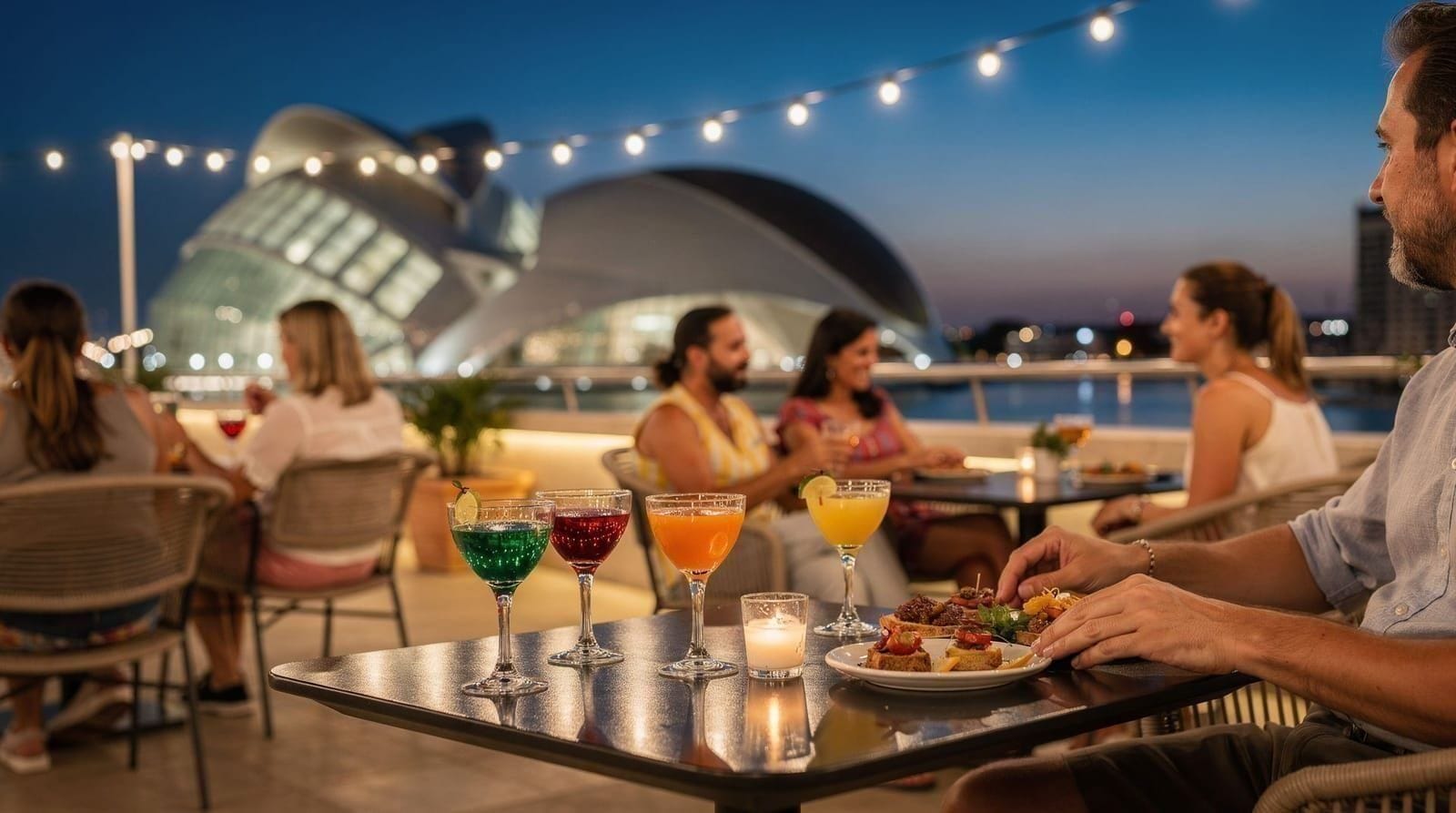
The City of Arts and Sciences illuminated at night is the top nighttime sight — free to visit independently. Organized options include night tuk-tuk tours, night bike tours, flamenco shows, and tapas and drinks evening tours. The combination of the illuminated complex at 21:00 plus a tapas evening tour in Ruzafa or El Carmen is an excellent Valencia night without the tourist-show premium.
Valencia’s evening starts significantly later than northern European cities and that’s not just a cultural quirk — it’s baked into the city’s physical infrastructure. Restaurants don’t open for dinner until 21:00. The promenades along the Turia Gardens and the waterfront fill up after 20:00 when the day’s heat has broken. The City of Arts and Sciences switches on its exterior illumination at dusk and looks entirely different from its daytime self. A trip to Valencia without spending time outdoors in the evening is a truncated experience.
The question for visitors is which night activities require booking and which can be done independently.
| Where | City of Arts and Sciences, El Carmen, Ruzafa, Turia Gardens |
| Cost | Free (illuminated complex, park) to around €55–100 (guided tours, dinner shows) |
| Time needed | 2–4 hours for a single tour; a full evening 19:30–23:00 to combine several |
| Getting there | Walkable within the old town; bus 19 or a 25-minute walk to City of Arts |
| Best time | Year-round; winter evenings are quieter and arguably more atmospheric |
The free night: City of Arts and Sciences illuminated
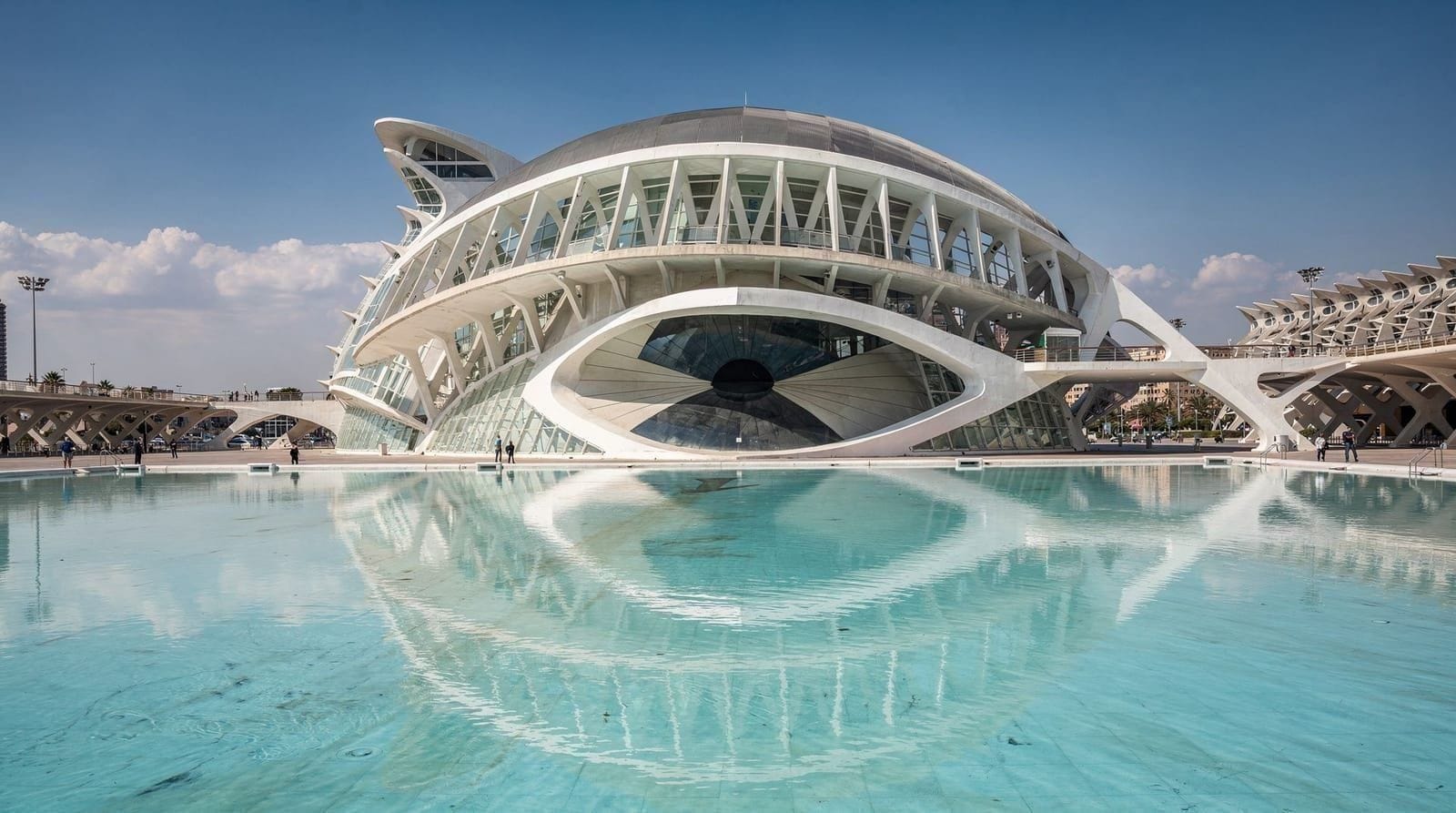
The most dramatic nighttime sight in Valencia costs nothing. The Ciudad de las Artes y las Ciencias complex is lit after dark with a system that illuminates the white Calatrava surfaces and the water features at the same time. The effect — white architecture glowing against a dark sky, doubled in the still reflection pools — is substantially more impressive than the daytime version, which competes with harsh Mediterranean sunshine.
Accessing the complex at night: The grounds are free and accessible until at least midnight. Walk from the Alameda metro stop south along the Turia Gardens path (25 minutes) or take bus 19 to the Oceanogràfic stop. The complex stays illuminated until approximately 23:00-00:00 depending on the season.
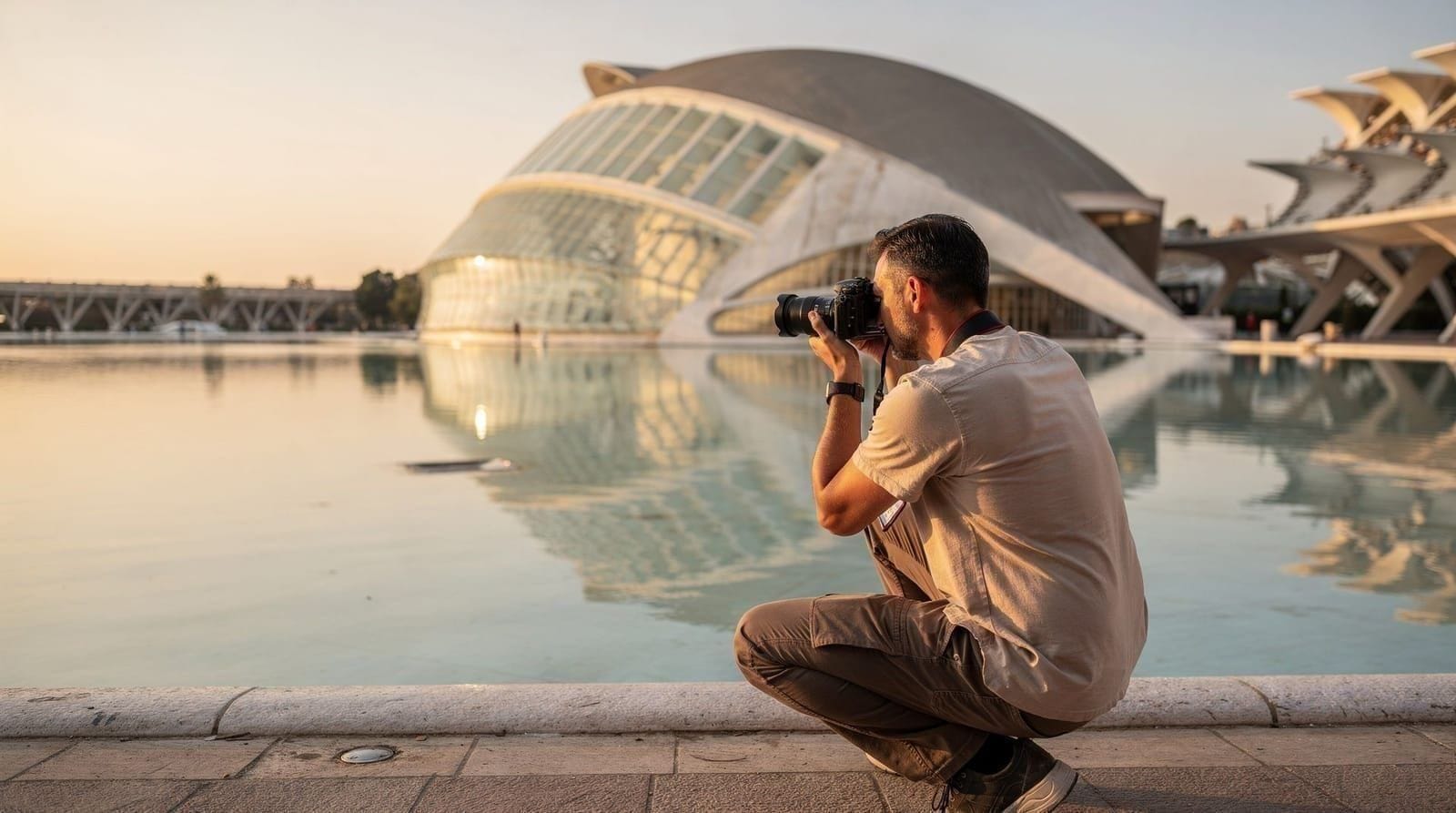
Photography: Long-exposure photography of the illuminated reflections is excellent. Bring a tripod. The concrete walkways around the pools provide stable surfaces for long exposures of 2-8 seconds. The best positions are on the northern bank opposite the Hemisfèric (the “eye” building) and along the long pool running west from the Príncep Felip science museum. Arrive around 30 minutes before full darkness to catch the transition from sunset colours to the artificial lighting — this window produces the most striking images and is missed entirely by tours that arrive after 21:00.
What you can’t do: Enter the Oceanogràfic, Hemisfèric, or Science Museum (these close at 19:00-20:00). The exterior, the pools, and the L’Umbracle walkway are your domain.
Night tuk-tuk tours
The night tuk-tuk circuit is a different product from the daytime version. The old city is quieter after 21:00, the medieval architecture is lit from below (creating dramatic upward-lighting shadows), and the movement through the lanes in an open vehicle in cooling evening air is genuinely pleasant.
Most night tuk-tuk tours include both the old city and the City of Arts and Sciences illuminated — the circuit makes most sense as a combined overview of both the medieval and modern Valencia at night.
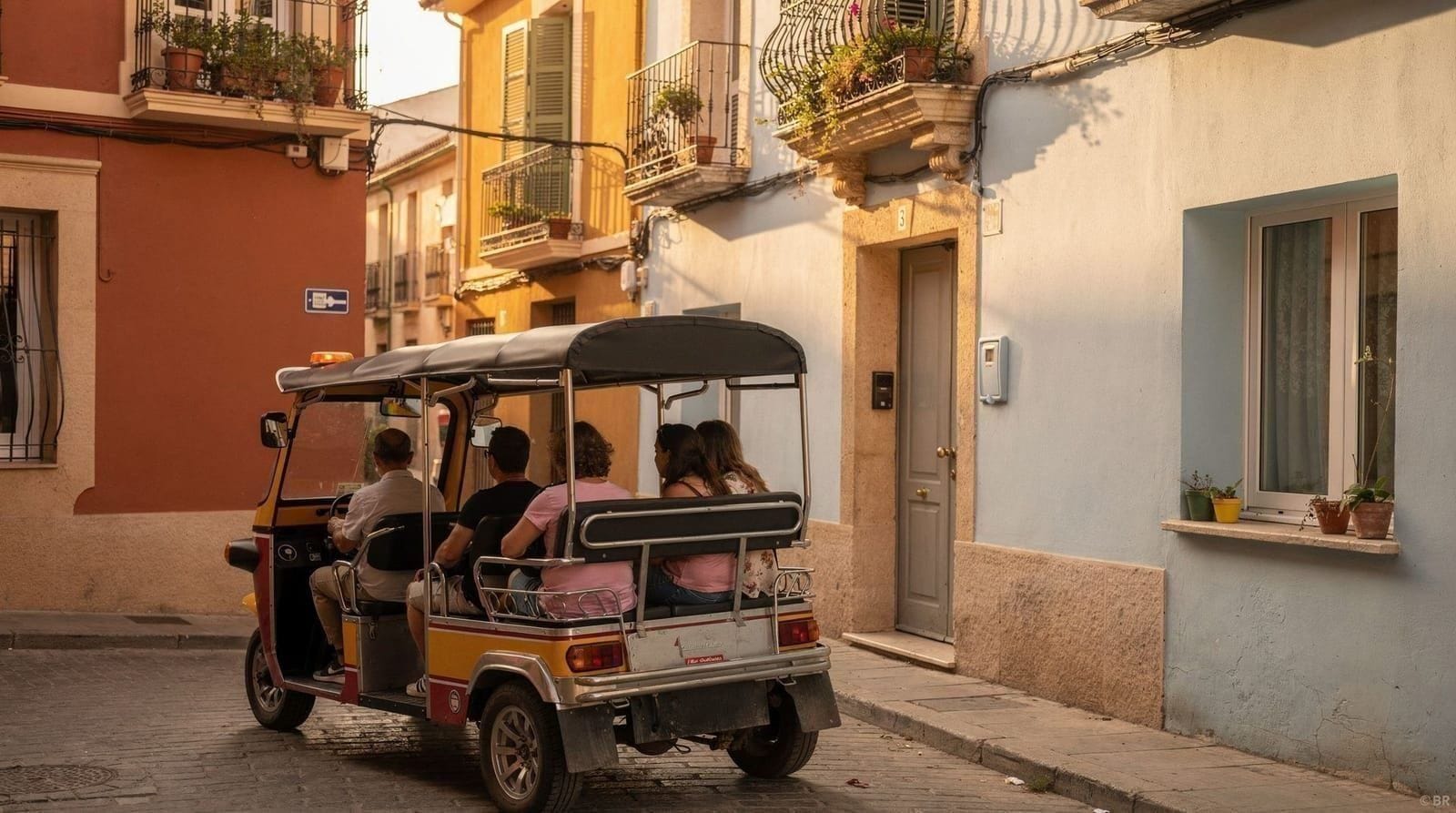 under the stars nighttime tuk-tuk tour (2 hours)Check availability
Duration: 2 hours. Meeting points typically at Plaza de la Reina or Plaza de Porta de la Mar around 20:30-21:00.
Who it suits: Couples wanting a romantic evening tour; visitors who did the daytime walking tour and want the nighttime perspective; people who find evening walks in warm weather more pleasant than afternoon sightseeing.
Night bike tours
The night bike tour is a different proposition from the tuk-tuk — more active, larger groups, lower per-person cost, and the Turia Gardens are the main route rather than the narrow lanes of El Carmen.
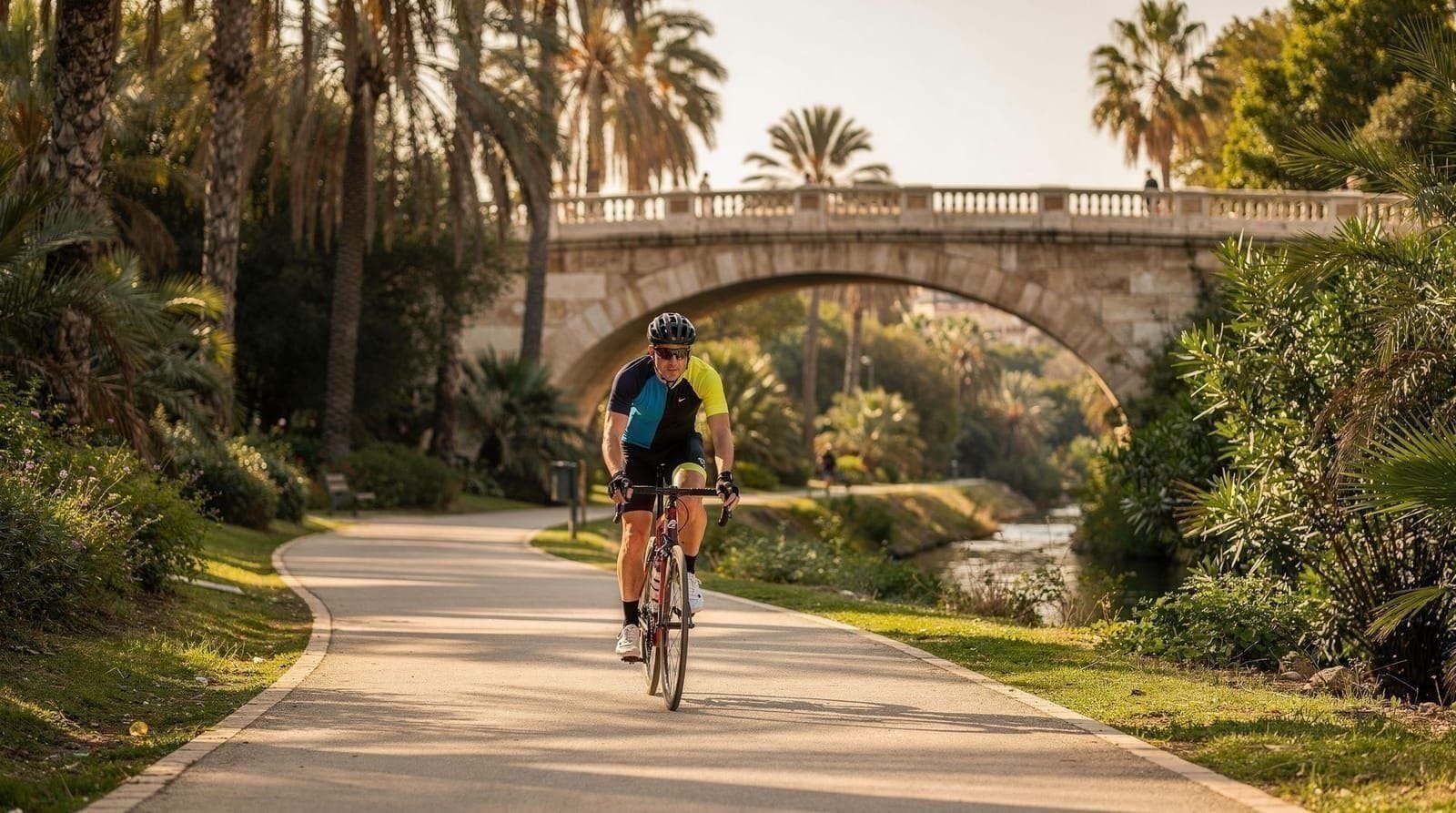 night bike tour (2 hours)Check availability
Route: The standard night bike tour starts in the old city, cycles through the Turia Gardens eastward to the illuminated City of Arts and Sciences, then returns through the park. The flat terrain and cool evening air make this one of the more pleasant physical activities in Valencia in summer.
Who it suits: Active travelers who want to combine exercise with sightseeing; couples; groups up to 15. Not suitable for visitors who are not comfortable cycling.
Flamenco shows
Valencia has a functional flamenco show market, though the city is not a flamenco heartland the way Sevilla or Jerez are. Valencian traditional music is different — flauta and tabalet percussion, dolçaina pipes — and flamenco in Valencia is largely performed for tourists.
This is not a reason to avoid it. A well-executed flamenco performance is impressive regardless of whether the city where you’re watching it has a deep flamenco tradition. The technical skill of professional bailaoras, the guitar work, and the cante jondo are genuinely worth experiencing.
The honest caveats: Valencia’s flamenco shows run from well-staged authentic performances to tourist-trap dinner shows with mediocre quality and inflated prices. The differentiation factors:
Signs of quality: Shows performed by professional companies with touring credentials. Venues with a standing dance tradition (not just tourist venues). The absence of “audience participation” segments.
Tourist trap signals: Dinner show format where the price is mostly food and the flamenco is an afterthought. Shows marketed primarily at cruise passengers. Venues located in prime tourist real estate (directly on the Plaza de la Reina) with corresponding prices.
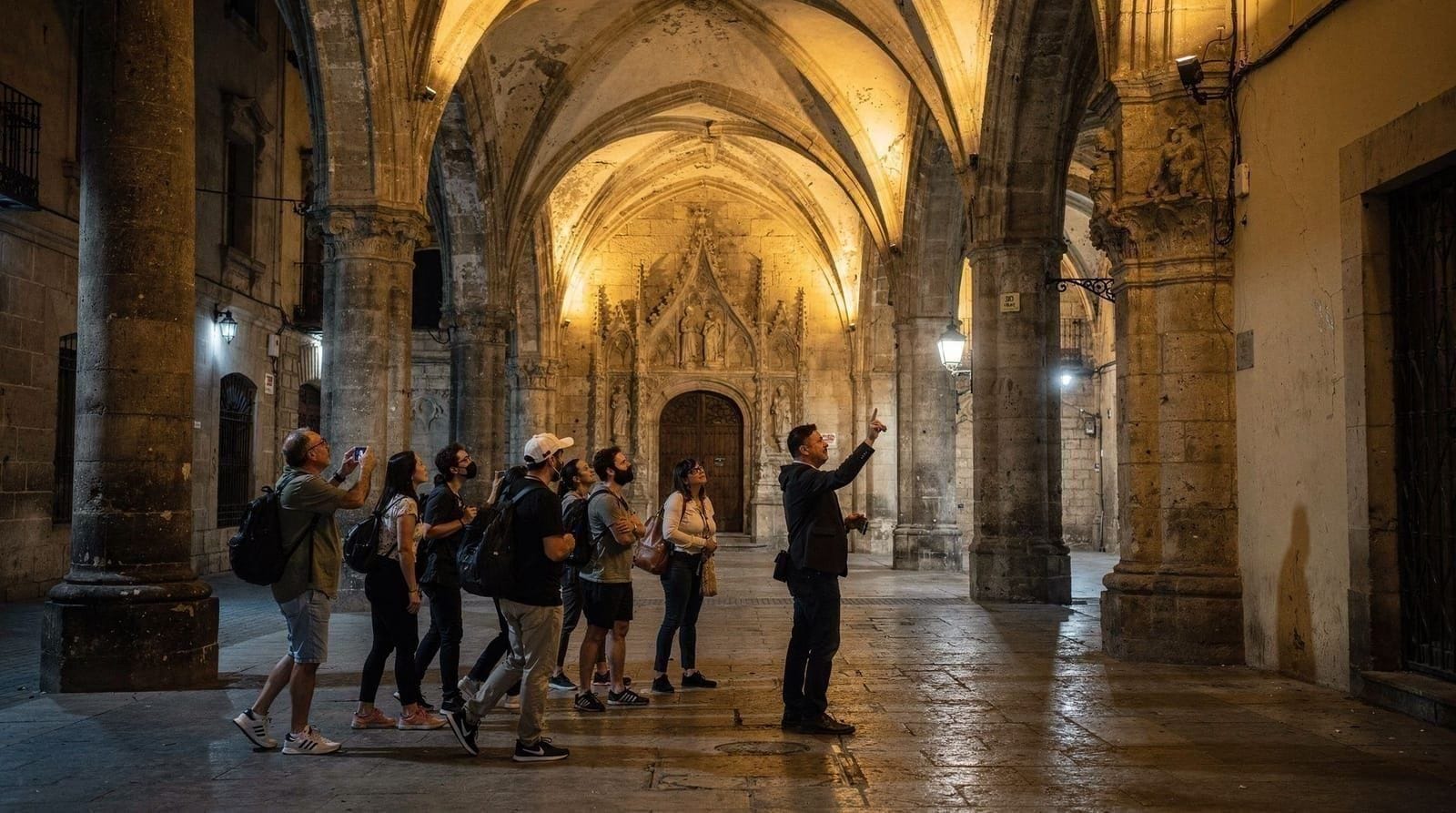 flamenco show with dinner at La BuleríaCheck availability
3-hour gourmet dinner with flamenco showCheck availability
flamenco show with dinner at La BuleríaCheck availability
3-hour gourmet dinner with flamenco showCheck availability
Price range: A show-only ticket runs €15-25. Dinner-with-show packages run €60-100. The dinner add-on is rarely worth the premium — better to eat dinner in Ruzafa and attend the show separately.
Tapas and drinks evening tours
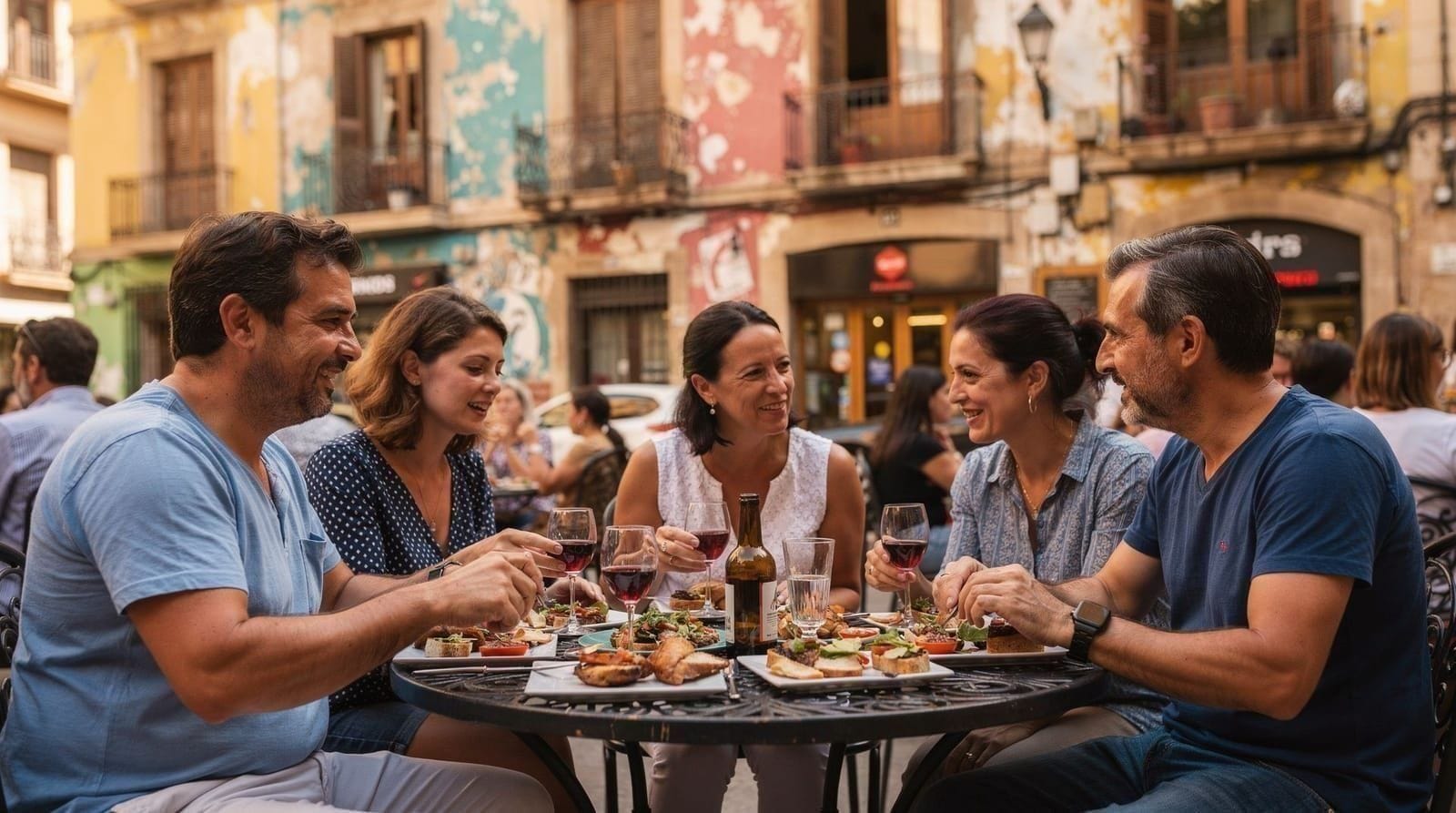
The tapas evening tour model — a guide takes you to 4-6 bars or restaurants in Ruzafa or El Carmen, with small plates and drinks at each stop — is an effective way to navigate the late-night food culture for visitors who don’t know which places to choose.
tapas and drinks evening tourCheck availability
Duration: 3-4 hours (typically 20:00-23:00 or 21:00-00:00).
What’s included: Usually 2-3 tapas dishes plus a drink at each stop. Wine or beer is the norm; some operators include vermut (vermouth) or Agua de Valencia — see the Agua de Valencia guide for context on this.
The honest value question: If you already know Ruzafa’s restaurant scene well, you don’t need a guide. If it’s your first evening in Valencia and you want to be directed to genuinely good bars without spending time researching, the guided tapas tour removes the friction. The price (typically €55-75 including food and drinks) is comparable to what you’d spend independently in the same bars.
The Agua de Valencia trap
Many evening tours include Agua de Valencia — the cocktail of cava, orange juice, vodka, and gin that was invented in Valencia in 1959. It’s a pleasant drink and genuinely Valencian. The trap: many tourist bars serve watered-down or low-quality versions at €10-15 per glass, targeting visitors who don’t know the standard.
The Agua de Valencia guide gives the full context, including where to order it properly and what a fair price looks like.
Night at the Turia Gardens
The Turia Gardens park is a social gathering place on warm evenings — Valencians come here after work, couples walk, cyclists use the path, and the sections near the Gulliver Park (tramo 10) and the Palau de la Música become informal outdoor social spaces. This is entirely free and requires no booking — just show up and walk or cycle.
The park is lit along the main path sections until 23:00-00:00. The Turia Gardens guide covers the park’s layout.
Comparing the organised night tours
A quick side-by-side of the main bookable options, since the choice between them depends mostly on budget and how active you want to be:
| Tour type | Duration | Typical price | Best for |
|---|---|---|---|
| Night tuk-tuk | 2 hours | €25–45 | Couples, easy sightseeing, no walking |
| Night bike tour | 2–2.5 hours | €25–35 | Active travellers, groups up to 15 |
| Flamenco show only | 1–1.5 hours | €15–25 | Culture without the dinner premium |
| Flamenco dinner show | 2.5–3 hours | €60–100 | Special-occasion evenings |
| Tapas and drinks tour | 3–4 hours | €55–75 | First-timers navigating Ruzafa/El Carmen |
For a single memorable evening on a modest budget, the night tuk-tuk plus a stand-alone flamenco show (skipping the dinner package) is the strongest combination on price versus experience.
Night photography tours
For visitors who want to do more than casually photograph the illuminated complex with a phone, dedicated photography tours run in the evening specifically to capture the City of Arts and Sciences reflections and the old-town lanes lit from below. These are usually smaller groups than the general sightseeing tuk-tuk or bike tours, led by a local photographer who knows the best tripod positions and timing relative to sunset. Worth considering if photography is a genuine interest rather than an afterthought — the standard night tuk-tuk tour does not allow the same time to set up a shot.
Guided versus self-guided evenings
Not every night activity needs a booking, and the guided versus self-guided guide covers this trade-off in more general terms. For nights specifically: the illuminated City of Arts complex, the Turia Gardens, and a self-directed tapas crawl in Ruzafa cost nothing beyond food and drink and require no advance planning. What you lose without a guide is the local knowledge of which bars are worth stopping at and the logistics of moving efficiently between old-city sights after dark. If you already know Valencia reasonably well, self-guided saves money without losing much. First-time visitors on a short stay tend to get more out of one guided evening activity, then explore independently for the rest of the trip.
Rooftop bars at night
Several rooftop bars in Valencia offer evening drinks with city views. The best rooftop bars guide covers the options, but briefly: the rooftop at the Caro Hotel (overlooking the old city, Roman wall visible), the El Ático bar at the NH Collection, and the seasonal terraces that open along the Av. del Marqués del Túria in summer.
Structuring an evening in Valencia
A practical evening sequence for a first visit:
19:30: Aperitivo in Ruzafa or El Carmen. Vermouth or beer, free tapa at a neighborhood bar. Cost: €2.50-4.
20:30: Walk or take the bus to the City of Arts and Sciences. Spend 45 minutes at the illuminated complex. Free.
21:30: Dinner in Ruzafa. Book ahead for the better restaurants. Budget €20-35/person for a full meal with wine.
23:00: Drinks in El Carmen (Plaça del Tossal area) or at a cocktail bar in Ruzafa.
This covers the major nighttime sights and the best food and bar scene without requiring any advance booking except for dinner.
Las Fallas at night — the definitive Valencia night experience
If you are in Valencia during Las Fallas (1-19 March), no organized night tour competes with simply being in the old city from 23:00 to 01:00 during the festival days. The combination of the illuminated fallas sculptures (most neighborhoods light their sculptures after dark), the firecrackers and music, the crowds in traditional costume, and the general atmosphere of a city that has abandoned its normal rhythms for two weeks is unlike anything else in Spain.
The climax night — Nit del Foc (18 March) — is the largest fireworks display in the world by tonnage. The mascletà (daily daytime firecracker display at 14:00 in Plaza del Ayuntamiento) is one of the most physically intense sensory experiences you can have in a Spanish city.
This is not a “night tour” in the organized sense. It requires no booking. It requires only being in the streets, which fill naturally with the city’s 800,000 residents and approximately 1.5 million visitors. See the Las Fallas guide for the complete logistics.
The Valencia night food sequence
Understanding Valencia’s evening rhythm helps in planning which organized activities fit where:
19:00-21:00: Aperitivo hour. This is the social warm-up — a vermut or beer at a bar counter, with free tapas, before the real meal. Bars in Ruzafa and El Carmen are busy in this window. Most organized evening tours start at this time.
21:00-23:00: Dinner. Restaurants fill rapidly from 21:00. The most popular Ruzafa restaurants are full by 21:30. Booking for dinner is essential at known places; walk-ins are possible at newer or less famous spots. This is the wrong time for a night tour (you should be eating).
23:00-01:00: Post-dinner drinks. The cocktail bars in Ruzafa and El Carmen fill in this window. This is when the nightlife properly begins. Night tuk-tuk tours that start at 21:00-22:00 are designed to end in time for dinner; tours that start at 22:00 work for those eating early or skipping a formal dinner.
01:00-04:00: Late night. The concentrated late-night scene is in El Carmen around Plaça del Tossal and certain venues near the old city. This is local and tourist mixed; the quality is inconsistent.
The winter night advantage
One aspect of Valencia’s night scene that guides rarely mention: winter evenings (November-February) are significantly better for the illuminated city experience than summer. The reasons:
Temperature: The City of Arts and Sciences reflection pools at night in winter (temperature 8-12°C, dry air, possibly some mist) are dramatically more atmospheric than in summer. The illuminated architecture against a cool clear sky is more striking.
Crowd levels: The City of Arts complex is genuinely empty at 21:00 on a weekday in January. You can walk around the pools in near-silence. In August, you share the space with hundreds of other people.
Light quality: Longer darkness hours in winter mean the illuminated complex is visible from late afternoon (17:30-18:00) rather than only after 21:00 as in summer. An early evening visit (17:30-19:00) in winter catches sunset light on the architecture, then transitions to artificial illumination — a sequence not possible in the long summer days.
Organized evening experiences: the value calculation
The honest assessment of the organized night tour market:
Worth it:
- Night tuk-tuk for couples who want a romantic, guided evening experience
- Tapas evening tour for first-timers who don’t want to navigate the restaurant scene independently
- Quality flamenco shows (not all are quality — research before booking)
- Night bike tour for active travelers who want exercise with scenery
Not worth it:
- Dinner shows at tourist-facing restaurants with overpriced food and mediocre entertainment
- Generic “nightlife tours” that are essentially bar crawls at tourist prices
- Any tour that guarantees “authentic flamenco experience” without naming the performers
The signal for quality: named performers, detailed program description, reviews mentioning specific performance elements (guitar solo, technique, energy) rather than just “great show.”
Frequently asked questions about night tours in Valencia
What time does Valencia come alive at night?
The evening begins properly at 21:00 when restaurants open for dinner. The streets of El Carmen and Ruzafa are most active between 22:00 and 01:00. The City of Arts complex is busiest for evening visitors between 21:00 and 22:30. Unlike some Spanish cities, Valencia doesn’t have a strong late-night club culture in the city center — the main late-night zones are the port/marina area and some venues in El Carmen.
Are night tours safe in Valencia?
Night tours with organized operators are entirely safe. Walking independently in the old city and Ruzafa at night is safe for most of the evening. The late-night Plaça del Tossal area (after 02:00) warrants the normal urban precautions. The safety guide covers the specific risks.
Is Valencia good for a romantic evening out?
Excellent. The combination of the illuminated City of Arts and Sciences, the medieval lanes of El Carmen in the evening light, and the quality of the restaurant scene in Ruzafa makes Valencia an unusually good romantic destination. Several photography tour operators also cater specifically to couples.
Is flamenco authentic in Valencia?
Flamenco is not indigenous to Valencia — it’s a tradition from Andalusia (Sevilla, Jerez, Cádiz). Valencia’s traditional performing arts are different: flauta and tabalet percussion, the dolçaina wind instrument, and ball de valencians dance forms. Flamenco in Valencia is performed for tourists, and some performances are excellent; others are low-quality tourist shows. Research the operator before booking.
What is the best night tour for couples in Valencia?
The night tuk-tuk (City of Arts illuminated, old city lanes, evening air) followed by a dinner reservation in Ruzafa is the strongest combination for couples who don’t want a pre-packaged evening. For those who prefer a guided experience, the tapas evening tour covers both the food scene and the bar culture in a single booking.
Top experiences
Bookable activities with verified prices and instant confirmation on GetYourGuide.