Overrated and underrated things to do in Valencia — an honest assessment
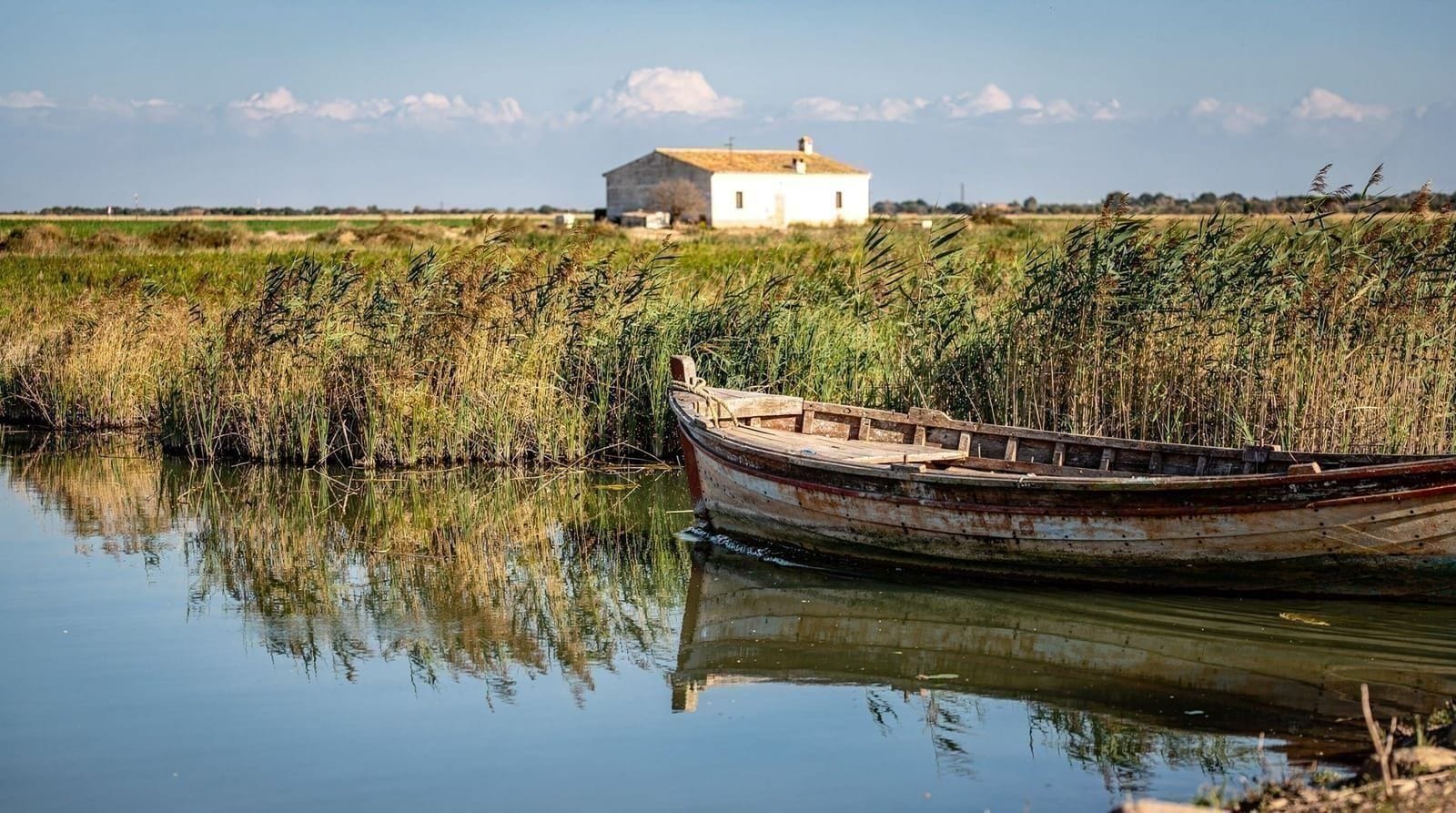
Valencia: Albufera Natural Park eco boat tour at sunset
What is overrated in Valencia and what is underrated?
Overrated — the hop-on hop-off bus (genuinely useful but not better than public transport), tourist paella on the beachfront, the Bioparc as a "must-do." Underrated — El Cabanyal (the city's most interesting neighbourhood), Albufera at dawn or evening, Bocairent and Requena as day trips, and the local esmorzaret culture that most visitors miss entirely.
How to use this guide
Every destination has a gap between what the tourist marketing promises and what the experience actually delivers. Valencia is better than average at delivering on its promises — the City of Arts genuinely is extraordinary, the paella genuinely is better here than anywhere else, and the beaches genuinely are good — but there are still things that get oversold to international visitors, and things that barely appear in the brochures despite being some of the best experiences in the city.
This guide is the honest reckoning.
| Overrated | Underrated |
|---|---|
| Hop-on hop-off tourist bus | El Cabanyal neighbourhood |
| Beachfront tourist paella | Albufera at dawn or late evening |
| Bioparc as a “must-do” | Bocairent |
| The Cathedral as top-tier sight | Requena wine country |
| Agua de Valencia in jug form | The esmorzaret culture, Montanejos |
Overrated: things that get more hype than they deserve
The hop-on hop-off tourist bus
The Valencia hop-on hop-off bus covers the City of Arts and Sciences, the old town, the marina, and the beach circuit. It’s not a scam — it does what it says. But the tourist marketing tends to present it as the “best way to see Valencia,” which is wrong.
The problem: At 3-5 km/h in city traffic, the bus provides audio commentary and a seat, but travels at the same speed as a bike or slower. The commentary is generic. The vehicle is conspicuously a tourist vehicle, creating a distance from the city rather than engagement with it. The EMT city bus network covers most of the same route at a fraction of the cost.
When it’s actually useful: For visitors with significant mobility limitations, for families with young children who need a rest, and for visitors with genuinely only one day who want geographic orientation without navigating public transport. In those specific cases, it earns its cost.
For most visitors: The Turia riverbed bike ride covers the same geographic spread, is more active, cheaper, and gives you the city at human scale rather than bus-window framing.
Beachfront paella tourism
The narrative around “eating authentic paella on Malvarrosa beach” appears in every Valencia travel guide. The reality is that the beachfront restaurants serving paella to tourists are producing a product that ranges from decent to poor, at prices well above what the same quality dish would cost inland.
The genuinely good traditional paella experience is in El Palmar (30 minutes south by bus), at arrosseries in the El Grau port neighbourhood, or at restaurants in Alboraia to the north. Not on the Malvarrosa beachfront main strip.
This doesn’t mean you shouldn’t eat on the beach — the setting is lovely — but order something other than the tourist paella if you’re on the beachfront. Seafood rice, fideuà, or fresh fish are better options at these restaurants.
Bioparc as a “must-see”
The Bioparc is genuinely a well-designed zoo with an African habitat theme and good animal welfare standards. It’s worth visiting for families with children or zoo enthusiasts. But travel guides regularly list it as one of Valencia’s top attractions alongside the Oceanogràfic — and the two aren’t comparable.
The Oceanogràfic is genuinely world-class. The Bioparc is a good zoo.
If you have limited time and are choosing between attractions, prioritise the Oceanogràfic + Hemisfèric + Science Museum circuit. The Bioparc is a half-day add-on for second or third visits, or for families where the children specifically want it.
The Cathedral as a top-tier sight
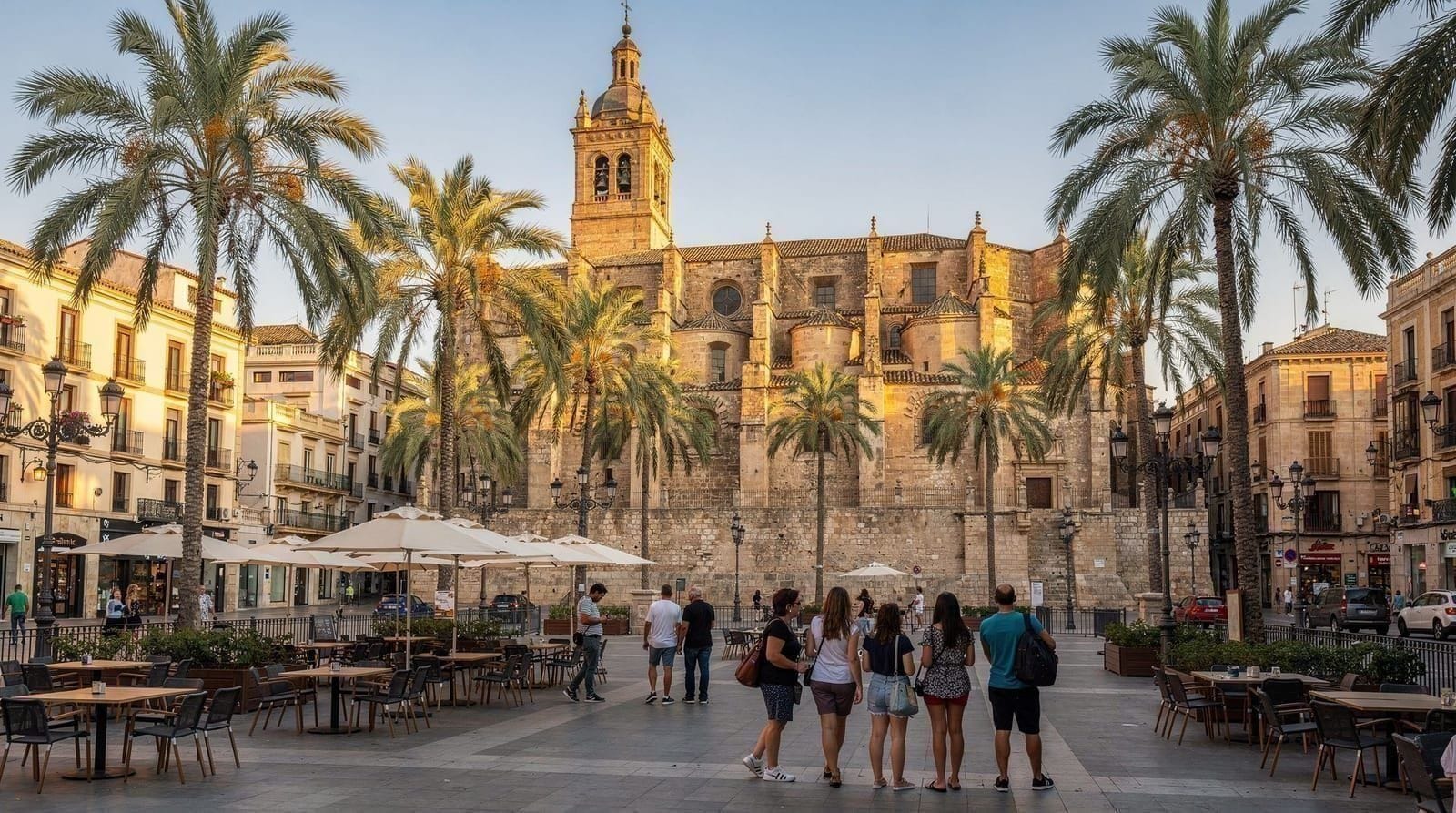
The Cathedral is worth visiting — the Micalet tower view is excellent, the interior has historical interest including the alleged Holy Grail cup, and the plaza is beautiful. But international travel content often positions it as Valencia’s “number one sight,” which misrepresents the city’s actual strengths.
Valencia’s genuinely extraordinary sights are the Llotja de la Seda (Silk Exchange — one of Europe’s finest Gothic civic buildings) and the City of Arts and Sciences complex. The Cathedral is impressive but not uniquely so by Spanish or European standards.
The fix: Visit the Cathedral’s plaza for orientation and atmosphere. Pay for the Micalet tower climb (€3, worth it for views). Give the interior a 20-minute visit if medieval art interests you. Then spend more time at the Llotja, which is undercrowded relative to its quality.
Agua de Valencia in tourist jug form
Already covered in the Agua de Valencia guide, but worth noting here: the large decorative jug version served at tourist terraces is one of Valencia’s most successfully marketed products that consistently underdelivers. Order it by the glass, at a proper bar, once.
Flamenco marketed as “authentic Valencia”
Flamenco is not a Valencian tradition — it comes from Andalusia — yet plenty of tourist-facing marketing presents a Valencia flamenco dinner show as an essential piece of local culture. The performances themselves range from genuinely skilled to mediocre tourist-trap dinner theatre, and the “authenticity” framing specifically misleads visitors about what they’re watching. See the night tours guide for how to tell a well-staged show from a dinner-show cash grab, and note that Valencia’s own performing arts traditions (dolçaina pipes, tabalet percussion) are almost never marketed to tourists at all, despite being the more genuinely local option.
Underrated: things worth much more than the attention they receive
El Cabanyal neighbourhood
El Cabanyal is Valencia’s most fascinating neighbourhood for visitors with any interest in urban history, architecture, or street culture — and it appears in very few international travel guides.
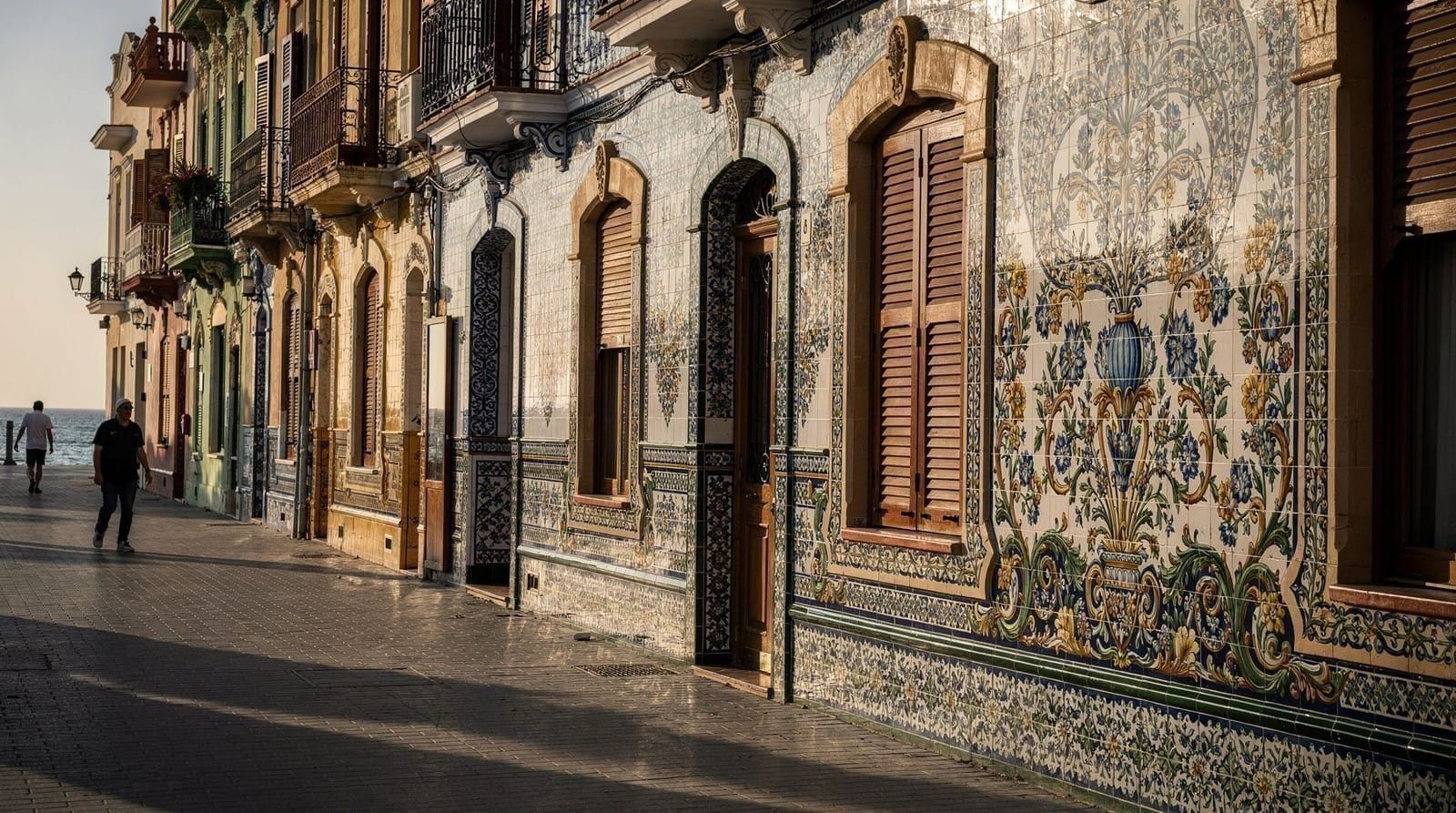
The neighbourhood was a fishing village until the city expanded to absorb it. Its street layout is perpendicular to the beach (every street ends at the sea), and its architecture is extraordinary: dense Art Nouveau and Modernisme-influenced tiled facades, each building individualised, many in states of beautiful deterioration and restoration.
El Cabanyal was under threat of demolition for decades (a road extension project would have cut through the heart of the neighbourhood). The plan was cancelled in 2010 after years of community resistance. The neighbourhood is now slowly gentrifying, which has introduced good cafés and restaurants alongside the traditional fishing-family bars and the fish market (Mercat de l’Olivera, on Carrer del Rosari).
What to do: Walk from the tram stop at Doctor Lluch towards the beach, turning down side streets. Look up at the facades — they’re different on every building. Find the neighbourhood market, have a coffee at a traditional bar, walk to the beach at the end of any street. Allow at least 2 hours; half a day is better.
Albufera at dawn or late evening (not just tourist boat-trip hour)
The tourist industry around Albufera has standardised around the “sunset boat tour” — arrive at 17:00, take a 45-minute electric boat ride, watch the sun dip over the rice fields, leave. This is a perfectly good experience.
What’s not marketed is the Albufera at dawn — the lake in early morning mist, with flamingos and herons actively feeding, the rice fields in early season growth, and almost no other visitors. This requires either an early bus (bus 24/25 from Valencia, first service around 07:00) or an overnight stay in El Palmar village.
Similarly, the Albufera after the tourist boats have stopped and before the village restaurants close — roughly 17:30 to 20:00 — has a completely different quality. Local fishermen still work the lake; the light in the late afternoon is extraordinary; the commercial tourism has wound down.
For a fuller visit, see Albufera day trip.
Albufera eco boat tour at sunset — the standard route, still worth doing onceBocairent
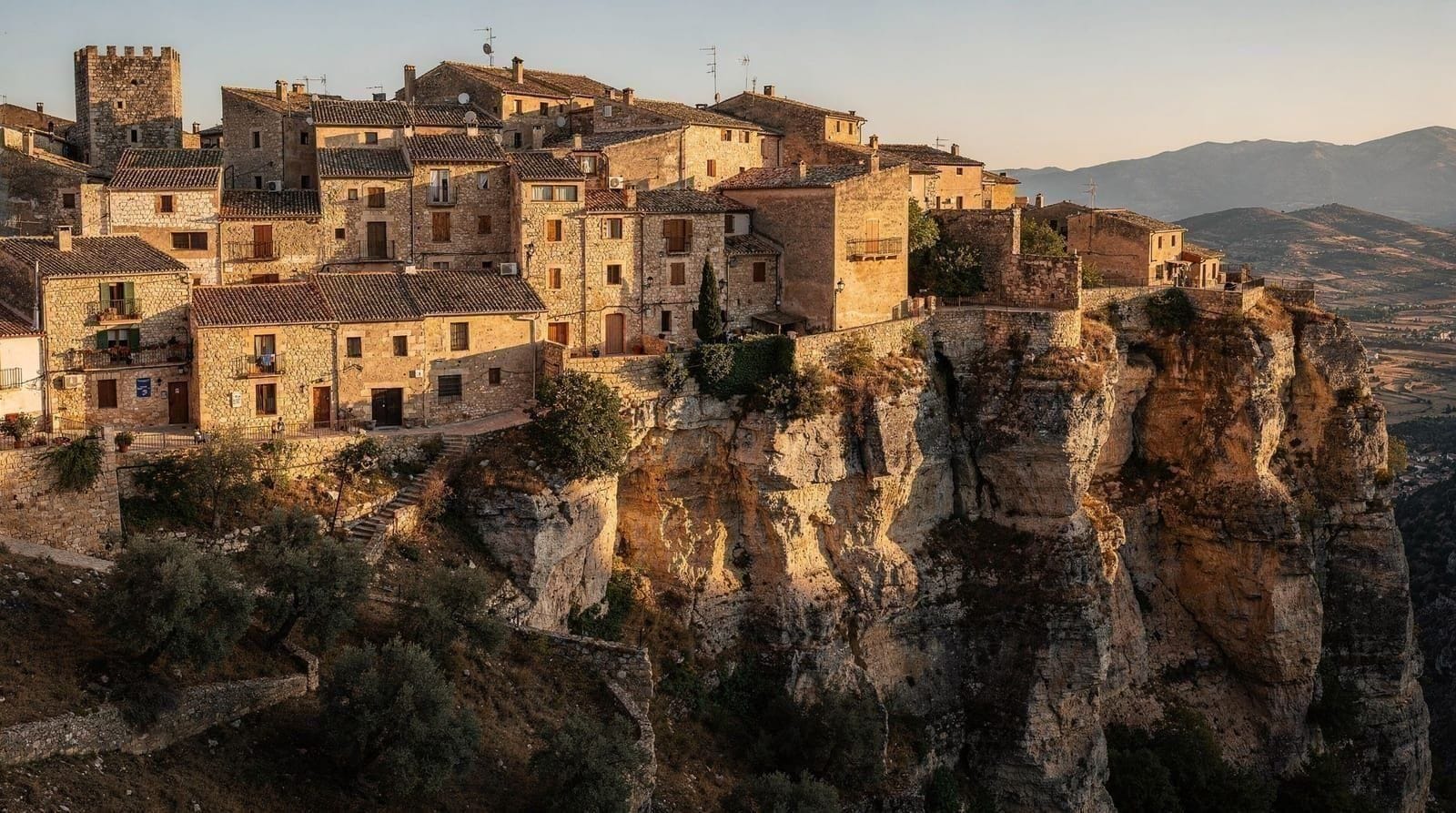
Bocairent is a medieval village in the Valencia mountains, about 90 minutes south of Valencia by car. Its old town perches dramatically on a cliff face — the streets are essentially carved into the rock, with houses built directly against the cliff wall. There’s a Moorish-era cave theatre (coves romanes) cut directly into the rock.
Almost no international tourists visit Bocairent. The village itself is Spanish-domestic tourism only — holiday homes owned by Valencian families, a summer market, church festivals. Finding accommodation in advance is necessary in July-August; outside summer, you’ll have it essentially to yourself.
This is the kind of discovery that marks the difference between a tourist trip and a travel experience. Getting there requires a car or an organised day trip.
Requena wine country
Requena, 70 km west of Valencia, is one of Spain’s most important wine regions — the Bobal grape variety grown here produces deep, tannic red wines that have been gaining international recognition in recent years. The town itself is built on ancient underground cellars (bodegas), many of which can be visited.
Requena is reachable by train from Valencia (about 1 hour, Cercanías line), or by organised wine tour. Spanish domestic tourists visit, but the international travel industry has largely overlooked it. Wine enthusiasts will find it significantly more interesting than similarly sized wine regions in France or Italy that receive ten times the international attention.
For a full guide to wine touring, see Requena wine tour.
Private Requena wine tour — cellars and Bobal tastings without the crowdsThe esmorzaret culture
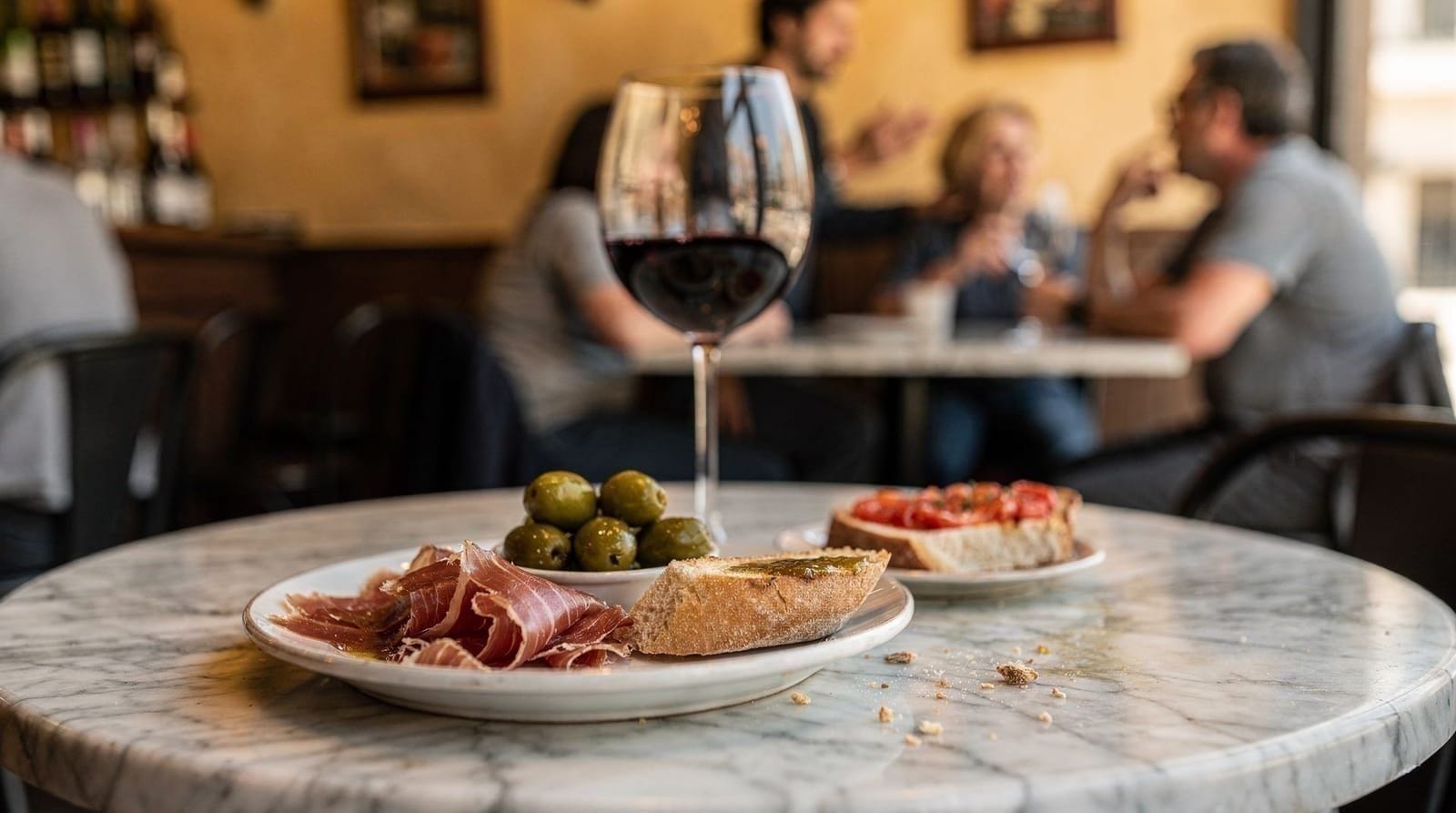
Covered in how to eat like a local, but worth highlighting as a specifically underrated experience: the Valencian mid-morning meal ritual is one of the most distinctive and enjoyable food cultures in Spain, and virtually no international travel guides mention it.
Most visitors eat at tourist hours (breakfast at 09:00, lunch at 12:30). They miss the 10:30-11:30 window when Valencia’s genuine local food culture is most visible — neighbourhood bars full of construction workers, market stall owners, office workers, and families, all eating substantial bocadillos and drinking coffee at the bar counter, in tiled rooms that haven’t changed since the 1960s.
This costs €3-5. It tastes better than almost anything on the tourist menu circuit.
Montanejos
Montanejos is a small village in a river gorge 100 km north-west of Valencia. The Mijares river emerges from a thermal spring here at a constant temperature of 25°C, creating natural swimming holes in brilliant turquoise water between rock walls. The full logistics are in the Montanejos thermal pools guide.
In summer (June-September), locals from Valencia come to swim in the river. International tourism infrastructure is essentially non-existent. A car is required; the drive through the Valencia mountain landscape is part of the appeal.
Peñíscola and Morella beyond the day-trip circuit
Most first-time visitors who venture north from Valencia stop at Peñíscola for its castle and beach. Far fewer continue inland to Morella, a genuinely intact medieval walled city that most international guidebooks barely mention despite being more architecturally significant than almost anywhere else covered in this guide. It requires a longer drive and a full day, which is precisely why it stays underrated — the effort filters out casual visitors.
The Turia Gardens at night
The Turia Gardens riverbed park is extensively covered as a daytime experience. Its evening and night version is less discussed — but the lit-up Calatrava bridges, the City of Arts reflected in the park’s pools, and the cooler temperature make it one of Valencia’s best summer evening walks or cycle rides. Families, cyclists, joggers, and young people fill it until midnight in summer.
Sagunto
Sagunto, 25 km north of Valencia and a 30-minute Cercanías train ride, has a Roman theatre and a hilltop castle with layers of Iberian, Roman, and Moorish fortification — a substantial half-day of history for almost no effort or cost. It receives a fraction of the attention of the day trips further afield, largely because it’s close enough to feel unglamorous rather than adventurous. See the Sagunto day trip guide for the details.
Genuinely worth it (neither overrated nor underrated)
For the sake of completeness:
Oceanogràfic: Genuinely extraordinary. Not overrated. Possibly underrated internationally — it’s Europe’s largest aquarium and competes with the world’s best. Plan 3 hours minimum.
Llotja de la Seda: One of the finest late-Gothic civic buildings in Europe, and UNESCO-listed. Underrated in international travel coverage but correctly rated by architectural historians. Spend 45 minutes minimum.
Mercado Central: Legitimately one of Europe’s great food markets. Worth visiting early on a weekday. The tourist trap element (smoothies, packaged goods) is peripheral to the genuine market experience.
Malvarrosa beach: Good beach. Correctly rated — not extraordinary but genuinely pleasant, especially in May-June and September-October when it’s not overcrowded.
Ciutat Vella walking generally: Wandering El Carmen and Ciutat Vella without a fixed itinerary is neither over- nor underrated — it’s simply one of the best free things to do in the city, and most guides get this right. The only correction worth making is to push further into the interior streets away from the Cathedral rather than stopping at the postcard corners.
Frequently asked questions about overrated Valencia
Is the City of Arts and Sciences worth it?
Yes — but understand what you’re paying for. The Oceanogràfic is genuinely world-class. The Hemisfèric is a good IMAX experience. The Science Museum is interesting but not exceptional. The complex’s exterior and the plaza around it are free to walk, and the architectural spectacle of Calatrava’s buildings reflected in the moat is one of Valencia’s best sights. Do the Oceanogràfic; everything else is optional.
Are day trips from Valencia worth it?
The best ones — Albufera, Xàtiva, Requena, El Palmar — are genuinely among Valencia’s best experiences. The worst are organised bus tours that stop at too many places too briefly. Choose day trips that give you 4+ hours at a destination or take yourself independently.
Is the old town of Valencia worth exploring?
Yes — but it rewards wandering away from the obvious circuit. The streets immediately around the Cathedral are genuinely lovely; the tourist restaurant density is unfortunate but avoidable. The streets north of the Cathedral (into El Carmen’s interior) are significantly less touristed and more characterful.
Are rooftop bars in Valencia worth it?
A few genuinely good ones exist — the best rooftop bars guide covers specific recommendations. The generic “hotel rooftop bar” formula of expensive drinks and generic views applies to some; others have genuine character. Worth one evening on a stay.