Where to stay during Las Fallas — honest neighbourhood guide
The honest dilemma: proximity versus sleep
The central tension of picking accommodation for Las Fallas is this: the closer you are to the action, the less sleep you’ll get. This isn’t a mild inconvenience — during the final five days (15–19 March), the streets of the old city run with fireworks, music, and crowds until well past 3am. If you have young children, light sleepers in your group, or simply want to sightsee rested, this matters more than proximity to the burning monuments.
There is no perfect neighbourhood. What follows is an honest map of the trade-offs.
| Book by | 9-12 months ahead for decent options in El Carmen or Russafa |
| Minimum stay | Often 3-5 nights during 15-19 March |
| Quietest realistic base | Eixample or near Estació del Nord |
| Most immersive base | El Carmen |
| Budget option | Benimaclet, if you don’t mind local (not tourist-zone) noise |
Neighbourhoods compared
| Neighbourhood | Noise level | Distance to main monuments | Price vs. average |
|---|---|---|---|
| El Carmen | Very high | Walking, often ground zero | Highest |
| Russafa | High | 20 min walk / 5 min metro | Slightly above average |
| Eixample | Moderate | 10-15 min walk | Average |
| Near Estació del Nord | Low-moderate | 15-20 min via transport | Below average |
| Benimaclet | High (local, not tourist) | 12 min metro | Lowest |
El Carmen: central but loud
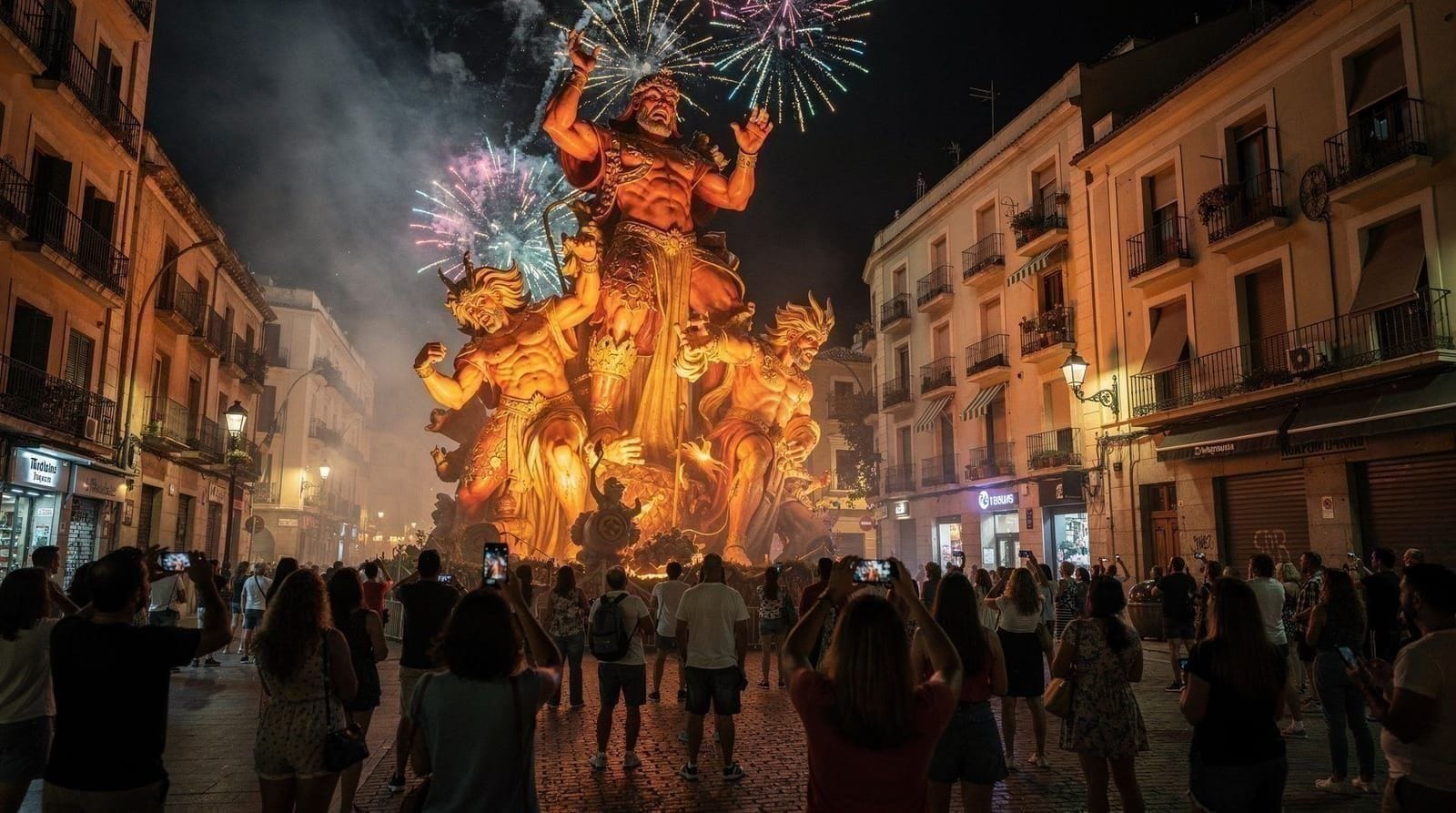
El Carmen is the most atmospheric neighbourhood in Valencia’s old city — medieval streets, street art, small bars, the Torres de Serranos just up the road. During Fallas, it’s also ground zero for noise. This is where several of the highest-profile fallas monuments are erected, and where the street parties run latest.
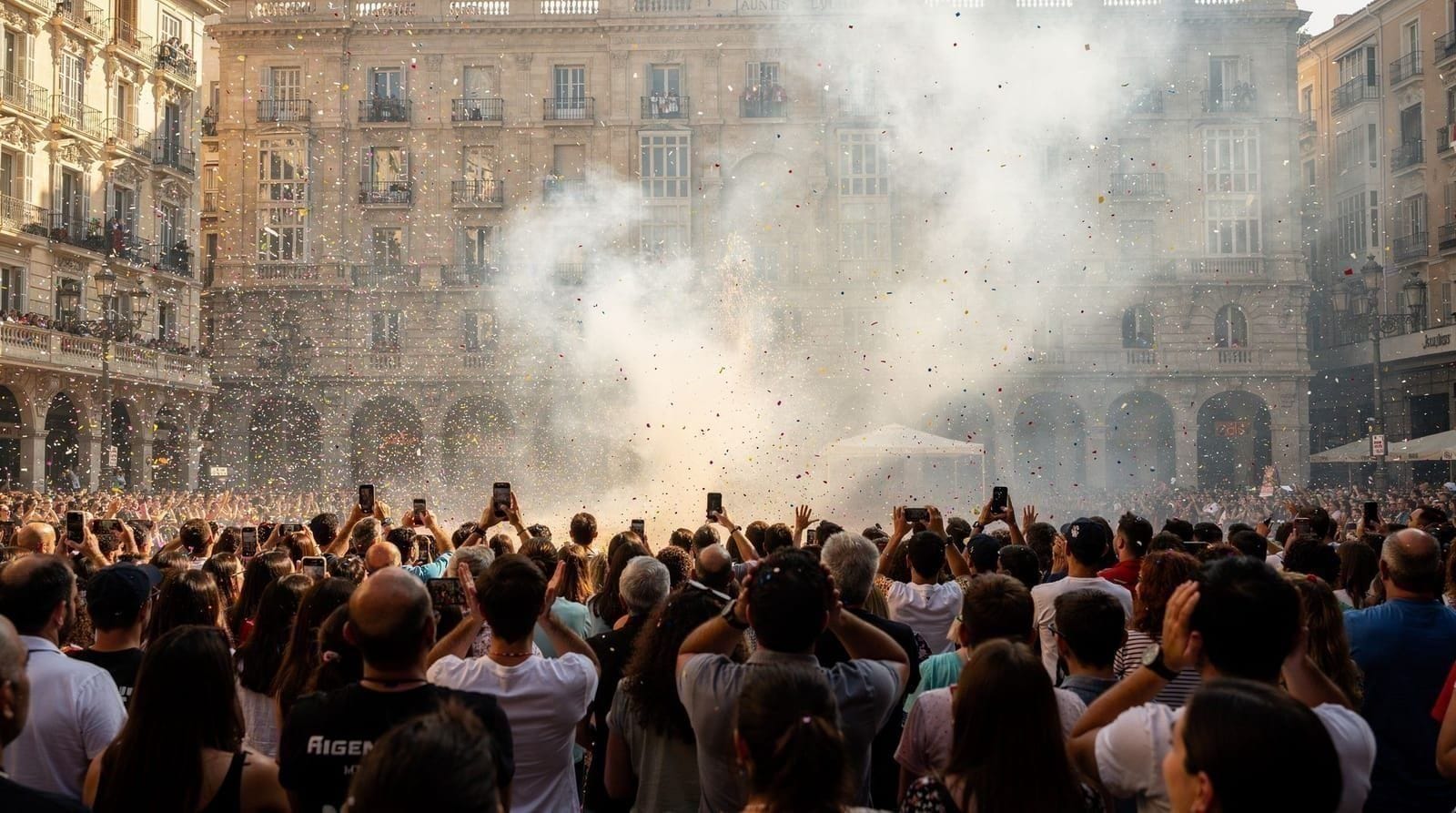
Staying here means: waking up to the smell of gunpowder, feeling the Mascletà rattle your windows at 2pm daily, and hearing petards (small firecrackers) from the morning onward. The upside is obvious — you’re immersed, and everything is walkable.
Verdict: ideal if you’re a first-timer who wants the full experience and doesn’t mind the noise. Not suitable for light sleepers or families with toddlers. See the El Carmen neighbourhood guide for an idea of normal conditions before Fallas arrives.
Russafa / Ruzafa: buzzy but slightly buffered
Russafa sits about 1.5 km south of the old town — a 20-minute walk from the main Fallas monuments, or five minutes on the metro. It’s Valencia’s trendiest neighbourhood on normal days and gets extremely busy during Fallas. The local Russafa falla commission runs one of the most celebrated neighbourhood fallas in the city, so you’re not escaping the festival by staying here.
What you are escaping is the old-town crush. Russafa has its own energy during Fallas — festive, local, genuinely fun — without the wall-to-wall tourist crowds of El Carmen and Plaza del Ayuntamiento. Accommodation here is also slightly cheaper on average.
Verdict: good compromise between atmosphere and slightly more manageable crowds. Still noisy, but with more of a local feel. The Russafa guide gives a sense of the neighbourhood outside festival time.
Eixample: quieter, more functional
The Eixample (the 19th-century grid district between the old city and Russafa) is where many longer-stay visitors and Spanish tourists base themselves during Fallas. Decent mid-range hotels, excellent transport links, quieter side streets compared to El Carmen, and a 10–15-minute walk to the main festival areas.
The trade-off is atmosphere: Eixample is pleasant but not what you’d call characterful. You’re here for the bed, the shower, and the wifi. During Fallas, that’s often exactly what you need.
Verdict: the most sensible base for most visitors who want genuine sleep and easy logistics. Not exciting, but practical. The Eixample guide covers what to expect in normal times.
Near the North Train Station (Estació del Nord): convenient and underrated
The area just south of the North Station — roughly between Xàtiva street and the Gran Via — is often overlooked, but during Fallas it has real advantages. The station feeds directly into the AVE, the metro, and the main EMT bus network. You can get almost anywhere in Valencia in under 20 minutes. Several solid four-star hotels in this zone have been popular with business travellers, meaning their Fallas prices are somewhat lower than comparable hotels in El Carmen.
The immediate surrounding streets can feel anonymous, but the Bullring (Plaza de Toros) and the Central Market are both within 10 minutes on foot. On Fallas nights, this area is noticeably calmer than the historic core.
Verdict: underrated for Fallas. Good value for money, excellent transport, reasonable noise levels.
Benimaclet: for budget travellers who know Valencia
Benimaclet is a student neighbourhood about 2.5 km north of the city centre — leafy, unpretentious, genuinely local. A couple of hostels and cheap guesthouses here offer some of the lowest Fallas rates in the city. The metro (line L4) gets you to the central fallas area in about 12 minutes. The Benimaclet guide shows what the district is like once the festival is over, which helps you judge whether its character suits you.
The downside: Benimaclet has its own strong Fallas culture, so you won’t escape the noise — it’s just a different noise (neighbourhood bars, local celebrations) rather than the tourist-oriented events near the centre. Accommodation options are limited and in high demand among budget travellers.
Verdict: works for experienced Valencia visitors or budget-focused travellers who want a local Fallas experience. Not ideal for first-timers expecting classic tourist-zone Fallas.
The honest advice on booking
Book 9–12 months in advance for any decent accommodation during 15–19 March. This isn’t hyperbole. Hotels in El Carmen and Russafa with good Tripadvisor scores are typically sold out or at their maximum price well before Christmas for mid-March dates. If you’re reading this in the autumn before your intended trip, you’re already behind.
Minimum stay requirements are real. Most reputable hotels impose a three-to-five-night minimum during peak Fallas dates. If you find a hotel with no minimum on the final weekend, it’s either very expensive, in a poor location, or receiving poor reviews for a reason.
Airbnb alternatives do exist but face the same dynamic — genuine apartments in central locations go fast. Be wary of listings that suddenly materialise in January for Fallas; some are last-minute postings from owners who’ve found the going rate and are testing the market without having confirmed all the logistics.
Apartment advantages: a kitchen matters during Fallas. Eating out during peak Fallas is expensive, and many restaurants switch to limited menus and high fixed prices. Having somewhere to eat breakfast and store snacks makes the festival more affordable.
For a detailed breakdown of every Valencia neighbourhood beyond the Fallas context, the where to stay in Valencia guide and the best area for first-time visitors guide are the reference points.
Book a Fallas guided tour to orient yourself on arrival — local guides can point out the best monuments and the practical logistics specific to your base
Choosing a base around your own plans
Your base should follow what you actually intend to do. If the fireworks and the final burning matter most to you, read the Nit del Foc guide before booking, because those nights decide how close or how far you want to sleep. If you would rather spread your days out, the Valencia during Fallas itinerary shows how a stay can be paced around the festival rather than swallowed by it.
Getting around matters as much as the bed itself. Streets close to traffic and crowds thicken as the days go on, so check the metro and EMT guide to see how easily your chosen area connects to the centre. If your group includes children, the Valencia with kids guide is worth a look before you commit to a noisy neighbourhood.
A guided visit early in the trip also pays off when you stay somewhere unfamiliar: a guided tour of the Fallas monuments gives you a feel for the layout of the city from your base, and shows which streets to avoid when you want to go back and rest.
A note on cancellation policies
Given how far in advance Fallas bookings need to happen, check cancellation terms carefully. Non-refundable rates during Fallas are common and can be brutal if your plans change. The 2020 festival was cancelled entirely due to COVID; most hotels ended up issuing vouchers rather than refunds. Refundable rates cost more but carry genuine value during a high-stakes booking window.
The Las Fallas complete guide covers the broader experience, and the Fallas day-by-day schedule helps you plan which nights you absolutely need to be in the city.
If everything in the city is already booked
By the time many travellers start looking, central Valencia for peak Fallas dates is genuinely sold out, not just expensive. In that situation, two realistic options exist. First, widen the search to Benimaclet or the streets near Estació del Nord, both covered above, which tend to have availability later than El Carmen or Russafa. Second, consider basing yourself in a nearby town — Alboraia, just north of the city, or even further towns connected by Cercanías trains — and commuting in for the days and nights that matter most, such as the Nit del Foc fireworks or the final Cremà. This sacrifices some spontaneity but is far better than an empty-handed search in January for mid-March dates.
Packing for a noisy, crowded stay
Regardless of neighbourhood, a few items make a real difference during Fallas: earplugs (genuinely necessary even in the quieter zones, since petards go off unpredictably from mid-morning), a portable phone charger (crowds strain networks and battery life), and comfortable closed shoes for standing through the Mascletà and evening processions. If you’re staying anywhere near El Carmen or Russafa, expect very little sleep on 15-19 March specifically and plan accordingly — a mid-festival rest day in a quieter base, if your itinerary allows it, helps more than most people expect.
Frequently asked questions about Where to stay during Las Fallas — honest neighbourhood guide
Which neighbourhood is the best compromise between atmosphere and sleep? Russafa or Eixample. Russafa keeps more festival energy with slightly less crush than El Carmen; Eixample trades most of the atmosphere for genuinely quieter nights and easy transport.
Is it too late to find accommodation if I’m booking just two months before Fallas? Central options are often gone by then, but Benimaclet, the area near Estació del Nord, or nearby towns like Alboraia commonly still have availability. Widen the search rather than giving up on attending.