Benimaclet guide: Valencia's student village neighborhood
Valencia: Turia Park guided bike tour
What is Benimaclet like in Valencia?
Benimaclet is a former village swallowed by Valencia's expansion, now a student neighborhood on the city's north edge. It's authentic, cheap, and entirely non-touristy. The distance from the main monuments (25-30 minutes on foot) makes it a niche choice — best for budget travelers or those interested in genuinely local Valencia.
Benimaclet is the neighborhood that travel guides to Valencia tend to ignore, and that’s precisely its appeal for a certain type of traveler. It’s authentic by default, not by design — there is no Instagram curation here, no boutique coffee shop serving €4 lattes, no artisan ceramics. There’s a covered market, a cluster of cheap bars around the village square, a large student population, and a genuinely local rhythm of daily life.
| Where | North edge of Valencia, beyond Eixample |
| Distance to old city | 25-30 min walk, 8 min by metro (line 6) |
| Best for | Budget stays, local immersion, extended trips |
| Typical apartment | Around €50-70/night |
| Quietest months | July-August (university empties) |
The village that became a neighborhood
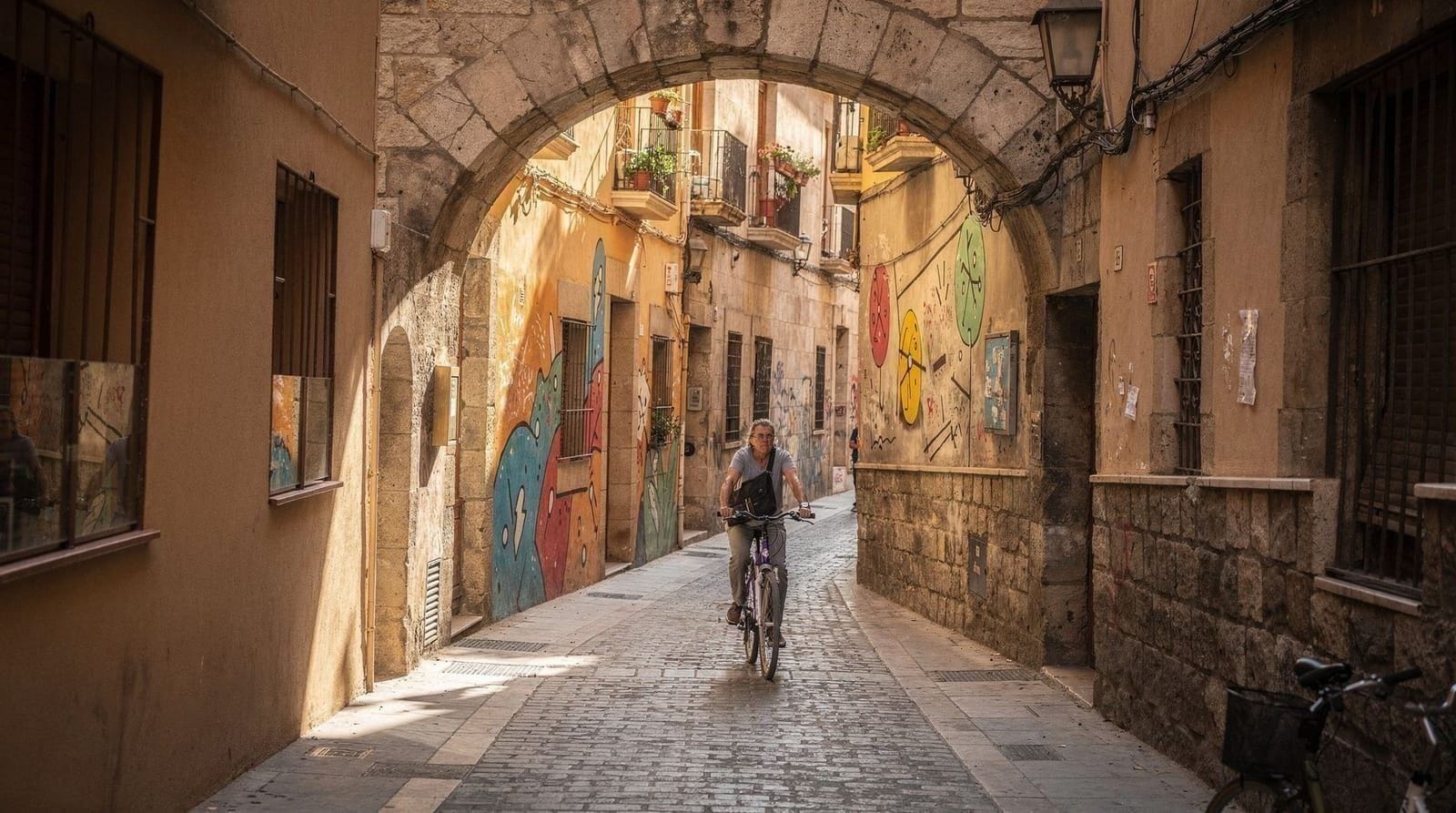
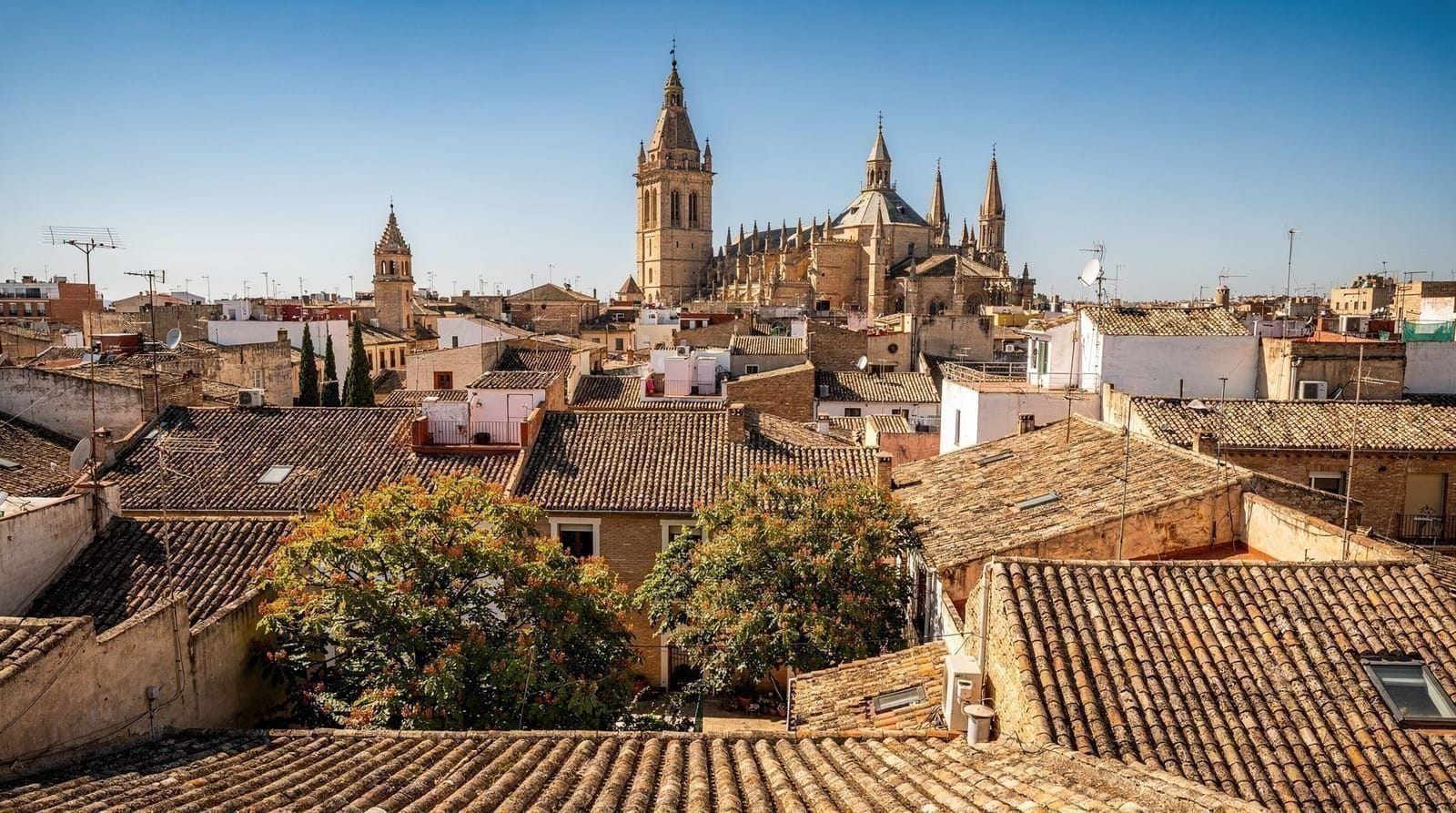
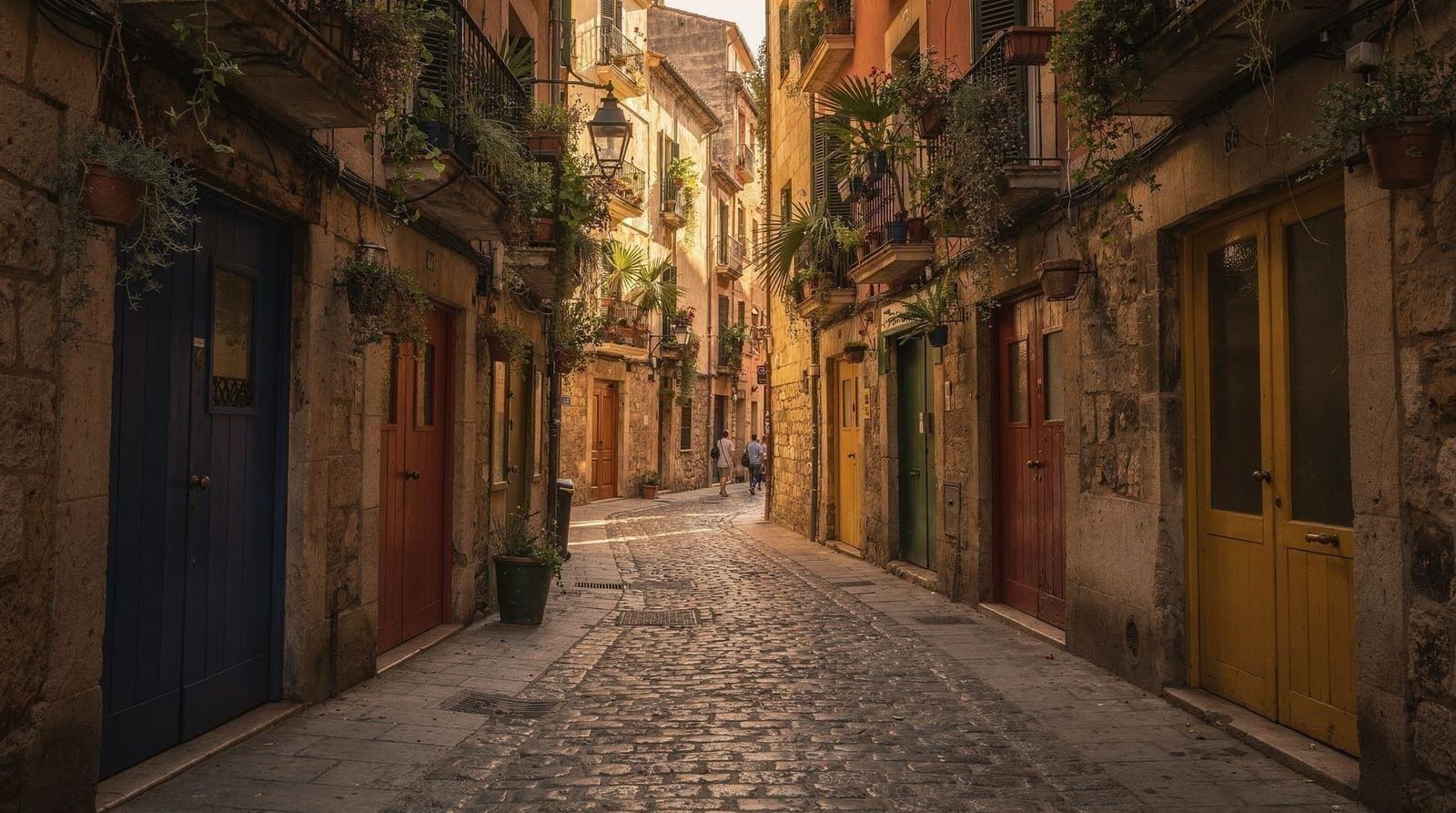
Benimaclet’s origins are legible in its street layout. Unlike the regular grid of Eixample or the planned 19th-century expansion, Benimaclet has the organic, slightly irregular pattern of a village that grew over centuries before being absorbed by a large city. The central Plaza de Benimaclet (with its church, market, and surrounding bars) has the proportions of a village square, not a city plaza.
The village was formally incorporated into Valencia in 1877, but maintained a distinct character for decades. Today the main agents of that character are: the Universidad Politécnica de Valencia (immediately adjacent), a significant North African immigrant community that has operated in the neighborhood since the 1990s, and the long-term residents of the older houses near the plaza.
The contrast with tourist-facing Valencia is stark. There are no souvenir shops. The bars serve €2 beers without irony. The market closes at 14:00 and the fishmonger doesn’t speak English. This is not a criticism — it’s a description of what you’re getting.
The Mercat de Benimaclet
The covered market on Calle de Beniarbeig is the neighborhood’s practical center. Smaller than the Ruzafa market, it has the full range of Valencian produce stalls — fruit and vegetables, fish, butchers, cheese and jamón, and a small flower section. Several bar counters inside the market serve morning coffee and the almuerzo (mid-morning snack).
The market is best visited on weekday mornings between 09:00 and 12:30. Saturday mornings are busier. It closes by 14:00 daily; most stalls pack up by 13:30.
Price reality check: Produce in the Benimaclet market is typically 10-15% cheaper than equivalent quality in the Ruzafa market and 25-30% cheaper than the Mercado Central. For self-catering visitors, this matters.
Bars and eating
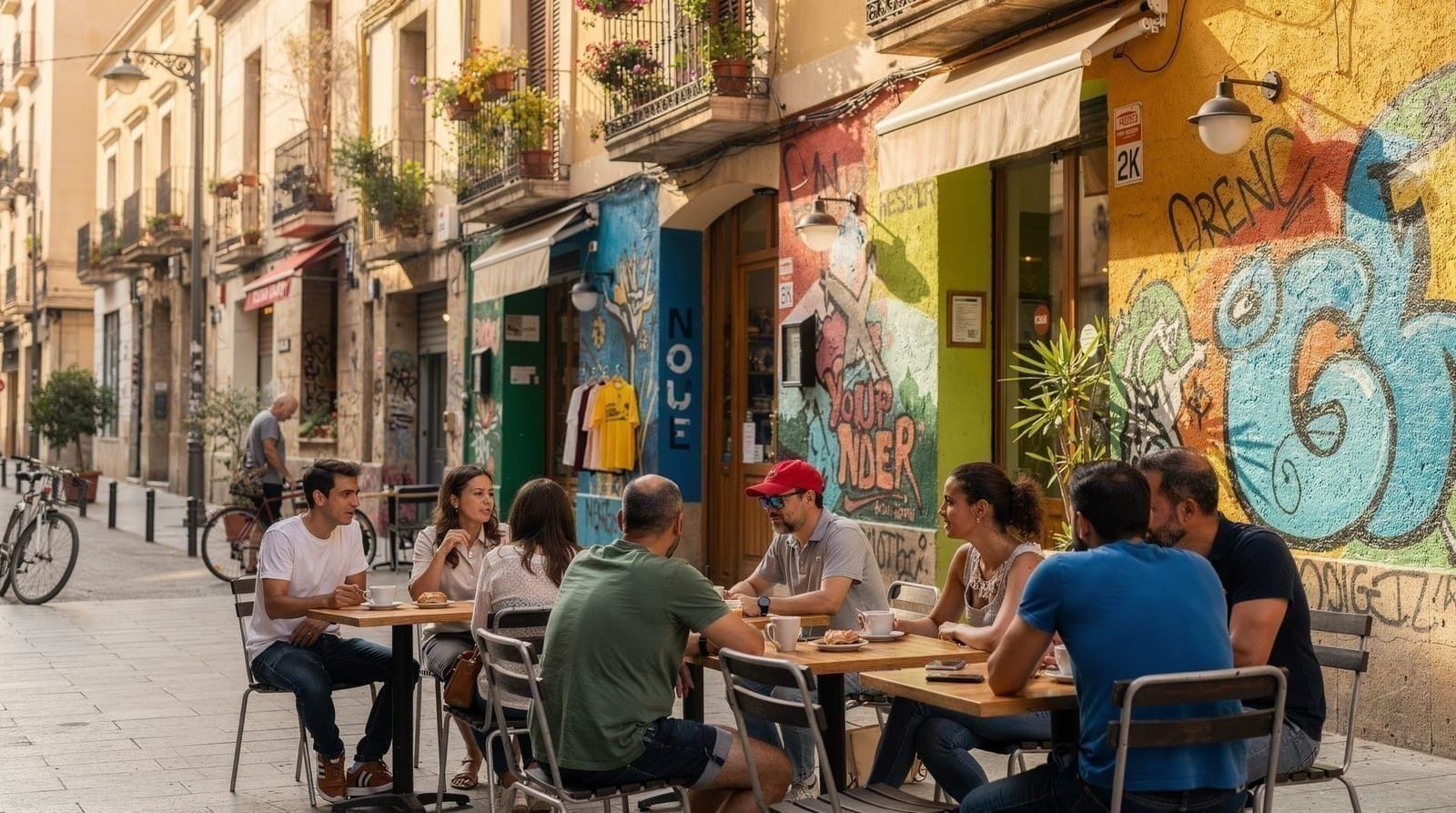
Benimaclet’s eating and drinking options are almost entirely local. The bars around Plaza de Benimaclet serve cheap beer (€1.80-2.20/caña), basic tapas (olives, crisps, sometimes a small free tapa with each drink), and straightforward food at lunch. This is not a sophisticated food scene — it’s the functional eating and drinking infrastructure of a working neighborhood.
Bar Manolo (Plaza de Benimaclet): The archetypical neighborhood bar — dark interior, football on the TV, regular clientele who know each other by name. A beer costs €2 and no one will ask you to pay €1.50 for bread you didn’t order.
El Kiosko (around the plaza): The outdoor terrace bars that appear in summer are where the local social life concentrates on warm evenings.
Kebabs and affordable food: Benimaclet has a higher density of kebab shops, falafel bars, and cheap international food options than the tourist-facing neighborhoods. This reflects the actual demographics. Quality varies; Falafel Beirut (Calle del Camp de Morvedre) is reliable.
Mid-range options: A handful of restaurants around the plaza serve the standard Spanish lunch — menú del día at €10-12, somewhat below the Ruzafa price point. See the menú del día guide for context.
 Turia Park guided bike tourCheck availability
Getting to and from Benimaclet
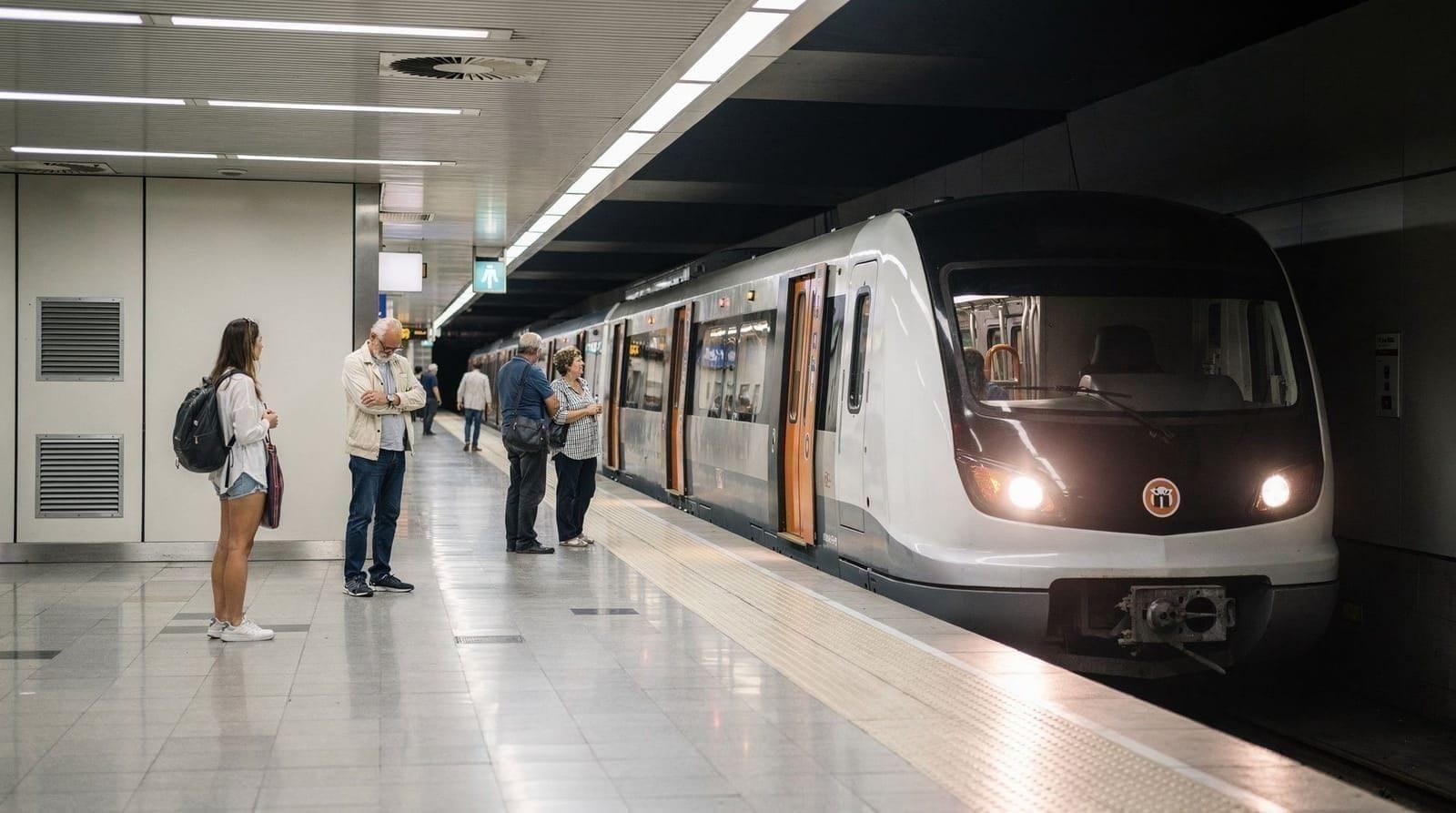
Metro: Line 6 stops at Benimaclet station, which connects to the wider metro network at Alameda (change for lines 3/5). Journey time from Benimaclet to the old city (Alameda): 8 minutes. This is the critical fact that makes Benimaclet usable as a base — the metro connection is fast.
Tram: Tram line 6 runs south from Benimaclet through the city toward the beach. This gives beach access without changing transport modes.
By bike: Benimaclet is approximately 3.5 km north of the Cathedral, a 20-25 minute cycle on flat roads or via the Turia Gardens if you approach from the eastern side of the park. The cycling guide covers routes.
Walking: The walk from Benimaclet to the old city takes 25-30 minutes and passes through the Eixample grid. It’s not uncomfortable but it’s longer than from Ruzafa or El Carmen.
Staying in Benimaclet
Accommodation options in Benimaclet are limited compared to more tourist-focused neighborhoods. There are no branded hotels; the options are private apartments via Booking.com or Airbnb, and two or three pension-type guesthouses near the market.
Prices reflect the lack of tourist infrastructure: a one-bedroom apartment in Benimaclet can be €50-70/night when equivalent space in El Carmen is €90-120. For budget travelers who are comfortable using the metro to access the monuments, this represents real savings.
The honest advice: book with free cancellation and read guest reviews carefully. Apartments in Benimaclet vary significantly — some are well-maintained renovations, others are aging family flats with basic equipment.
Who should stay in Benimaclet
Suitable: Budget travelers who eat local, students and young travelers comfortable with the student neighborhood atmosphere, visitors primarily interested in seeing the non-tourist side of Valencia, people on extended stays (2+ weeks) who want to live in a local neighborhood.
Not suitable: First-time visitors to Valencia who want walkable access to the monuments, families with young children who need convenient access to the main attractions, travelers who prioritize restaurant quality for evening dining.
For the full neighborhood comparison with pros and cons, see the where to stay in Valencia guide and the best area for first-timers guide.
Student culture and the university
The Universitat Politècnica de València (UPV) occupies a substantial campus immediately adjacent to Benimaclet, with approximately 35,000 students. This creates the main driver of the neighborhood’s character: cheap food, late-night bars, a young demographic, and the kind of casual social culture that develops where people are living on student budgets.
The practical consequence for visitors: services oriented toward students — laundries, computer repair shops, affordable restaurants, kebab shops, photocopy centers — mix with the older neighborhood’s infrastructure. This is neither charming nor off-putting; it’s functional and genuine.
The UPV also has an impact on seasonal variation: during term time (October to June), Benimaclet is active and lively. During July and August (exam period and summer break), large numbers of students leave and the neighborhood quiets significantly.
The North African community
Benimaclet has had a significant North African immigrant community since the 1980s and 1990s. The community has established halal butchers, Moroccan cafés, Arabic language schools, and social organizations that make Benimaclet’s street culture visibly more diverse than most of central Valencia.
Several Moroccan and Algerian teahouses operate in the neighborhood, serving mint tea with pastries in the traditional style. These are welcoming to visitors and represent a food culture entirely absent from the tourist neighborhoods — the best of them are excellent.
The relationship between the Moroccan community, the student population, and the older Spanish residents is complex and sometimes tense, but Benimaclet has not experienced the more acute integration conflicts visible in some other European cities. The neighborhood functions as a mixed community with genuine, if sometimes friction-filled, coexistence.
How Benimaclet compares to other authentic neighborhoods
Several European cities have a “student village” neighborhood: Kreuzberg in Berlin before it became a tourist destination, parts of Lisbon’s Mouraria before renovation. Benimaclet is Valencia’s version — not yet discovered as a tourism product, still oriented toward the people who actually live there.
This gives it something that Ruzafa, for all its retained local character, has partially lost: the experience of being in a place where you are the only tourist, where the bar does not have an English menu, and where the people around you are simply doing their daily lives. For some travelers, this is exactly what they’re looking for.
What’s worth doing in Benimaclet
The market morning: Start at the Mercat Municipal de Benimaclet at 09:30 on a weekday. Spend 30-40 minutes looking at the stalls, then stop at one of the bar counters for a coffee and an almuerzo. This 90-minute morning visit covers the essential character of the neighborhood without requiring a full half-day.
The plaza aperitivo: On Sunday midday (12:30-14:30), the bars around Plaza de Benimaclet serve vermut (vermouth with soda) in the traditional pre-lunch ritual. This is one of the most relaxed and genuinely Valencian food experiences available in the city — cheap, unperformed, and oriented entirely toward local enjoyment rather than tourist consumption.
Walking the village streets: The irregular, organic street pattern around the old village core (the streets immediately surrounding the plaza and the church of Sant Miquel) is the historical sediment from which Benimaclet grew. Walking these 5-6 blocks takes 30 minutes and reveals the village-within-city character clearly.
The Moroccan teahouses: Several excellent Moroccan and Algerian teahouses operate in the neighborhood, serving mint tea, Moroccan pastries (chebakia, sfenj, msemen), and the full range of North African café culture. Prices are minimal (tea for two: €3-5) and the atmosphere is entirely unlike the Spanish café culture that dominates the rest of Valencia.
Practical comparison: Benimaclet vs Ruzafa
Both are “authentic” Valencia neighborhoods in the sense that they are primarily inhabited by local residents. The differences:
| Factor | Benimaclet | Ruzafa |
|---|---|---|
| Tourist density | Very low | Low-moderate |
| Restaurant quality | Basic-functional | Mid-range to excellent |
| Nightlife | Student bar culture | Restaurant + bar scene |
| Distance to monuments | 25-30 min on foot | 15 min on foot |
| Metro access | Line 6 (Benimaclet station) | Lines 1, 3/5 |
| Price level | Very cheap | Moderate |
| International food options | Good (Moroccan, kebabs) | Average |
| Specialty coffee | Minimal | Several good options |
For budget travelers who want a genuinely non-tourist Valencia neighborhood, Benimaclet is the better choice. For visitors who want local atmosphere but also want good evening dining, Ruzafa is the better choice.
Beyond the neighborhood: what Benimaclet gives you
Living in Benimaclet for a few days gives you access to something that most tourist experiences don’t: the rhythms of a working Spanish neighborhood that hasn’t been curated for visitors. The morning coffee at the market bar, the plaza life on summer evenings, the mix of languages in the street, the unpretentious bar culture — these are real textures of Valencian life that disappear in the tourist zones.
This matters more for some travelers than others. If you want to understand what Valencia is actually like for its 800,000 residents rather than for its 10 million annual visitors, time in Benimaclet is instructive.
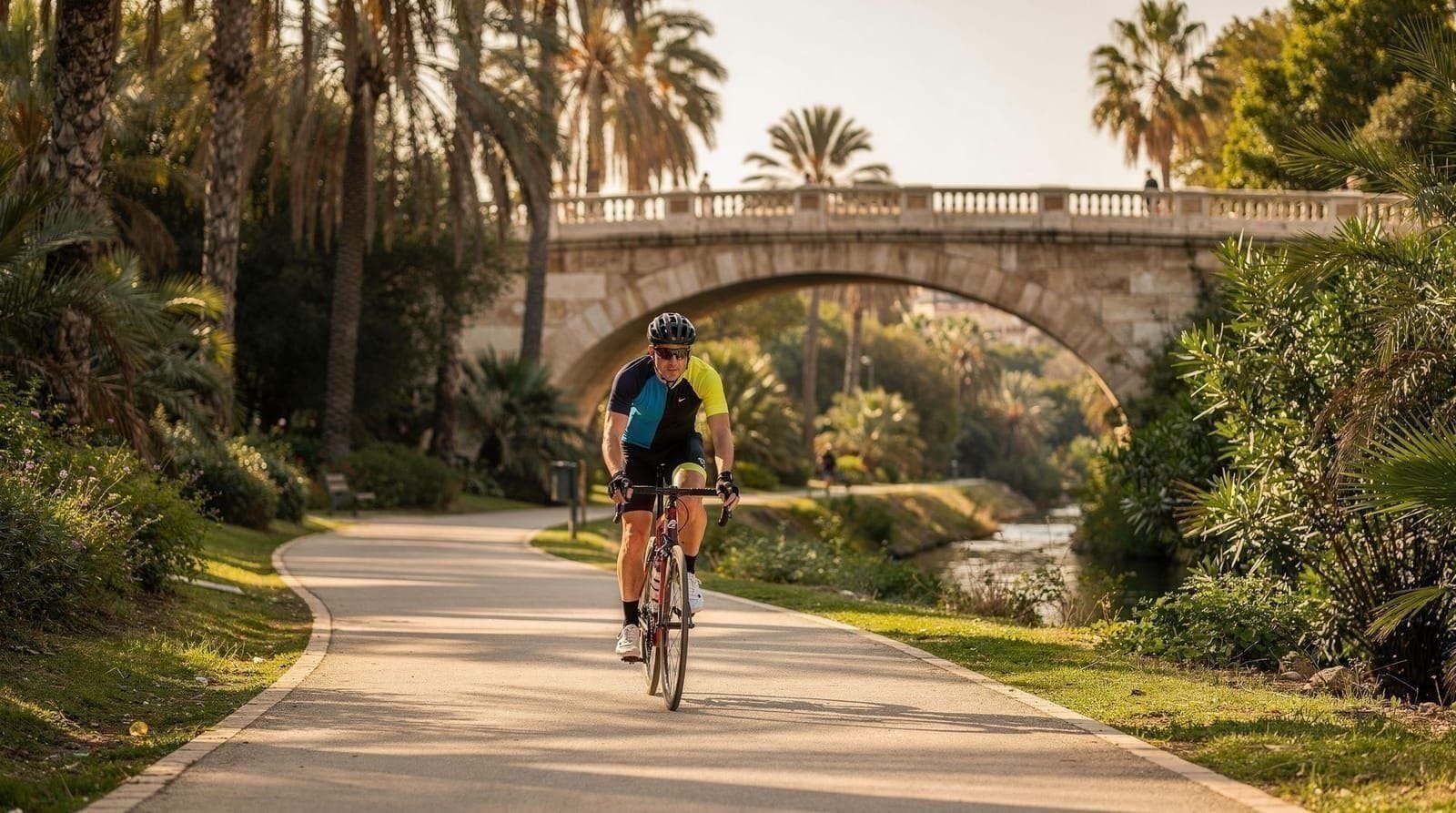 bike tourCheck availability
Benimaclet in the seasonal calendar
Term time (October to June): The full university population is present. Bars and cafés around the plaza are at their most active. The neighborhood is livelier, cheaper (student-oriented pricing), and more socially dense. The Moroccan teahouses and halal restaurants are at their busiest.
Summer (July to August): The university empties. The older residential population remains. The neighborhood is significantly quieter, which is pleasant for some visitors and slightly emptier-feeling for others. The Wednesday market (*mercat) on the plaza and surrounding streets is active year-round and adds animation even in summer.
Las Fallas (March): Benimaclet has its own smaller fallas sculptures. The atmosphere is festive without being overwhelming — a more manageable version of the festival than the old city’s saturation. The plaza bars do extended hours during the festival week.
Cycling from Benimaclet
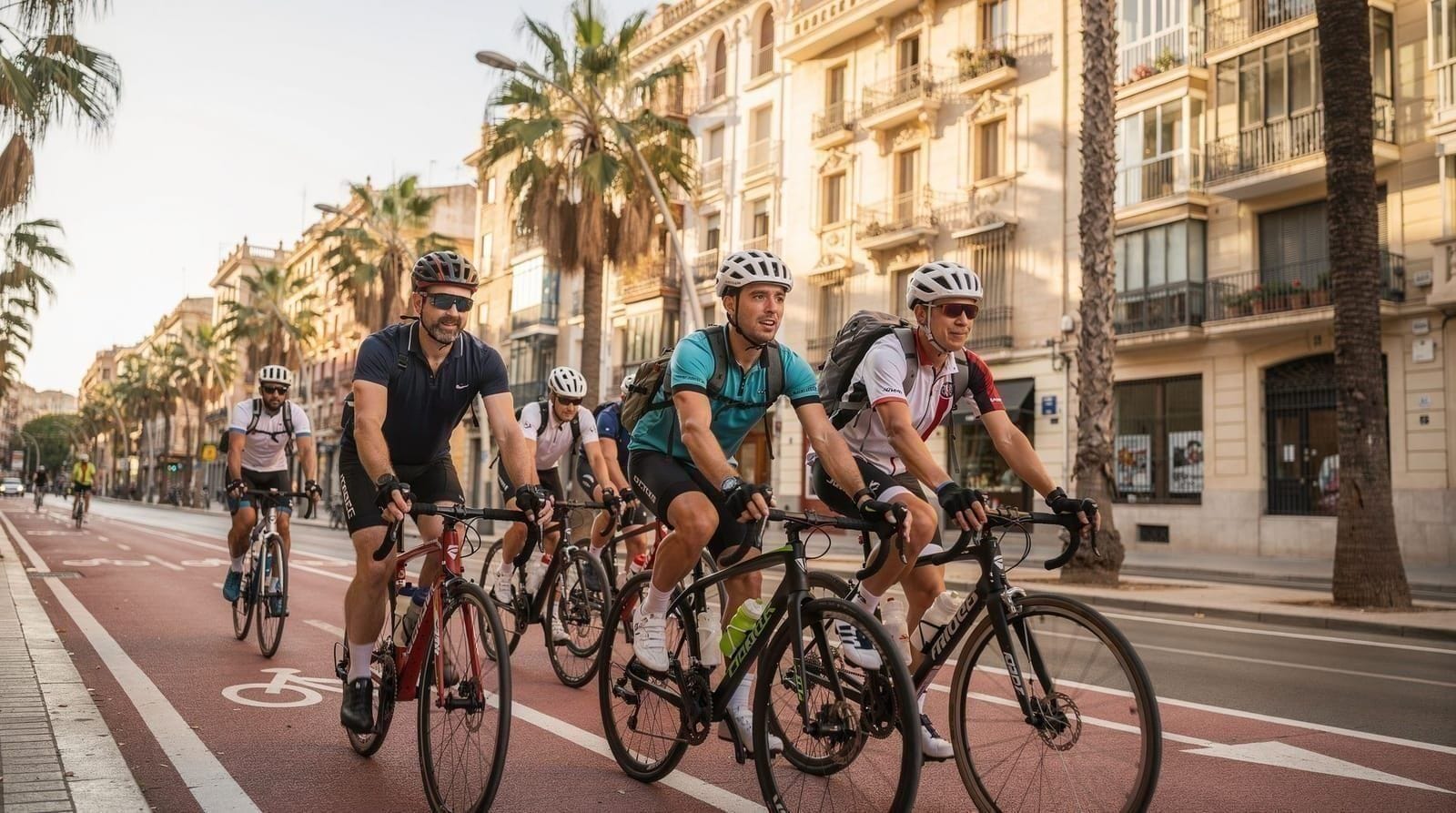
The Turia Gardens cycle path is accessible from Benimaclet, connecting the neighborhood to the old city and the City of Arts without using the metro. The fastest cycling route south from Benimaclet:
Calle dels Llauradors south toward the Turia Gardens entry at the Pont del Real area (approximately 20 minutes by bike to the center of El Carmen).
The cycling in Valencia guide covers the full routes, including the Benimaclet-to-beach option via the eastern park extension.
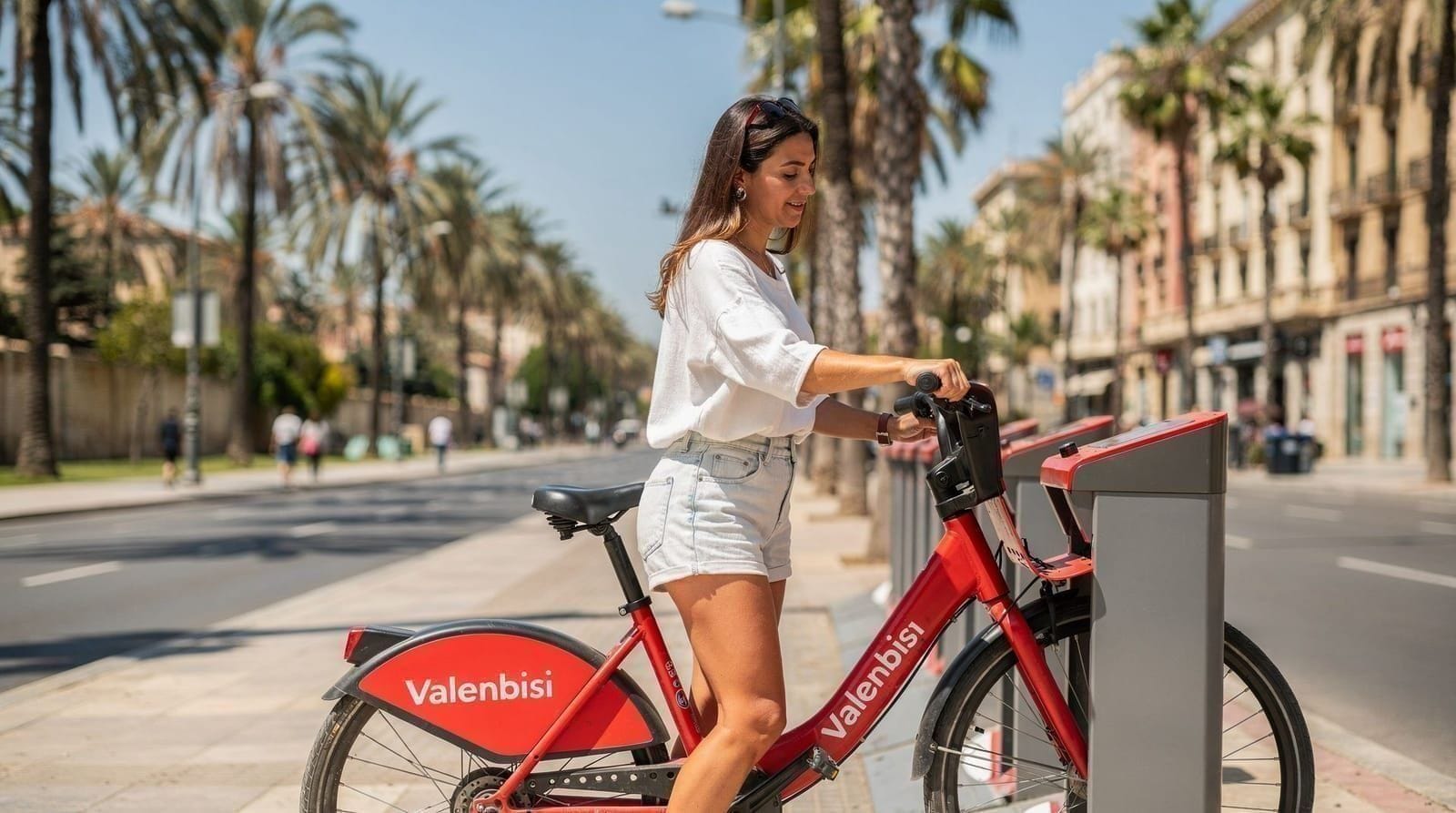
Valenbisi bike share has stations in the neighborhood (check the app for current locations — stations are occasionally relocated). See the Valenbisi guide.
A realistic half-day plan
If you’re basing yourself elsewhere and want to see Benimaclet properly rather than rushing through it, here’s a sequence that respects how the neighborhood actually works rather than trying to force it into a checklist.
09:30 — Arrive by metro. Take line 6 to Benimaclet station; it’s 8 minutes from Alameda, so this costs almost nothing in trip-planning terms. Surface at the plaza rather than wandering the residential streets first — the plaza gives you an immediate read on the neighborhood.
09:45-10:30 — The market. Walk the stalls at the Mercat de Benimaclet, then sit at one of the bar counters inside for a coffee and an almuerzo (a small savory roll or sandwich, typically €2-4). This is the single most useful thing to do here if your time is limited.
10:30-11:15 — The village core. Walk the five or six blocks of irregular streets around the church of Sant Miquel. There’s no single monument to aim for; the point is the street pattern itself and the contrast with the Eixample grid you probably arrived through.
11:15-12:00 — A Moroccan teahouse. Stop for mint tea and pastries at one of the North African cafés near the plaza. Budget €3-5 for two. This is the part of the half-day most visitors skip and most regret skipping.
Sunday variant: if your half-day falls on a Sunday, shift the whole plan later and end at 13:00 with vermut at a plaza bar instead of tea — it’s the more social, more Valencian version of the same idea.
Renting for longer stays
For visitors planning two weeks or more in Valencia — language students, remote workers, people testing out the city before a longer move — Benimaclet is worth treating as a genuine option rather than a curiosity. Monthly furnished rentals in the neighborhood run noticeably below equivalent listings in Ruzafa or El Carmen, and the metro connection means the discount doesn’t cost you meaningful time to the center.
The trade-off is infrastructure aimed at residents, not visitors: fewer English-speaking landlords, fewer platforms specializing in short furnished lets, and a housing stock that skews toward older buildings without lifts. Budget extra time to view a place in person before committing, and don’t assume every listing photographed well is accurately described — this is a market that runs on word of mouth and long-term tenants more than tourist turnover.
Frequently asked questions about Benimaclet
Is Benimaclet worth visiting as a day trip?
Yes, briefly. The market and the plaza make for an easy 2-hour afternoon excursion from the city center — take the metro to Benimaclet, walk to the market (go in the morning), then the plaza, then a beer at one of the plaza bars. It’s not a major tourist sight but it’s a pleasant contrast to the old city.
Is Benimaclet safe?
Benimaclet is safe for tourists. There are no particular safety concerns beyond the standard urban precautions (keep your phone in your pocket, don’t leave bags unattended). The neighborhood has a higher density of petty crime than leafy Eixample, but lower than the late-night zones of El Carmen.
How is the nightlife in Benimaclet?
The nightlife is student-oriented, cheap, and lively during term time (October to June). Bars around the plaza run until 02:00-03:00. This is not Valencia’s clubbing scene — it’s local bar culture. If you want clubs, El Carmen and the port area are your options.
Can I walk to the beach from Benimaclet?
Not conveniently — it’s about 4.5 km. The tram (line 6) takes about 20 minutes to La Malvarrosa beach. See the best beaches guide for beach options accessible from the north of the city.
What language do they speak in Benimaclet?
Spanish primarily, with Valencian heard more than in the tourist zones. The North African community in the area speaks Arabic and Darija. English is spoken by some students and young residents but the neighborhood is not accustomed to tourist visitors — don’t expect English menus or translated signage.
Is Benimaclet a good base if I don’t have a car?
Yes — it’s arguably better suited to car-free visitors than car owners, since street parking is limited and the metro connection to the center is fast. If you’re planning day trips beyond the city, pair this with the day trips without a car guide for options that work directly from a Benimaclet base.
Top experiences
Bookable activities with verified prices and instant confirmation on GetYourGuide.