Cabanyal beach: where the fishing village meets the sea
Valencia: paella and beach tour by e-bike
What is Cabanyal beach and how is it different from Malvarrosa?
Cabanyal beach is the southern section of the same continuous sandy stretch as Malvarrosa, immediately in front of the El Cabanyal neighbourhood. It is marginally closer to the port, less tourist-facing than the Paseo de Neptuno section, and has a more local character. Metro line 4 or 6 to Marítim-Serreria or Neptú gives access in 20 minutes from the city centre.
Cabanyal beach sits at the junction of Valencia’s most characterful neighbourhood and the Mediterranean. The El Cabanyal district grew as a fishing village before the city’s expansion absorbed it, and the beach in front of it retains traces of that origin — small fishing boats sometimes pulled up on the sand in the early morning, a working-class directness that the more tourist-facing Malvarrosa stretch has largely lost.
The beach itself is contiguous with Malvarrosa to the north and La Marina beach to the south. There is no formal dividing line in the sand. What distinguishes “Cabanyal beach” is the neighbourhood behind it: the tiled facades, the restored modernist houses, the street art, and the Cabanyal market a few blocks inland.
| Where | El Cabanyal district, southern continuation of Malvarrosa beach |
| Cost | Free beach access; sunbed rental around €10–15/day in season |
| Time needed | Half a day for beach + neighbourhood walk |
| Getting there | Metro line 4/6 to Neptú, 18–20 min from centre |
| Best time | Weekday mornings, June–October for swimming |
Access
Metro: Line 4 or 6 to Marítim-Serreria or Neptú station. The Neptú stop is marginally closer to the southern end of the beach; Marítim-Serreria is better for the central section. Journey time from the city centre (Xàtiva hub): 18–20 minutes.
Tram T4: The tram follows the coast and stops at several points near the beach. Slightly slower but a pleasant alternative from Palau de la Música.
By bike: The most satisfying route is the Turia Gardens cycle path east, then north along the seafront. The entire trip from the old town is 25–30 minutes on a flat path with minimal traffic crossings. Valenbisi bike-share stations are located in El Cabanyal.
Bus: Lines 1, 2, and 31 serve El Cabanyal from central stops. Slower in summer traffic.
On foot from Malvarrosa: If you are already at Malvarrosa, Cabanyal beach is simply the southern continuation — a 10–15 minute walk along the promenade past the Paseo de Neptuno restaurant strip.
The beach
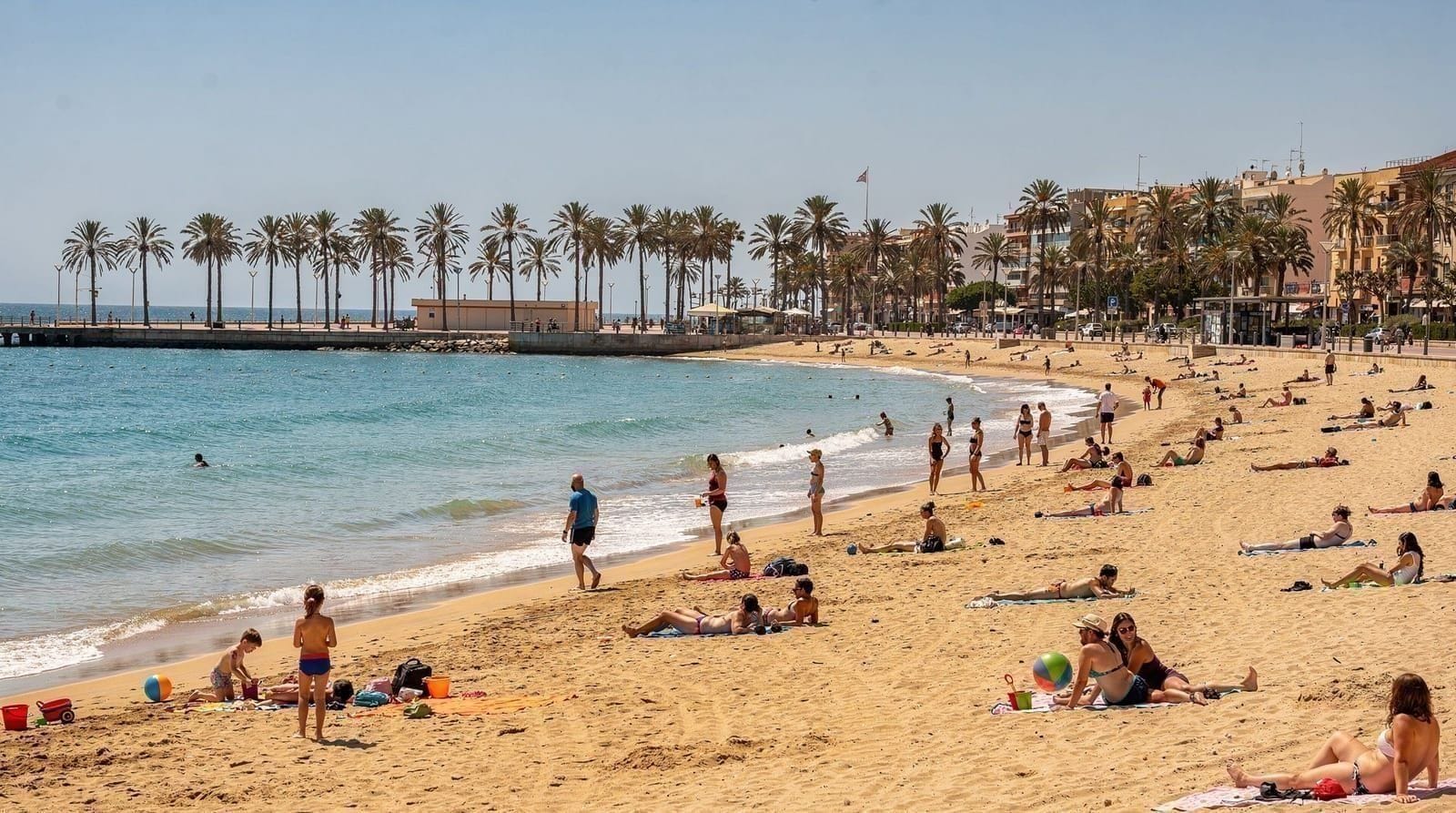
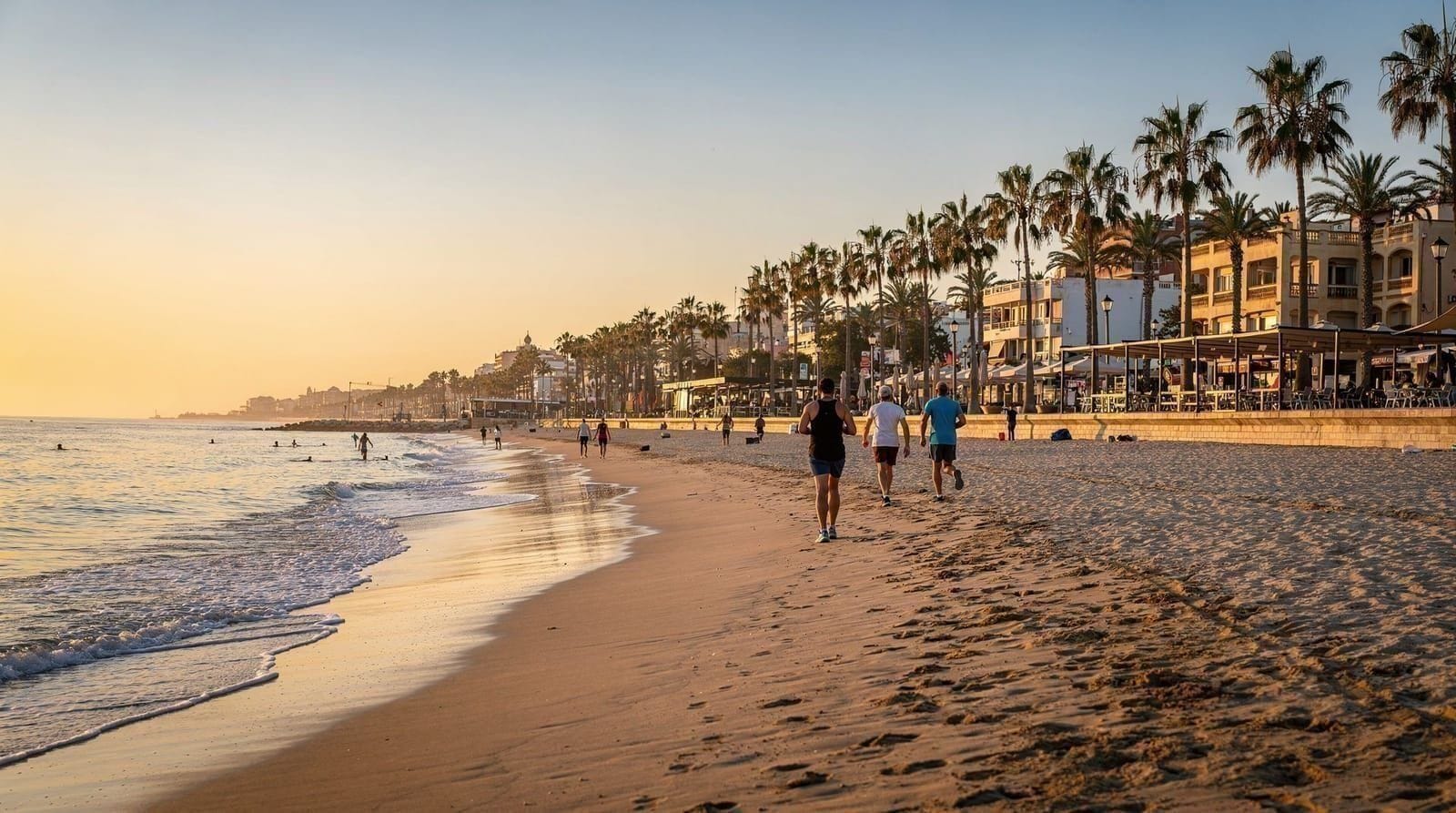
Cabanyal beach is an urban beach in the straightforward sense: city behind it, sea in front, beach services in between. The sand is the same pale grey as Malvarrosa. Width is 50–70 metres. The slope into the water is gentle.
What makes this section distinctive is the social composition. The area immediately in front of the El Cabanyal neighbourhood has historically attracted more local families and fewer tourist-facing concessions than the Paseo de Neptuno stretch. This is partly changing as the neighbourhood gentrifies and tourism increases, but as of 2026 the Cabanyal beach section retains a more mixed, local-leaning character.
Water conditions: Identical to Malvarrosa. Calm and swimmable June–October. Water temperature 22–28 °C. Blue Flag certification most years. Lifeguards on duty in season.
Services: Showers, toilets, accessible ramps. Sunbed rentals available June–September. Beach volleyball areas exist near the central section. The beach fills on summer weekends but typically slightly later in the morning than the Paseo de Neptuno section, which catches earlier tourist arrivals.
Cabanyal beach vs. Malvarrosa: which section to pick
| Cabanyal beach | Malvarrosa | |
|---|---|---|
| Atmosphere | Local, working-class, quieter | Tourist-facing, busier promenade |
| Restaurants | Neighbourhood menús, better value | Paseo de Neptuno beach restaurants |
| Nearest metro | Neptú (southern end) | Neptú / Marítim-Serreria (northern end) |
| Neighbourhood interest | Ceramic facades, street art, market | Mostly beachfront, less to explore inland |
| Best for | A slower, more local beach day | A classic beachfront afternoon |
Neither section is objectively “better” — the sand and water are identical, since it is one continuous beach. The choice is really about what you want to do before or after swimming: if a genuine neighbourhood with history and texture appeals to you, base yourself on the Cabanyal end; if you want a straightforward beachfront afternoon with more restaurant density right on the sand, Malvarrosa’s Paseo de Neptuno stretch is the more conventional choice.
El Cabanyal neighbourhood as context
The real reason to choose Cabanyal beach over Malvarrosa as your base for a beach day is what lies behind the sand. El Cabanyal is one of Valencia’s most interesting urban areas: a fishing village progressively absorbed into the city since the 19th century, threatened with demolition as recently as 2010, now being carefully restored.
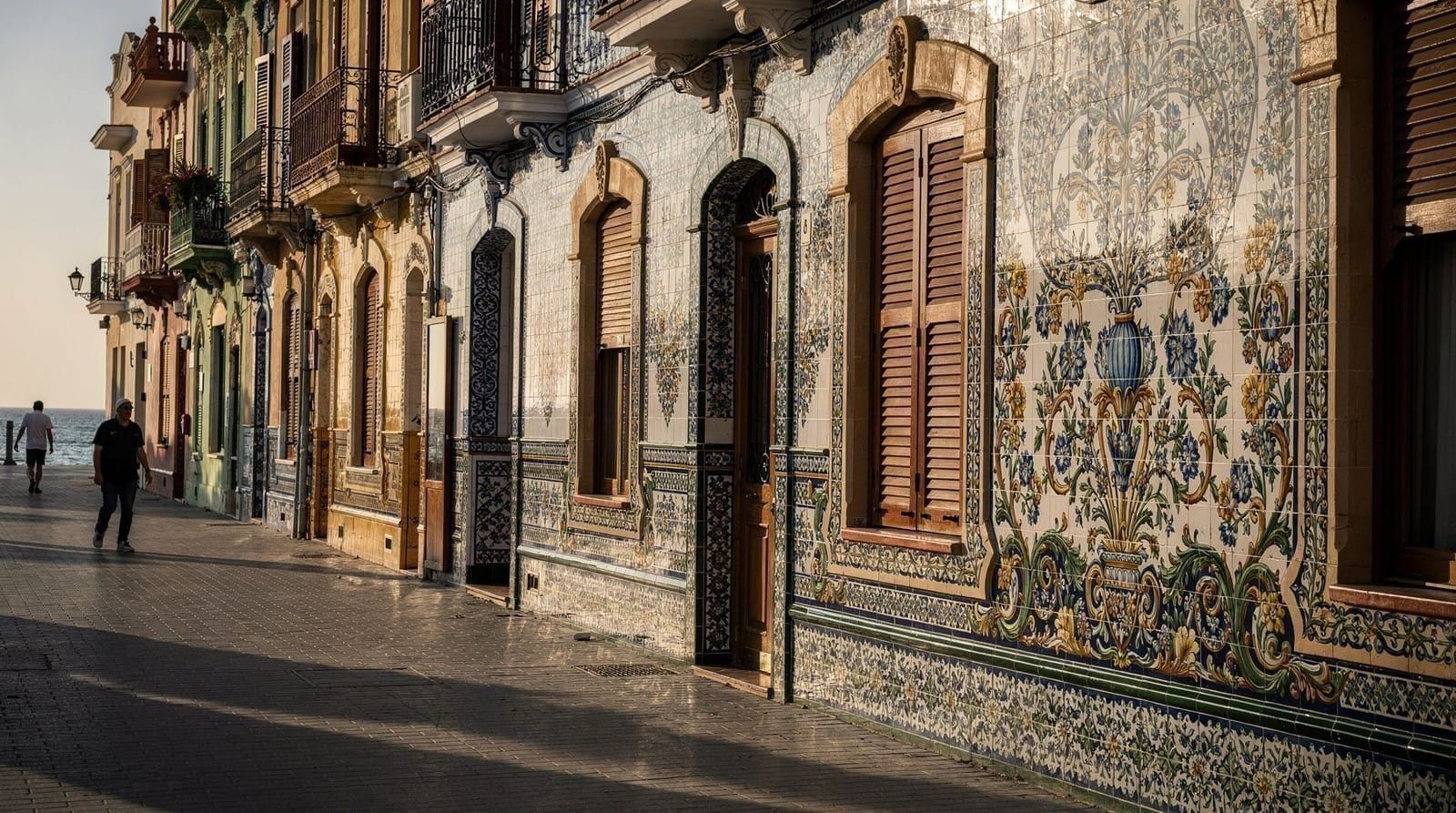
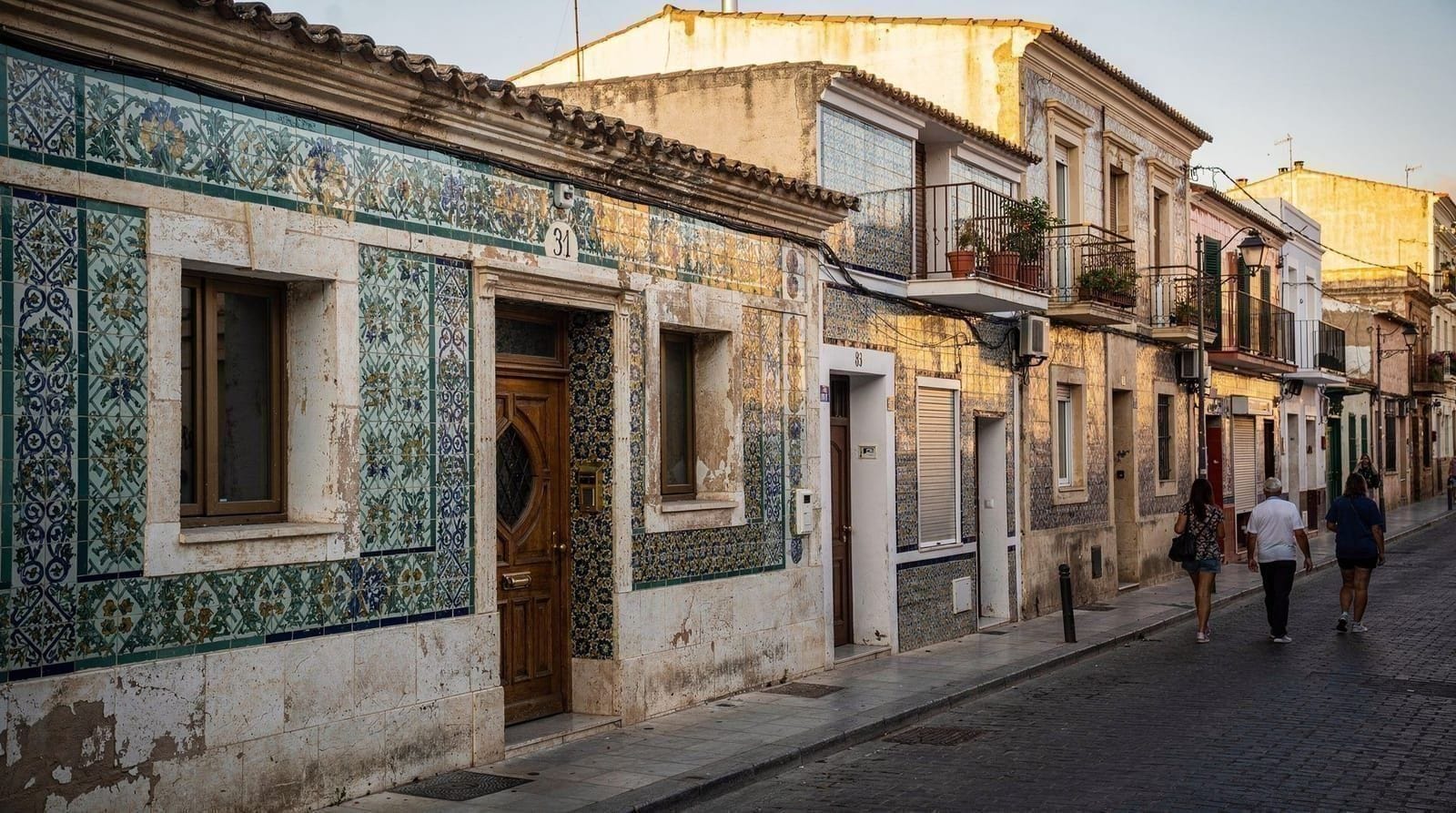
The neighbourhood’s defining visual feature is the ceramic tile facades on traditional barraca-derived houses: geometric tile patterns in green, blue, yellow, and white cover building fronts in a way unlike anything else in Valencia. Walking the streets of El Cabanyal — particularly Carrer de la Barraca, Carrer del Doctor Lluch, and the streets running perpendicular to the sea — is a 30–45 minute experience that changes the context of the beach entirely.
Street art in El Cabanyal is extensive and legitimate. The Cabanyal street art route covers works by local and international artists on the walls of buildings that were marked for demolition. Several murals directly reference the neighbourhood’s history and the demolition controversy.
Semana Santa Marinera (Easter week) brings the traditional fishermen’s Holy Week processions to these streets. The imagery and solemnity are different from the city’s more formal cathedral processions — more intimate, more directly connected to sea-working tradition.
Restaurants and eating near Cabanyal beach
The Cabanyal area has a broader, more honest restaurant scene than the Paseo de Neptuno tourist strip:
Carrer de la Barraca has several neighbourhood restaurants serving proper Valencian lunch menus (menú del día) at €12–15 including three courses and a drink — the same quality as beachfront restaurants at two-thirds the price.
La Pepica (Paseo de Neptuno 6): the famous beachfront restaurant sits at the boundary of Malvarrosa/Cabanyal and is covered in the Malvarrosa guide. Worth a visit but prices reflect its reputation.
Mercado del Cabanyal (Carrer de l’Escalante): the neighbourhood market opens Tuesday–Sunday mornings. Fresh fish counters, shellfish, and prepared food make it an excellent lunch option. Stalls close around 14:00.
For authentic paella near the beach: see the broader paella guide. The honest answer is that the best Valencian paella is not on the beachfront — it is in the l’Horta Sud municipal areas and traditional establishments inland.
Cabanyal beach for families
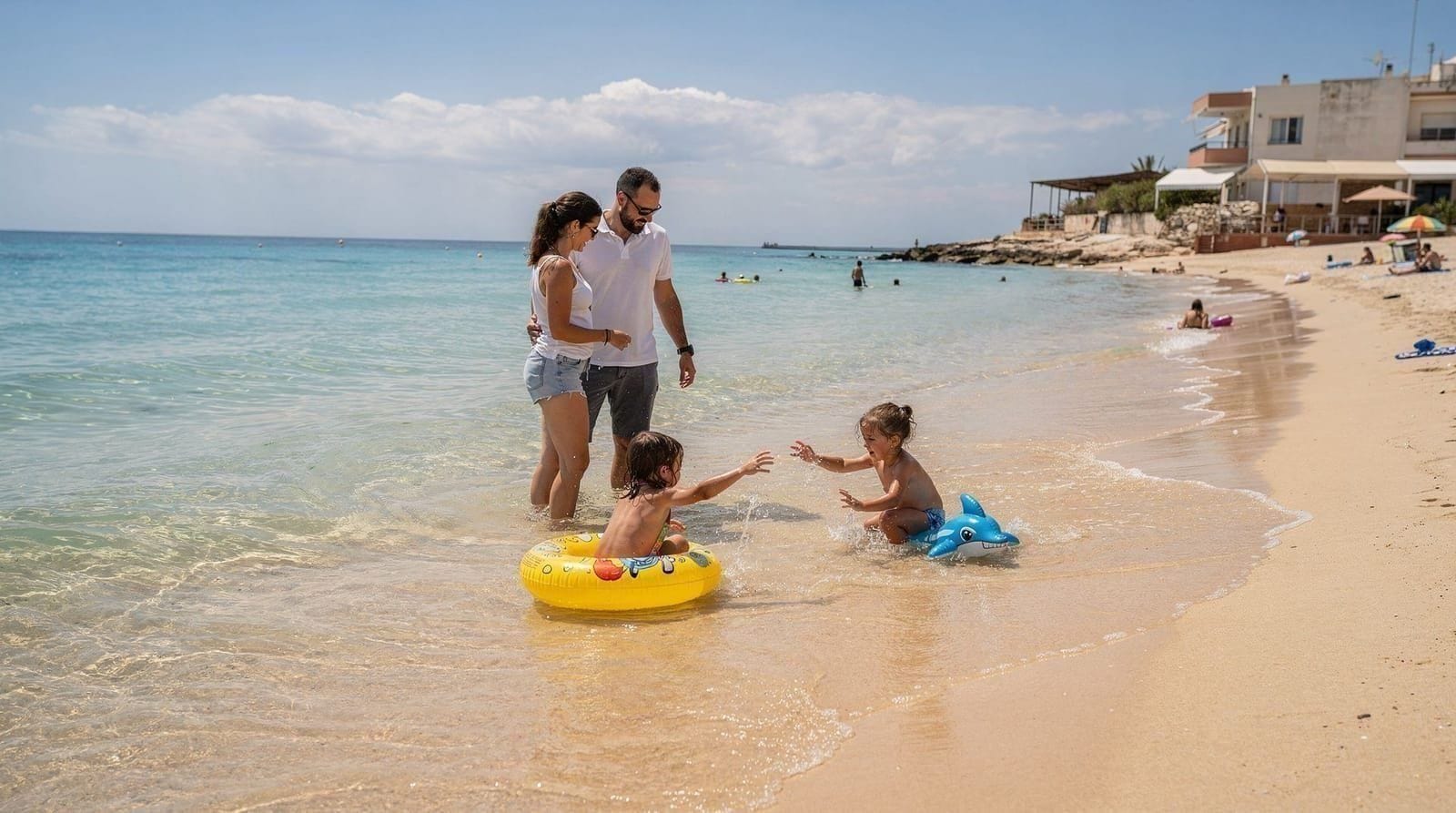
The gentle slope into the water and the accessible ramps make Cabanyal beach a reasonable choice for families with young children, though it lacks a dedicated playground area right on the sand. For a beach specifically set up with families in mind, the family beaches guide covers the sections with more shade, calmer water pockets, and nearby facilities. Cabanyal’s advantage for families is logistical: the neighbourhood behind it has a working market (good for picking up fruit and snacks) and enough neighbourhood restaurants that finding a table with a menu the kids will eat is easier than on the more tourist-dense Paseo de Neptuno.
Cabanyal beach outside summer
Valencia’s beach season officially runs June to October for swimming, but Cabanyal beach and the neighbourhood behind it are worth visiting in other months too — arguably more so, since the ceramic facades and street art are the real draw and are unaffected by water temperature. Spring (April–May) and early autumn (late September–October) give comfortable walking weather without summer’s heat, and the beach itself is nearly empty, which suits the slower, local character of this stretch better than a packed August weekend does. For a broader sense of how Valencia changes through the year, see the best time to visit guide; for beaches specifically, the Valencia beach season guide breaks down month by month what to expect.
Water sports and activities
The Cabanyal beach section shares its water sports provision with Malvarrosa. Paddle surf operators are concentrated near the Eugenia Viñes area (slightly north). Sailing and catamaran tours depart from the Port of Valencia marina, a 10–15 minute walk south.
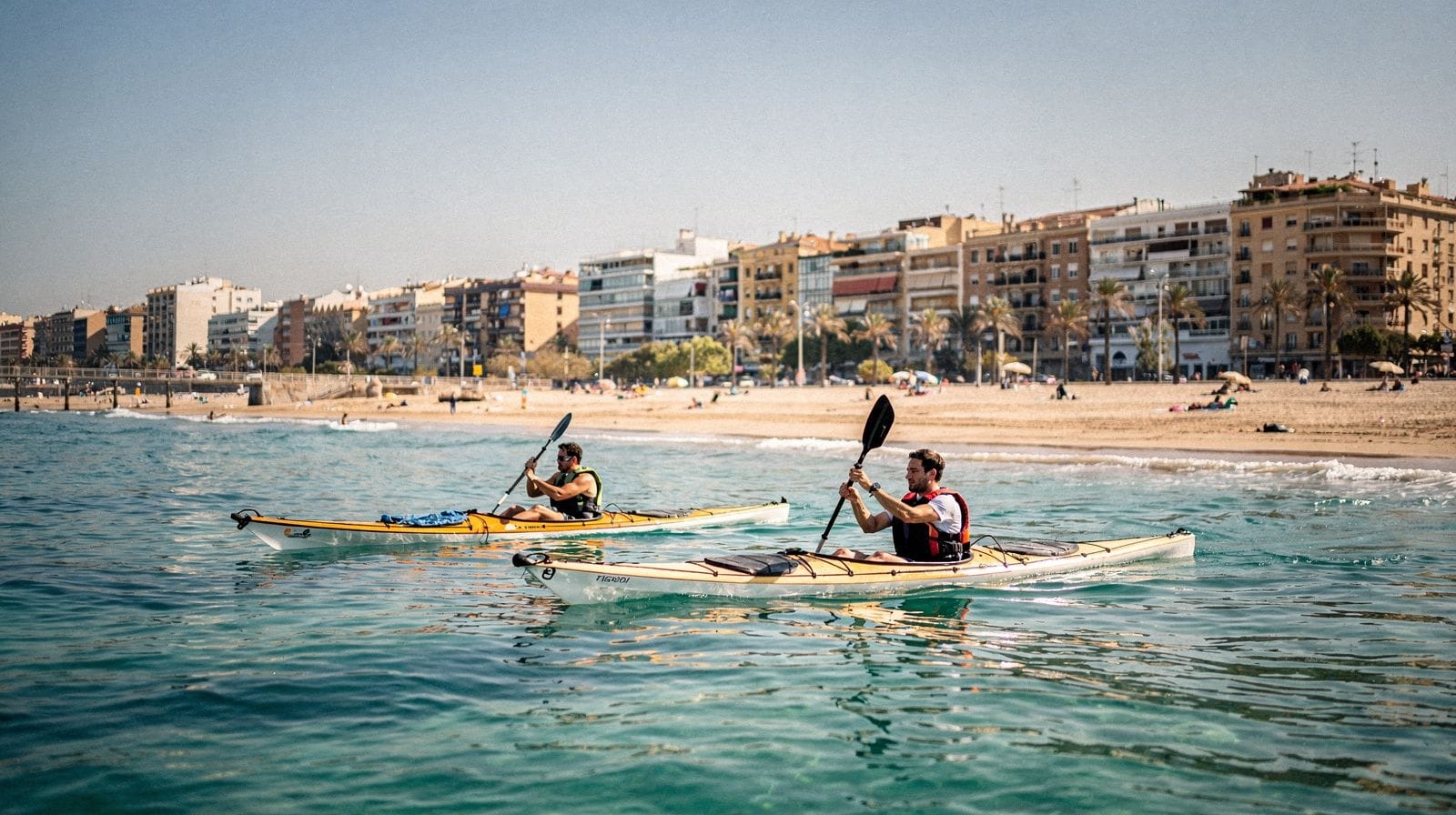 paddle surf lessonCheck availability
For a tour that combines El Cabanyal, the beach, and the Ciudad de las Artes y las Ciencias — perhaps the most practical way for a visitor to connect the different parts of the coast:
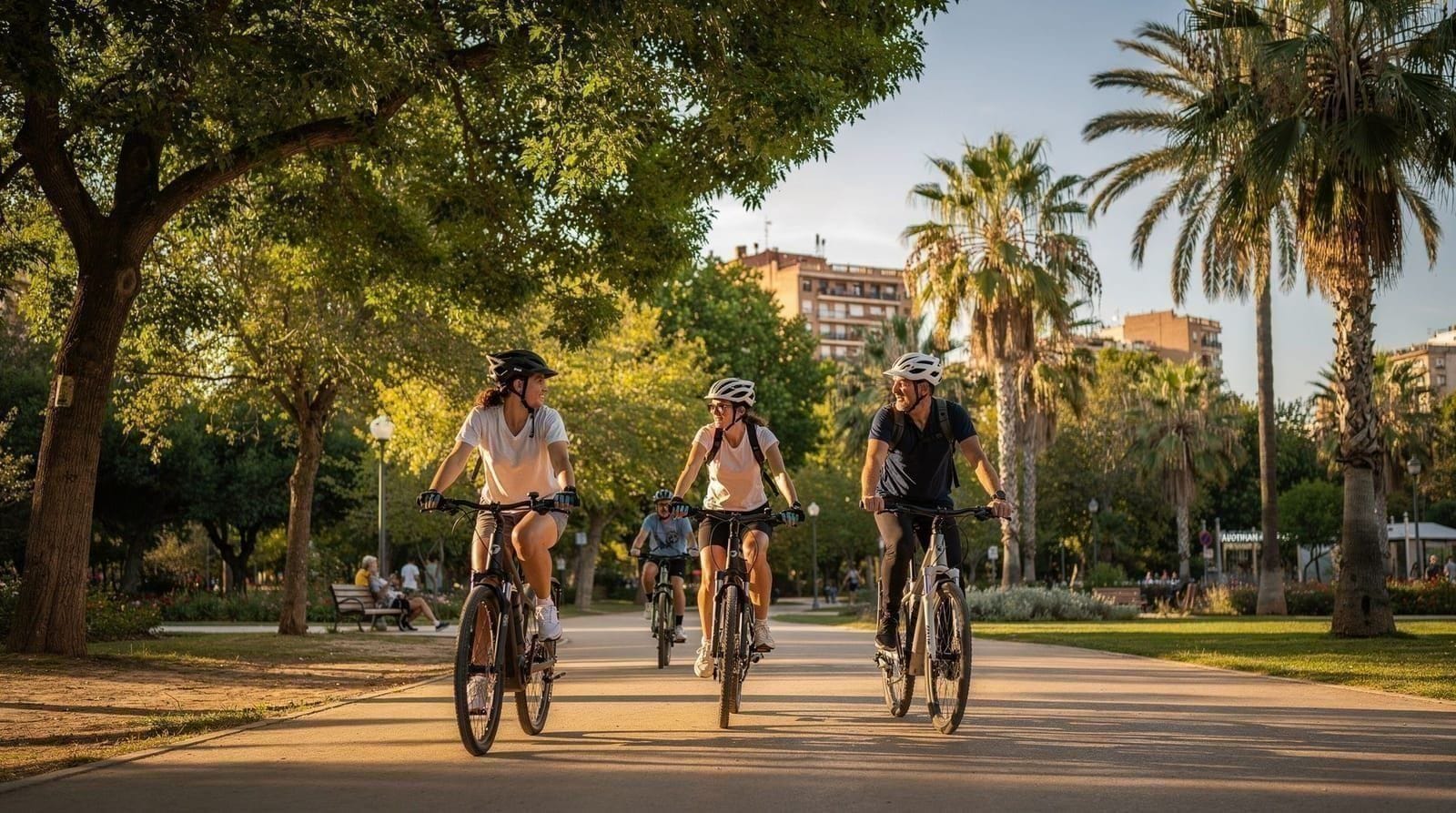 paella and beach tour by e-bikeCheck availability
The e-bike format covers the distance between the old town, the beachfront, El Cabanyal, and the Ciudad de las Artes complex more efficiently than walking, and includes a paella lunch. Duration is typically 4–5 hours.
Combining Cabanyal beach with the neighbourhood
A practical full-day itinerary:
- Morning: walk or cycle through El Cabanyal before the heat builds (09:00–11:00). The ceramic facades look best in morning light. Check the street art route.
- Midday: beach from 11:00–14:00 before the main crowds peak.
- Lunch: Mercado del Cabanyal or a neighbourhood restaurant on Carrer de la Barraca (14:00–15:30). This is the Spanish lunch hour — arriving at 14:00 puts you in the Valencian rhythm.
- Afternoon: continue south by bike or on foot along the seafront promenade toward the Port of Valencia and the Port Marina area.
Alternatively, the e-bike tour covers this territory with a guide:
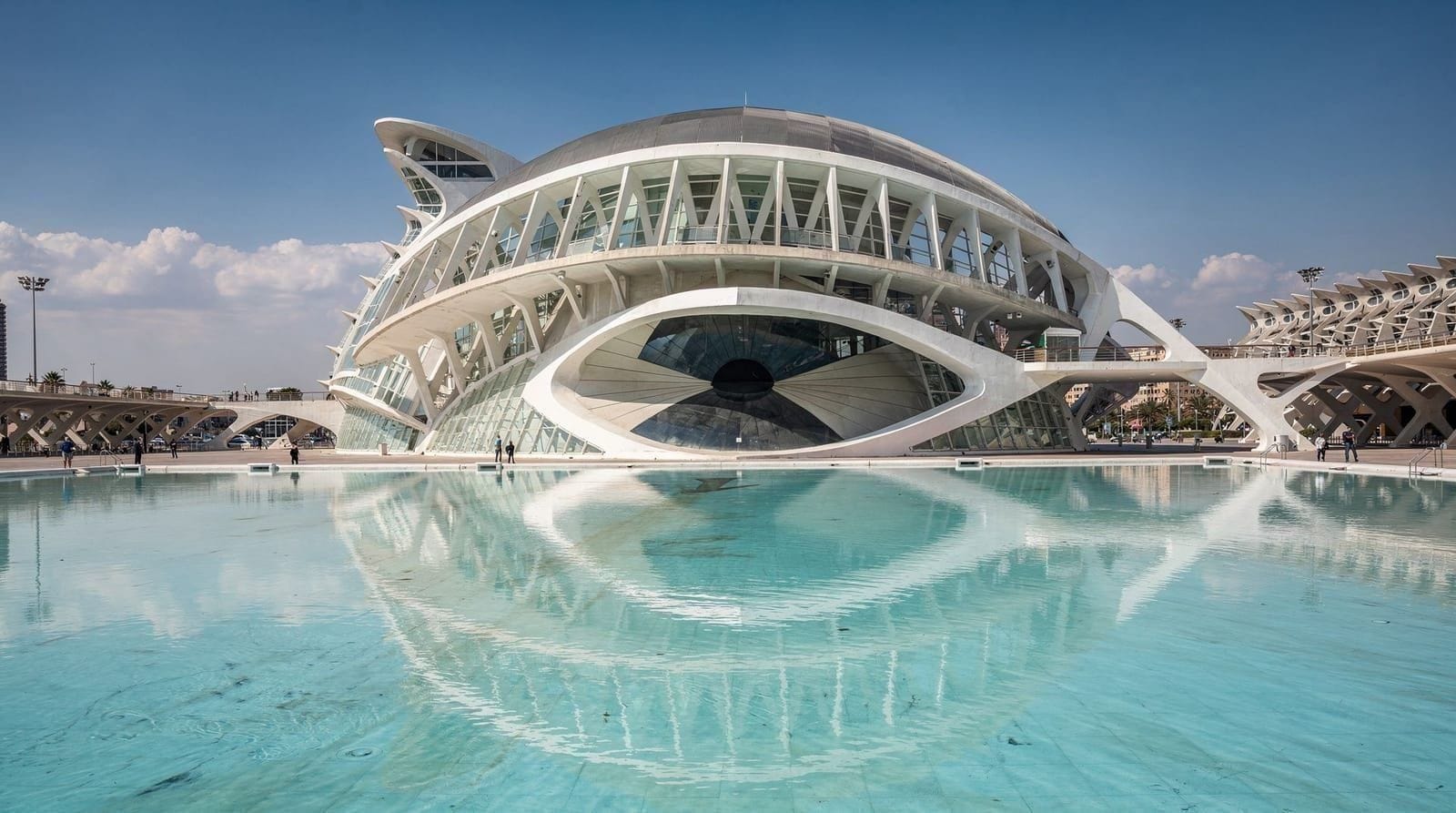 all-in-one beaches, old town and City of Arts by e-bikeCheck availability
Practical information
Getting there: Metro lines 4 and 6 to Marítim-Serreria or Neptú. Tram T4. Bus 1, 2, 31. Bike via Turia Gardens.
From Malvarrosa: 10–15 min walk south along the promenade.
Facilities: Showers, toilets, accessible ramps, lifeguards June–September, sunbed rental.
Swimming season: June–October.
Neighbourhood interest: El Cabanyal ceramic facades, street art, Mercado del Cabanyal, Semana Santa Marinera (Easter).
Best time: Weekday mornings in June or September for beach; any morning for neighbourhood walk.
Frequently asked questions about Cabanyal beach
Is Cabanyal beach the same as Malvarrosa beach?
They are part of the same continuous stretch of sand. The distinction is geographic — Cabanyal beach refers to the section immediately in front of the El Cabanyal neighbourhood, while Malvarrosa is the central and northern section with Paseo de Neptuno running alongside it. The water is identical; the atmosphere differs slightly, with Cabanyal retaining more local character.
How do I find the El Cabanyal ceramic facade walk?
No formal paid tour is required. Walking the streets parallel to the beach — especially Carrer de la Barraca, Carrer del Doctor Lluch, and Carrer de Cavite — reveals most of the significant tiled facades within a 30–45 minute self-guided walk. The Valencia City Hall provides a free printed itinerary map from the tourist office at Plaza de la Reina.
Is El Cabanyal safe to visit?
Yes. The area has a complicated history and some blocks remain in various stages of renovation, but it is safe for visitors during normal hours. The main restaurant streets and the beachfront are busy and well-lit. The neighbourhood has gentrified considerably since 2015, with new restaurants and cultural venues opening alongside the traditional fishing community.
When is the Semana Santa Marinera in Cabanyal?
The Semana Santa Marinera takes place during Holy Week (the week before Easter Sunday). The processions are organised by the fishermen’s brotherhoods and follow routes through El Cabanyal rather than the historic centre routes. Dates vary by year. The processions are free to watch and significantly less crowded than the city centre versions.
Is Cabanyal beach good for families with young children?
Yes, reasonably — the gentle slope and accessible ramps work well, though it lacks a dedicated beachside playground. For a section specifically set up with families in mind, see the family beaches guide. Cabanyal’s practical advantage is the neighbourhood market and casual restaurants a short walk inland, which make feeding children easier than on the busier Paseo de Neptuno strip.
The broader El Cabanyal restoration story
The history behind El Cabanyal’s ceramic facades is inseparable from a political controversy that shaped modern Valencia. In 2000, the city council approved an “Extension Plan” that would have demolished approximately 1,600 buildings in El Cabanyal to extend Avenida de Blasco Ibáñez directly to the sea — effectively bulldozing the heart of a neighbourhood to create a wider road.
The plan triggered an extraordinary resistance campaign that lasted more than a decade. Architects, artists, UNESCO (which formally requested Spain to halt the demolitions), and neighbourhood activists contested the demolitions. Several buildings were demolished before the plan was suspended following a change in regional government in 2015.
The saved buildings are now being restored. Walking the neighbourhood today, you can see the spectrum from freshly renovated tiled facades to still-derelict buildings mid-restoration to recently completed new construction filling gaps where demolitions did occur. The neighbourhood is not yet finished — it is a visible work in progress.
This context transforms a walk through El Cabanyal from a pleasant neighbourhood stroll into something more pointed: the ceramic tiles exist, the neighbourhood exists, because enough people fought to preserve them.
The fishing heritage and the sea
El Cabanyal was historically a fishing community. The proximity to the beach was not incidental — the neighbourhood grew directly from the needs of a fishing economy. The barques and boats that needed launching, the nets that needed drying, the fish that needed processing and selling — all of these activities shaped the neighbourhood’s street layout and architecture.
The Mercado del Cabanyal still sells fresh fish landed from the Mediterranean. The connection is real, if attenuated. The families who have fished the Valencian coast for generations are fewer in number now, but the tradition continues. During the Semana Santa Marinera, the fishermen’s brotherhood processions make this connection explicit — the religious imagery is maritime, the participants are descendants of fishing families, and the routes pass the streets where those families have lived for generations.
Art and street murals in El Cabanyal
El Cabanyal has one of Valencia’s most concentrated street art zones. The Cabanyal Street Art programme, organised by local cultural associations, has commissioned works on buildings throughout the neighbourhood. Several of the most significant pieces address the demolition controversy directly — buildings marked for demolition that instead became painted with works referencing survival, community, and memory.
The street art is not uniformly on the same streets as the ceramic facades; mapping a route that captures both requires some planning. The tourist office at Plaza de la Reina has the most current printed map. A self-guided walk covering the major works takes approximately 60–90 minutes and requires no entry fees.
Seasonal events at Cabanyal beach and neighbourhood
Semana Santa Marinera (Easter week): The defining neighbourhood event. Free to watch. Much quieter than the historic centre processions.
Cabanyal Portes Obertes (Open Doors festival, typically late May): Artists and residents open their homes and workshops to the public. Exhibitions, performances, and guided tours of buildings normally inaccessible. One of the few genuine neighbourhood cultural events in Valencia that has not become tourist-facing.
Summer beach concerts: The beachfront occasionally hosts free open-air concerts in July and August, typically on the Paseo de Neptuno promenade. Programming varies annually; check Valencia’s cultural calendar (l’Agenda València, published by the city council).
Getting the most from Cabanyal beach
For most visitors arriving by metro, the practical approach is:
- Exit at Neptú station.
- Walk east to the beach (5 minutes).
- Turn south and walk the beachfront to see the southern end of Malvarrosa and the transition into the Cabanyal beach section.
- After beach time, walk one block inland into El Cabanyal’s main streets.
- Follow Carrer de la Barraca north, watching for tiled facades.
- Cross to the Mercado del Cabanyal for a market visit if it is before 14:00.
- Lunch at a neighbourhood restaurant.
- Optional: Segway or e-bike tour if you want a guided format.
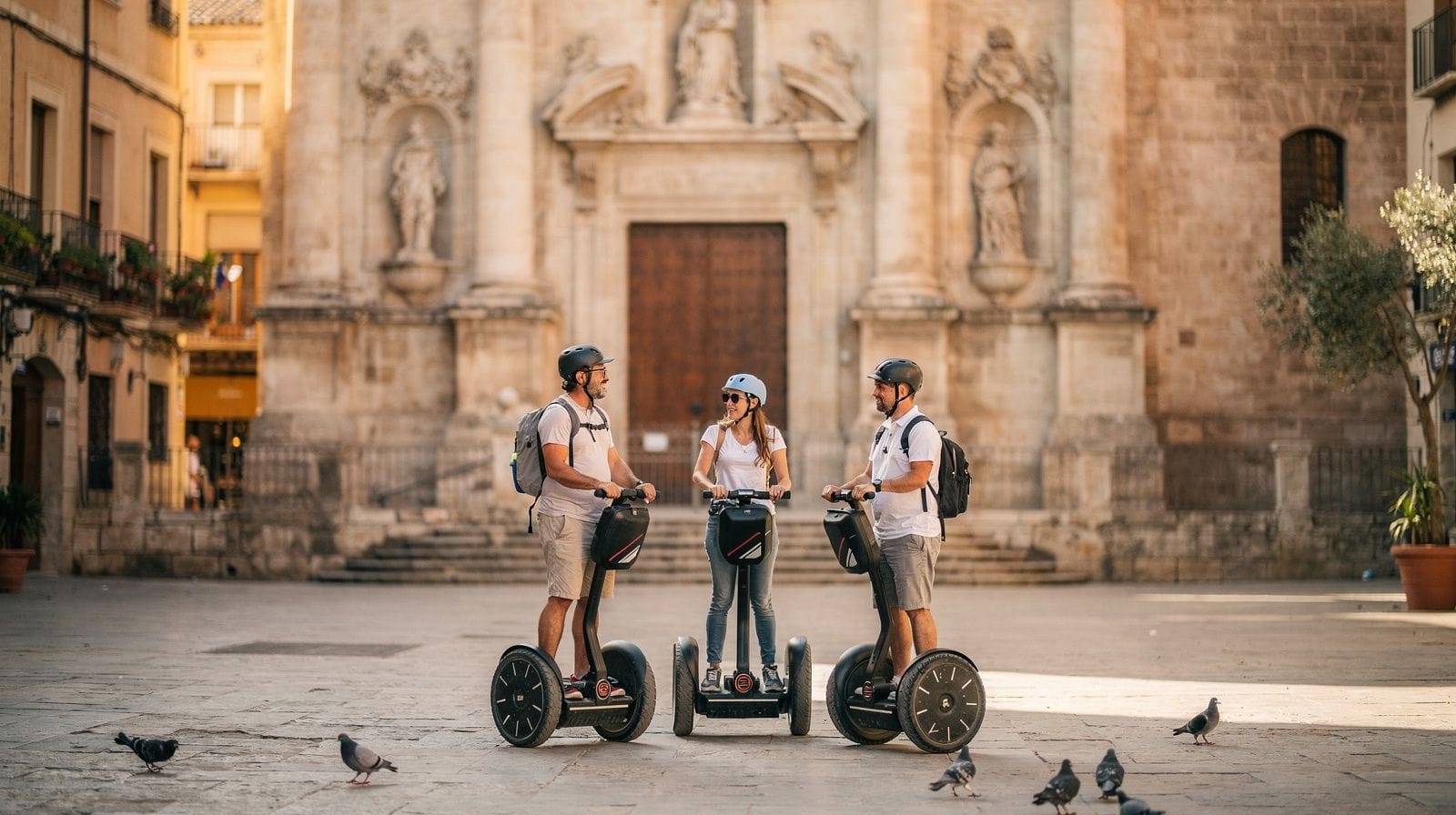 fantastic segway tour from city centre to the beachCheck availability
The segway tour from the city centre to the beach covers the Turia Garden route and the seafront in a guided 2-hour format, ending at the beach area. For visitors who want the narrative without the self-navigation, this is the efficient approach.
Practical information summary
Getting there: Metro lines 4 and 6 to Neptú (nearest) or Marítim-Serreria. Tram T4 from Palau de la Música. Bus 1, 2, 31.
The beach: Wide, gently sloped, Blue Flag standard. Lifeguards June–September. Sunbed rental in season.
The neighbourhood: El Cabanyal ceramic facades best seen on weekday mornings. Street art requires a map (free from tourist office). Mercado del Cabanyal open Tuesday–Sunday mornings to 14:00.
Swimming season: June–October. Water temperature 22–28 °C.
Eating nearby: Neighbourhood restaurants on Carrer de la Barraca and side streets offer better value than the Paseo de Neptuno beachfront.
Top experiences
Bookable activities with verified prices and instant confirmation on GetYourGuide.