Christmas in Valencia: markets, belenes and what the city actually does in December
How Valencia celebrates Christmas
Northern European Christmas is defined by cold, lights, mulled wine, and the visual aesthetic of snow and fir trees. Valencia’s Christmas has some overlap with this — there are lights on the streets, there are markets — but the cultural centre of gravity is different.
The belén (nativity scene) is the primary Christmas tradition in Valencia and across Spain. Every church, many public buildings, and a significant proportion of private homes construct elaborate nativity scenes during the Christmas period. These range from simple figurine arrangements on a table to room-filling landscapes with moving water, moss, stone and ceramic figures in which the Biblical nativity is set within an entire village or hillside. The craft tradition of nativity figure-making — imaginería — has deep roots in Valencia.
The main festive period runs from 8 December (Immaculate Conception, a public holiday) through 6 January (Three Kings Day/Epifany, the day Spanish children traditionally receive gifts). The final week of December and the first week of January are the peak.
| When | 8 December – 6 January, peak in the final two weeks |
| Weather | Highs 15–17°C, evenings 7–9°C |
| Crowds | Low, rising slightly 20 Dec–6 Jan |
| Signature sight | Cathedral belén, Ciutat de les Arts ice rink |
| Signature food | Turrón, roscón de Reyes, seafood over paella |
Christmas markets
Valencia has a Christmas market on the Plaza del Ayuntamiento (Town Hall Square) during December. The market occupies the central square with stalls selling Christmas goods, crafts, food and seasonal items. It’s pleasant but modest by German or Austrian Christmas market standards — around forty stalls, with an ice skating rink alongside it.
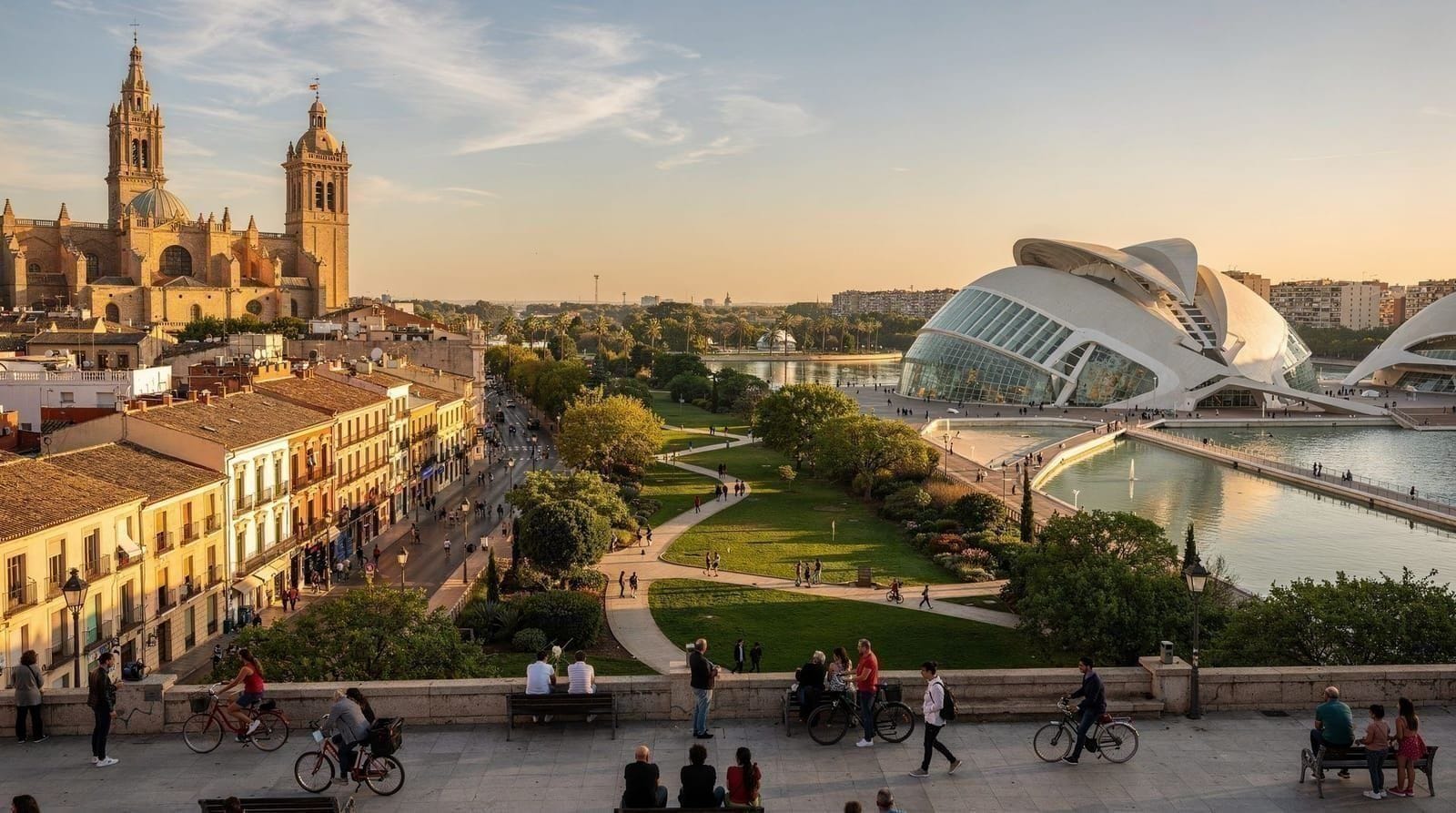
The ice rink at the Ciudad de las Artes y las Ciencias is more spectacular, set against the backdrop of Calatrava’s white structures. It operates from late November through January and is open to the public with skate rental available. The setting is genuinely unusual — ice skating with a futuristic architectural backdrop in Mediterranean winter light.
Additional smaller markets appear at the Mercado de Navidad in Ruzafa and at various neighbourhood locations. The Russafa Christmas market focuses on local crafts and design rather than commercial goods, and tends to reflect the neighbourhood’s creative community.
The belén tradition
The Catedral de Valencia holds one of the most impressive public belenes in the city. The nativity scene in the Cathedral is constructed annually and draws significant local foot traffic throughout December and into January. Entry to the Cathedral costs 12 € for the cultural visit (museum included), with the Miguelete tower climb as a separate 3 € ticket; the cathedral also opens free of charge for worship at set hours, so check the official hours on the cathedral website.
The Llotja de la Seda (Silk Exchange) — the 15th-century Gothic building that is one of Valencia’s UNESCO World Heritage sites — sometimes hosts special Christmas exhibitions, though programming varies by year.
The Museu Faller (Fallas Museum) context is worth noting: the Fallas tradition, Valencia’s defining civic festival, has its roots in the same craft and celebration culture as the belén. During December, the Fallas workshops that will produce the March sculptures are in mid-production; it’s possible to visit the Ciudad del Artista Fallero to see the giant paper sculptures in progress.
Christmas Eve and Christmas Day
Nochebuena (Christmas Eve, 24 December) is the main family celebration in Spain. Restaurants are mostly closed or running reduced services as families eat at home. The city is unusually quiet in the evening.
Christmas Day (25 December) is calm. Many restaurants reopen for lunch. The streets in the afternoon have a gentle, post-feast quality.
New Year’s Eve (Nochevieja, 31 December) is another story. The Plaza del Ayuntamiento fills with tens of thousands of people. The midnight tradition is eating twelve grapes — one per bell strike at midnight — for luck in the coming year. This is followed by celebrations that run until morning. The bars and clubs in El Carmen and Ruzafa have full New Year programmes, typically requiring advance ticket purchase.
Three Kings Day (6 January)
The more important gift-giving day in Spanish tradition is 6 January, Día de los Reyes Magos. The evening of 5 January sees the Cabalgata de Reyes (Three Kings Parade) through the city centre — floats, disguised figures throwing sweets into the crowds, and the theatrical arrival of the Reyes Magos (Three Kings) at the Ayuntamiento.
For families with children, this is the most visually interesting event of the Valencia Christmas season. The parade runs in the evening, usually 6-9pm.
Practical notes for a December visit
Weather: Average highs of 15-17°C in December. Cold for Valencia by its own standards, mild by northern European comparison. Evenings drop to 7-9°C and require a jacket. Rain is more likely than in summer but not reliably frequent.
Crowds: Low. The Christmas period (20 December-6 January) is busier than the rest of the month due to domestic Spanish tourism, but nothing approaches summer levels. Hotels are cheaper than peak summer; the difference can be substantial.
What’s open: Museums, attractions and restaurants operate near-normal hours through December, with reductions on Christmas Eve, Christmas Day and New Year’s Day. Check individual attraction websites for holiday schedules.
What the city smells like: In December, Valencia’s central streets smell of roasted chestnuts (castañas asadas) from the vendors stationed around the old town. Combined with the orange blossom scent that persists year-round from the city’s orange trees, and the occasional whiff of cold stone, it creates a specific olfactory signature that most people who’ve visited in winter remember.
The Christmas food
The Christmas table in Valencia centres on traditional Spanish items: turrón (nougat from Jijona and Alicante, nearby towns in the Valencian Community), mazapán (marzipan), polvorones (crumbly shortbread), and roscon de Reyes (a ring-shaped sweet bread with candied fruit, eaten for Three Kings Day).
These are sold throughout December at the Mercado Central, at specialist confectionery shops (confiterías), and in supermarkets. The quality range is wide; the confiterías’ homemade versions are better than the mass-market supermarket equivalents by a significant margin.
Christmas meals lean toward seafood (gambas a la plancha, mejillones, coquinas) and lamb or suckling pig (cochinillo or cordero). Less paella than the rest of the year, which is seasonally appropriate — paella is conceptually a warm-weather, outdoor dish.
For anyone visiting in the Christmas window, the combination of low crowds, genuine cultural events, mild weather and excellent food at the year’s most affordable prices makes December an underappreciated time to be in Valencia. See the best time to visit guide for how December compares to the rest of the year, and consider staying in El Carmen or Russafa for easy access to the Ayuntamiento markets and the Nochevieja grape tradition.
Where to stay for a Christmas trip
El Carmen puts you within walking distance of the Cathedral belén and the Plaza del Ayuntamiento market; Russafa gives quieter evenings and a genuinely local Christmas market of its own at the Mercado de Navidad. Neither neighbourhood requires a car, and both connect easily to the Ciutat de les Arts ice rink by metro or a short taxi. The best neighbourhoods guide covers the full trade-offs if you’re deciding between them.
When December turns grey: indoor days
Rain is not the norm in a Valencia December, but it can happen, and the festive weeks are a good moment to slot in the city’s big indoor attractions while the queues are shorter than in summer. The Oceanogràfic guide and the honest verdict on whether it is worth it help you decide how much of a day to give it; if you would rather book ahead, a ticket for the aquarium and marine park keeps the plan simple on a day you would rather not improvise.
The same complex holds the Science Museum and the Hemisfèric, which pair naturally with an afternoon on the ice rink nearby. For a single booking that covers several of them, a combined ticket for the aquarium, the planetarium-style dome and the science museum is the practical route, and the City of Arts and Sciences guide explains how the buildings fit together.
If you are travelling with children over the holidays, the rainy day ideas for kids and the wider Valencia with kids guide give you fallback options between the belén visits and the Three Kings parade. For a broader sense of what the cool season feels like beyond Christmas itself, read Valencia in winter.