Valencia vs Barcelona: which city should you visit?
Most people asking “Valencia or Barcelona?” have already decided. What they want is reassurance that their destination is the right choice, or a framework to break a tie. This piece won’t give you either of those things; it’ll tell you what the difference actually is: they’re not competitors, they serve different traveller needs, and choosing between them reveals more about what you want from a trip than about the cities themselves.
| Valencia | Barcelona | |
|---|---|---|
| Crowds | Moderate, manageable outside Fallas | High, strained infrastructure in peak season |
| Accommodation (double, central) | around €80-130/night | around €130-200/night |
| Menú del día | around €12-14 | around €16-20 |
| Signature draw | Rice tradition, Ciudad de las Artes, beach access | Gaudí architecture, top-tier restaurant scene |
| Beach from the city | Malvarrosa, plus Albufera and El Saler nearby | Barceloneta, urban and crowded |
Crowds and overtourism
Barcelona is one of the five most visited cities in Europe. In high season, the Ramblas, the Gothic Quarter and the Sagrada Família are operating at crowd densities that affect the quality of the visit — even if you’ve made peace with queuing two hours for a Gaudí ticket and paying 40 € for the privilege.
This is not a snobbish point about preferring obscure places; it’s a practical point about visitor experience. Barcelona’s infrastructure is excellent but it is visibly strained by its tourism volume. The neighbourhood protest movements against overtourism (particularly in the Gothic Quarter, Barceloneta beach and Gràcia) reflect real residential stress.
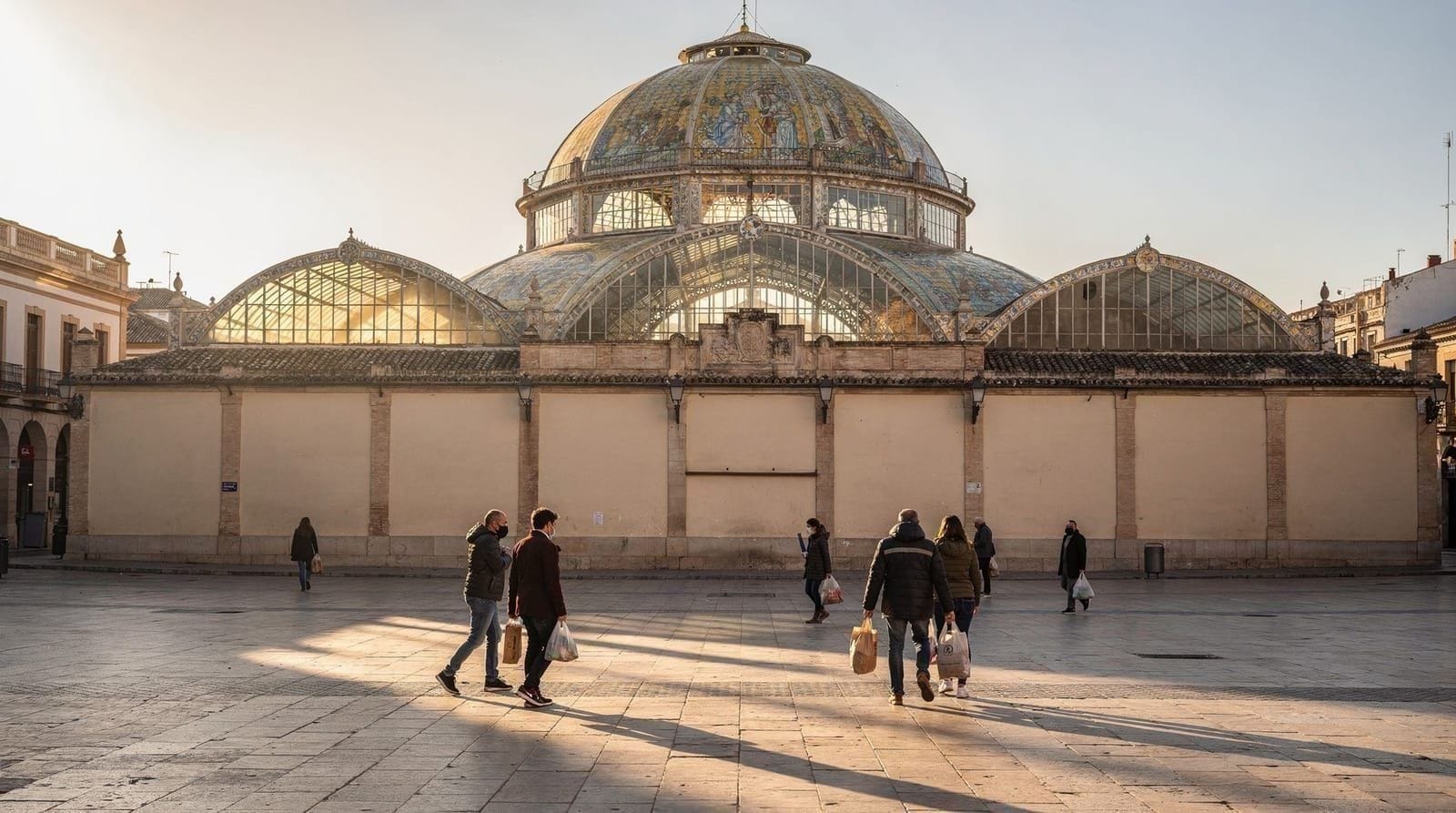
Valencia sees significant tourism but at a qualitatively different scale. In September, you can walk into the Lonja de la Seda — a UNESCO World Heritage building arguably as significant as anything in Barcelona’s Gothic Quarter — at 11am on a weekday and have it nearly to yourself. The Oceanogràfic in July needs advance booking but doesn’t have the same queue structure as the Sagrada Família. The tourist density in Valencia allows the city to feel, most of the time, like a city being lived in rather than consumed.
Cost
Barcelona’s accommodation costs are among the highest in Spain, driven upward by demand and constrained supply. A decent centrally located double room in Barcelona costs 130-200 € per night in high season. A comparable room in Valencia is 80-130 €.
Food follows a similar pattern. The tourist-facing restaurants in both cities are overpriced; the local alternatives are cheaper in Valencia. A menú del día in a good neighbourhood restaurant in Valencia costs 12-14 €. The equivalent in Barcelona might be 16-20 €.
Transport: Barcelona’s metro network is excellent. Valencia’s is less extensive but adequate for the main sights. Valencia is a walkable city in a way Barcelona is slightly less so.
If budget is a significant consideration, Valencia is materially cheaper. The gap is not enormous but it’s consistent.
The food question
Barcelona has a world-class restaurant scene. The molecular gastronomy movement centred on elBulli (now closed) shaped an entire generation of Catalan chefs, and Barcelona’s top-tier restaurants remain among Europe’s most inventive.
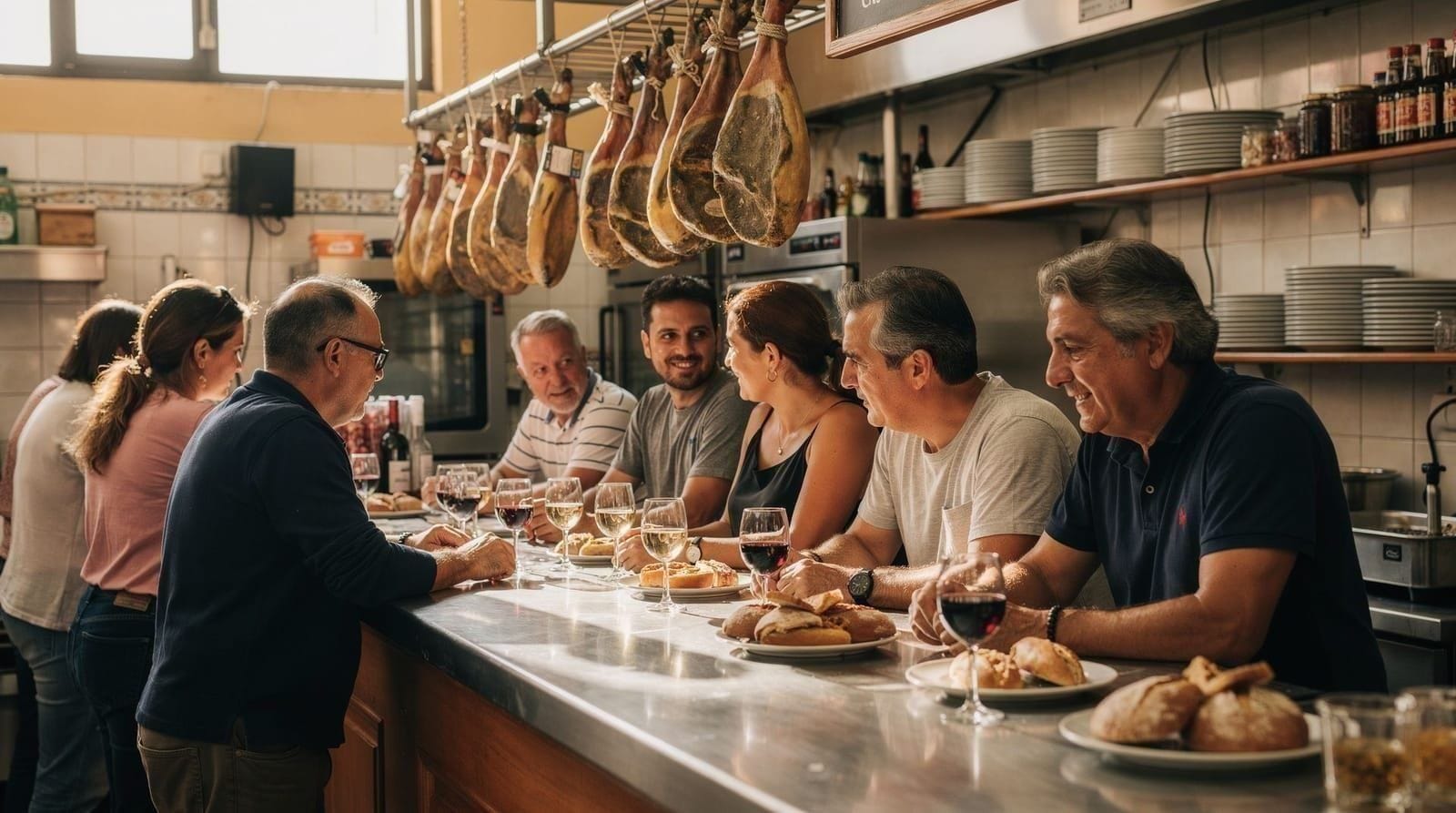
Valencia has a different food argument: it has the best rice tradition in Spain and arguably the most distinctive regional cuisine in the country. Paella is Valencian, not Spanish in the generic sense. The Central Market is widely regarded as one of the best food markets in Europe. The horchata from the l’Horta Nord tigernut farms is unlike anything available elsewhere. The Albufera all i pebre is irreplaceable.
At the high-end restaurant level, Barcelona wins. At the level of eating the most distinctive, place-specific food at honest prices, Valencia is the stronger argument.
Traditional Valencian paella cooking classIf cooking is not your thing, a guided walk through the market is a gentler way to taste the difference: a morning food tour around the central market gives you the context that makes the rest of your meals in the city easier to choose well. For the dishes themselves, see how to order paella like a local and the paella traps to avoid.
The beach
Both cities have city beaches. Barcelona’s Barceloneta is famous and overcrowded. Valencia’s Malvarrosa is similar in its urban character but slightly less famous and therefore slightly less crowded.
The real difference is what you can access from each city. From Valencia, the Albufera Natural Park is 20 km south — a UNESCO biosphere reserve with a freshwater lagoon, rice fields, and a genuine working fishing village. The beaches at El Saler and La Devesa are backed by dune systems and pine forest and reach an almost rural quality despite being 30 minutes from the city centre. Cullera and Gandia are an hour by train and have beaches of a different order to anything accessible in an hour from Barcelona.
The beach argument is straightforwardly Valencia’s.
Architecture and culture
Barcelona wins on architecture, with some qualification. Gaudí’s work — the Sagrada Família, Parc Güell, Casa Batlló — is among the most extraordinary created by any architect in any era. This is not hyperbole; it is a genuine reason to go to Barcelona.
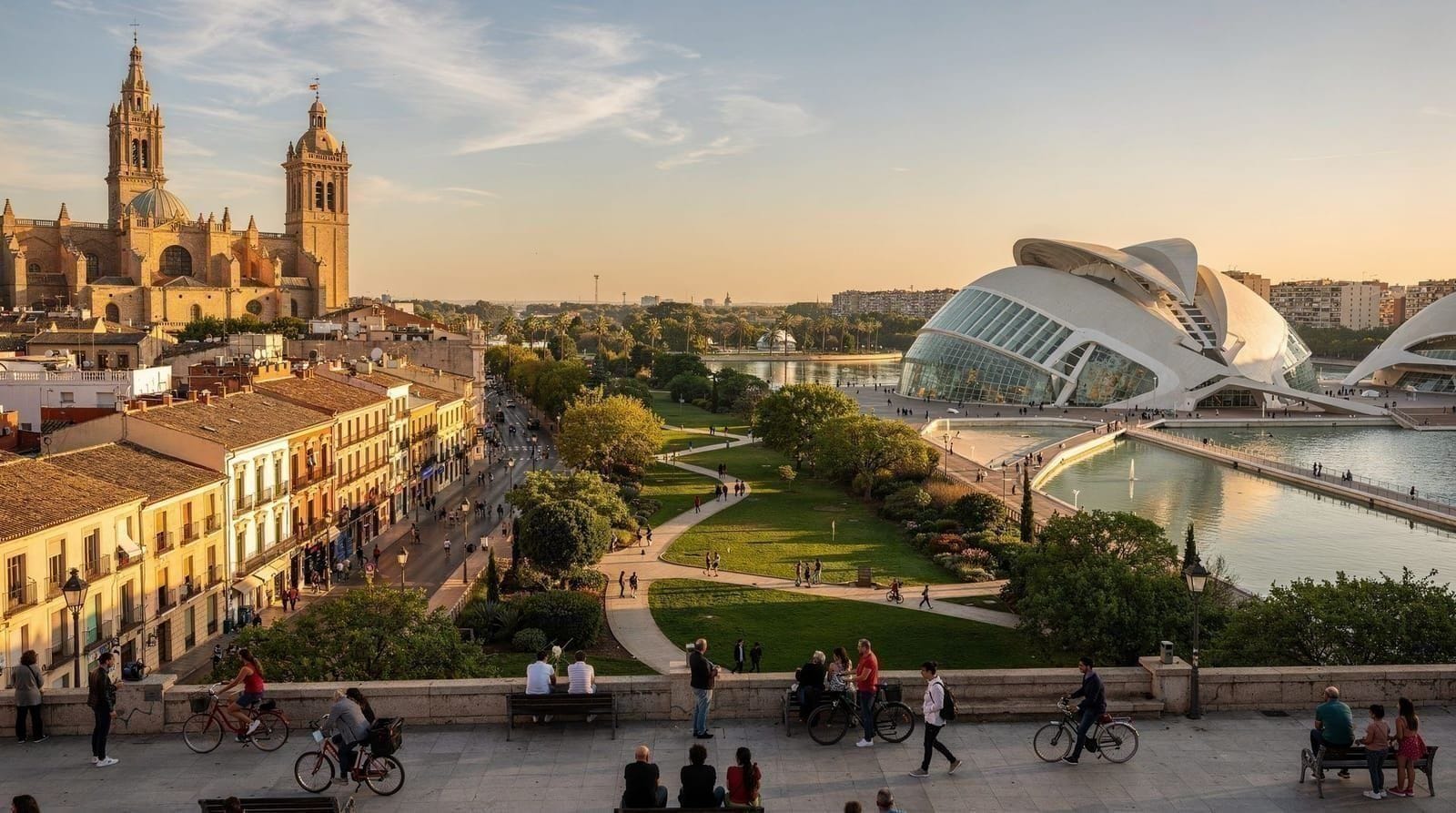
Valencia’s architectural case is different. The Ciudad de las Artes y las Ciencias — Santiago Calatrava’s futuristic complex in the Turia riverbed — is genuinely spectacular and often underestimated by people who expect it to be a poorer version of something they’ve seen elsewhere. It isn’t. The Modernista buildings along Gran Vía are underrated. The Gothic Quarter (Barrio del Carmen) is smaller than Barcelona’s but more authentic-feeling in its day-to-day life.
For history: Valencia has the Lonja de la Seda, the Cathedral (which holds what is claimed to be the Holy Grail — a separate and interesting story in the cathedral guide), and a Roman and Moorish history that predates Barcelona’s medieval significance. The IVAM contemporary art museum is underappreciated internationally.
Barcelona has more and bigger. Valencia has things that receive less foot traffic, which sometimes means you experience them better.
Families and day trips
For families, the practical difference is less about the sights themselves and more about pace and logistics. Valencia’s compact centre means shorter walks between activities and a lower baseline of crowd stress with children in tow; Valencia with kids covers the specific attractions that work well. Barcelona’s family attractions (Park Güell, the aquarium, the beach) are excellent but spread across a larger, more crowded city, which adds real logistics overhead with young children.
If you do choose Valencia with children, the easiest anchor for a day is the Ciudad de las Artes y las Ciencias, where you can pair a visit to the Oceanogràfic aquarium with the neighbouring science museum and planetarium without crossing the city. Our Gulliver park guide and the rainy-day ideas for kids fill the gaps around it.
Day-trip range also differs in character rather than quantity. From Valencia, Albufera, Xàtiva and Requena’s wine country are all under an hour and feel genuinely different from the city. From Barcelona, Montserrat and the Costa Brava play a similar role but generally involve more time and more crowds getting there.
Which suits a first-time Spain visitor
If this is a first and only trip to Spain, Barcelona’s name recognition and Gaudí’s work make a reasonable case for prioritising it — it’s the city most people picture when they think “Spain plus Mediterranean.” But first-timers who want a gentler introduction, better value, and a city that doesn’t require managing queues and crowd logistics for most of the day tend to have an easier, more relaxed trip in Valencia. Neither answer is wrong; it depends on whether “must-see landmarks” or “genuinely enjoyable pace” matters more to you.
The travel profile that fits each city
Go to Barcelona if: You specifically want Gaudí. You want the highest-tier restaurant scene in Spain. You’re combining with the Costa Brava. You’re doing the Spain-in-ten-days route that includes Madrid-Barcelona as the standard circuit.
Go to Valencia if: You want to understand the Mediterranean food culture that Barcelona is partly built on. You want a beach holiday based from a city. You want to eat better paella than you’ll find anywhere else. You want a city that’s large enough to be genuinely interesting but small enough that you don’t spend significant portions of the day managing queues. You want a Fallas experience with no parallel anywhere.
Go to both if: You have ten or more days in Spain and want to understand the range of the Mediterranean coast.
A practical note on connections
Barcelona and Valencia are connected by AVE (high-speed train) in approximately three hours. This is a reasonable in-day connection; you can be in Valencia for lunch and Barcelona for dinner, or vice versa. Many Spain itineraries combine them effectively without having to choose.
The guide on getting to Valencia from Barcelona and Madrid has the practical train information.
Frequently asked questions about Valencia vs Barcelona
Is Valencia cheaper than Barcelona overall, not just for accommodation? Yes, consistently across accommodation, restaurant meals and, to a lesser extent, attractions — though the gap is moderate rather than dramatic, generally 20-30% depending on category.
Can I visit both cities in one trip without it feeling rushed? Yes, if you have at least seven to ten days total. The AVE train connects them in about three hours, making a split of, for example, four days in Barcelona and three to four in Valencia comfortable rather than rushed.